Castel Sant’Angelo - Rome
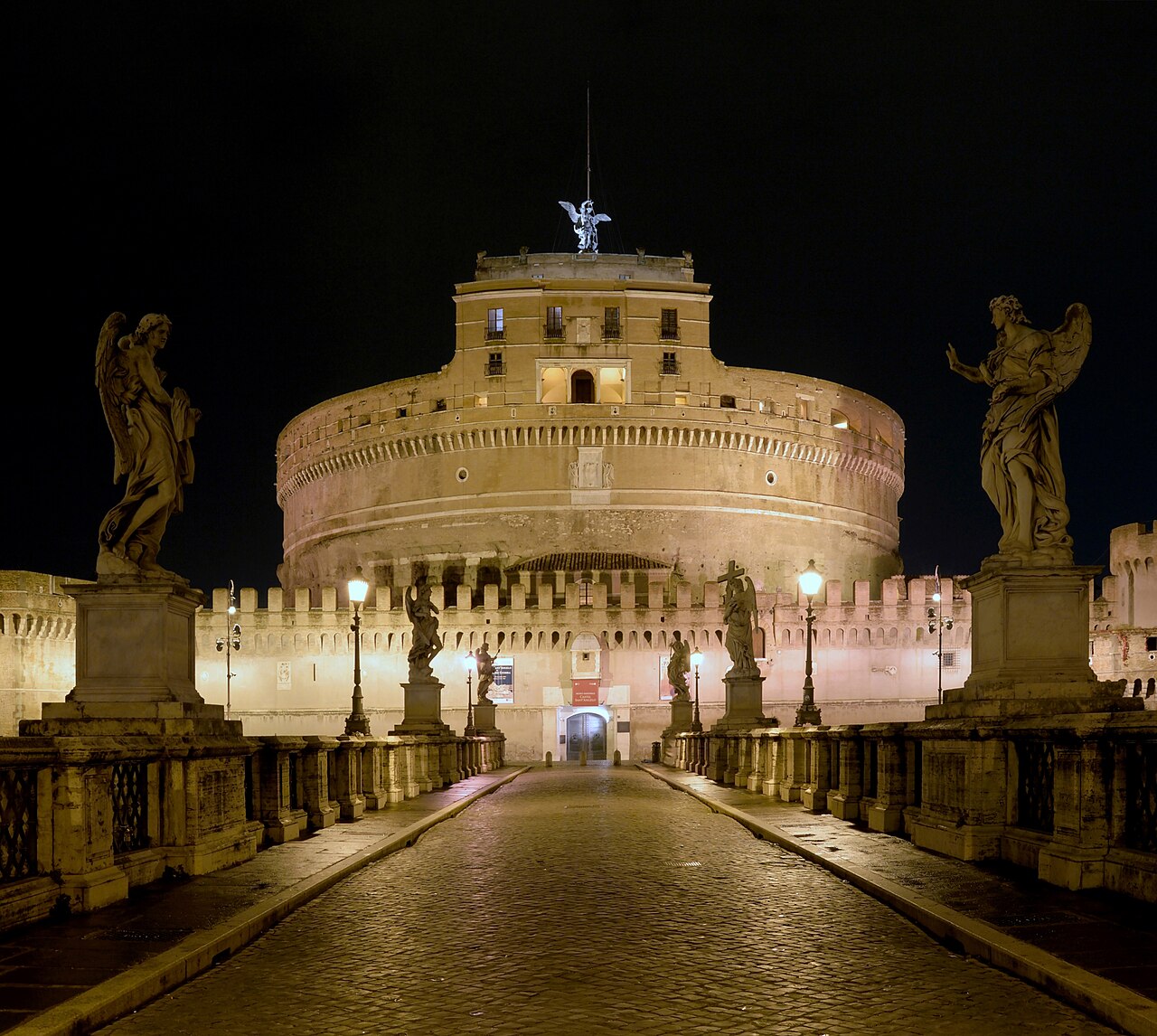
Castel Sant'Angelo, also known as the Castle of the Holy Angel, is one of the most remarkable historic monuments in Rome, Italy. It stands as a unique testament to the city's nearly 2000-year history, having continuously evolved in function and architecture since its construction. Unlike many ancient Roman structures that have fallen into ruin or were quarried for building materials, Castel Sant'Angelo has remained a prominent feature of Rome's urban landscape, adapting to the changing needs of the city over the centuries.
Origins as a mausoleum
The castle was originally built between 123 and 139 AD as the mausoleum for Emperor Hadrian and his family. The design was a massive cylindrical structure, inspired by earlier Roman tombs but on an unprecedented scale. It was constructed with a solid core of concrete and brick, surrounded by a travertine marble exterior. The mausoleum was topped by a garden and a golden quadriga statue, symbolizing the emperor’s divine status. This monumental tomb was located on the right bank of the Tiber River, near the Vatican Hill, and was linked to the city by the Pons Aelius bridge, now known as the Bridge of Angels.
Transformation into a fortress
By the early 5th century, the mausoleum had lost its original funerary function. In 403 AD, the Roman Senate transformed the building into a military fortress to defend the city against barbarian invasions. This marked the beginning of a long period during which Castel Sant'Angelo served as a strategic defensive stronghold. The structure was reinforced with thick walls, battlements, and additional towers to withstand sieges.
Medieval modifications and papal fortress
During the Middle Ages, the castle underwent extensive modifications. In the 11th century, it became a state prison, reflecting its secure and imposing design. Ownership of the castle shifted among prominent Roman noble families until the 14th century, when it became closely associated with the papacy. Popes fortified the castle further, connecting it to the Vatican by the fortified Passetto di Borgo, a secret elevated corridor that allowed the pope to escape during times of danger.
Renaissance and baroque enhancements
Throughout the Renaissance and Baroque periods, Castel Sant'Angelo was embellished with luxurious apartments, chapels, and decorative frescoes. These additions reflected the castle’s dual role as a fortress and a papal residence. The castle's interior spaces were adapted to accommodate the needs of the papal court, while the exterior defenses were maintained and improved to protect against evolving military threats.
Role as a prison and museum
In the 19th century, Castel Sant'Angelo resumed its function as a prison, housing political prisoners and criminals alike. This use continued until 1906, when the castle was finally converted into a museum. Today, it is a rich cultural site that offers visitors a glimpse into Rome’s layered history through its extensive collections, architectural features, and panoramic views of the city.
Architectural features and significance
The castle's architecture is a fascinating blend of Roman engineering, medieval fortification, and Renaissance artistry. The massive cylindrical core remains the centerpiece, surrounded by defensive walls and bastions added over centuries. The Passetto di Borgo is a unique feature that highlights the castle's strategic importance. Inside, visitors can explore richly decorated halls, papal apartments, chapels, and dungeons, each telling a part of the castle's complex story.
Strategic location
Situated on the banks of the Tiber River, Castel Sant'Angelo occupies a key defensive position controlling access to the city from the north. Its proximity to the Vatican also underscores its role as a protector of the papacy during turbulent times.
Cultural and historical legacy
Castel Sant'Angelo is not only a symbol of Rome's imperial past but also a monument to the city's resilience and adaptability. It has witnessed the rise and fall of empires, the power struggles of the papacy, and the transformation of Rome from an ancient capital to a modern city. Its preservation as a museum allows millions of visitors to connect with these layers of history and appreciate the architectural ingenuity that has kept the castle standing for nearly two millennia.
Frequently asked questions (FAQ)
- What is Castel Sant’Angelo known for?
- Castel Sant’Angelo, originally built as a mausoleum for Emperor Hadrian, has served various purposes throughout history, including a fortress and a papal residence. Today, it is recognized for its stunning architecture and rich history, making it a significant landmark in Rome.
- When was Castel Sant’Angelo built?
- Construction of Castel Sant’Angelo began in AD 135 and was completed in AD 139. Over the centuries, it has undergone numerous modifications, reflecting different architectural styles and uses.
- Can I visit Castel Sant’Angelo?
- Yes, Castel Sant’Angelo is open to visitors, allowing you to explore its impressive interiors, art collections, and panoramic views of the city. Be sure to check the official website for any updates on visitor access and safety guidelines.
- What are the opening hours for Castel Sant’Angelo?
- Castel Sant’Angelo typically opens at 9:00 AM and closes at 7:30 PM, with the last entry at 6:30 PM. Opening hours may vary on public holidays, so it’s advisable to verify before your visit.
- How much does it cost to enter Castel Sant’Angelo?
- The ticket price for Castel Sant’Angelo is generally around €14 for adults, with reduced rates for students and free entry for children under 18. Discounts are often available on certain days, so check the official site for the latest information.
- Is Castel Sant’Angelo accessible for visitors with disabilities?
- Yes, Castel Sant’Angelo is equipped with facilities to assist visitors with disabilities, including ramps and elevators. However, some areas may still present challenges due to the castle's historical structure.
- When is the best time to visit Castel Sant’Angelo?
- The best time to visit Castel Sant’Angelo is during the spring and fall when the weather is mild, and crowds are generally smaller. Early mornings or late afternoons can also provide a more tranquil experience.
- What nearby attractions can I visit after Castel Sant’Angelo?
- After visiting Castel Sant’Angelo, you can easily explore nearby attractions such as St. Peter's Basilica, the Vatican Museums, and the beautiful Ponte Sant’Angelo. Each site offers unique historical and cultural experiences worth discovering.
Information
Loading map...
Visitor reviews
No reviews yet. Been here? Write the first review and help other travelers!
Write the first reviewVisited this castle? Share your experience
Your review helps other travelers and adds first-hand knowledge to our encyclopedia.