Ghumdan Palace
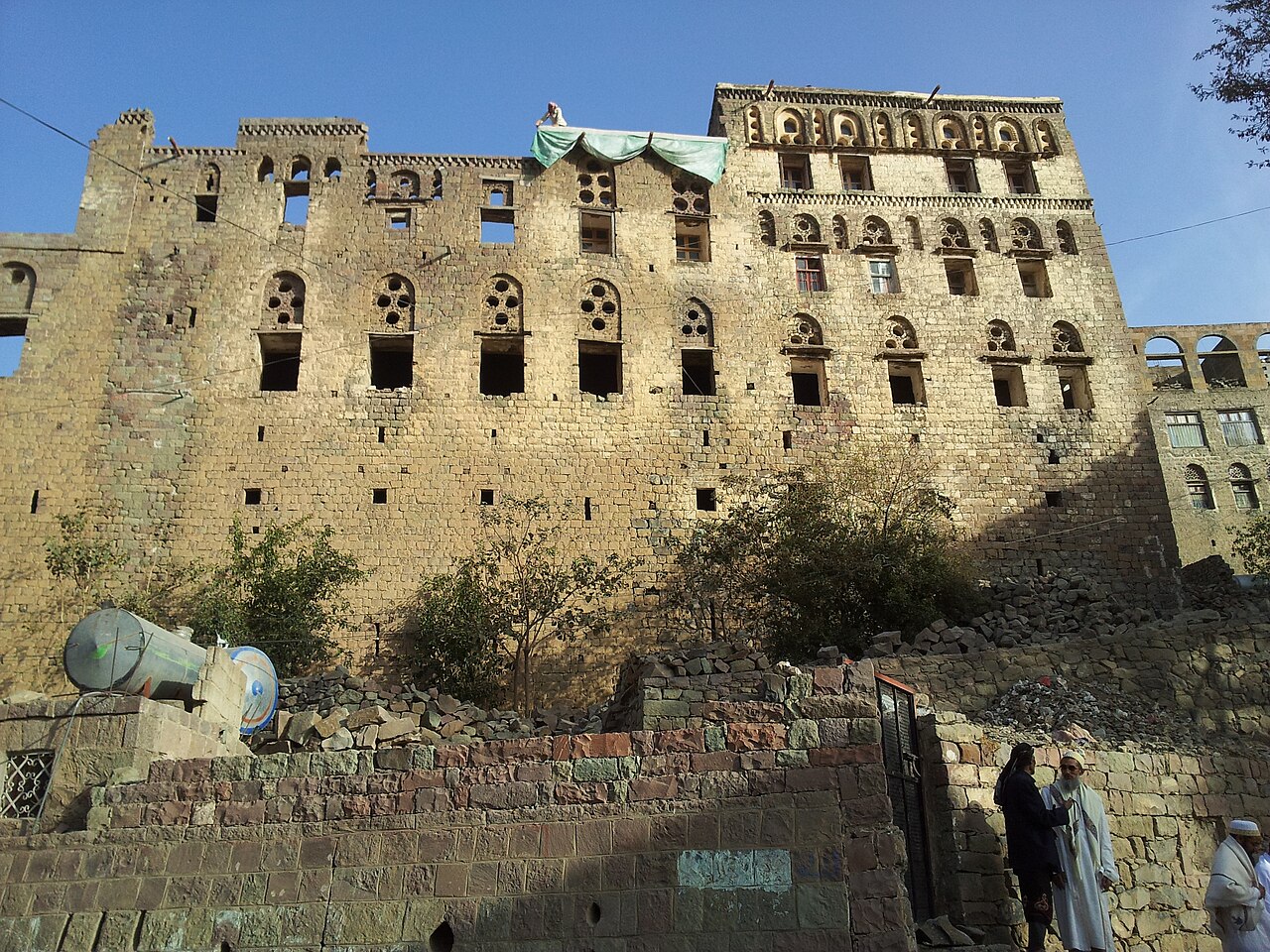
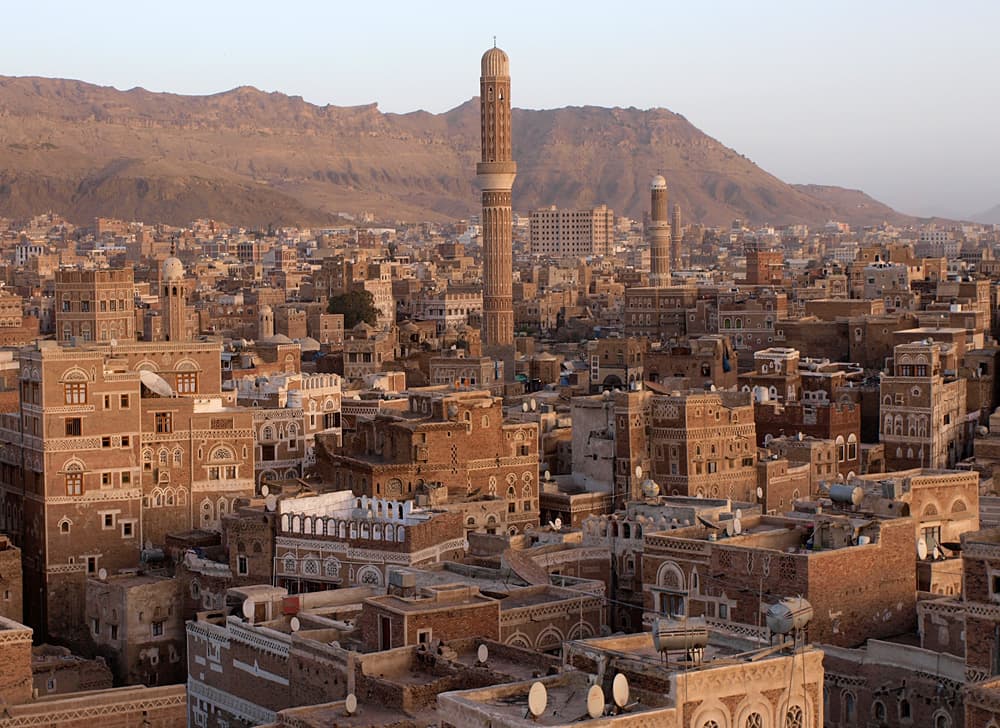
Ghumdan Palace, also known as Qasir Ghumdan or Ghamdan Palace, is a significant archaeological site located in the old city of Sana'a, Yemen. This ancient fortified palace dates back to the Kingdom of Saba, making it one of the oldest known monumental structures in the Arabian Peninsula. Today, only ruins remain of the once majestic palace, situated near the eastern doors of the Great Mosque of Sana'a (Jami‘ Al Kabeer Mosque), within the UNESCO World Heritage Site of the Old City of Sana'a.
Historical context and origins
The palace's origins are steeped in legend and early history, with several historical accounts attributing its foundation to different figures and eras. According to the Arab geographer and historian Al-Hamdani (c. 893-945), the foundation stones were laid by Shem, the son of Noah, symbolically linking the palace to biblical times. The construction is often credited to the Sabaean monarch Ilī-Sharḥa Yaḥḍib around the 8th century BCE, who was the father of the famed Queen Bilqis (the Queen of Sheba). Other sources suggest the palace was built by Sha'r Awtar, a ruler known for fortifying the city of Sana'a.
There is some debate among historians regarding the exact dating of the palace, with some placing its construction in the pre-Islamic period, possibly during the reign of the last great Sabaean king, El Sharih Yahdhib (circa 60-20 BCE). Others propose a slightly later date around the beginning of the 1st or 2nd century CE. Despite these uncertainties, the palace is universally recognized as a monumental symbol of the ancient Sabaean civilization.
Architectural features and significance
The palace was renowned for its impressive scale and unique architectural design. It is believed to have been a fortified structure with a towering multi-storey building, sometimes described as a 20-storey high-rise tower. This tower-like feature has led some scholars to consider Ghumdan Palace as possibly the world's earliest known skyscraper. The palace's construction utilized local stone and traditional Sabaean building techniques, including thick defensive walls and elevated terraces.
Despite the limited physical remains today, historical descriptions and Arabic poetry from various periods celebrate the palace's beauty and grandeur. The palace likely included multiple chambers, halls, and fortified walls that demonstrated advanced engineering and architectural skills of the Sabaean people. The location on an eminence in the southeastern part of the old city provided strategic defensive advantages and a commanding view of the surrounding area.
Destruction and restorations
The palace suffered destruction at various points in history. Some accounts attribute its ruin to the forces of Caliph Uthman during the early Islamic period, while others suggest it may have been damaged earlier by the Ethiopian King Kaleb. Over the centuries, the palace was restored several times, reflecting its continued cultural importance to the people of Sana'a and Yemen.
Location and cultural heritage
Ghumdan Palace is located on the extreme southeastern edge of Sana'a's old walled city, known as al-Qaṣr. It lies just west of the Great Mosque of Sana'a, a key religious and historical landmark. The site today is largely a field of tangled ruins, referred to locally as khadd, and is part of the broader Old City of Sana'a UNESCO World Heritage Site.
The palace's ruins are an important cultural symbol in Yemen, frequently mentioned in Arabic poetry and folklore. These literary references often highlight the palace's architectural splendor and its legendary status as a symbol of ancient Yemeni civilization. The term "Ghumdan Tower" is sometimes used to emphasize the palace's towering structure and its historical prominence.
Archaeological significance and current condition
Today, Ghumdan Palace exists primarily as an archaeological ruin. The site has not been extensively excavated or restored, leaving much of its original structure obscured beneath debris and modern urban development. The ruins provide valuable insights into Sabaean architecture and urban planning, as well as the early history of Sana'a.
Preservation efforts are challenged by the palace's location within a densely populated urban area and ongoing regional instability. Despite these challenges, Ghumdan Palace remains a vital link to Yemen's ancient past and a subject of scholarly interest.
Legends and literary references
The palace is surrounded by numerous legends and tales that have been passed down through generations. It is often celebrated in Arabic poetry for its beauty and grandeur, with poets praising its towering presence and architectural elegance. The palace's association with Queen Bilqis adds to its mystique and cultural resonance.
These stories contribute to the palace's enduring legacy as a symbol of Yemeni heritage and the ancient Sabaean civilization's achievements in architecture and governance.
Frequently asked questions (FAQ)
- How do I get to Ghumdan Palace?
- Ghumdan Palace is located in the heart of Sana'a, Yemen. To reach the palace, you can use local taxis or arrange for a guided tour that includes transportation. It's advisable to confirm the route and travel times with your driver, as local traffic conditions may vary.
- What is the historical significance of Ghumdan Palace?
- Ghumdan Palace is one of the most important historical sites in Yemen, known for its unique architecture and rich history. It served as a royal palace during the Himyarite Kingdom and is considered a symbol of Yemen's ancient civilization. The palace showcases the country’s architectural prowess and is a testament to its cultural heritage.
- When was Ghumdan Palace built?
- Construction of Ghumdan Palace is believed to have begun in the 3rd century AD during the Himyarite period. It was expanded and renovated over the centuries, reflecting various architectural styles and influences. The palace is notable for being one of the tallest and oldest structures in Yemen.
- Can I visit Ghumdan Palace?
- Yes, visitors can explore Ghumdan Palace, although access may vary depending on ongoing preservation efforts. It's recommended to check with local tour operators for current visiting hours and any restrictions that may be in place. Guided tours can enhance your experience by providing valuable insights into the palace's history and architecture.
- Why is Ghumdan Palace considered an architectural marvel?
- Ghumdan Palace is renowned for its impressive multi-story structure, intricate designs, and use of local materials. The blend of stone and mudbrick construction, along with intricate carvings and ornamentation, showcases the advanced building techniques of its time. Its grandeur and scale set it apart from other historical buildings in the region.
- Is it possible to find accommodations near Ghumdan Palace?
- Yes, there are several accommodations available near Ghumdan Palace, ranging from budget hostels to more upscale hotels. Many options provide easy access to the palace and other attractions in Sana'a. It's advisable to book in advance, especially during peak tourist seasons.
- What is the best time to visit Ghumdan Palace?
- The best time to visit Ghumdan Palace is during the cooler months, from October to April, when the weather is more comfortable for outdoor exploration. Visiting during this period not only enhances your experience but also allows you to enjoy the surrounding sights with pleasant weather. Be sure to check local holidays, as they may affect visiting hours.
- What are the ticket prices for Ghumdan Palace?
- Ticket prices for Ghumdan Palace can vary depending on whether you join a guided tour or visit independently. It's advisable to check with local tourism information or your hotel for the most current pricing. Fees usually include guided services, which can enrich your visit.
- What are some nearby attractions to Ghumdan Palace?
- In addition to Ghumdan Palace, visitors can explore other historical sites in Sana'a, such as the Great Mosque of Sana'a and the Old City, a UNESCO World Heritage site. The vibrant local markets and traditional souks offer a glimpse into Yemeni culture and commerce. Planning a full day of exploration can provide a well-rounded experience of the region's rich history.
Photo gallery

Information
Loading map...
Visitor reviews
No reviews yet. Been here? Write the first review and help other travelers!
Write the first reviewVisited this castle? Share your experience
Your review helps other travelers and adds first-hand knowledge to our encyclopedia.