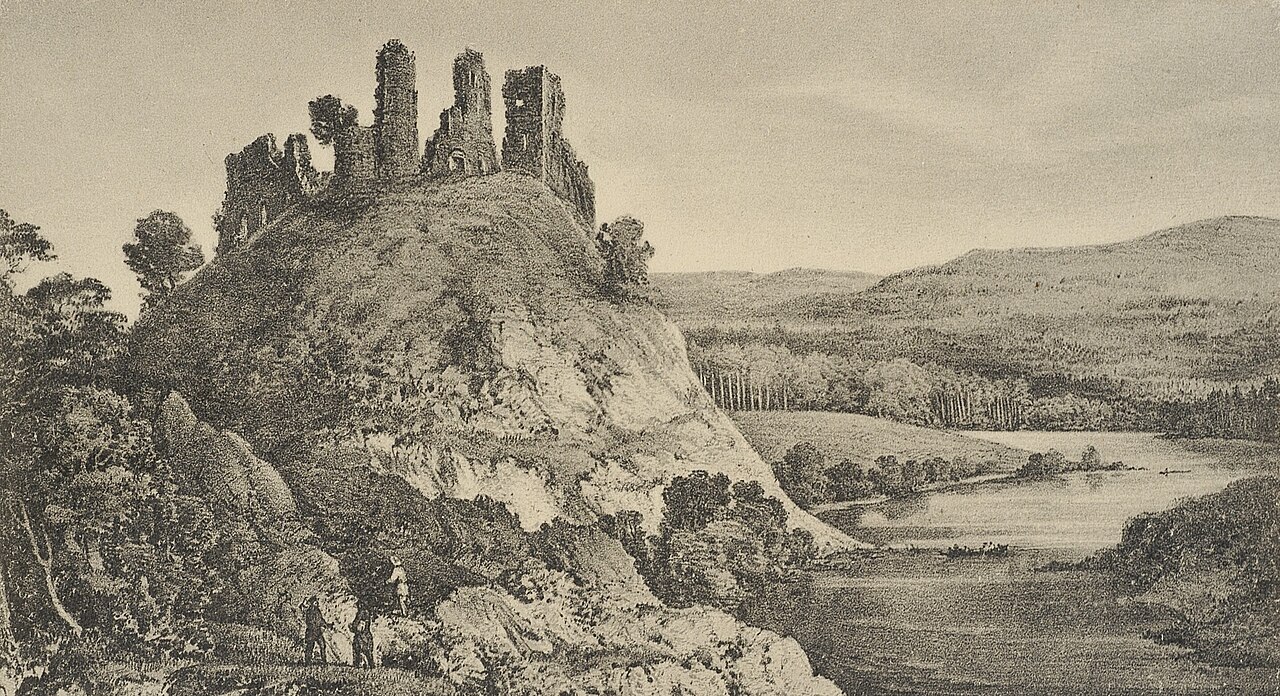
Ovruch Castle
Ovruch Castle stands as a significant historical monument in the city of Ovruch, Ukraine, embodying the rich medieval heritage of the East Slavic civilization. Originally constructed within the territory of the Drevlyan principality, this fortress served as a pivotal military and administrative center from the 10th century onward. Strategically located on a raised hill near the confluence of the Vručaj stream and the Noryn River, the castle's site was naturally fortified by waterways and surrounding swampy terrain, making it a formidable defensive position in its time.
Early history and strategic importance
The earliest historical references to Ovruch Castle date back to the late 10th century, notably connected with the military campaigns of Prince Oleg Sviatoslavich in 977. Some historians suggest that Ovruch replaced the former capital of the Drevlyans, Iskorosten, which was destroyed by Princess Olga in 945. The castle's position on Castle Hill took advantage of natural defenses, including the Noryn River, the Vručaj stream, and adjacent swamplands, supplemented by artificial fortifications such as deep moats and earth ramparts.
The rise of the drevlyan principality seat
During the mid-12th century, under the rule of Prince Ryurik Rostislavich, Ovruch became the hereditary seat of the Drevlyan princes. The city and castle were fortified with extensive wooden defenses, reinforcing their role as a regional stronghold. These fortifications were characterized by a wooden palisade or goroden, constructed primarily from pine wood, with sharpened stakes forming a formidable barrier against invaders.
Destruction and rebuilding through invasions
The fortress suffered significant damage during the Mongol invasion in 1240, when Batu Khan's armies razed it. After this devastation, the castle was rebuilt and continued to function as a fortified center under the Kyiv principality, which was then a vassal state to the Mongol Golden Horde. In the early 14th century, the Putivl branch of the Olgovichi dynasty governed the Ovruch principality as vassals to the rulers of Galicia-Volhynia.
Lithuanian conquest and further conflicts
In the 1320s, the castle was captured and destroyed by Gediminas, the Grand Duke of Lithuania. Shortly thereafter, in 1362, Ovruch was incorporated into the Grand Duchy of Lithuania. The fortress was reconstructed but faced another devastating attack in 1399 during the military campaign led by Edigey, a commander under Tamerlane. These repeated assaults underscored the castle's strategic importance and vulnerability amid regional power struggles.
Renaissance era fortifications and administrative role
By the early 16th century, the castle endured frequent Tatar raids, including a notable attack in 1506. Restoration efforts culminated in 1522, leading to significant improvements in the castle's fortifications. The mid-1500s marked the strongest phase of the castle's defenses under the stewardship of starosta Yosyp Mykhailovych Khaletsky, who oversaw substantial military enhancements. A detailed 1552 description reveals the castle's robust armament, including 27 firearm openings (hooks), seven powder magazines, four handguns, and 24 iron cannonballs, reflecting the early adoption of artillery in its defense.
Administrative prominence after the union of lublin
Following the Union of Lublin in 1569, which united the Kingdom of Poland and the Grand Duchy of Lithuania into the Polish-Lithuanian Commonwealth, Ovruch and its castle gained status as a county town (starostwo), administering several nearby settlements. Despite suffering damage during the 1641 Tatar raid and the 1648 Khmelnytsky Uprising, the castle remained a key administrative center. In recognition of its importance, King Władysław Vasa granted Ovruch Magdeburg rights, providing the town with a degree of self-governance.
Religious transformation and decline
In 1678, the Jesuit Collegium relocated to the castle grounds, constructing large buildings and a Roman Catholic church within the fortress precincts. This marked a shift from purely military functions to religious and educational uses. However, the fortress was destroyed by Haidamak rebels in 1720. Although rebuilt around 1750, the castle never regained its former military significance.
Civil administration and ecclesiastical changes
By the mid-18th century, the castle had fallen into disrepair and was repurposed for civil functions such as courts, storage, and prison cells. The Jesuit church underwent several transitions: after the suppression of the Jesuit order in 1773, it passed to the Basilian monastic order, and later to the Orthodox Church in 1831. Renovated between 1872 and 1877, it became the Transfiguration Cathedral. This cathedral was ultimately demolished by Soviet authorities in the 1930s.
Architectural features and fortifications
The original wooden fortress of Ovruch Castle was a complex of natural and artificial defenses integrated into the terrain of Castle Hill. The fortress occupied an area approximately 140 meters long and 90 meters wide, enclosed by pine wood walls constructed as a goroden—a wooden palisade with sharpened stakes. Earthen ramparts and deep moats surrounded the castle, enhancing its defensive capabilities.
Defensive structures and armaments
The castle featured three main towers, wooden parapets known as sharpatinas, and defensive openings called hooks or gakovnitsy designed for firearms and crossbows. The 1552 records document 27 such openings, seven powder magazines, four handguns, and 24 iron cannonballs, illustrating the castle's preparedness for early artillery warfare.
Internal layout and access
Inside the fortress, 61 wooden enclosures housed the estates of nobles and clergy, alongside a church dedicated to Saints Cosmas and Damian. The castle's main entrance was guarded by a pile-supported bridge, a drawbridge, and a chain mechanism to control access. A secret underground passage, or potaynik, connected the fortress to the Vručaj stream, providing a concealed escape route or supply line.
Later history and present-day site
By the late 16th and early 17th centuries, the castle's defenses had declined, with dilapidated gates, towers, and fences. Despite this, some artillery pieces and firearms remained. The 18th century saw the castle adapted for civil administration and religious purposes, with the Jesuit Collegium and church marking a new chapter in its history.
Today, the original wooden structures of Ovruch Castle have not survived. The site is marked by the modern Spaso-Preobrazhensky Cathedral, constructed in 1993 on Castle Hill, preserving the historical footprint of the once formidable fortress that shaped the medieval history of the region.
Frequently asked questions (FAQ)
- When was Ovruch Castle originally built?
- Ovruch Castle was originally constructed in the 10th century, serving as a military and administrative center for the Drevlyan principality.
- What natural features contributed to the castle's defense?
- The castle was strategically located on a raised hill near the confluence of the Vručaj stream and the Noryn River, with surrounding swamps and waterways providing natural defenses.
- What happened to Ovruch Castle during the Mongol invasion?
- The castle was razed by Batu Khan's armies in 1240 but was subsequently rebuilt and continued to serve as a fortified center under the Kyiv principality.
- How did the castle's role change after the Union of Lublin in 1569?
- After the Union of Lublin, Ovruch Castle became part of the Polish-Lithuanian Commonwealth and gained status as a county town, administering nearby settlements.
- Are there any remains of the original castle today?
- The original wooden structures have not survived. The site is now marked by the modern Spaso-Preobrazhensky Cathedral, built in 1993 on Castle Hill.
Information
Opening hours
9:00-17:00, daily
Ticket prices
Free
Current owner
Municipality
Website
Visit websiteSources & official resources
Verify the information above using these authoritative references.
Loading map...
Visitor reviews
No reviews yet. Been here? Write the first review and help other travelers!
Write the first reviewVisited this castle? Share your experience
Your review helps other travelers and adds first-hand knowledge to our encyclopedia.