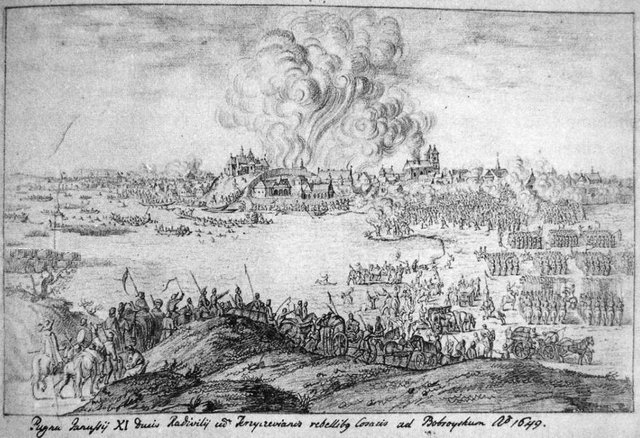
Mazyr Castle stands as a significant example of a late medieval wooden fortress in what is now Belarus. Situated in the town of Mazyr, the castle originally succeeded a 14th-century wooden fortification and evolved into a crucial defensive and administrative center by the 15th century. Its strategic location on a naturally fortified promontory by the Pripyat River provided natural defenses, enhanced by man-made fortifications.
Historical development and military significance
The castle's origins trace back to a wooden structure built by local communities, reflecting the regional building traditions of the time. During the 16th century, Mazyr was enclosed by a palisade known as an ostrog, which reinforced its defensive perimeter. This period was marked by frequent Tatar raids, notably in the 1520s and 1530s, which caused significant damage to the fortress.
Following these attacks, around 1543, Mazyr Castle underwent substantial repairs and fortification. New walls and quadrangular towers were constructed, enhancing its military architecture. By 1576, the castle featured five fortified towers, each rising to seven levels with podsyabitiyas galleries that allowed defenders to patrol and observe safely. The towers were topped with distinctive tent-shaped roofs, a characteristic architectural feature of the region's fortifications.
Despite these improvements, the castle suffered a devastating fire in 1609, leading to its complete destruction. Reconstruction was completed by 1613, restoring its defensive capabilities. However, throughout the 17th century, Mazyr Castle endured repeated damage from ongoing military conflicts, which gradually diminished its role as a stronghold.
Architectural features and layout
The castle was constructed entirely of wood, consistent with local traditions, occupying a high root bank flanked by wide ravines, which naturally fortified the site. Its defensive walls featured battlements and were equipped with two tiers for combat. The walls incorporated galleries strengthened by a technique known as blankovanie, which provided additional protection. Interestingly, two sections of the wall were adapted for residential use, combining defensive and living functions.
Within the courtyard, the Church of the Savior served as a central religious structure for the castle's inhabitants. Several three-chamber wooden houses or izbas were present, some with cellars and connecting rooms, indicating a degree of domestic comfort and complexity unusual for fortifications of this type. The complex also included a treasury, granaries (svyrany), and a brewery cellar, underscoring the castle's administrative and economic roles.
Archaeological excavations revealed a 16th-century residential building containing a tiled stove made from ceramic pot and box tiles decorated with geometric patterns. This feature highlights the attention to interior detail and craftsmanship within the fortress, reflecting a blend of functionality and aesthetic consideration.
Transition and decline in the 18th century
By the 18th century, the military importance of Mazyr Castle had waned, and it transitioned into a wooden palace complex. This new phase included facilities dedicated to economic activities, marking a shift from purely defensive purposes to administrative and ceremonial functions. This evolution mirrors broader changes in regional security and governance during this period.
Archaeological significance and preservation
Today, Mazyr Castle exists primarily as an archaeological site, with excavations providing valuable insights into its original layout and construction techniques. The preservation of its wooden fortifications, towers, and associated structures offers a rare glimpse into the architectural and defensive strategies of late medieval Belarus. Ongoing efforts aim to maintain and present this historical landscape, helping to preserve the cultural heritage of the region.
Importance of wooden architecture
The exclusive use of wood in Mazyr Castle's construction is a distinctive feature, illustrating regional adaptation to available materials and defensive needs. The complex design of towers with multiple levels and galleries demonstrates sophisticated military engineering despite the limitations of wooden construction.
Defensive innovations
The use of podsyabitiyas galleries and the blankovanie technique to reinforce walls were innovative solutions that enhanced the castle's defensive capabilities. These features allowed defenders to monitor and repel attackers effectively while maintaining structural integrity.
Cultural and economic roles
The presence of a church, domestic houses, and economic facilities such as granaries and a brewery within the castle grounds indicates that Mazyr Castle was more than a military installation. It functioned as a center of local governance, religion, and economy, reflecting the multifaceted role of such fortresses in medieval society.
Frequently asked questions (FAQ)
- How do I get to Mazyr Castle?
- Mazyr Castle is located in the town of Mazyr, Belarus, easily accessible by car or public transport from major cities like Minsk. The nearest train station is Mazyr, from where you can take a taxi or walk to the castle.
- What is the historical significance of Mazyr Castle?
- Mazyr Castle dates back to the 15th century and has played a crucial role in the region's defense against invaders. Its history reflects the turbulent past of Belarus, marked by various sieges and reconstructions over the centuries.
- When was Mazyr Castle built?
- Construction of Mazyr Castle began in the late 1400s, and it was completed in the early 1500s. Originally built as a fortified structure, it has undergone several renovations to preserve its architectural heritage.
- Can I visit Mazyr Castle year-round?
- Yes, Mazyr Castle is open to visitors throughout the year, although some areas may be restricted during winter months for safety reasons. It’s advisable to check the local weather conditions before planning your visit.
- Why is the architecture of Mazyr Castle unique?
- Mazyr Castle features a blend of Gothic and Renaissance architectural styles, with thick stone walls and impressive towers. Its design reflects the strategic importance of the castle, showcasing both defensive capabilities and aesthetic beauty.
- Is it possible to take guided tours of Mazyr Castle?
- Yes, guided tours are available, providing visitors with detailed insights into the castle's history and architecture. It is recommended to book your tour in advance, especially during peak tourist seasons.
- What are the opening hours for Mazyr Castle?
- Mazyr Castle typically opens at 10 AM and closes at 6 PM, with extended hours during the summer months. It is advisable to verify the specific opening hours before your visit to ensure you have ample time to explore.
- What nearby attractions should I visit while in Mazyr?
- While visiting Mazyr Castle, you can also explore the nearby St. Nicholas Church and the picturesque banks of the Pripyat River. The town of Mazyr offers a rich cultural experience and additional historical sites that are worth a visit.
- How much are the ticket prices for Mazyr Castle?
- Ticket prices for Mazyr Castle are quite affordable, typically ranging from 5 to 10 Belarusian Rubles for adults, with discounts available for children and students. Check the official website for the most current pricing and any special offers.
Information
Loading map...
Visitor reviews
No reviews yet. Been here? Write the first review and help other travelers!
Write the first reviewVisited this castle? Share your experience
Your review helps other travelers and adds first-hand knowledge to our encyclopedia.