Oude Loo Castle
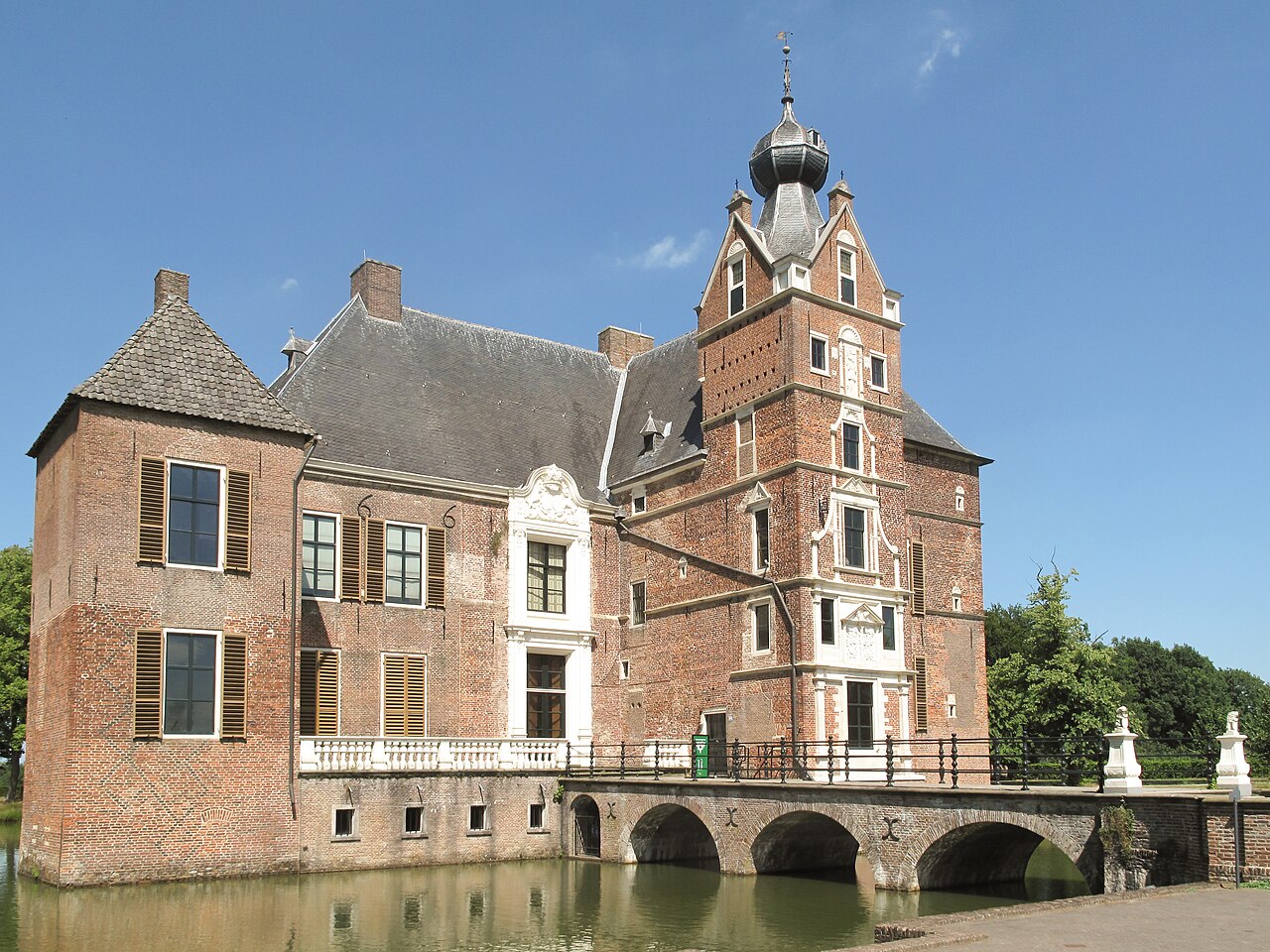
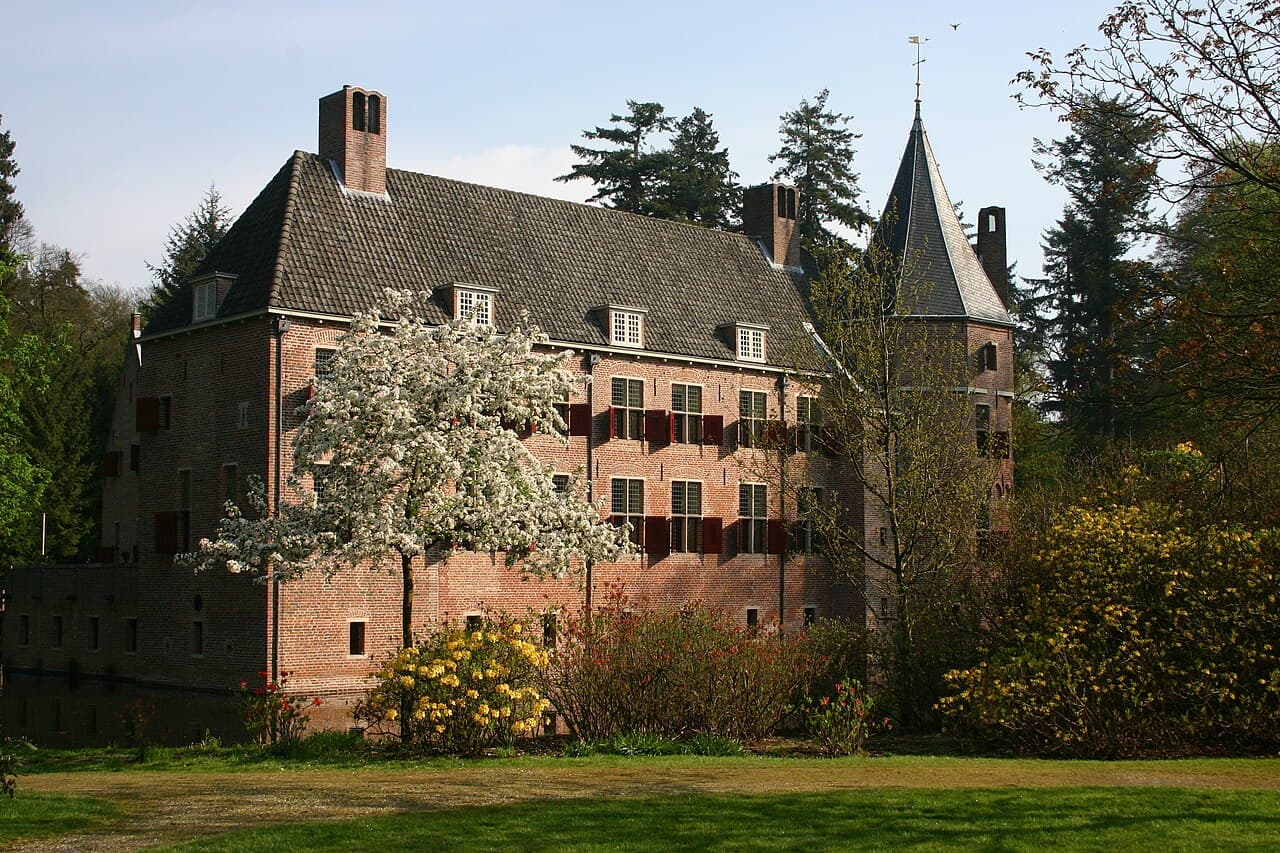
Oude Loo Castle, locally known as Kasteel het Oude Loo, is a striking example of a Renaissance moated castle situated in the royal gardens behind the 17th-century Royal Loo Palace in Apeldoorn, within the province of Gelderland, Netherlands. The castle's name reflects its origins: "Oude" meaning "old" and "Loo" referring to a "forest on sandy soil," highlighting its historic connection to the surrounding landscape.
The castle's origins trace back to the early 15th century, initially established as a farm, likely constructed by an individual named Udo Taholt. Later in the same century, ownership transferred to Gerrit van Rijswijk, who is believed to have fortified the farm, laying the groundwork for its transformation into a defensive structure.
Architectural evolution and Renaissance transformation
In the mid-16th century, the castle underwent significant redevelopment under the ownership of the Bentinck family. Johan Bentinck spearheaded a major rebuilding project between 1538 and 1540, converting the property into the moated castle recognizable today. This reconstruction introduced a distinctive U-shaped layout, featuring residential wings appended to the older front facade, which was characterized by prominent round corner towers. This design reflected Renaissance architectural sensibilities, blending both defensive features and residential comfort.
During this period, the castle served as a hunting lodge for notable figures such as Karel, Duke of Guelders, emphasizing its dual role as both a fortified residence and a leisure retreat.
Royal acquisition and historical significance
In 1684, Prince William III, Stadtholder of Holland and Zeeland, acquired Oude Loo Castle. He continued to use it primarily as a hunting lodge. However, the castle soon proved insufficient for the scale of his hunting parties, prompting the construction of the nearby Loo Palace between 1686 and 1688.
The castle's role evolved over the centuries, notably during the French occupation of Holland in 1795, when it was repurposed as a military hospital. This period marked the beginning of its decline and neglect.
In the early 19th century, during the reign of King Louis Napoleon, appointed by his brother Napoleon Bonaparte, the castle served as a summer residence. Notably, Louis Napoleon ordered the moat around the castle to be filled in due to a childhood prophecy that he would die by drowning, reflecting a personal and symbolic modification to the castle's landscape.
Restoration and modern use
The castle underwent a significant restoration in 1904 under the direction of Queen Wilhelmina of Orange. The restoration was carried out by the renowned Dutch architect Pierre Cuypers, famous for his work on the Rijksmuseum in Amsterdam and De Haar Castle. Cuypers restored both the castle and its moat, reviving its historical character and architectural integrity.
Further restoration efforts took place during the 1950s and 1960s, ensuring the preservation of this important cultural heritage site. Today, Oude Loo Castle remains the private property of the Dutch Royal Family, who use it regularly as a country house and guest residence. While the castle itself is not open to the public, the surrounding grounds are accessible during the spring months of April and May.
Landscape and park design
The castle is set within a carefully designed park that began construction in the 17th century. The landscape architecture incorporates paths, ponds, and a mix of open spaces and groves to create a naturalistic and varied environment. The western and northern sections of the park, originally heathland in the 19th century, were planted with Scots pine, resulting in diverse forested areas interspersed with patches of heath.
One notable feature within the park is Wilhelmina's Valley, an ancient meltwater valley formed during the most recent ice age, adding geological significance to the site. Many cultural heritage elements within the park have been restored, including a recent redesign by landscape architect Michael van Gessel, who enhanced the park's naturalistic qualities while respecting its historic character.
Architectural features and heritage status
Oude Loo Castle exemplifies a Renaissance moated castle with its characteristic U-shaped plan, round corner towers, and fortified elements adapted for residential use. The castle's moat, originally a defensive feature, reflects the changing attitudes towards castle architecture in the Renaissance, balancing fortification with aesthetic appeal.
Since 1973, Oude Loo Castle has been recognized as a national heritage site in the Netherlands, underscoring its cultural and historical importance. Its preservation and continued use by the royal family highlight the castle's enduring legacy as both a historic monument and a living residence.
Frequently asked questions (FAQ)
- What is the historical significance of Oude Loo Castle?
- Oude Loo Castle, located in Apeldoorn, dates back to the 17th century and is a remarkable example of Dutch Renaissance architecture. It has served as a royal residence and hunting lodge, highlighting its importance in Dutch history and royal culture.
- When was Oude Loo Castle built?
- The construction of Oude Loo Castle began in 1660 and was completed in 1665. It was commissioned by the Dutch nobility and has since been a significant landmark in the region.
- Can I visit Oude Loo Castle?
- Yes, Oude Loo Castle is open to the public for visits, but it is advisable to check the specific visiting hours and any restrictions beforehand. Guided tours are available to enhance your experience and provide deeper insights into the castle's history.
- What are the opening hours for Oude Loo Castle?
- Oude Loo Castle typically opens its doors to visitors from Tuesday to Sunday, with varying hours depending on the season. It is recommended to visit the official website for the most current opening times and any special events.
- Is it possible to access Oude Loo Castle with limited mobility?
- Oude Loo Castle strives to be accessible to all visitors, but certain areas may present challenges for those with limited mobility. It is best to contact the castle in advance to inquire about accessibility options and support available during your visit.
- What is the best time to visit Oude Loo Castle?
- The best time to visit Oude Loo Castle is during the spring and summer months when the gardens are in full bloom and outdoor activities are plentiful. Additionally, visiting during the week can help you avoid larger crowds and enjoy a more peaceful experience.
- What are the ticket prices for Oude Loo Castle?
- Ticket prices for Oude Loo Castle vary depending on age and group size, with discounts often available for children and seniors. It is advisable to check the official website for the most accurate and up-to-date pricing information before your visit.
- Are there any nearby attractions to Oude Loo Castle?
- Yes, there are several attractions near Oude Loo Castle, including the beautiful Hoge Veluwe National Park and the Apenheul Primate Park. These nearby sites offer a variety of activities for nature lovers and families, making it easy to plan a full day of exploration.
Photo gallery

Information
Sources & official resources
Verify the information above using these authoritative references.
Loading map...
Visitor reviews
No reviews yet. Been here? Write the first review and help other travelers!
Write the first reviewVisited this castle? Share your experience
Your review helps other travelers and adds first-hand knowledge to our encyclopedia.