Cannenburgh Castle — Netherlands castle

Cannenburgh Castle

Cannenburgh Castle in Vaassen, Netherlands
Vaassen, Gelderland, Netherlands
Renaissance (15th–17th c.)
Well Preserved

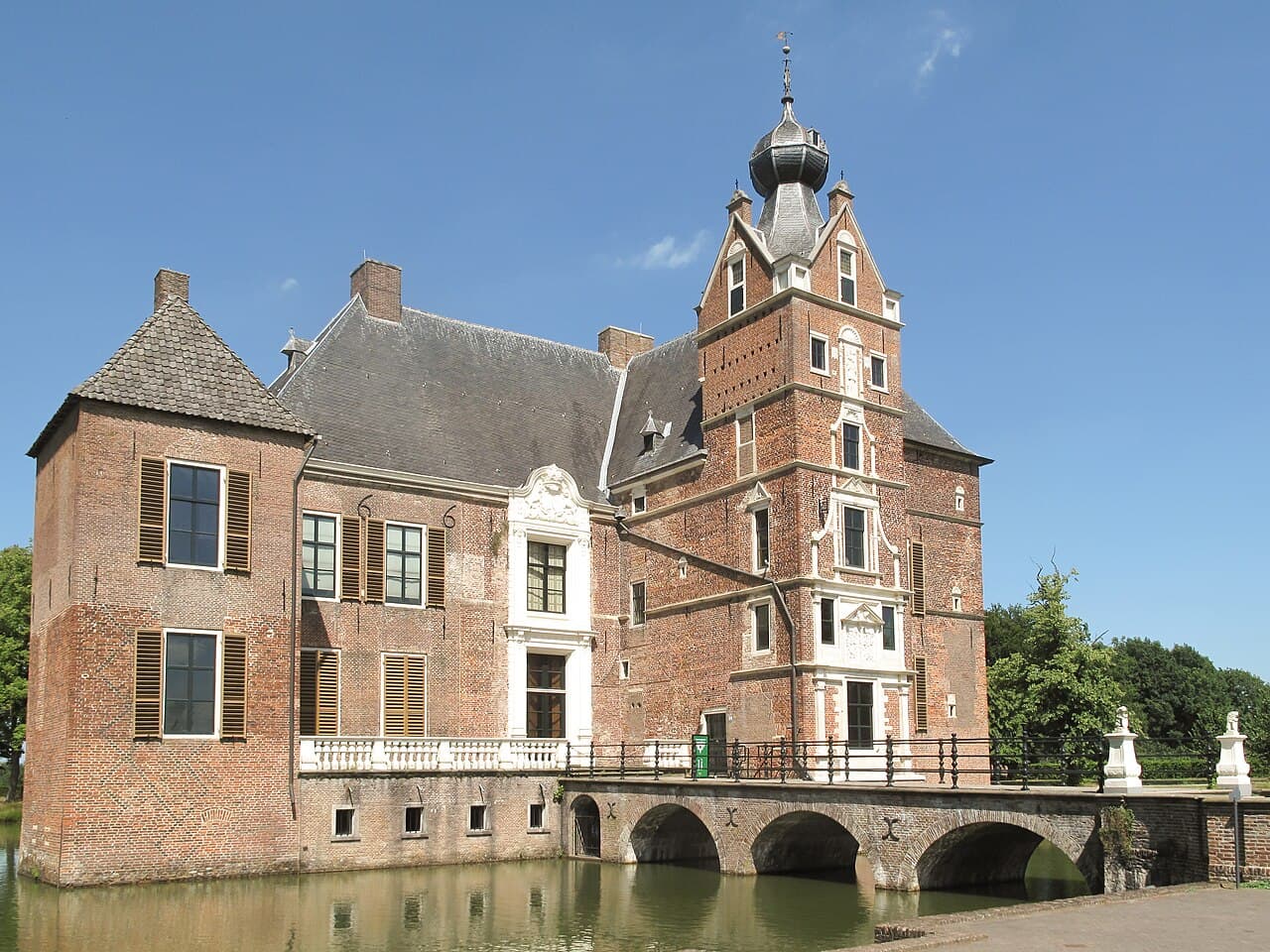
Cannenburgh Castle stands as a remarkable example of a Renaissance watercastle located in Vaassen, Gelderland, Netherlands. Constructed in the 16th century by the notable field marshal Maarten van Rossum, the castle was built upon the ruins of an earlier medieval fortress. This strategic choice of location allowed the castle to benefit from natural defensive advantages, enhanced by its complete surrounding moat, a defining feature of watercastles.

Architectural design and features

The castle's layout has been remarkably preserved in its original form, showcasing key elements of Renaissance architecture. The structure is characterized by its symmetrical design and the harmonious integration of defensive and residential elements. The castle features robust brick walls complemented by stone detailing around windows and doors, typical of Renaissance style in the Netherlands.

Water defenses and moat system

The entire complex is encircled by a broad, deep moat, which served both as a defensive barrier and a status symbol. This water feature not only protected the castle from potential sieges but also enhanced its aesthetic appeal. The moat is fed by nearby water sources, maintaining a steady level to ensure effective defense.

Towers and gatehouse

The castle includes strategically placed towers at its corners, which were used for surveillance and defense. The main gatehouse is fortified and designed to control access, featuring a drawbridge over the moat. These features reflect the military expertise of its builder, Maarten van Rossum, who was known for his strategic acumen.

Historical context and significance

Maarten van Rossum, a prominent military leader during the turbulent times of the 16th century, commissioned the castle to serve both as a stronghold and a noble residence. The castle's construction during the Renaissance period reflects the shift in architectural trends from purely defensive medieval fortresses to more comfortable and stylistically refined noble estates.

Throughout its history, Cannenburgh Castle has witnessed various ownership changes and has been involved in regional conflicts, although it remained largely intact due to its strong defenses and strategic location.

Restoration and modern use

Between 1975 and 1981, the castle underwent a comprehensive restoration aimed at preserving its historical integrity and architectural features. During this period, efforts were made to restore antique furnishings and interiors, providing visitors with an authentic experience of Renaissance noble life.

Today, Cannenburgh Castle is open to the public, offering guided tours that explore its rich history, architecture, and the life of its former inhabitants. The castle also hosts cultural events and exhibitions, contributing to the preservation of Dutch heritage.

Visitor experience

Visitors can explore the castle's well-preserved halls, chambers, and courtyards, gaining insight into Renaissance architecture and the lifestyle of the Dutch nobility in the 16th century. The surrounding park and gardens add to the scenic beauty of the site, making it a popular destination for history enthusiasts and tourists alike.

Frequently asked questions (FAQ)

How do I get to Cannenburgh Castle?
Cannenburgh Castle is located in Vaassen, Netherlands, and is easily accessible by car or public transport. If you are traveling by train, the nearest station is Apeldoorn, from where you can take a bus or taxi to the castle.
What is the historical significance of Cannenburgh Castle?
Cannenburgh Castle dates back to the 16th century and is a prime example of Renaissance architecture in the Netherlands. It was originally built as a residence for the noble family of Van Rechteren and has played a significant role in regional history.
When was Cannenburgh Castle built?
Construction of Cannenburgh Castle began in 1543 and was completed in the late 16th century. The castle has undergone several renovations over the years, preserving its historical charm while adapting to modern needs.
Can I take guided tours of Cannenburgh Castle?
Yes, guided tours are available at Cannenburgh Castle, allowing visitors to explore its rich history and architecture. It is advisable to check the schedule in advance and book your tour to ensure availability.
Why is Cannenburgh Castle an architectural landmark?
Cannenburgh Castle is considered an architectural landmark due to its unique blend of Renaissance style and the picturesque landscape surrounding it. The castle features characteristic elements such as ornate gables, intricate stonework, and beautiful gardens that enhance its historical appeal.
Is it possible to host events at Cannenburgh Castle?
Yes, Cannenburgh Castle offers a beautiful setting for a variety of events, including weddings, corporate gatherings, and private celebrations. Interested parties should contact the castle administration for more information on availability and booking options.
What are the opening hours for Cannenburgh Castle?
Cannenburgh Castle is typically open to visitors from April to October, with specific hours varying throughout the week. It is recommended to check the official website or contact the castle directly for the most current opening hours before your visit.
What are the ticket prices for visiting Cannenburgh Castle?
Ticket prices for Cannenburgh Castle may vary depending on the season and age of the visitor. Generally, discounts are available for children, students, and seniors, so be sure to check the official website for the latest pricing details.
When is the best time to visit Cannenburgh Castle?
The best time to visit Cannenburgh Castle is during the spring and summer months when the gardens are in full bloom and the weather is pleasant. Additionally, special events and exhibitions are often hosted during this time, enhancing your experience.
Are there any nearby attractions to Cannenburgh Castle?
Yes, Cannenburgh Castle is located near several attractions, including the beautiful Veluwe National Park and the historical town of Apeldoorn. Visitors can easily explore the surrounding area for more cultural and natural experiences.

Photo gallery

Cannenburgh Castle
Click to view

Photo by Michielverbeek•CC BY-SA 3.0 nl

1 photo • Click any image to view in full screen

Information

Water Castle

Sources & official resources

Verify the information above using these authoritative references.

Loading map...

Visitor reviews

No reviews yet. Been here? Write the first review and help other travelers!

Write the first review

Visited this castle? Share your experience

Your review helps other travelers and adds first-hand knowledge to our encyclopedia.

Write a review

(5/5)

0/2000 characters

Your review will be visible after admin approval

Nearby castles

1 km

Cannenburch Castle

Vaassen, Poland

Cannenburch Castle is a striking example of a Renaissance castle located in the town of Vaassen, in the province of Gelderland, Netherlands. Constructed in 1544, it was commissioned by Marten van Rossem, a notable Dutch general, reflecting the military and residential architectural trends of the period. The history and origins of Cannenburch Castle The castle's origins trace back to the mid-16th century, a time when the Netherlands was undergoing significant political and military changes. Marten van Rossem, leveraging his status and resources, established Cannenburch as a fortified residence that combined both defensive and domestic functions. The castle was strategically positioned to oversee the surrounding lands, serving as a symbol of power and control. Throughout its history, Cannenburch Castle has witnessed various ownership changes and adaptations, reflecting the evolving needs of its occupants. Its role transitioned from a primarily military fortress to a noble residence, mirroring broader shifts in castle usage during the Renaissance. Architectural features and style Cannenburch Castle is a prime example of Renaissance architecture in the Netherlands, characterized by its symmetry, proportion, and incorporation of classical elements. The castle's layout includes a central courtyard surrounded by robust walls and defensive towers, typical of the era's fortified manors. The castle features corner towers that provided vantage points for surveillance and defense. The walls are constructed with sturdy masonry, and the design integrates both aesthetic appeal and functional fortification. Inside, the castle contains spacious halls and chambers designed for noble living, reflecting the Renaissance emphasis on comfort and style alongside defense. Defensive structures The castle's fortifications include a moat that encircles the structure, enhancing its defensive capabilities by creating a physical barrier against potential attackers. The entrance is secured by a gatehouse, which historically would have been guarded and possibly equipped with a drawbridge. The cultural and historical significance of Cannenburch Castle Cannenburch Castle holds cultural importance as a well-preserved example of Renaissance military architecture in the Netherlands. It provides valuable insights into the lifestyle and defensive strategies of Dutch nobility during the 16th century. Today, the castle is recognized for its heritage value and is often visited by those interested in medieval and Renaissance history, architecture, and Dutch cultural heritage. Its preservation allows visitors to experience the atmosphere of a Renaissance noble residence fortified for protection. Current status and visitor information The castle is well preserved and serves as a museum open to the public. Visitors can explore the castle's interior, including its halls, chambers, and defensive structures, gaining an understanding of its historical context and architectural significance. Located in the scenic surroundings of Gelderland, the castle offers a glimpse into the region's rich history and architectural heritage. It is accessible by road and is a popular destination for tourists interested in Dutch castles and Renaissance architecture.

Renaissance (15th–17th c.)
Details
6.4 km
Oude Loo Castle — Netherlands castle

Oude Loo Castle

Apeldoorn, Netherlands

Oude Loo Castle, locally known as Kasteel het Oude Loo, is a striking example of a Renaissance moated castle situated in the royal gardens behind the 17th-century Royal Loo Palace in Apeldoorn, within the province of Gelderland, Netherlands. The castle's name reflects its origins: "Oude" meaning "old" and "Loo" referring to a "forest on sandy soil," highlighting its historic connection to the surrounding landscape. The castle's origins trace back to the early 15th century, initially established as a farm, likely constructed by an individual named Udo Taholt. Later in the same century, ownership transferred to Gerrit van Rijswijk, who is believed to have fortified the farm, laying the groundwork for its transformation into a defensive structure. Architectural evolution and Renaissance transformation In the mid-16th century, the castle underwent significant redevelopment under the ownership of the Bentinck family. Johan Bentinck spearheaded a major rebuilding project between 1538 and 1540, converting the property into the moated castle recognizable today. This reconstruction introduced a distinctive U-shaped layout, featuring residential wings appended to the older front facade, which was characterized by prominent round corner towers. This design reflected Renaissance architectural sensibilities, blending both defensive features and residential comfort. During this period, the castle served as a hunting lodge for notable figures such as Karel, Duke of Guelders, emphasizing its dual role as both a fortified residence and a leisure retreat. Royal acquisition and historical significance In 1684, Prince William III, Stadtholder of Holland and Zeeland, acquired Oude Loo Castle. He continued to use it primarily as a hunting lodge. However, the castle soon proved insufficient for the scale of his hunting parties, prompting the construction of the nearby Loo Palace between 1686 and 1688. The castle's role evolved over the centuries, notably during the French occupation of Holland in 1795, when it was repurposed as a military hospital. This period marked the beginning of its decline and neglect. In the early 19th century, during the reign of King Louis Napoleon, appointed by his brother Napoleon Bonaparte, the castle served as a summer residence. Notably, Louis Napoleon ordered the moat around the castle to be filled in due to a childhood prophecy that he would die by drowning, reflecting a personal and symbolic modification to the castle's landscape. Restoration and modern use The castle underwent a significant restoration in 1904 under the direction of Queen Wilhelmina of Orange. The restoration was carried out by the renowned Dutch architect Pierre Cuypers, famous for his work on the Rijksmuseum in Amsterdam and De Haar Castle. Cuypers restored both the castle and its moat, reviving its historical character and architectural integrity. Further restoration efforts took place during the 1950s and 1960s, ensuring the preservation of this important cultural heritage site. Today, Oude Loo Castle remains the private property of the Dutch Royal Family, who use it regularly as a country house and guest residence. While the castle itself is not open to the public, the surrounding grounds are accessible during the spring months of April and May. Landscape and park design The castle is set within a carefully designed park that began construction in the 17th century. The landscape architecture incorporates paths, ponds, and a mix of open spaces and groves to create a naturalistic and varied environment. The western and northern sections of the park, originally heathland in the 19th century, were planted with Scots pine, resulting in diverse forested areas interspersed with patches of heath. One notable feature within the park is Wilhelmina's Valley, an ancient meltwater valley formed during the most recent ice age, adding geological significance to the site. Many cultural heritage elements within the park have been restored, including a recent redesign by landscape architect Michael van Gessel, who enhanced the park's naturalistic qualities while respecting its historic character. Architectural features and heritage status Oude Loo Castle exemplifies a Renaissance moated castle with its characteristic U-shaped plan, round corner towers, and fortified elements adapted for residential use. The castle's moat, originally a defensive feature, reflects the changing attitudes towards castle architecture in the Renaissance, balancing fortification with aesthetic appeal. Since 1973, Oude Loo Castle has been recognized as a national heritage site in the Netherlands, underscoring its cultural and historical importance. Its preservation and continued use by the royal family highlight the castle's enduring legacy as both a historic monument and a living residence.

Renaissance (15th–17th c.)
Details
17.5 km

Nijenbeek Castle

Voorst, Netherlands

Nijenbeek Castle, also known locally as Kasteel Nijenbeek, is a historic fortress located near the village of Voorst in the province of Gelderland, Netherlands. This castle occupies a strategic position northeast of Voorst, situated on the banks of the IJssel river, a location that historically offered significant military and economic advantages. The castle's origins date back to the mid-13th century, with the earliest known mention in 1266, highlighting its longstanding importance in regional defense and governance. Early history and strategic significance The castle was initially documented as a fortified house owned by Dirk, Lord of Nijenbeek. Its position at a bend in the IJssel river was of considerable strategic importance, especially during the turbulent period under Count Otto I of Guelders (1184-1207). During this era, the region experienced frequent conflicts with the Bishop of Utrecht, making Nijenbeek Castle a critical defensive outpost near the border of the Oversticht. The castle's location allowed control over river traffic and provided a stronghold against incursions. Construction and architectural development The original core of Nijenbeek Castle was its keep, believed to have been constructed after 1255, once the region stabilized following earlier conflicts. This keep formed the central fortified structure around which the castle complex developed. Surrounding the keep were various outbuildings, including stables, sheds, and a flour mill, supporting the castle's self-sufficiency and daily operations. By the late 13th century, the castle did not yet feature a distinct bailey, but over the following century, a bailey gradually emerged. The first explicit mention of a full bailey appears in a 1383 deed, indicating the expansion of the castle's defensive perimeter. This development reflects the castle's evolving military and residential functions, transitioning from a simple fortified house to a more complex castle structure. Renaissance transformation and decline Entering the 16th century, Nijenbeek Castle's military importance diminished. In 1506, Charles of Egmond, Duke of Guelders, sold the castle, marking a shift in ownership and function. By 1523, parts of the bailey were deliberately demolished, signaling a reduction in the castle's defensive capabilities. Shortly after 1533, the castle underwent modifications to serve as a permanent residence rather than a fortress. Damage during the eighty years' war The castle's strategic position once again brought it into conflict during the Eighty Years' War (1568–1648). In 1585, it endured a Spanish siege, followed by a siege by the State troops in 1586, resulting in considerable damage. These events underscore the castle's continued military relevance despite its earlier decline in defensive stature. Later history and preservation challenges In 1672, the castle played a role in military maneuvers when John Maurice, Prince of Nassau-Siegen, stationed an army of 22,000 men along the IJssel river, using Nijenbeek Castle as a base. Although a battle did not ensue, the castle's survival during the subsequent French occupation of the Veluwe region is notable. Unlike many other regional castles, Nijenbeek was spared destruction, likely due to the protection granted to its owner, Johan Thomas van Steenbergen, by the Duke of Luxembourg, a French commander. Renovations and wartime damage The castle underwent several renovations throughout the 18th, 19th, and 20th centuries, reflecting changing tastes and the desire to maintain the structure. However, in 1945, during the final stages of World War II, the castle was heavily shelled by Canadian troops because it was used by German forces as a lookout post. This bombardment led to significant damage and initiated a period of decline and decay. Architectural legacy and current state Originally constructed in the early 1300s, Nijenbeek Castle evolved from a fortified keep into a more extensive square castle during the 14th century. Today, only the keep remains largely intact, serving as a testament to the castle's medieval origins and its architectural transformations over centuries. The castle exemplifies Renaissance architectural influences, particularly visible in its later residential adaptations. Despite the damage and partial loss of its structures, Nijenbeek Castle remains an important cultural and historical landmark in Gelderland, reflecting the region's feudal past and military history. Historical significance Nijenbeek Castle's enduring presence highlights its role in regional power struggles, military campaigns, and noble residence. It stands as a symbol of the complex history of the Gelderland province and the broader Netherlands, offering insights into medieval fortification techniques, Renaissance residential architecture, and the impact of warfare on heritage sites. Visitor information and cultural importance While the castle is not fully preserved, its ruins and remaining structures attract historians, architects, and visitors interested in medieval and Renaissance castles. The site offers a tangible connection to the past and serves as a focal point for local heritage conservation efforts.

Renaissance (15th–17th c.)
Details