Otočec Castle — Slovenia castle

Otočec Castle

Otočec Castle: Slovenia's unique water castle on the Krka River
Lower Carniola, Slovenia
High Medieval (11th–13th c.)

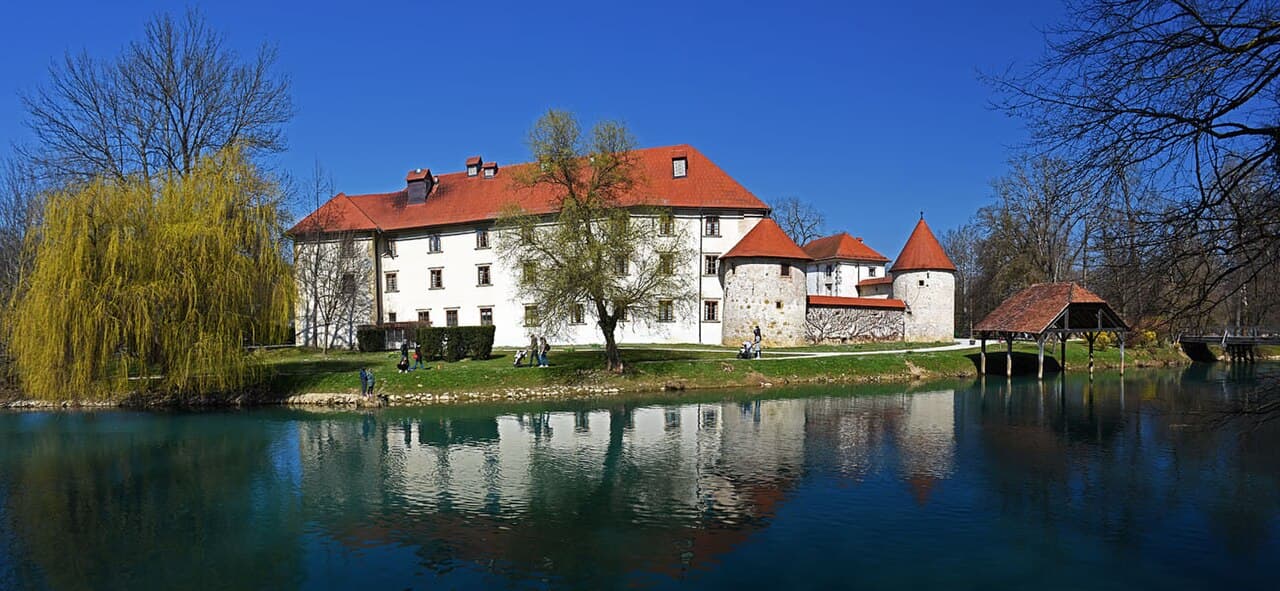
Otočec Castle stands as a unique architectural and historical gem in Slovenia, renowned as the country's only water castle. Situated on a small island in the middle of the Krka River, this castle creates one of the most picturesque and culturally significant images in the region of Lower Carniola. Its location surrounded entirely by water not only provided natural defense but also contributes to its exceptional charm and appeal as a tourist destination and heritage site.

The castle's origins trace back to the 13th century, with the first documented mention occurring in 1252. Although the exact founder remains unknown, the castle's strategic position and early ownership by the noble Otočani family suggest its importance in medieval regional defense and administration. Over the centuries, Otočec Castle passed through the hands of several prominent noble families, including the Vilander, the Lenkoviči, and later the Dovolec and Solncu families, reflecting the shifting political and social landscape of the region.

Historical evolution and ownership

The castle's medieval history is marked by its transformation from a defensive stronghold into a noble residence with refined architectural features. The Lenkoviči family, particularly Jurij Lenkovič, who was the provincial chief of Kranjska in the 16th century, played a significant role in the castle's development. Under their stewardship, the castle was enhanced with Renaissance elements, including a notable Renaissance portal adorned with a marble medallion featuring a girl's profile, which remains one of the most important surviving architectural details.

Later owners continued to shape the castle's appearance and function. The castle also witnessed turbulent times during the Second World War, when it was seized by Italian forces and used as a fortress. In 1942, partisans set fire to the castle, leaving it in ruins along with its two characteristic bridges. This destruction marked a significant turning point in the castle's history.

Architectural features and restoration

The original medieval structure of Otočec Castle has undergone numerous alterations, yet several key architectural fragments have been preserved. The castle's design reflects a blend of Gothic and Renaissance styles, evident in its fortified walls, towers, and decorative portals. The castle's island setting is protected by water moats, which were enhanced by a later owner who excavated part of the land to ensure the castle was surrounded by water on all sides, increasing its defensive capabilities.

After the war, restoration efforts began in 1952 and lasted six years, supported by international working brigades. The initial focus was on restoring the roof and stabilizing the ruins. By 1959, the castle reopened as a restaurant, marking the beginning of its transformation into a hospitality venue. Subsequent renovations have respected the castle's historical character, restoring it to its former Gothic and Renaissance splendour while adapting it for modern use.

Current use as a hotel and cultural landmark

Today, Otočec Castle operates as a luxury hotel, offering visitors a unique experience of staying within a historic fortress surrounded by natural beauty. The castle's interiors blend historical authenticity with contemporary comfort, making it one of Slovenia's most attractive and prestigious hotels. Its status as the only water castle in Slovenia and its rich history attract tourists, historians, and architecture enthusiasts alike.

Significance in Slovenian cultural heritage

Otočec Castle holds a special place in Slovenia's cultural and natural heritage. It is a rare example of a water castle in the region, combining defensive medieval architecture with Renaissance artistic elements. The castle and its surrounding park form a harmonious landscape that showcases the interplay between human craftsmanship and natural environment.

The castle's restoration after wartime destruction symbolizes resilience and dedication to preserving national heritage. It serves not only as a tourist attraction but also as a venue for cultural events, conferences, and celebrations, contributing to the local economy and cultural life.

Architectural details worth noting

  • Renaissance portal with marble medallions depicting maiden profiles, dating to the 16th century.
  • Fortified walls and towers that reflect the castle's medieval defensive function.
  • Water moats that surround the island, enhanced to provide full water protection.
  • Two historic bridges that connect the castle island to the riverbanks, integral to its unique water castle status.

Visiting Otočec Castle

Visitors to Otočec Castle can enjoy the scenic beauty of the Krka River and the surrounding parkland. The castle offers accommodations, fine dining, and opportunities to explore its historical architecture. Its accessibility and picturesque setting make it a popular destination for both domestic and international tourists.

The castle's rich history, combined with its architectural elegance and natural surroundings, make it an essential stop for anyone interested in medieval fortifications, Renaissance art, or Slovenian cultural heritage.

Frequently asked questions (FAQ)

How do I get to Otočec Castle?
Otočec Castle is located in Lower Carniola, Slovenia, and is easily accessible by car or public transport. If you're driving, the castle is situated just off the main road connecting Novo Mesto and Trebnje. Public buses also run regularly from nearby towns, making it convenient for visitors.
What is the historical significance of Otočec Castle?
Otočec Castle dates back to the 13th century and is one of the few water castles in Slovenia. It has a rich history, serving as a noble residence and a strategic fortification throughout various conflicts. Today, it stands as a symbol of Slovenian heritage and is a popular tourist attraction.
When was Otočec Castle built?
The construction of Otočec Castle began in the late 12th century and was completed in the 13th century. Over the centuries, it has undergone several renovations and expansions, reflecting different architectural styles. Its enduring structure showcases the evolution of medieval castle design.
Can I visit Otočec Castle year-round?
Yes, Otočec Castle is open to visitors throughout the year, although opening hours may vary by season. It's advisable to check the official website or contact the castle directly for the most current visiting hours. Visiting during the spring and summer months allows you to enjoy the beautiful gardens surrounding the castle.
Why is Otočec Castle a popular tourist destination?
Otočec Castle is renowned for its picturesque setting on an island in the Krka River, making it a stunning backdrop for photographs. Its historical significance, beautiful architecture, and well-maintained gardens attract visitors from all over the world. Additionally, the castle hosts various cultural events and exhibitions, enhancing its appeal.
Is it possible to host events at Otočec Castle?
Yes, Otočec Castle offers facilities for hosting various events such as weddings, conferences, and private gatherings. The enchanting setting and historical ambiance make it a unique venue for special occasions. Interested parties should reach out to the castle management for more information on packages and availability.
What are the ticket prices for visiting Otočec Castle?
Ticket prices for Otočec Castle vary depending on age and the type of tour chosen. Generally, rates are affordable, with discounts available for students and seniors. Group rates may also apply, so it’s beneficial to check the official website for the latest pricing information.
What are the nearby attractions to Otočec Castle?
In addition to Otočec Castle, visitors can explore nearby attractions such as the charming town of Novo Mesto, the Krka National Park, and the picturesque village of Šmarješke Toplice. These locations offer a blend of nature, history, and local culture, making them perfect companions to your castle visit.

Photo gallery

Otočec Castle
Click to view

Photo by Vid Pogacnik•CC BY-SA 4.0

1 photo • Click any image to view in full screen

Information

Sources & official resources

Verify the information above using these authoritative references.

Loading map...

Visitor reviews

No reviews yet. Been here? Write the first review and help other travelers!

Write the first review

Visited this castle? Share your experience

Your review helps other travelers and adds first-hand knowledge to our encyclopedia.

Write a review

(5/5)

0/2000 characters

Your review will be visible after admin approval

Nearby castles

5.4 km

Gracar Turn Castle

Hrastje, Slovenia

Gracar Turn Castle, also known as Grätzer's Tower, is a notable example of a late medieval fortress located in Hrastje, Slovenia. Although it is not documented in medieval sources directly, the renowned historian Valvasor mentions that a manor stood on this site during the 14th century. The castle takes its name from the Grätzer family, who originated from nearby Gradac and are credited with its initial construction. Historical background and ownership The castle's early history is somewhat obscure due to the lack of direct medieval records. However, it is known that the Grätzer family established the manor in the 14th century, which laid the foundation for the present castle complex. Over the centuries, the property changed hands multiple times, reflecting the turbulent history of the region. In 1821, the castle was purchased by Anton Rudež, a significant figure who contributed to the castle's cultural heritage. Janez Trdina, a prominent Slovene writer and ethnographer, was frequently a guest at Gracar Turn during Rudež's ownership. Trdina composed several of his works at the castle, including his most famous collection, Fables and Tales of the Gorjancers, which captures the folklore and traditions of the Gorjanci hills region. Architectural features and layout The core structure of Gracar Turn Castle is a multi-story residential palacium, which served as the main living quarters. This central building is surrounded by a rectangular fortified complex, a common design in late medieval castles aimed at defense and residence. The complex is anchored by two imposing square towers that provide vantage points for surveillance and protection. The castle's architecture reflects the late medieval style with functional defensive elements such as thick walls and limited access points, designed to withstand sieges and attacks. The rectangular layout allowed for efficient use of space within the defensive perimeter, combining residential comfort with military utility. Damage and restoration During World War II, part of Gracar Turn Castle was severely damaged when it was set on fire by partisan fighters. This event marked a significant moment in the castle's history, reflecting the broader conflict and resistance movements in Slovenia during the war. Following the war, efforts were made to renovate and restore the castle, preserving its historical and architectural integrity. Today, the castle stands as a restored late medieval monument, showcasing its original form while accommodating necessary repairs. The restoration work has focused on maintaining the castle's characteristic features, including the square towers and the multi-story palacium, ensuring that visitors can appreciate its historical significance and architectural design. Gracar Turn's cultural significance Beyond its architectural and historical importance, Gracar Turn Castle holds a special place in Slovenian cultural history due to its association with Janez Trdina. The castle served as a creative retreat where Trdina developed his literary works that document the folklore of the region. This connection adds a layer of cultural heritage to the site, attracting visitors interested in both history and literature. The castle's location in Hrastje situates it within a region known for its natural beauty and historical landmarks, making it a point of interest for tourists exploring Slovenian medieval architecture and cultural history.

Late Medieval (14th–15th c.)
Details
6.9 km

Hmeljnik Castle

Novo mesto, Slovenia

Hmeljnik Castle stands prominently on a stone slope above the village of Karteljevo, near Novo mesto in Slovenia. This high medieval castle first appeared in written records in 1217, marking it as a significant medieval stronghold dominating the surrounding valley and the important road connecting Ljubljana to Bregana. Its strategic position allowed it to oversee and control local traffic and trade routes, reflecting its historical importance in regional defense and administration. Origins and early ownership The original builders and first owners of Hmeljnik Castle remain uncertain, but it is generally believed that the Lords of Višnja gora were among its earliest masters. There is also a possibility that the Lords of Hopfenbach or the Hmeljnik family themselves held the castle during its early years. The Hmeljnik family line ended in the 14th century, after which the castle changed hands several times. Architectural evolution through the centuries Original medieval structure The castle originally was constructed in the late 12th century as a vaulted fortress featuring two Roman palazzos and a prominent staircase tower. This design was typical for the period, focusing on defense and residential needs of the noble occupants. The vaulted construction provided strength and durability, while the palazzos served as living quarters and administrative centers. Gothic additions During the Gothic period, significant expansions were made to the castle. The southwest tower and the east wing were added, enhancing both the defensive capabilities and the residential space. Additionally, the castle chapel dedicated to Saint Pancras was constructed, reflecting the religious devotion of the inhabitants and serving as a private place of worship within the castle walls. Defensive enhancements during the Renaissance In response to the threat of Turkish attacks in the region, a double fortress wall equipped with circular towers was built to bolster the castle's defenses. These fortifications were typical of the Renaissance military architecture designed to withstand artillery and prolonged sieges. A Renaissance archway was also added, providing an elegant entrance flanking the inner courtyard. Unfortunately, this archway was demolished after World War II. Ownership by the Auersperg family and later history The castle came under the ownership of the Auersperg family for at least three centuries, a notable noble house in the region. Following the Auerspergs, the castle passed through various hands, including the Wamboldt family, who resided there until World War II. This period saw the castle serving more as a noble residence than a military fortress. Destruction and restoration Hmeljnik Castle suffered severe damage during World War II when it was burnt down in 1942. The ruins were further devastated by deliberate detonations after the war, leaving the castle in a ruined state. Restoration efforts began in the late 1950s, focusing on stabilizing the remaining structures. The castle was given a new roof and underwent static consolidation to preserve what remained of its historic fabric. Architectural features and significance The castle's architectural layout reflects its long history, combining elements from the high medieval vaulted construction to Gothic and Renaissance additions. The presence of Roman palazzos and a staircase tower highlight the castle's original defensive and residential functions. The double fortress walls with circular towers illustrate adaptations to evolving military threats, especially during the period of Turkish incursions into Central Europe. The castle chapel of Saint Pancras remains a notable feature, exemplifying the integration of religious spaces within noble residences of the medieval period. Although parts of the castle, such as the Renaissance archway, were lost, the restoration has helped maintain the castle's silhouette and historical presence in the landscape near Novo mesto. Visiting Hmeljnik Castle today Today, Hmeljnik Castle stands as a partially restored monument, offering visitors a glimpse into Slovenia's medieval past and the architectural evolution of a noble fortress. Its position above the valley provides scenic views and a tangible connection to the region's history. While the castle is not fully intact, its preserved elements and the surrounding landscape make it a significant cultural and historical site. Visitors interested in medieval architecture, Slovenian history, and noble residences will find Hmeljnik Castle a valuable destination. The castle's layers of construction tell stories of changing defensive needs, noble families, and regional conflicts over several centuries.

High Medieval (11th–13th c.)
Details
15.3 km
Raka Castle — Slovenia castle

Raka Castle

Raka, Slovenia

Raka Castle stands as one of the oldest and most historically significant medieval castles in Slovenia. Located in the City Municipality of Krško, this hill castle was originally constructed in the 12th century, making it a remarkable example of High Medieval fortification architecture in the region. Documented as early as 1161 and explicitly mentioned as Castrum Arch in 1279, the castle has witnessed centuries of noble ownership, architectural evolution, and historical events that shaped its current form. Early history and noble ownership Raka Castle was initially built in the second half of the 12th century by the Counts of Bogen, a prominent noble family of the time. Ownership later passed to the Counts of Andechs and subsequently to the Dukes of Spanheim, reflecting the shifting political landscape of medieval Slovenia. From 1248 until the end of the 15th century, the castle was under the stewardship of the Archer knights, a notable knightly family who played a significant role in the castle's administration and defense. In 1501, a relative of the Archer knights, Leonhard Herič from Kompolje in Blagovica, sold the castle to Baron Georg von Scheyer from Soteska. This marked a new chapter in the castle’s history, although it suffered damage during the 1515 peasant revolt when it was burned. Following this, in 1525, the castle and its estate were granted in fief to Baron Johann Balthasar von Werneck by Archduke Karl, indicating its continued strategic and economic importance. Architectural development and estate expansion Throughout the 17th century, Raka Castle remained under the ownership of the Werneck barons and was later sold to the Kajzelj family. The Kajzelj family developed the estate further by establishing greenhouse plots and a pond with crab breeding facilities below the castle, illustrating the integration of agricultural and aquacultural practices within the castle grounds. The castle underwent significant restoration and modernization under Baron Franz Karl Haller von Hallerstein, who owned it from 1784 to 1825. He transformed the castle's appearance, giving it a refined look characterized by classicist architectural elements. He also designed new landscaped formal gardens and constructed several purpose-built outbuildings, enhancing both the aesthetic and functional aspects of the estate. During his tenure, the estate was expanded through acquisitions of neighboring lands, including parts of the Studenice estate in 1800 and Dolenje Radulje in 1811. Architectural features and layout The castle is a quadrangular three-story building with a partial basement, featuring an eleven-bay facade on the north side and an eight-bay facade on the east. It is surrounded to the west and south by woodlands and thickets, with a narrow, untended path allowing passage around the structure. Entry into the arcaded courtyard is through a grand classicist stone portal, a highlight of the castle's refined architectural style. Inside, the castle's layout includes basements accessible from the courtyard via broad wooden staircases, primarily in the south and west wings. The ground floor historically served agricultural purposes, including storage for crops in the granary and pantry, which were equipped with floor compartments and wooden ceiling beams for hanging produce. The first floor is accessed by broad stone stairs located in the east wing's arcaded corridor. Some rooms on this floor are partitioned. Notably, the southern wing houses a hall with a flat ceiling and a Baroque-style parquet floor. One of the best-preserved rooms is known as Johanna's room. A manual dumbwaiter on the outer side was used historically to transfer food from the kitchen to the rooms, and a food distribution area with a built-in cabinet, barrier, and distribution counter remains intact. Modern history and preservation efforts In the 20th century, Raka Castle served various roles, including as a military outpost during World War II and as a municipal seat between 1952 and 1961. After the war, in 1948, the Daughters of Charity were expelled from their convent and moved into the castle, where they stayed until 1998. During their occupancy, they installed plumbing, enclosed the courtyard arcades with wood and glass, partially repaired the roof, and built a simple brick garage on the property. Since the departure of the Sisters of Charity, the castle has been vacant and empty, with some interior furnishings and facilities remaining intact. The roof has fallen into disrepair, and the castle requires restoration to preserve its architectural and historical integrity. In 2007, the Municipality of Krško declared Raka Castle a monument of special architectural or historic interest. This designation aims to protect the castle's landscape, architectural, artistic, and historical value, promote its cultural significance, and encourage educational and scientific research related to the site. Cultural significance and visitor experience Raka Castle is a valuable cultural landmark that offers insights into medieval Slovenian noble life, architectural evolution from the 12th century onward, and the region's socio-political history. Its combination of High Medieval origins and later classicist renovations provides a layered narrative of architectural styles and estate management. Visitors to Raka Castle can appreciate its arcaded courtyard, classicist stone portal, and the preserved interiors such as Johanna's room. The surrounding woodlands and estate lands contribute to the castle's historic atmosphere, though access around the castle is limited by the narrow paths and natural vegetation.

High Medieval (11th–13th c.)
Details