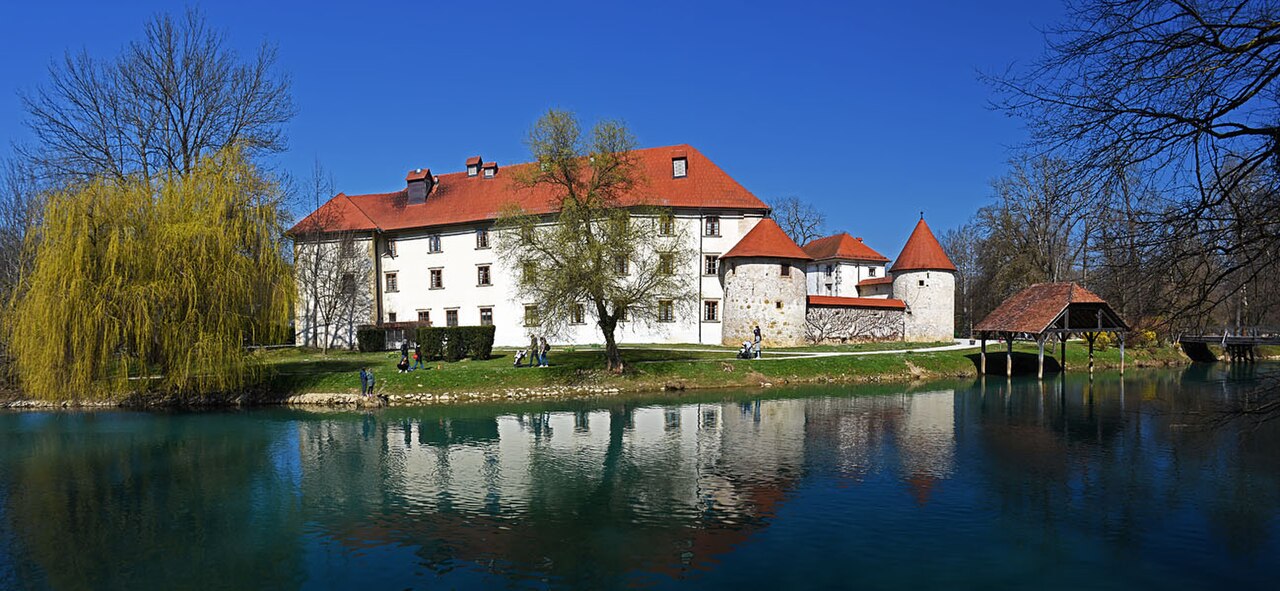
Hmeljnik Castle
Hmeljnik Castle stands prominently on a stone slope above the village of Karteljevo, near Novo mesto in Slovenia. This high medieval castle first appeared in written records in 1217, marking it as a significant medieval stronghold dominating the surrounding valley and the important road connecting Ljubljana to Bregana. Its strategic position allowed it to oversee and control local traffic and trade routes, reflecting its historical importance in regional defense and administration.
Origins and early ownership
The original builders and first owners of Hmeljnik Castle remain uncertain, but it is generally believed that the Lords of Višnja gora were among its earliest masters. There is also a possibility that the Lords of Hopfenbach or the Hmeljnik family themselves held the castle during its early years. The Hmeljnik family line ended in the 14th century, after which the castle changed hands several times.
Architectural evolution through the centuries
Original medieval structure
The castle originally was constructed in the late 12th century as a vaulted fortress featuring two Roman palazzos and a prominent staircase tower. This design was typical for the period, focusing on defense and residential needs of the noble occupants. The vaulted construction provided strength and durability, while the palazzos served as living quarters and administrative centers.
Gothic additions
During the Gothic period, significant expansions were made to the castle. The southwest tower and the east wing were added, enhancing both the defensive capabilities and the residential space. Additionally, the castle chapel dedicated to Saint Pancras was constructed, reflecting the religious devotion of the inhabitants and serving as a private place of worship within the castle walls.
Defensive enhancements during the Renaissance
In response to the threat of Turkish attacks in the region, a double fortress wall equipped with circular towers was built to bolster the castle's defenses. These fortifications were typical of the Renaissance military architecture designed to withstand artillery and prolonged sieges. A Renaissance archway was also added, providing an elegant entrance flanking the inner courtyard. Unfortunately, this archway was demolished after World War II.
Ownership by the Auersperg family and later history
The castle came under the ownership of the Auersperg family for at least three centuries, a notable noble house in the region. Following the Auerspergs, the castle passed through various hands, including the Wamboldt family, who resided there until World War II. This period saw the castle serving more as a noble residence than a military fortress.
Destruction and restoration
Hmeljnik Castle suffered severe damage during World War II when it was burnt down in 1942. The ruins were further devastated by deliberate detonations after the war, leaving the castle in a ruined state. Restoration efforts began in the late 1950s, focusing on stabilizing the remaining structures. The castle was given a new roof and underwent static consolidation to preserve what remained of its historic fabric.
Architectural features and significance
The castle's architectural layout reflects its long history, combining elements from the high medieval vaulted construction to Gothic and Renaissance additions. The presence of Roman palazzos and a staircase tower highlight the castle's original defensive and residential functions. The double fortress walls with circular towers illustrate adaptations to evolving military threats, especially during the period of Turkish incursions into Central Europe.
The castle chapel of Saint Pancras remains a notable feature, exemplifying the integration of religious spaces within noble residences of the medieval period. Although parts of the castle, such as the Renaissance archway, were lost, the restoration has helped maintain the castle's silhouette and historical presence in the landscape near Novo mesto.
Visiting Hmeljnik Castle today
Today, Hmeljnik Castle stands as a partially restored monument, offering visitors a glimpse into Slovenia's medieval past and the architectural evolution of a noble fortress. Its position above the valley provides scenic views and a tangible connection to the region's history. While the castle is not fully intact, its preserved elements and the surrounding landscape make it a significant cultural and historical site.
Visitors interested in medieval architecture, Slovenian history, and noble residences will find Hmeljnik Castle a valuable destination. The castle's layers of construction tell stories of changing defensive needs, noble families, and regional conflicts over several centuries.
Frequently asked questions (FAQ)
- What is the historical significance of Hmeljnik Castle?
- Hmeljnik Castle, located near Novo mesto, Slovenia, dates back to the 13th century and is a prime example of medieval architecture. It played a crucial role in the defense strategies of the region and has witnessed numerous historical events over the centuries, contributing to its rich legacy.
- When was Hmeljnik Castle built?
- Hmeljnik Castle was constructed in the 13th century, with its first documented mention occurring in 1250. Throughout the years, it underwent various modifications and renovations, reflecting the architectural styles of different periods.
- Is it possible to visit Hmeljnik Castle?
- Yes, Hmeljnik Castle is open to visitors, allowing them to explore its historical grounds and enjoy the stunning views of the surrounding landscape. Guided tours are often available, providing insights into the castle's history and architecture.
- What are the opening hours for Hmeljnik Castle?
- Hmeljnik Castle is typically open to visitors from 10 AM to 6 PM during the peak tourist season, which runs from May to September. However, it is advisable to check the official website or local tourist information for updated hours, especially during the off-season.
- Can I find nearby attractions when visiting Hmeljnik Castle?
- Absolutely! Hmeljnik Castle is located close to other notable landmarks, such as the city of Novo mesto and the Krka River, which offers beautiful natural scenery. Visitors can also explore nearby hiking trails and enjoy local dining options to enhance their experience.
- How much does it cost to enter Hmeljnik Castle?
- The ticket prices for Hmeljnik Castle are quite reasonable, typically around €5 for adults and discounted rates for children and seniors. Group rates may also be available, making it a budget-friendly option for families and school trips.
- What is the best time to visit Hmeljnik Castle?
- The best time to visit Hmeljnik Castle is during the spring and early autumn months when the weather is mild, and the surrounding landscapes are vibrant. Additionally, these seasons tend to have fewer crowds, allowing for a more enjoyable and relaxed visit.
- Is Hmeljnik Castle accessible for visitors with disabilities?
- While Hmeljnik Castle offers some accessible pathways, certain areas may be challenging due to the castle's historic structure and terrain. It is advisable for visitors with mobility concerns to contact the castle management in advance to inquire about specific accessibility options available.
Information
Loading map...
Visitor reviews
No reviews yet. Been here? Write the first review and help other travelers!
Write the first reviewVisited this castle? Share your experience
Your review helps other travelers and adds first-hand knowledge to our encyclopedia.