Ostrovica Fortress (Croatia) — Croatia castle

Ostrovica Fortress (Croatia)

Ostrovica fortress: medieval stronghold in Zadar County, Croatia
High Medieval (11th–13th c.)
Ruins

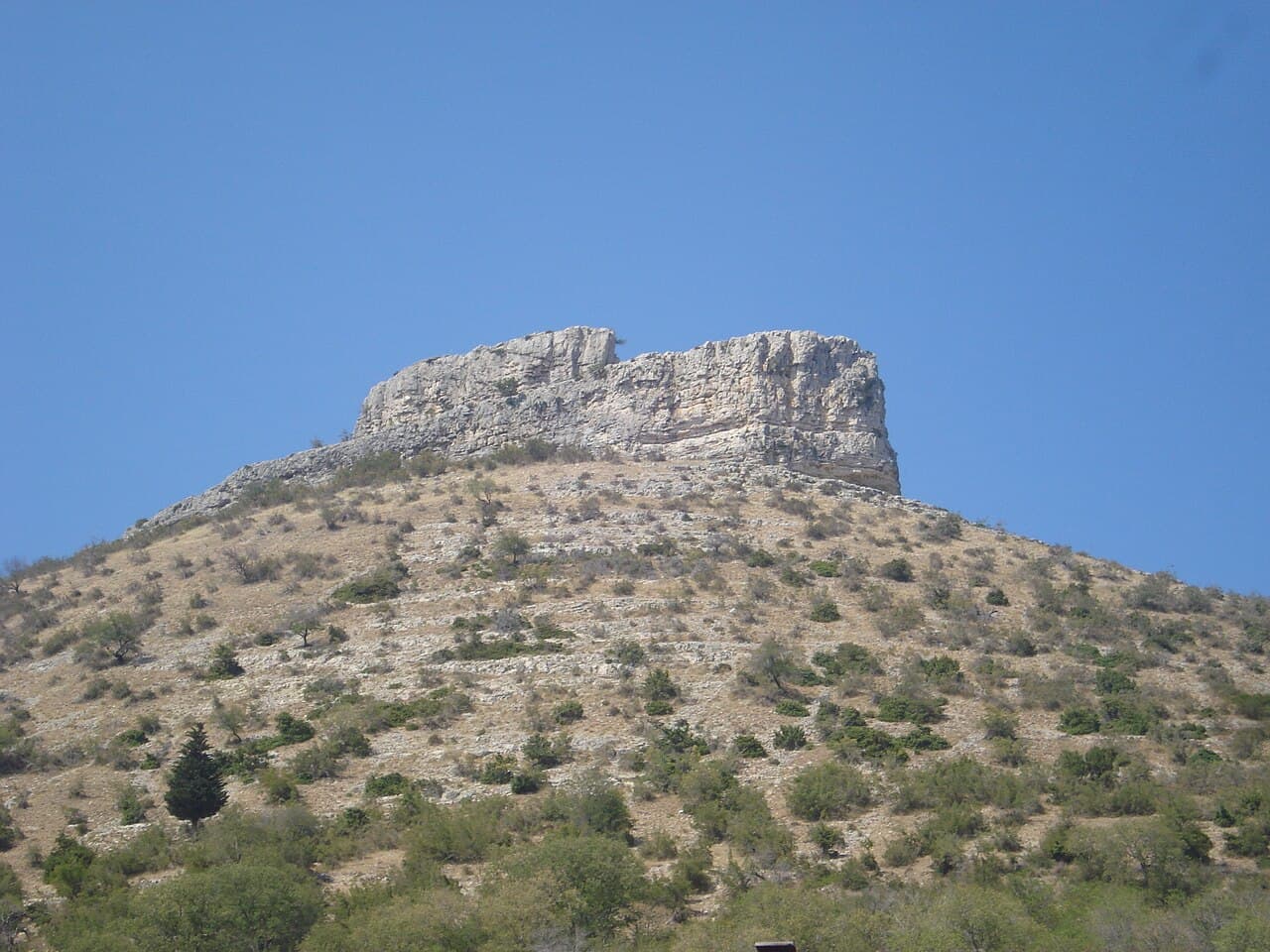
Ostrovica Fortress (Croatian: Tvrđava Ostrovica) is a significant medieval fortification perched atop a solid rock on a hill above the village of Ostrovica in Zadar County, Croatia. Strategically positioned between the historical regions of Bukovica and Ravni Kotari, this fortress played a crucial role in the defense network protecting the nearby city of Zadar. Its elevated location offered commanding views over the surrounding landscape, making it a vital military outpost during the High Medieval period.

Historical significance and strategic role

Constructed in the 12th century, Ostrovica Fortress was known as the "Key to the City of Zadar" due to its strategic importance in controlling access routes to the city. It served as a defensive bastion against various invading forces over the centuries, including during the turbulent Ottoman–Venetian Wars in the 17th century. Its location allowed defenders to monitor and control movement through the region, providing early warnings of approaching enemies and acting as a deterrent to hostile incursions.

Architectural features and layout

The fortress was built on a rocky outcrop, utilizing the natural topography for defense. The surviving ruins indicate a complex of stone walls and fortified towers that once enclosed the site. The walls were constructed with thick stone masonry designed to withstand sieges and artillery fire. The fortress likely included gatehouses, battlements, and watchtowers to enhance its defensive capabilities.

Its elevated position on the hilltop made direct assault difficult, and the fortress was probably surrounded by natural cliffs or steep slopes on several sides, further enhancing its defensibility. Although much of the structure has been lost, the remaining ruins provide insight into the High Medieval military architecture typical of Croatian fortifications of the period.

Destruction and current condition

Ostrovica Fortress was severely damaged and largely destroyed during the Ottoman–Venetian Wars in the second half of the 17th century. The conflicts between the Ottoman Empire and the Republic of Venice led to widespread devastation in the region, and the fortress was abandoned after its destruction. Today, only fragments of the original stone walls and foundations remain, classifying it as archaeological ruins.

The site is an important cultural heritage location and offers visitors a glimpse into medieval fortification techniques and regional history. Its ruins stand as a testament to the military struggles that shaped the Dalmatian coast and the broader Adriatic region.

Location and accessibility

Situated near the village of Ostrovica in Zadar County, the fortress is accessible to visitors interested in exploring Croatia's medieval history. The site is surrounded by natural landscapes characteristic of the Bukovica and Ravni Kotari regions, with a rugged terrain that adds to the fortress's commanding presence. Although in ruins, the location provides panoramic views over the surrounding countryside and the Adriatic Sea in the distance.

Preservation and archaeological importance

As an archaeological site, Ostrovica Fortress has been the subject of various studies aimed at understanding its historical context and architectural features. Preservation efforts focus on stabilizing the remaining structures and preventing further deterioration. The fortress contributes valuable information about medieval defensive architecture in Croatia and the military history of the Adriatic region.

Photo gallery

Ostrovica Fortress (Croatia)
Click to view

Photo by Silverije•CC BY-SA 3.0

1 photo • Click any image to view in full screen

Information

Archaeological Site / Ruins

Loading map...

Visitor reviews

No reviews yet. Been here? Write the first review and help other travelers!

Write the first review

Visited this castle? Share your experience

Your review helps other travelers and adds first-hand knowledge to our encyclopedia.

Write a review

(5/5)

0/2000 characters

Your review will be visible after admin approval

Nearby castles

9.6 km

Budak Castle

Budak, Croatia

Budak Castle, locally known as Kaštel Budak, is a historic fortress located near the village of Budak in Zadar County, Croatia. This castle stands on a low hill, commanding views over the surrounding landscape, and played a significant role in the turbulent border conflicts of the late 15th and early 16th centuries. Historical background and strategic importance Constructed around 1475 by local Croatian nobility, Budak Castle was primarily built as a defensive stronghold against the expansionist ambitions of the Republic of Venice. Situated near the Adriatic coast, the castle's location was strategically chosen to monitor and protect the region from Venetian incursions during a period marked by frequent territorial disputes. The castle's military significance increased following the Battle of Krbava Field in 1493, where the Kingdom of Croatia suffered a devastating defeat against the advancing Ottoman Empire. This loss marked a turning point in regional power dynamics, and Budak Castle became a crucial defensive outpost against the growing Ottoman threat. In 1502, the castle was sold to the Venetians, reflecting shifting political control in the area. However, by 1527, the Ottomans had gained dominance over the region, and it is believed that the castle may have been utilized by Ottoman forces thereafter, though detailed records from this period are scarce. Architectural features and layout The surviving remains suggest that Budak Castle was designed around a circular main tower which functioned as the keep, the last line of defense and the central stronghold. This tower was encircled by a defensive curtain wall, against which various ancillary buildings were constructed. These structures likely served as living quarters, storage, and garrison facilities for the castle's defenders. The castle’s design reflects typical late medieval fortification principles, emphasizing a compact and easily defensible layout. The circular tower would have provided a wide field of view and minimized blind spots, while the surrounding wall enhanced protection against siege weapons and infantry assaults. Current condition and accessibility Today, Budak Castle remains partially preserved, with visible foundations and wall remnants that allow for interpretation of its original form. The site is freely accessible to visitors, although it lacks a clearly marked path. Access involves a short walk through natural shrubbery and rocky terrain from the nearest road. A notable modern addition is the red and white checkerboard painting on the tower, representing the coat of arms of the Republic of Croatia. While this decoration is not historically authentic, it serves as a symbolic homage to Croatian heritage and identity. Budak Castle in the context of Croatian medieval fortifications Budak Castle is an example of a small-scale hill castle typical of the Croatian borderlands during the late medieval period. Its construction reflects the need for local nobility to establish fortified residences that could also serve as military bastions amid the geopolitical struggles between Venice, the Ottomans, and Croatian forces. The castle’s relatively simple yet effective design underscores the practical considerations of defense in a frontier zone. Unlike larger royal fortresses, Budak was likely manned by a modest garrison and relied on its strategic position and robust construction to deter attackers. Legacy and cultural significance Although Budak Castle did not play a prominent role in major historical events beyond its defensive function, it remains a valuable cultural monument. It offers insight into the architectural and military strategies employed by Croatian nobility during a period of intense regional conflict. The castle also contributes to the historical landscape of Zadar County, complementing other medieval fortifications and enriching the heritage tourism potential of the area. Its preservation as a ruin accessible to the public allows visitors to connect with Croatia’s medieval past and appreciate the challenges faced by those who lived on the volatile frontier between empires.

Late Medieval (14th–15th c.)
Details
12.1 km

Sonković Castle

Sonković, Croatia

Sonković Castle, known locally as Utvrda or Kula Sonković, is a medieval fortress located north of the village of Sonković in the Šibenik-Knin County of Croatia. This castle occupies a strategic position on a rocky ridge adjacent to the entrance of a small canyon, overseeing a natural spring whose waters flow through the canyon and ultimately into Lake Prokljan. This setting not only provided a natural defensive advantage but also ensured a reliable water supply, a crucial feature for any fortress of its time. Historical background and significance The origins of Sonković Castle trace back to the early medieval period, making it one of the older fortifications in the region. It served as the seat of the Sonković family, a local noble lineage that lent its name to the surrounding village. The castle's history is closely tied to the turbulent political landscape of Dalmatia and the broader Balkan region during the Middle Ages. In 1528, the castle and its village were absorbed into the Ottoman Empire, marking a significant shift in the area's control. This period also coincides with the extinction of the Sonković family, after which the castle's direct noble stewardship ended. The Ottoman presence lasted until 1684, when the territory fell under the rule of the Venetian Republic. However, there is little documented evidence regarding the extent to which either the Ottomans or Venetians utilized the castle for military or administrative purposes. Following Venetian rule, which lasted until 1794, the castle's strategic importance diminished as political and military priorities evolved in the region. The lack of clear records about later usage suggests that Sonković Castle gradually fell into disuse. Architectural features and location Sonković Castle is classified as a hill castle, built to take advantage of the natural elevation and rocky terrain for defense. Its position on a ridge above a canyon entrance provided natural fortification, making direct assault difficult. The presence of a natural spring below the castle was a vital resource, ensuring water availability during sieges or prolonged occupation. The castle's remains indicate a compact fortified structure, likely featuring typical medieval defensive elements such as stone walls and possibly a tower or keep, although detailed architectural studies are limited. The absence of a clear path to the castle today reflects its rugged setting and the decline in maintenance over the centuries. Access and preservation status Currently, Sonković Castle is in a state of ruins and is freely accessible to visitors. There are no formal paths or visitor facilities, and reaching the site requires scrambling up a rocky hillside through dense vegetation. This challenging access preserves the castle's secluded character but limits the number of casual visitors. The castle's preservation status reflects its long abandonment and the absence of significant restoration efforts. Its ruins offer valuable insights into early medieval fortification techniques in Croatia and the historical shifts in regional control from local noble families to Ottoman and Venetian powers. Sonković Castle in the context of Croatian medieval fortifications Sonković Castle exemplifies the smaller-scale fortresses typical of Dalmatian hinterlands during the early medieval period. Unlike the grand coastal fortresses or Renaissance palaces found elsewhere in Croatia, Sonković served primarily local defensive and administrative functions. Its survival, even in ruin, contributes to understanding the distribution of power and settlement patterns in Šibenik-Knin County. While not extensively documented or restored, Sonković Castle remains a point of interest for historians and enthusiasts of medieval architecture, offering a tangible connection to the region's complex past. Visiting tips and nearby attractions Visitors to Sonković Castle should be prepared for a physically demanding approach due to the lack of established paths. Proper footwear and caution are advised when scrambling over rocky terrain. The natural surroundings, including the canyon and spring, provide a scenic backdrop for exploration. Nearby, the village of Sonković and the broader Šibenik-Knin County offer additional historical sites and natural attractions, including the famous Krka National Park and the coastal town of Šibenik, known for its Renaissance and Baroque architecture.

Early Medieval (5th–10th c.)
Details
13.5 km

Perušić Castle

Perušić Benkovački, Croatia

Perušić Castle, also known locally as Kaštel Perušić, is a late medieval fortress situated near the village of Perušić Benkovački in Zadar County, Croatia. Built in the 15th century by the noble Croatian family Perušić, the castle occupies a strategic hilltop overlooking fertile fields and key roads. Its elevated position allowed for control and defense in a turbulent period marked by territorial disputes between the Venetian Republic and the Croatian-Hungarian Kingdom. Historical context and strategic importance The castle was constructed during a time when Dalmatia was divided between competing powers. As part of a network of fortifications, Perušić Castle served as a defensive stronghold protecting inland territories from Venetian expansion. The late medieval period saw frequent skirmishes and shifting borders in this region, making such fortresses vital for local nobility and military strategy. In the early 16th century, the geopolitical landscape changed dramatically with the onset of Ottoman incursions into Croatian lands. In 1527, rather than resist, the castle was surrendered to the Ottoman Empire without a fight. Under Ottoman rule, the fortress was adapted to meet new military needs, reflecting the empire's architectural and defensive practices. The castle remained an Ottoman possession until 1683, when the Turks were expelled during the Great Turkish War. Architectural features and layout Perušić Castle was originally designed with an irregular square plan, fortified by square corner towers that provided strong defensive vantage points. At its core stood a prominent round keep approximately 18 meters high, which was connected to a smaller square tower. This keep functioned as the last line of defense and a residence for the lord of the castle. The combination of round and square towers was typical for fortifications of this era, balancing defense and habitability. The castle's walls enclosed a courtyard and various internal buildings, although detailed records of these structures are limited. The hilltop location enhanced its defensive capabilities, allowing surveillance of the surrounding landscape and early warning of approaching forces. Decline and current condition After the expulsion of the Ottomans in the late 17th century, Perušić Castle lost its military significance as regional borders stabilized and warfare tactics evolved. The fortress gradually fell into disuse and neglect. Remarkably, it survived relatively intact until the 20th century. During World War II, the castle was heavily damaged when it was demolished by partisans amid local fighting. Today, the site remains in a state of ruin, with only fragments of the walls, towers, and the central keep discernible. Despite its ruined state, the castle remains freely accessible to visitors interested in exploring Croatia's medieval heritage. Visiting Perušić Castle The castle's remote location and ruined condition mean it is not a major tourist attraction, but it offers historical insight into the region's medieval defensive architecture. Visitors can explore the remains and appreciate the strategic importance of the site in past centuries. There are no formal visitor facilities or entrance fees, and the site is open year-round. Legacy and significance Perušić Castle stands as a testament to the complex history of Dalmatia during the late medieval period, illustrating the shifting control between Croatian nobility, Venetian forces, and the Ottoman Empire. Its architecture reflects the military needs and styles of the 15th and 16th centuries, combining traditional Croatian noble fortification techniques with Ottoman adaptations. Though in ruins, it remains a valuable cultural and historical landmark in Zadar County.

Late Medieval (14th–15th c.)
Details

