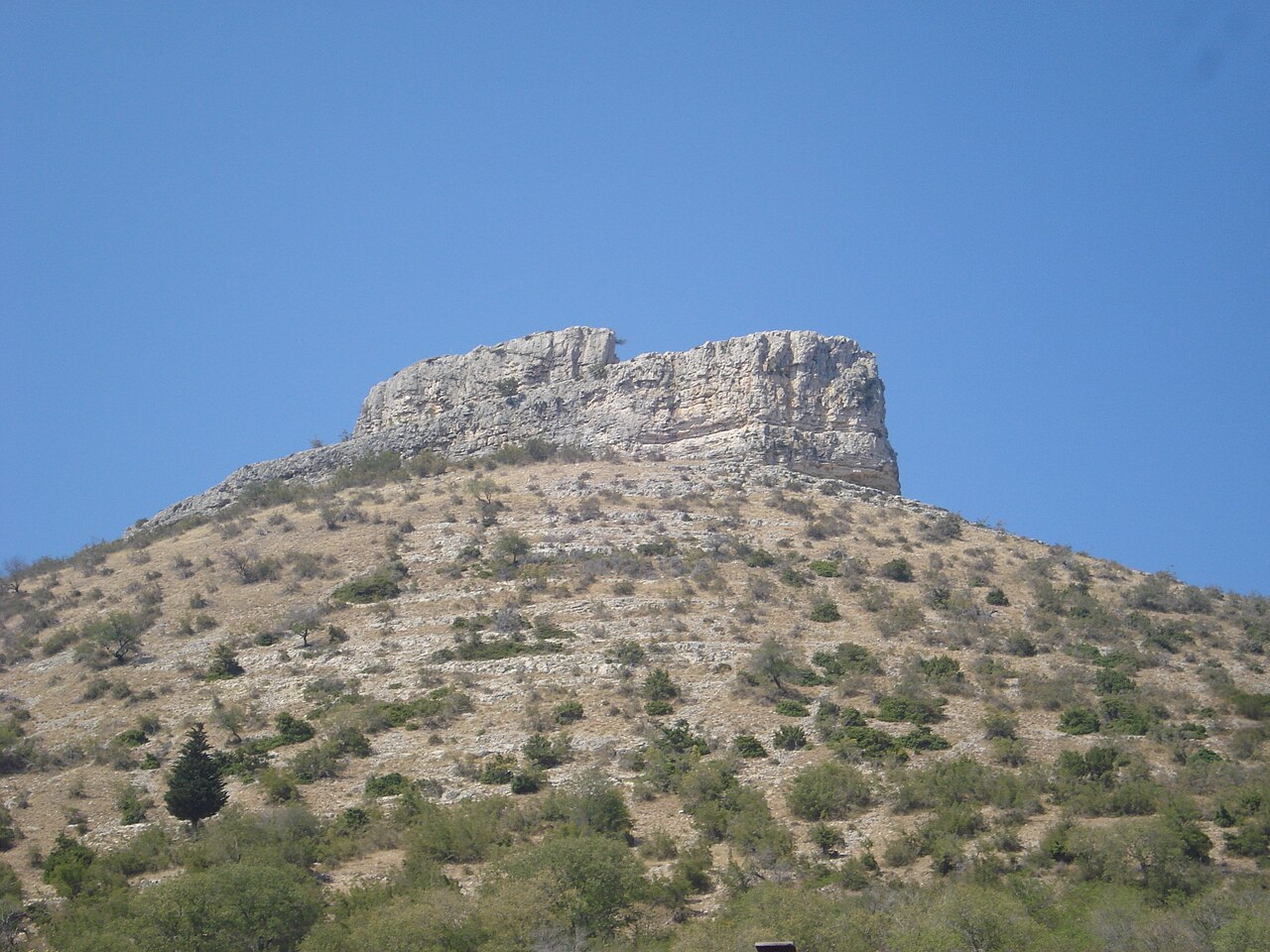
Budak Castle
Budak Castle, locally known as Kaštel Budak, is a historic fortress located near the village of Budak in Zadar County, Croatia. This castle stands on a low hill, commanding views over the surrounding landscape, and played a significant role in the turbulent border conflicts of the late 15th and early 16th centuries.
Historical background and strategic importance
Constructed around 1475 by local Croatian nobility, Budak Castle was primarily built as a defensive stronghold against the expansionist ambitions of the Republic of Venice. Situated near the Adriatic coast, the castle's location was strategically chosen to monitor and protect the region from Venetian incursions during a period marked by frequent territorial disputes.
The castle's military significance increased following the Battle of Krbava Field in 1493, where the Kingdom of Croatia suffered a devastating defeat against the advancing Ottoman Empire. This loss marked a turning point in regional power dynamics, and Budak Castle became a crucial defensive outpost against the growing Ottoman threat. In 1502, the castle was sold to the Venetians, reflecting shifting political control in the area. However, by 1527, the Ottomans had gained dominance over the region, and it is believed that the castle may have been utilized by Ottoman forces thereafter, though detailed records from this period are scarce.
Architectural features and layout
The surviving remains suggest that Budak Castle was designed around a circular main tower which functioned as the keep, the last line of defense and the central stronghold. This tower was encircled by a defensive curtain wall, against which various ancillary buildings were constructed. These structures likely served as living quarters, storage, and garrison facilities for the castle's defenders.
The castle’s design reflects typical late medieval fortification principles, emphasizing a compact and easily defensible layout. The circular tower would have provided a wide field of view and minimized blind spots, while the surrounding wall enhanced protection against siege weapons and infantry assaults.
Current condition and accessibility
Today, Budak Castle remains partially preserved, with visible foundations and wall remnants that allow for interpretation of its original form. The site is freely accessible to visitors, although it lacks a clearly marked path. Access involves a short walk through natural shrubbery and rocky terrain from the nearest road.
A notable modern addition is the red and white checkerboard painting on the tower, representing the coat of arms of the Republic of Croatia. While this decoration is not historically authentic, it serves as a symbolic homage to Croatian heritage and identity.
Budak Castle in the context of Croatian medieval fortifications
Budak Castle is an example of a small-scale hill castle typical of the Croatian borderlands during the late medieval period. Its construction reflects the need for local nobility to establish fortified residences that could also serve as military bastions amid the geopolitical struggles between Venice, the Ottomans, and Croatian forces.
The castle’s relatively simple yet effective design underscores the practical considerations of defense in a frontier zone. Unlike larger royal fortresses, Budak was likely manned by a modest garrison and relied on its strategic position and robust construction to deter attackers.
Legacy and cultural significance
Although Budak Castle did not play a prominent role in major historical events beyond its defensive function, it remains a valuable cultural monument. It offers insight into the architectural and military strategies employed by Croatian nobility during a period of intense regional conflict. The castle also contributes to the historical landscape of Zadar County, complementing other medieval fortifications and enriching the heritage tourism potential of the area.
Its preservation as a ruin accessible to the public allows visitors to connect with Croatia’s medieval past and appreciate the challenges faced by those who lived on the volatile frontier between empires.
Frequently asked questions (FAQ)
- How do I get to Budak Castle?
- Budak Castle is located near the village of Budak in Zadar County, Croatia. There is no marked trail, but it is accessible by a short walk through shrubs and rocky terrain from the nearest road.
- What is the historical significance of Budak Castle?
- Budak Castle was built around 1475 to defend against Venetian and later Ottoman incursions. It played a role in the border conflicts following the Battle of Krbava Field in 1493.
- Can I enter Budak Castle?
- Yes, Budak Castle is freely accessible to visitors. However, it is in a partially preserved state with only foundations and wall remnants visible, so caution is advised when exploring.
- Why is there a red and white checkerboard on the tower?
- The red and white checkerboard painted on the tower represents the Croatian coat of arms. This is a modern addition and not historically original to the castle.
Information
Loading map...
Visitor reviews
No reviews yet. Been here? Write the first review and help other travelers!
Write the first reviewVisited this castle? Share your experience
Your review helps other travelers and adds first-hand knowledge to our encyclopedia.