Oshakan — Armenia castle

Oshakan

Oshakan hill castle in Armenia
Oshakan, Armenia
High Medieval (11th–13th c.)
Partially Preserved

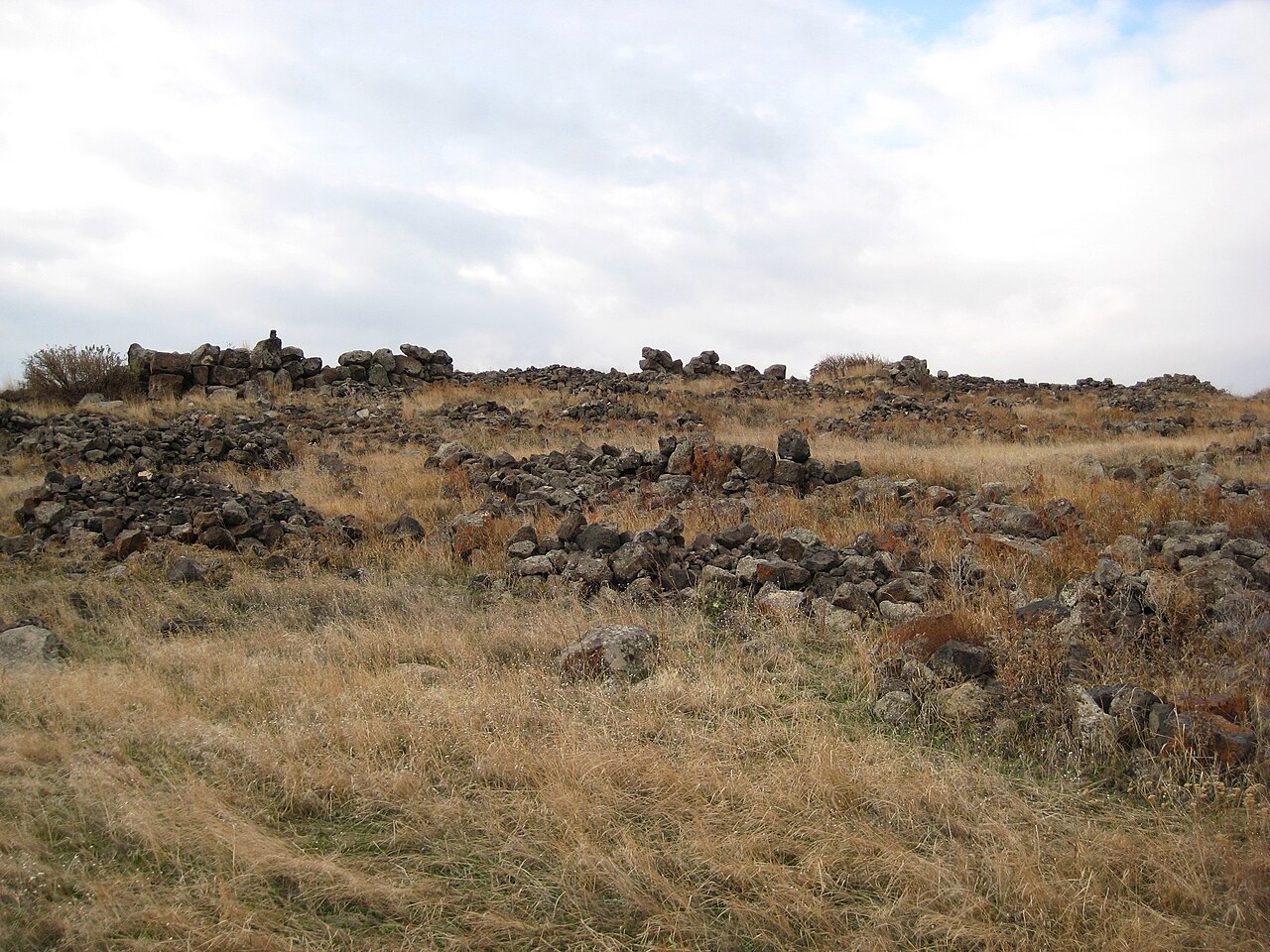
Oshakan hill castle is a historic fortress located in Armenia, notable for its strategic placement atop a hill that provided commanding views of the surrounding landscape. This elevated position was typical for many medieval Armenian fortifications, designed to offer defensive advantages against invaders and control over important routes.

Historical context and significance

The castle dates back to the medieval period, a time when Armenia was frequently contested by various regional powers. Fortifications like Oshakan were crucial in the defense network of the region, protecting local populations and serving as military strongholds. Although detailed records about the castle's specific origins and builders are limited, its presence reflects the broader pattern of Armenian hill castles constructed during the High to Late Medieval periods.

Architectural features and layout

As a hill castle, Oshakan is characterized by its adaptation to the natural topography. The fortress was likely built using locally sourced stone, with walls following the contours of the hill to maximize defensive capabilities. Typical features would have included fortified walls, battlements, and possibly a keep or donjon serving as a last refuge. The layout would have incorporated courtyards and limited access points to control entry.

Defensive structures

The castle's defenses would have included thick stone walls with crenellations for archers, narrow arrow slits, and possibly a moat or ditch on the more accessible sides. The entrance was likely protected by a gatehouse or barbican to impede attackers. The elevated position itself was a significant defensive asset, making direct assaults difficult.

Current condition and preservation

Today, Oshakan castle remains in a state that can be described as partially preserved. While some sections of the walls and foundations are still visible, much of the structure has succumbed to centuries of weathering and neglect. Archaeological efforts have helped to identify the castle's footprint and some architectural details, although extensive restoration has not been undertaken.

Cultural importance and tourism

Oshakan hill castle holds cultural significance as part of Armenia's rich medieval heritage. It attracts visitors interested in history, archaeology, and Armenian architecture. The site offers panoramic views and a tangible connection to the region's past defensive strategies. Visitors should be prepared for limited facilities and access, as the castle is primarily an archaeological site rather than a fully developed tourist destination.

Frequently asked questions (FAQ)

How do I get to Oshakan hill castle?
Oshakan hill castle is located near the village of Oshakan in Aragatsotn Province, Armenia. Visitors can reach the site by car or local transport from Yerevan, followed by a short hike up the hill where the castle stands.
What is the historical significance of Oshakan hill castle?
Oshakan hill castle served as a strategic defensive fortress during the medieval period in Armenia. It played a role in protecting the region from invasions and controlling local trade routes.
Can I explore the castle ruins freely?
Yes, visitors can explore the partially preserved ruins of Oshakan hill castle. However, due to the site's archaeological nature, some areas may be restricted for preservation reasons.
When is the best time to visit Oshakan castle?
The best time to visit Oshakan hill castle is during the late spring to early autumn months when the weather is mild and the landscape is accessible for hiking.
Are there guided tours available at Oshakan hill castle?
Guided tours may be available through local tour operators or the state museum managing the site. It is recommended to check in advance for organized visits to gain detailed historical insights.

Photo gallery

Oshakan
Click to view

Photo by Մելքոն Մինասյան•CC BY-SA 3.0

1 photo • Click any image to view in full screen

Information

Hill Castle

Current owner

State museum

Loading map...

Visitor reviews

No reviews yet. Been here? Write the first review and help other travelers!

Write the first review

Visited this castle? Share your experience

Your review helps other travelers and adds first-hand knowledge to our encyclopedia.
Write a review

(5/5)

0/2000 characters

Your review will be visible after admin approval

Nearby castles

6.8 km
Aghchka berd — Armenia castle

Aghchka berd

, Armenia

Aghchka berd is a high medieval hill castle located in Armenia, dating back to the 13th century. This fortress exemplifies the strategic military architecture typical of the period, constructed to oversee and defend the surrounding terrain. The castle's elevated position on a hill provided natural defensive advantages, allowing its occupants to monitor approaching threats and control key routes. Historical context and significance Built during the high medieval period, Aghchka berd reflects the turbulent history of Armenia in the 13th century, a time marked by frequent invasions and regional conflicts. Castles such as Aghchka berd were essential for local lords and rulers to maintain control over their territories and protect their populations. The fortress likely played a role in the defense against various invading forces during this era, including Mongol incursions and regional rivalries. Architectural features and construction The castle is classified as a hill castle, meaning it was built on elevated terrain to maximize defensive capabilities. Its construction would have involved robust stone walls adapted to the natural contours of the hill. Typical features of such castles include thick curtain walls, battlements, and towers positioned to provide overlapping fields of fire. The use of local stone materials would have been common, ensuring durability and blending the structure with its environment. Defensive structures Aghchka berd's design likely includes fortified walls with battlements and possibly towers or keeps that served as strongpoints within the castle complex. The elevated site would have been enhanced with a gatehouse controlling access, and possibly a moat or ditch to impede attackers. The castle's layout would have been adapted to the hill's shape, with defensive walls following the natural topography. Interior and functional spaces Within the walls, the castle would have contained essential structures such as a great hall for gatherings, living quarters for the lord and retainers, storage rooms, and possibly a chapel. These spaces were designed to support both military and domestic needs, enabling the castle to function as a self-sufficient stronghold during sieges. Preservation and current condition Today, Aghchka berd exists primarily as ruins, with remnants of its walls and defensive features still visible. The site offers valuable insights into medieval Armenian military architecture and settlement patterns. Preservation efforts focus on stabilizing the ruins to prevent further decay and facilitating archaeological research to uncover more about its construction and history. Visiting Aghchka berd Visitors to Aghchka berd can explore the castle ruins and enjoy panoramic views of the surrounding Armenian landscape. The hilltop location provides a unique perspective on the strategic considerations of medieval fortifications. Due to its condition as ruins, visitors should exercise caution while exploring. The site is of interest to historians, archaeologists, and tourists seeking to understand Armenia's medieval heritage.

High Medieval (11th–13th c.)
Details
10.2 km
Ushiberd — Armenia castle

Ushiberd

Ushi, Armenia

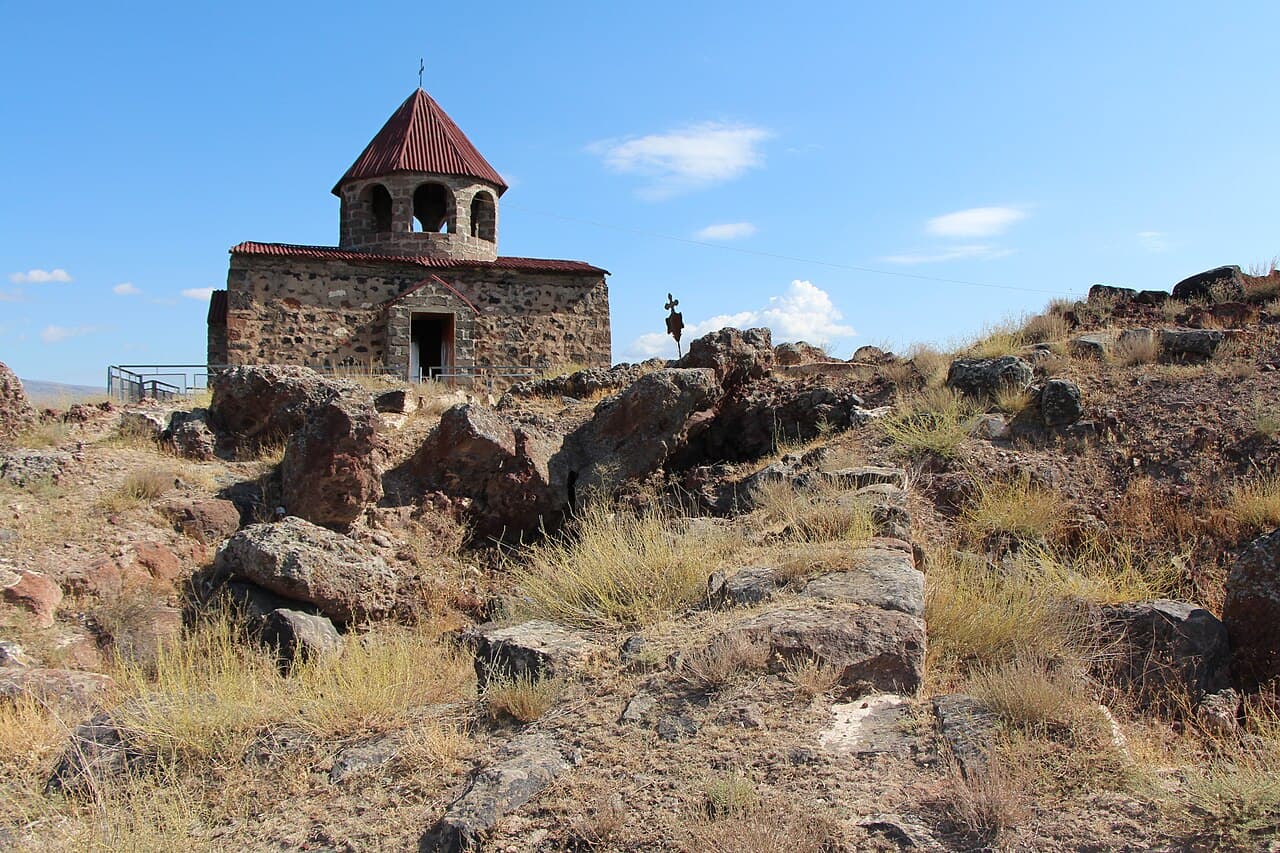
Ushiberd (Armenian: Ուշիբերդ) is a significant Iron Age fortress situated on a prominent hilltop just outside the village of Ushi in the Aragatsotn Province of Armenia. This fortress is an important archaeological site that dates back to the first millennium BC, reflecting the early defensive architecture of the region. Although the fortress is now largely in ruins, it offers valuable insights into the fortification techniques and settlement patterns of ancient Armenia. Location and archaeological context The fortress occupies a strategic position atop a hill, which provided natural defensive advantages by overseeing the surrounding landscape. This location was chosen to protect the inhabitants and control nearby routes. The site is part of a broader archaeological landscape that includes settlements dating from the 3rd to the 1st millennia BC, indicating a long history of human occupation in this area. Just below the hill lies the Saint Sargis Monastery, a complex with structures spanning the 7th to 13th centuries. This proximity highlights the area's continued cultural and religious significance well beyond the Iron Age. Additionally, a 10th-century chapel stands nearby along the main road leading back to Ushi village, further emphasizing the site's historical layering. Architectural features and condition Ushiberd is classified as a hill castle, characterized by its elevated position and natural defensive terrain. The fortress walls originally encircled the hilltop, following the contour of the terrain to maximize defense. Today, only fragments of these walls remain, primarily around the hill's edge where the slope begins. The interior of the fortress is marked by large piles of stone rubble, remnants of the original fortification walls and internal structures that have collapsed over time. The surviving wall sections reveal the use of large, roughly hewn stones, typical of Iron Age construction methods in the region. The fortress's design likely included towers and gates, though these features are no longer clearly distinguishable due to the ruinous state. The extensive collapse of the walls suggests that the fortress was abandoned long ago and has since suffered from natural erosion and possibly human activity. Historical significance and cultural heritage Ushiberd provides a rare glimpse into the defensive strategies employed by early Armenian societies during the Iron Age. The fortress's location and construction indicate its role in regional security and control over local settlements and trade routes. Its proximity to significant religious sites like Saint Sargis Monastery illustrates the continuity of occupation and cultural importance of this area through various historical periods. The nearby Saint Sargis Monastery and the 10th-century chapel contribute to the cultural landscape, offering visitors a chance to explore a range of historical eras within a compact area. These religious sites also reflect the Christian heritage of Armenia, which became the first nation to adopt Christianity as a state religion in the early 4th century AD. Visiting ushberd and surrounding sites Visitors to Ushiberd can explore the fortress ruins and appreciate the panoramic views from the hilltop. The site is accessible from the village of Ushi and is often visited in conjunction with the Saint Sargis Monastery. Due to the fortress's ruinous condition, caution is advised when navigating the uneven terrain and stone piles. The combination of ancient fortifications and medieval religious architecture makes the area a compelling destination for those interested in Armenian history, archaeology, and architecture. While there are no formal visitor facilities at Ushiberd, the nearby monastery offers a more developed cultural experience. Archaeological research and preservation Archaeological studies at Ushiberd have focused on documenting the fortress's layout and construction techniques, contributing to broader understanding of Iron Age fortifications in the South Caucasus region. Preservation efforts are limited due to the site's remote location and the extensive deterioration of the structures. Continued archaeological work and conservation could enhance knowledge of Ushiberd's role in regional history and improve visitor access and interpretation. Protecting the site is important for maintaining Armenia's rich cultural heritage and for educational purposes.

Details
16.3 km
Amberd — Armenia castle

Amberd

, Armenia

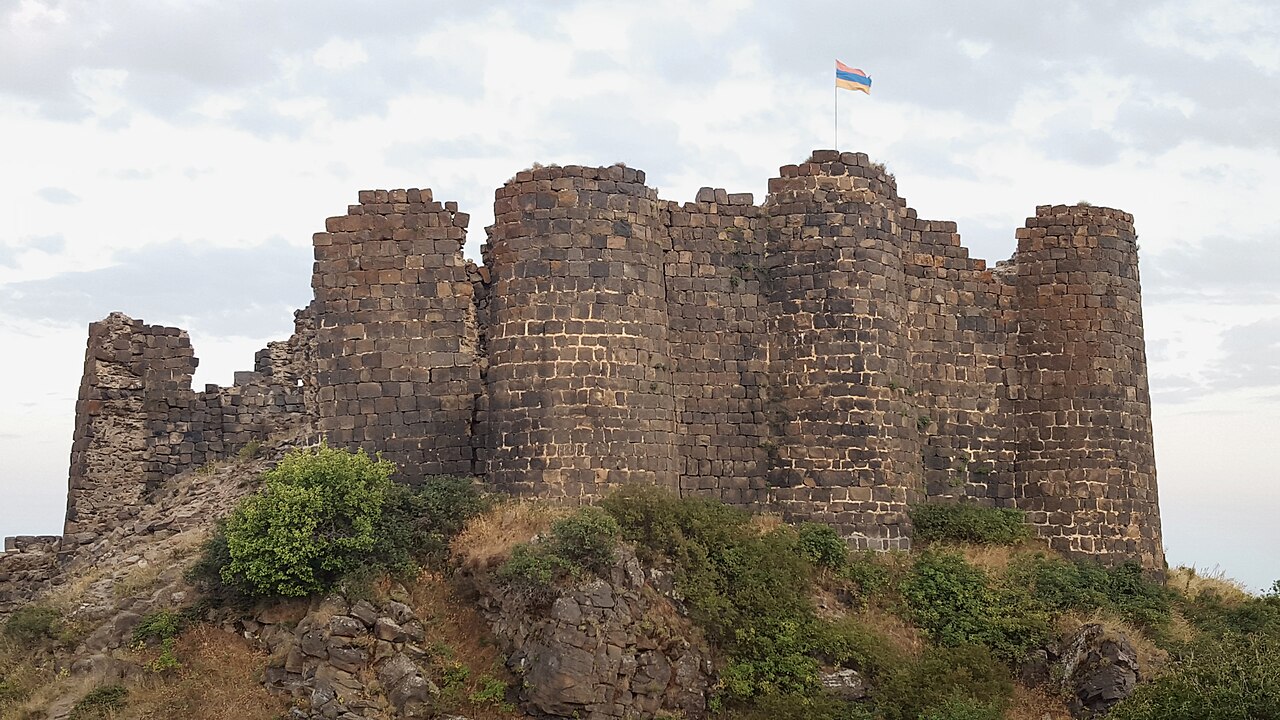
Amberd fortress, situated on the slopes of Mount Aragats in the Aragatsotn province of Armenia, is a remarkable example of a 10th-century medieval stronghold. Located at an altitude of approximately 2,300 meters (7,500 feet) above sea level, it commands a strategic position at the confluence of the Arkashen and Amberd rivers. The name Amberd translates to "fortress in the clouds," a fitting description given its lofty and commanding location amidst the mountainous terrain.The fortress is often confused with the nearby Vahramashen Church, an 11th-century Armenian church located close to the castle site. The village of Byurakan, situated about 6.4 kilometers (4 miles) away, serves as the nearest settlement to Amberd, providing access to visitors and researchers alike.Historical background and strategic importanceAmberd was constructed during the early medieval period, specifically in the 10th century, a time of significant political and military activity in the Armenian highlands. The fortress served as a defensive bastion for the region, protecting the surrounding territories from invasions and local conflicts. Its elevated position allowed for extensive visibility over the surrounding valleys and mountain passes, making it a critical military asset in controlling movement and defending against hostile forces.Throughout its history, Amberd changed hands multiple times, reflecting the turbulent nature of the region. It was associated with various Armenian noble families and rulers who fortified and expanded its structures to meet evolving military needs. The fortress's design and location illustrate the strategic military thinking of the period, emphasizing natural defenses enhanced by robust stone fortifications.Architectural features and layoutThe fortress complex at Amberd includes remnants of defensive walls, towers, and gates that once formed a formidable barrier against attackers. The walls were constructed using local volcanic stone, carefully cut and fitted to withstand both siege and the harsh mountain climate. The surviving structures reveal a combination of military and residential functions within the fortress.Amberd also included a keep or central stronghold, which served as the last line of defense and the residence of the fortress's lord or commander. The keep was surrounded by a courtyard and additional buildings that supported the daily life and military operations of the garrison.Nearby, the Vahramashen Church, built in the 11th century, complements the fortress complex, showcasing Armenian religious architecture of the period. The church's presence indicates the importance of spiritual life alongside military concerns in medieval Armenian society.Preservation challenges and cultural significanceAmberd is currently classified as archaeological ruins due to the extensive damage it has suffered over the centuries. Natural factors such as erosion, earthquakes, and the harsh mountain climate have contributed to the deterioration of the fortress's structures. Additionally, a lack of sufficient funding for conservation efforts has left the site vulnerable to further degradation.In 2024, the pan-European Federation for Cultural Heritage, Europa Nostra, included Amberd in its list of the seven most endangered European monuments and heritage sites. This designation highlights the urgent need for preservation measures to protect the fortress from collapse and to safeguard its historical and cultural value for future generations.Amberd remains a symbol of Armenia's medieval heritage and military architecture. Its ruins attract historians, archaeologists, and tourists interested in exploring the region's past and experiencing the dramatic mountain landscape that shaped its history.Access and visitor informationThe fortress is accessible from the nearby village of Byurakan, which serves as a base for visitors. Due to its high elevation and rugged terrain, reaching Amberd requires a degree of physical effort, but the site offers rewarding views and a tangible connection to Armenia's medieval past.Visitors should prepare for mountain weather conditions and limited facilities at the site. Preservation efforts are ongoing, but some areas may be unstable, so caution is advised when exploring the ruins.

Early Medieval (5th–10th c.)
Details