Ortenberg Castle — Germany castle

Ortenberg Castle

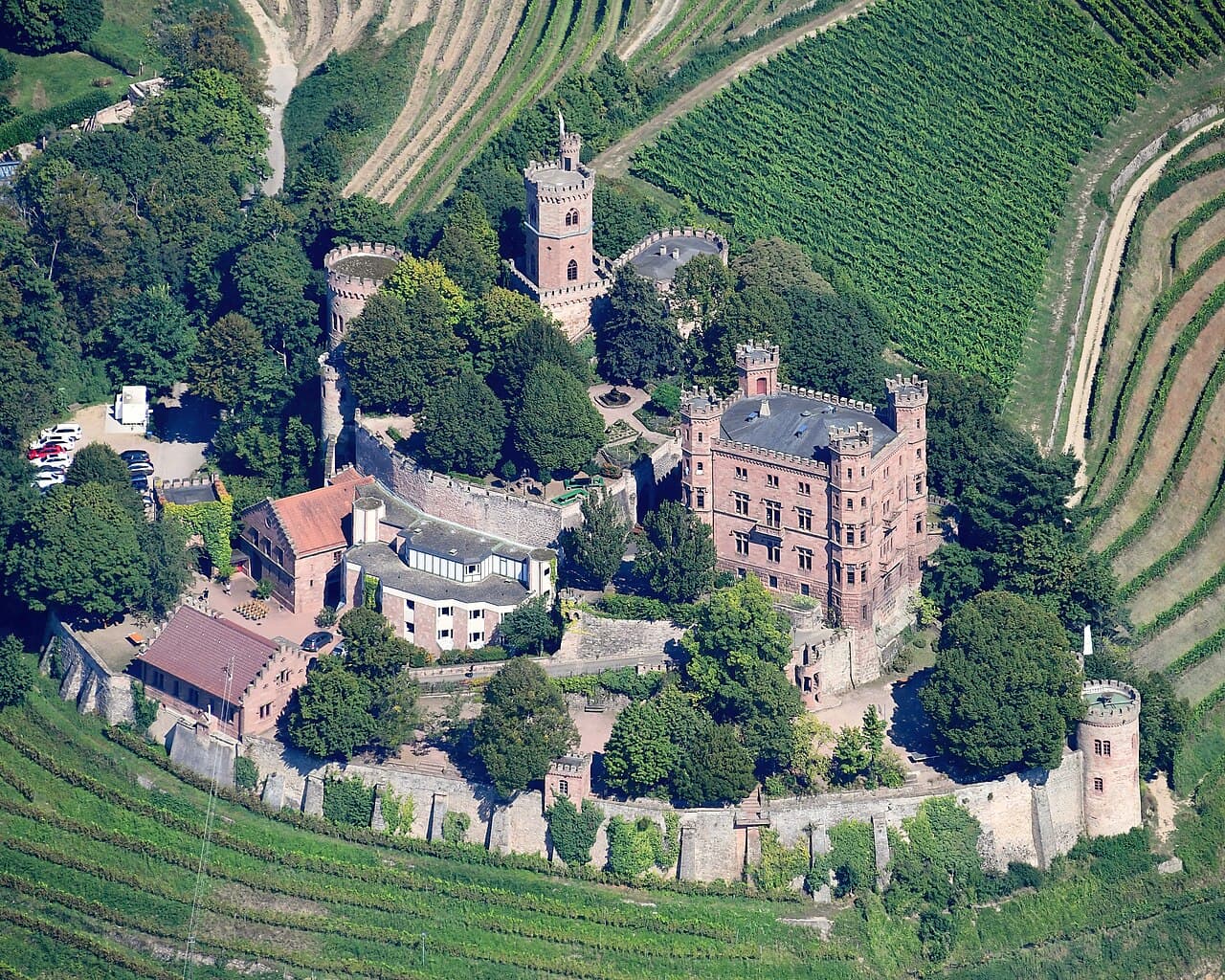
Ortenberg Castle in Ortenau, Germany
Ortenberg, Germany
High Medieval (11th–13th c.)

Ortenberg Castle (German: Schloss Ortenberg) is a prominent hill castle located above the town of Ortenberg in the Ortenau region of Germany. It commands a strategic position at the end of the Kinzig Valley, nestled between the towns of Offenburg and Gengenbach. This castle is one of the most significant medieval fortifications in the area and serves as a key historical landmark of the Ortenau district.

Historical origins and strategic importance

The castle's origins date back to the 11th and 12th centuries, during the High Medieval period. It was constructed by the influential House of Zähringen, a noble family that played a vital role in the development of southwestern Germany. The primary purpose of Ortenberg Castle was to protect the Kinzig Valley, a crucial route for trade and military movement. Its elevated position on a hill provided excellent visibility and defense advantages against potential invaders.

Architectural features and layout

As a hill castle, Ortenberg Castle exhibits typical characteristics of medieval fortifications designed to utilize natural terrain for defense. The castle complex includes robust stone walls, defensive battlements, and a commanding keep or donjon that served as the last line of defense and residence for the lord. The castle's layout likely included a courtyard, gatehouse, and various outbuildings necessary for sustaining a garrison and administration.

Over centuries, the castle underwent modifications to adapt to changing military technologies and residential needs. Although much of the original medieval structure remains, some parts have been restored or repurposed, reflecting architectural influences from later periods.

Later history and current use

Following its medieval military function, Ortenberg Castle experienced periods of decline and restoration. Its strategic importance diminished with the advent of modern warfare and political changes in the region. In contemporary times, the castle has been preserved as a cultural monument and adapted for public use.

Today, Ortenberg Castle houses a youth hostel, offering visitors a unique opportunity to stay within historic walls while exploring the surrounding natural and cultural landscape. The castle's preservation allows for educational tours and events that highlight its medieval heritage and architectural significance.

Location and accessibility

Situated in the state of Baden-Württemberg, Ortenberg Castle overlooks the picturesque Kinzig Valley, providing panoramic views of the surrounding countryside. Its proximity to towns like Offenburg and Gengenbach makes it accessible for visitors interested in medieval history and castle architecture.

Significance in regional history

The castle's association with the House of Zähringen links it to a broader narrative of territorial control and noble power in medieval southwestern Germany. It exemplifies the military and administrative strategies of the time, serving as a protective stronghold and symbol of feudal authority.

Ortenberg Castle remains a valuable heritage site, reflecting the architectural and historical developments of the High Medieval period and the evolution of castle construction in the region.

Frequently asked questions (FAQ)

How do I get to Ortenberg Castle?
Ortenberg Castle is located above the town of Ortenberg in Baden-Württemberg, Germany. It is accessible by local roads from Offenburg and Gengenbach, with parking available nearby for visitors.
What is the historical significance of Ortenberg Castle?
Ortenberg Castle was built in the 11th and 12th centuries by the House of Zähringen to protect the Kinzig Valley. It played a crucial role in regional defense and administration during the High Medieval period.
Can I stay overnight at Ortenberg Castle?
Yes, the castle currently operates as a youth hostel, allowing visitors to experience staying within a historic medieval castle setting.
What architectural features can I see at Ortenberg Castle?
Visitors can observe typical hill castle features such as stone walls, battlements, a keep or donjon, and a courtyard. The castle's design reflects medieval defensive architecture adapted to its hilltop location.
When is the best time to visit Ortenberg Castle?
The castle is best visited during the warmer months from spring to early autumn when weather conditions are favorable for exploring the hilltop and surrounding valley views.

Photo gallery

Ortenberg Castle
Click to view

Photo by Carsten Steger•CC BY-SA 4.0

1 photo • Click any image to view in full screen

Information

Hill Castle

Loading map...

Visitor reviews

No reviews yet. Been here? Write the first review and help other travelers!

Write the first review

Visited this castle? Share your experience

Your review helps other travelers and adds first-hand knowledge to our encyclopedia.

Write a review

(5/5)

0/2000 characters

Your review will be visible after admin approval

Nearby castles

7.5 km

Staufenberg Castle

Durbach, Germany

Staufenberg Castle stands as a remarkable example of a high medieval hill castle in the scenic region of Durbach, Germany. Originally constructed in the 11th century, though first documented in the 12th century, this castle has witnessed significant historical events and architectural transformations that reflect the evolving needs and tastes of its noble owners. Its strategic location atop a rocky promontory at approximately 383 meters above sea level provided formidable natural defenses, characteristic of castles built during the High Middle Ages. The castle’s history is deeply intertwined with the regional power struggles and noble lineages of southwestern Germany. Early records associate the castle with the lords or counts of Staufenberg between 1132 and 1188, who were connected to nearby religious foundations. It is plausible that the castle was originally built by ministerial servants of the Dukes of Zähringen, a powerful noble family whose influence peaked in the 12th century. After the extinction of the Zähringen line in 1218, the castle passed through the hands of several noble families including the Counts of Urach-Freiburg and the Eberstein family, before finally coming under the control of the Margraves of Baden by 1366. Historical significance and noble ownership Throughout its history, Burg Staufenberg occasionally functioned as a Ganerbenburg, a type of castle jointly held by multiple noble families. This arrangement was common in medieval Germany to manage inheritance and territorial claims, reflecting the castle’s importance as a regional power center. The castle endured considerable hardship during the Thirty Years’ War (1618-1648), suffering damage from military actions and later being looted in 1689 by the French army during the Nine Years’ War. In the aftermath of these conflicts, the castle’s ownership shifted when the Margrave of Baden granted it as a fief to Johann Christoph von Greiffen, a court marshal who had recently been ennobled as a baron by the Emperor. This transfer marked a period of relative stability before the Margrave reacquired the property in 1693. The castle remained in the hands of the Baden family, who transformed it in the 19th century. Architectural evolution and 19th-century romantic remodeling Starting in 1832, Staufenberg Castle underwent extensive remodeling that altered much of the medieval fortress into a Romantic-style residence. This transformation reflected the 19th-century European fascination with medieval architecture, blending historic fortress elements with aesthetic enhancements to create a picturesque noble estate. The remodeling included the adaptation of the castle’s interiors and exteriors to suit residential and representational functions rather than purely defensive purposes. Medieval defensive features The core of the castle is the palas, or main residential building, which incorporates parts of a bergfried—a tall defensive tower typical of medieval castles used as a refuge and lookout. The bergfried elements embedded within the palas highlight the castle’s original military function. The castle is situated on a rocky promontory, with a dry moat about 10 meters below the main defensive position, emphasizing its strategic design for defense. Later adaptations and current use To the west of the main structure lies a platform now used as a terrace, accessible through the castle tavern known as the Burgschenke. This adaptation showcases how the castle’s spaces have evolved from military and residential uses to hospitality and event functions. Today, the castle is privately owned by the family of Baden and operates as a winery known as the Margravial Baden Wine Estate. It is also available for rent for weddings and other special events, blending its rich heritage with contemporary cultural uses. Site layout and remaining structures The castle complex occupies a commanding position on a rocky hilltop, which provided natural protection and a vantage point over the surrounding landscape. The defensive design includes remnants of walls, the bergfried integrated into the palas, and the dry moat that once served as a key fortification element. Although no original 11th-century structures survive intact, the layered architectural fabric reveals the castle’s evolution from a medieval fortress to a romanticized noble residence. Despite the lack of extensive archaeological finds such as inscribed stones or medieval artifacts, the visible remains of Staufenberg Castle offer valuable insights into the defensive strategies and residential comforts of a high medieval hill castle. The combination of medieval fortification elements with 19th-century romantic modifications creates a unique cultural landmark within the Baden wine region. Visiting Staufenberg Castle today Visitors to Staufenberg Castle can experience a blend of history, architecture, and viticulture. The castle’s picturesque setting and well-preserved structures make it a popular destination for those interested in medieval architecture and German noble history. The castle tavern provides a welcoming atmosphere for guests to enjoy local wines produced on-site, while the terrace offers panoramic views of the surrounding vineyards and the Black Forest foothills. Its use as a venue for weddings and cultural events adds a contemporary dimension to the castle’s long history, allowing visitors to engage with the site in a meaningful and memorable way. The castle’s private ownership ensures its preservation and continued integration into the cultural landscape of the region.

High Medieval (11th–13th c.)
Details
10.7 km
Alt-Geroldseck Castle — Germany castle

Alt-Geroldseck Castle

, Germany

Alt-Geroldseck Castle is a significant example of a high medieval hill castle located in Germany, with origins tracing back to the 11th century. Although now in ruins, the castle's remains provide valuable insight into medieval fortification techniques and the historical context of the region during the Middle Ages. Historical context and origins The castle was constructed during the high medieval period, a time characterized by the widespread establishment of fortified structures across Europe. These castles served both defensive and administrative purposes, often controlling strategic routes and local territories. Alt-Geroldseck Castle was likely built to oversee and protect the surrounding lands, reflecting the feudal system's need for military strongholds. Architectural features and layout As a hill castle, Alt-Geroldseck was strategically positioned on elevated terrain, which provided natural defense advantages. The castle's design would have included typical medieval fortifications such as stone curtain walls, a keep or donjon, and possibly towers for surveillance and defense. Although much of the structure is now in ruins, archaeological studies have revealed foundations and remnants that hint at its original layout. Defensive structures The castle likely featured battlements and arrow slits integrated into its walls, allowing defenders to repel attackers effectively. The elevated position combined with these architectural elements would have made Alt-Geroldseck Castle a formidable fortress in its time. Decline and current condition Over the centuries, Alt-Geroldseck Castle fell into disuse and was eventually abandoned, leading to its current state as ruins. The passage of time and natural elements have caused significant deterioration, but the site remains an important archaeological location for understanding medieval fortifications in Germany. Archaeological significance and preservation Today, the castle is classified as an archaeological ruins site, attracting historians and archaeologists interested in the high medieval period. Excavations and preservation efforts aim to protect the remaining structures and uncover further details about the castle's history and architecture. Visiting alt-geroldseck castle Although the castle is in ruins, it offers visitors a glimpse into medieval history and architecture. The site is accessible for those interested in exploring historical fortifications and enjoying panoramic views from the hilltop location. Visitors should prepare for uneven terrain and limited facilities due to the castle's archaeological nature.

High Medieval (11th–13th c.)
Details
12.4 km
Hohengeroldseck Castle Ruins — Germany castle

Hohengeroldseck Castle Ruins

Schönberg, Germany

Hohengeroldseck Castle ruins stand as a significant medieval archaeological site located in Schönberg, Germany. Dating back to the 13th century, this castle was originally constructed around 1250 and served as the ancestral seat of the Counts of Hohengeroldseck. It is a prime example of a high medieval hill castle that played an important role in regional power struggles during the Middle Ages. Historical significance and ownership The castle was built during a period of territorial consolidation and feudal expansion in the Holy Roman Empire. The Counts of Hohengeroldseck established their dominion here, using the castle as a fortified residence and administrative center. Throughout its history, the castle endured multiple military confrontations, notably two significant sieges in 1426 and 1486. These conflicts reflected the turbulent political landscape of the region, involving rival noble families and shifting alliances. Architectural features and layout Although now in ruins, archaeological studies and remaining stonework reveal that Hohengeroldseck Castle was constructed primarily from local stone, featuring typical high medieval defensive elements. The castle was strategically positioned on a hill, utilizing natural elevation for defense. Key features likely included a keep or donjon, curtain walls, and fortified gates. The layout would have incorporated residential quarters, storage facilities, and defensive battlements designed to withstand sieges. Defensive structures The castle's elevated location provided commanding views of the surrounding landscape, allowing defenders to monitor approaching forces. The walls were thick and robust, designed to resist attacks from siege engines common in the 13th to 15th centuries. Although much of the superstructure has collapsed, remnants of towers and gatehouses indicate a complex defensive system. Destruction and current condition Hohengeroldseck Castle met its demise during the War of the Palatine Succession when French troops invaded the region in 1689. The castle was deliberately set ablaze and suffered complete destruction, leaving it in ruins ever since. Today, the site is classified as archaeological ruins and is partially excavated, offering valuable insights into medieval fortification techniques and noble residences. Archaeological and cultural importance The ruins of Hohengeroldseck Castle attract historians and visitors interested in medieval architecture and feudal history. Excavations have uncovered foundations and artifacts that contribute to understanding the lifestyle and defensive strategies of the period. The site is protected as a cultural heritage landmark and serves as a reminder of the region's medieval past. Visiting the ruins Visitors to the castle ruins can explore the remains and enjoy panoramic views of the surrounding countryside. While the site lacks extensive facilities, it provides an authentic experience of medieval fortifications in their natural setting. Interpretive signage helps contextualize the castle's history and significance.

High Medieval (11th–13th c.)
Details