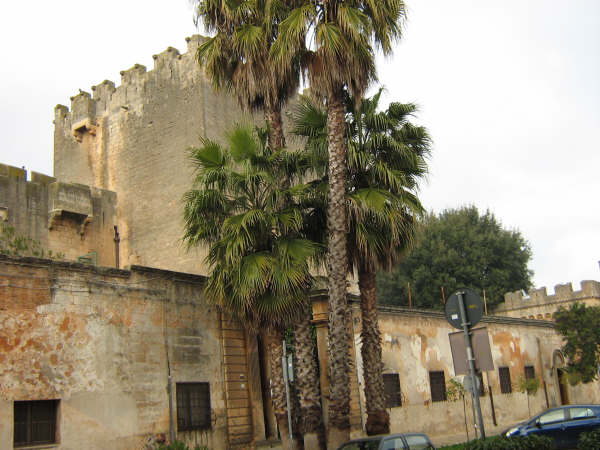
Oria Castle
Oria Castle, also known as the Swabian Castle, stands as a monumental example of medieval military architecture in the town of Oria, located in the Puglia region of southern Italy. This imposing fortress, with origins dating back to the 11th century, was extensively rebuilt between 1225 and 1233 under the direction of Holy Roman Emperor Frederick II, a ruler renowned for his architectural patronage and strategic military constructions. The castle's enduring presence marks it as a key historical and cultural landmark in the region, reflecting the complex layers of political and military history that shaped southern Italy during the High Medieval period.
The castle's triangular layout is distinctive, dominated by three prominent towers: the Quadrata (Square Tower), the Del Cavaliere (Knight's Tower), and the Del Salto (Jump Tower). The Quadrata Tower dates back to the original Swabian construction phase under Frederick II, while the other two towers were added during the subsequent Angevin domination in the late Middle Ages. This architectural evolution illustrates the castle's ongoing military significance and adaptation to changing defensive needs over centuries.
Architectural features and defensive design
Oria Castle's architecture is a testament to the strategic military engineering of the High Medieval era. Its triangular plan is relatively rare among Italian castles, designed to optimize defense by minimizing vulnerable angles and maximizing the effectiveness of its three towers. The Quadrata Tower, the oldest and most robust, served as the main keep and a final refuge during sieges. The Del Cavaliere and Del Salto towers were later additions, enhancing the castle's defensive perimeter and providing vantage points for surveillance and archery.
The castle's thick stone walls and battlements were constructed to withstand prolonged assaults, while its elevated position offers commanding views over the surrounding town and countryside. This vantage point was crucial for early detection of approaching enemies and for controlling the nearby territory. The castle's ramparts and fortified gates further underscore its role as a military stronghold.
Historical context and significance
Commissioned by Frederick II, Oria Castle was part of a broader network of fortifications across southern Italy intended to consolidate imperial control and defend against both external invasions and internal rebellions. Frederick II, known as the "Stupor Mundi" (Wonder of the World), invested heavily in castle construction, blending functionality with elements of grandeur and sophistication.
Throughout its history, the castle has been inhabited by princes, knights, and noblemen, serving not only as a military fortress but also as a residence and administrative center. Its ownership and control shifted through various ruling powers, including the Angevins, who left their mark architecturally and culturally. These transitions reflect the turbulent medieval history of the Kingdom of Naples and the wider Mediterranean geopolitical struggles.
Interior features and cultural heritage
Inside, Oria Castle reveals a rich tapestry of medieval life. Visitors can explore ancient frescoes that adorn the walls, offering insights into the artistic styles and religious themes of the period. The chapel within the castle is a highlight, showcasing period-appropriate religious architecture and decoration, emphasizing the spiritual dimension of castle life.
The castle's decorated halls and chambers reflect the blend of military austerity and noble elegance, with spaces designed for both defense and courtly functions. These interiors provide a tangible connection to the daily lives of its historic inhabitants and the social structures of medieval aristocracy.
Local legends and atmospheric presence
A notable aspect of Oria Castle is the local tradition known as Oria Fumosa or "foggy Oria." This legend attributes the frequent mist and fog enveloping the castle to mysterious events during its construction, adding a layer of folklore to its historical narrative. The atmospheric fog enhances the castle's dramatic silhouette, especially at sunset, creating a picture-postcard view cherished by visitors and locals alike.
The castle's presence dominates the town skyline, making it a focal point for cultural tourism and heritage appreciation in Oria. Its panoramic views extend over the Apulian countryside, allowing visitors to experience the landscape much as medieval sentinels would have.
Visiting oria castle today
Today, Oria Castle is a well-preserved monument open to the public, offering guided tours that delve into its architectural features, historical significance, and the legends that surround it. Visitors can explore the towers, walk along the battlements, and enjoy the expansive views that have made the castle a beloved landmark.
The castle's location in the heart of Oria makes it easily accessible, and its cultural events and exhibitions provide additional opportunities to engage with the region's medieval heritage. The combination of historical authenticity, architectural grandeur, and scenic beauty ensures Oria Castle remains a must-visit destination for enthusiasts of medieval history and architecture.
Frequently asked questions (FAQ)
- How do I get to Oria Castle?
- Oria Castle is located in the charming town of Oria, Italy. You can reach it by car, train, or bus from nearby cities such as Brindisi or Taranto. The castle is within walking distance from the town center, making it accessible for visitors.
- What is the historical significance of Oria Castle?
- Oria Castle dates back to the 11th century and was built by the Normans as a defensive stronghold. It has witnessed various historical events and changes in ownership over the centuries, reflecting the rich history of the region. Today, it stands as a testament to the medieval architecture and strategic importance of the area.
- When was Oria Castle built?
- Oria Castle was constructed in the 11th century during the Norman period in Southern Italy. Its construction was part of a broader effort to fortify the region against invasions and to establish control over the surrounding territories. The castle has undergone several renovations since its original construction, preserving its historical essence.
- Can I visit Oria Castle year-round?
- Yes, Oria Castle is open to visitors throughout the year, although opening hours may vary by season. It's recommended to check the official website or local tourist information for the most current visiting hours. This allows you to plan your visit according to your schedule.
- Why is Oria Castle a popular tourist attraction?
- Oria Castle is popular due to its impressive architecture, historical significance, and stunning views of the surrounding landscape. Visitors are drawn to its well-preserved structures and the opportunity to explore a piece of Italian history. The castle also hosts various cultural events and exhibitions throughout the year.
- Is it possible to access all areas of Oria Castle?
- While many areas of Oria Castle are accessible to the public, some sections may have restricted access due to preservation efforts. Visitors can explore the main towers and walls, which provide breathtaking views of Oria and the surrounding countryside. For the best experience, consider joining a guided tour that provides insight into the castle's history and architecture.
- What are the ticket prices for Oria Castle?
- Ticket prices for Oria Castle are generally affordable, with discounts available for students and seniors. Children under a certain age may enter for free. It's best to check the official website for up-to-date pricing and any special promotions that may be available during your visit.
- What is the best time to visit Oria Castle?
- The best time to visit Oria Castle is during the spring and fall when the weather is mild and pleasant. This allows for comfortable exploration of the castle and its surroundings. Additionally, visiting during local festivals can enhance your experience with cultural activities and events.
- Are there any nearby attractions to visit?
- Yes, there are several nearby attractions, including the charming streets of Oria, the Romanesque Cathedral of Oria, and the archaeological site of Egnazia. Visitors can also enjoy local cuisine at nearby restaurants, making it a perfect day trip. Exploring the surrounding countryside and coastal areas adds to the overall experience.
Information
Loading map...
Visitor reviews
No reviews yet. Been here? Write the first review and help other travelers!
Write the first reviewVisited this castle? Share your experience
Your review helps other travelers and adds first-hand knowledge to our encyclopedia.