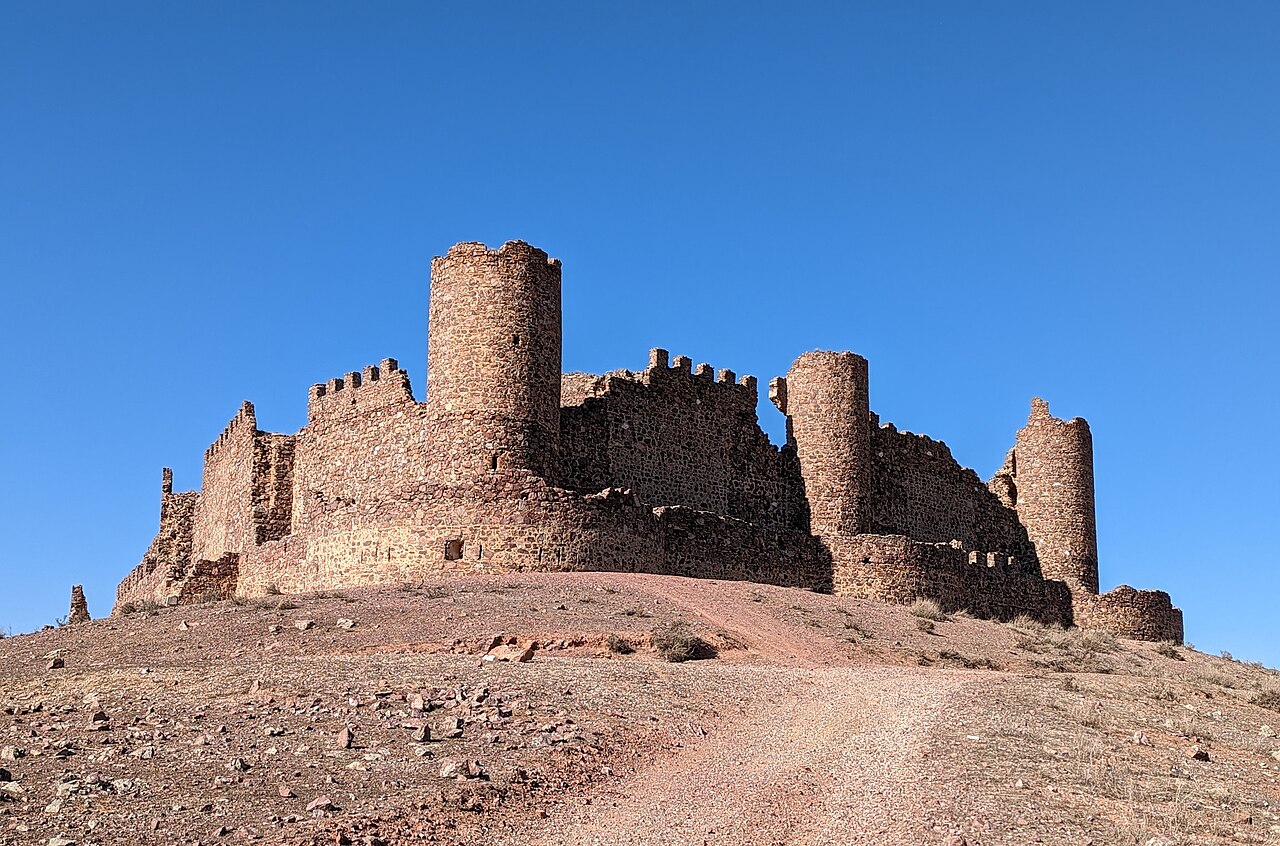
Orgaz Castle stands in the village of Orgaz, located in the province of Toledo, Spain. This late-medieval fortress reflects the turbulent history of the region during the 14th and 15th centuries. Despite its placement on flat terrain within the village, the castle was once fortified with a moat and an outer enclosure, emphasizing its defensive role.
Historical background and ownership
The castle's origins as a Christian stronghold date back to the 14th and 15th centuries. It was granted by King Pedro I to Martin Fernández, marking its importance in the medieval political landscape. Later, King Carlos I bestowed the title of Count of Orgaz upon Don Álvaro Pérez de Guzmán, linking the castle to one of Spain's noble families. However, the castle suffered significant damage when royal troops set it on fire during conflicts with the Comuneros, local rebels allied with the villagers resisting the crown.
By the 18th century, the castle was abandoned, reflecting the decline of such fortifications as military strongholds in the region.
Architectural features and layout
Structure and plan
The castle has a rectangular ground plan with a notable projecting keep on its south side, rising approximately 20 meters high. This keep served as the main defensive tower and last refuge during sieges. On the east side, a distinctive semicircular apse-like tower protrudes, adding to the castle's unique silhouette.
Its walls are primarily constructed of rubblework masonry, interspersed with patches of ashlar masonry, indicating repairs or reinforcements over time. The castle also features five small turrets that contribute to its defensive capabilities and aesthetic appeal.
Entrance and decorative elements
The entrance is situated adjacent to the keep and is marked by a Renaissance-style door that bears the coat of arms of the Guzmán family. This entrance reflects the architectural transition from medieval fortification to Renaissance influence, highlighting the castle's evolving role and status.
Defensive features and village integration
Despite its location on level ground and within the village, the castle was equipped with a moat and an outer enclosure, which would have provided additional layers of defense against attackers. The integration of the castle into the village layout indicates its importance as a local power center and protective structure for the inhabitants.
Current condition and accessibility
Thanks to various restoration efforts, Orgaz Castle remains in a good state of preservation. However, public access appears limited, as the castle was closed at the time of recent visits, and it is unclear whether it currently serves any public or private function. Its status as a well-preserved late-medieval castle makes it a notable example of regional military architecture, though it remains a modest village fortress rather than a grand palace.
Significance and architectural context
Orgaz Castle exemplifies the late-medieval military architecture typical of Castile-La Mancha, combining functional defensive design with elements of Renaissance style. Its 20-meter-high keep and unique semicircular tower distinguish it among other Spanish castles of the period. The castle's history, marked by royal patronage and conflict during the Comuneros uprising, reflects the broader political and social upheavals of 15th-century Spain.
While smaller and less famous than many Spanish fortresses, Orgaz Castle offers valuable insight into the evolution of castle construction and the shifting roles of such structures from purely military to noble residences.
Frequently asked questions (FAQ)
- How do I get to Orgaz Castle?
- Orgaz Castle is located in the town of Orgaz, Spain, which is easily accessible by car or public transportation from nearby cities like Toledo. If you're traveling by car, take the A-40 highway for a convenient route. There are also local bus services that connect Orgaz with major towns in the region.
- What is the historical significance of Orgaz Castle?
- Orgaz Castle, dating back to the 15th century, played a vital role in the defense of the region during the Reconquista. It has witnessed numerous historical events and changes in power, reflecting the rich history of Spain. The castle's strategic location made it a key stronghold during various conflicts.
- When was Orgaz Castle built?
- Orgaz Castle was constructed in the late 15th century, around the year 1475. It showcases a blend of Gothic and Mudejar architectural styles, which were prevalent during that period. The castle's design and structure have been preserved, allowing visitors to glimpse its historical grandeur.
- Can I visit Orgaz Castle year-round?
- Yes, Orgaz Castle is open to visitors throughout the year, although specific opening hours may vary by season. It is recommended to check the official website or local tourist information for the most accurate and up-to-date visiting hours. Always consider visiting during weekdays to avoid larger crowds.
- Why is Orgaz Castle popular among tourists?
- Orgaz Castle attracts tourists due to its stunning architecture, rich history, and breathtaking views of the surrounding landscape. Visitors appreciate the opportunity to explore the castle's towers and walls, which provide insight into the life of medieval times. Additionally, its proximity to other historical sites makes it a popular stop for history enthusiasts.
- Is it possible to take guided tours of Orgaz Castle?
- Yes, guided tours are available at Orgaz Castle, offering visitors an in-depth look at its history and architecture. These tours are led by knowledgeable guides who can share fascinating stories and insights about the castle's significance. It's advisable to book in advance, especially during peak tourist seasons.
- What are the ticket prices for Orgaz Castle?
- Ticket prices for Orgaz Castle are quite reasonable, typically ranging from €3 to €5 for adults, with discounts available for children and seniors. Group rates may also be available for educational or tour groups. Always check for any special promotions or family packages that may be offered during your visit.
- What is the best time to visit Orgaz Castle?
- The best time to visit Orgaz Castle is during the spring and fall when the weather is mild, and the tourist crowds are smaller. These seasons provide a comfortable climate for exploring the castle grounds and enjoying the surrounding scenery. Summer can be quite hot, while winter may bring cooler temperatures.
- Are there any nearby attractions to Orgaz Castle?
- Yes, there are several nearby attractions to explore, including the historic town of Orgaz itself, which features charming streets and local restaurants. Additionally, the city of Toledo, known for its rich history and stunning architecture, is just a short drive away. Visitors can also enjoy regional parks and natural reserves for outdoor activities.
Information
Address
Plaza Castillo, Orgaz, Toledo, Spain
Loading map...
Visitor reviews
No reviews yet. Been here? Write the first review and help other travelers!
Write the first reviewVisited this castle? Share your experience
Your review helps other travelers and adds first-hand knowledge to our encyclopedia.