Orford Castle
Orford Castle stands as a remarkable testament to 12th-century military architecture in Suffolk, England. Built between 1165 and 1173 by King Henry II, this royal castle was constructed to assert royal authority in a region previously dominated by powerful baronial families, particularly the Bigods. Its strategic location near the coast and the River Ore allowed it to serve both military and commercial purposes, reinforcing the crown's influence while supporting the growth of the port of Orford.
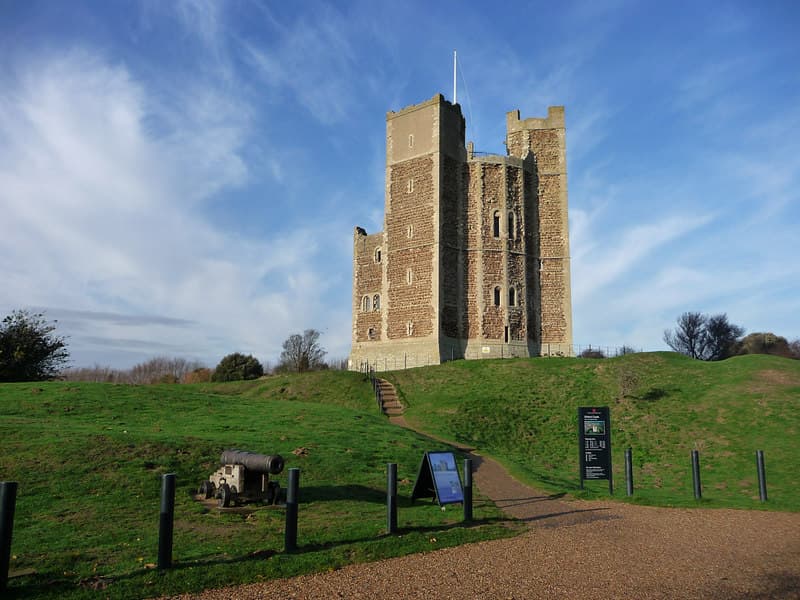
The castle's most striking feature is its well-preserved keep, described by historian R. Allen Brown as "one of the most remarkable keeps in England." This keep is architecturally unique, combining a circular central tower with three rectangular towers projecting from it, a design likely inspired by Byzantine architecture. The proportions of the keep follow precise mathematical ratios, reflecting contemporary English church architecture principles. The keep rises approximately 90 feet (27 meters) tall, with a diameter of 49 feet (15 meters) for the central tower, showcasing high-quality ashlar stonework and broad staircases designed for practical defense and comfort.
Historical context and royal ambitions
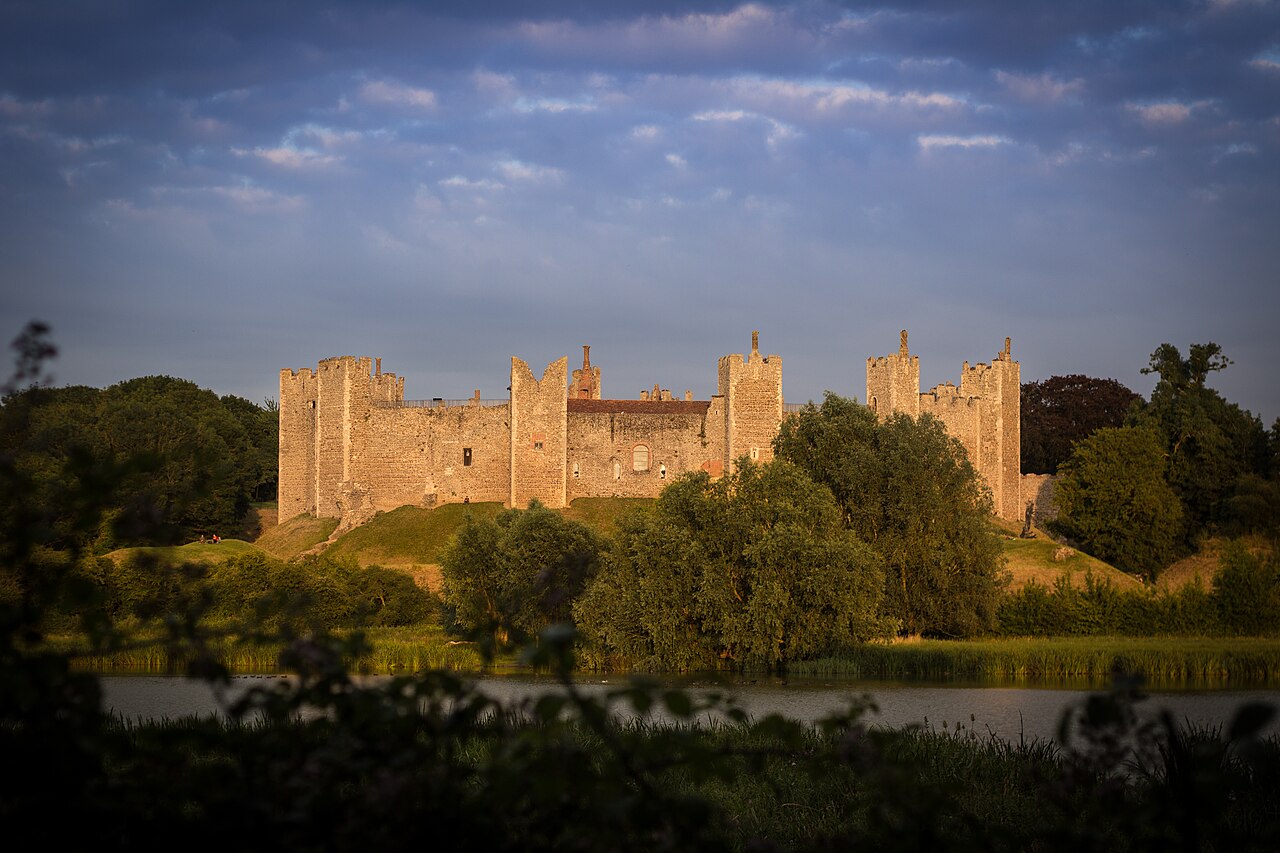
The construction of Orford Castle was a direct response to the political instability during the Anarchy, a civil war in England during the reign of King Stephen. The Bigod family, Earls of Norfolk, had controlled much of Suffolk, using Framlingham Castle as their base. Henry II sought to reassert control by building Orford Castle near the village of Orford, which had been founded around 1100 by Norman nobleman Robert Malet. The castle's establishment marked a shift from baronial to royal dominance in the region.
During the revolt of 1173–1174, Orford Castle was heavily garrisoned with 20 knights loyal to Henry II, underscoring its military significance. After Henry II crushed the rebellion, he permanently confiscated Framlingham Castle, further solidifying Orford's role as a symbol of royal power. However, after Henry's death in 1189, the castle's political importance waned, even as the port of Orford flourished and surpassed Ipswich in trade by the early 13th century.
Ownership and later history
In 1216, during the First Barons' War, the castle was captured by Prince Louis of France, who later became King Louis VIII. Subsequently, under King Henry III, governors such as John Fitz-Robert and Hubert de Burgh managed the castle. Ownership passed to the de Valoines family during King Edward I's reign and then to Robert de Ufford, 1st Earl of Suffolk, through marriage. Edward III granted the castle to the Ufford family in perpetuity in 1336.
The Ufford family made several improvements, including installing glass windows and wood paneling, but the castle was likely used only occasionally due to its limited size. Later, the castle passed through the Willoughby, Stanhope, and Devereux families. Economic decline followed as the River Ore estuary silted up and Orford Ness expanded, diminishing the port's and castle's regional importance.
Architectural features and construction details
The unique design of the keep
The keep's circular central tower with three rectangular towers is an unusual design for English castles, reflecting advanced architectural planning. The design incorporates the mathematical ratio of 1 to the square root of 2, a principle common in contemporary ecclesiastical architecture. The keep's interior features include broad staircases approximately 5 feet 6 inches (1.68 meters) wide, chambers oriented to capture early morning sunlight, and draught-proofed doors and windows for comfort.
The roof above the upper hall originally formed a domed ceiling supported by corbels and was topped by a tall steeple, adding both defensive and aesthetic value. A chapel located above the entrance on the first mezzanine level is notable for its unusual shape, which is atypical for sacred spaces, indicating the castle's multifunctional use.
Materials and construction
The masonry combines limestone from Caen in Normandy, local mudstone known as septaria, coralline stone, and limestone from Northamptonshire. Timber was sourced from Scarborough, demonstrating the extensive logistics involved in the castle's construction. The basement served as storage and included a well and a sink built into the walls, essential for sustaining the garrison during sieges.
Outer defenses and site layout
Originally, the keep was surrounded by a curtain wall with probably four flanking towers and a fortified gatehouse enclosing a small bailey or courtyard. Defensive works included a surrounding ditch, a wooden palisade, and a stone bridge. The site was enhanced by draining nearby marshes, improving both defense and the harbor's functionality.
By the 19th century, most outer defenses had disappeared due to stone quarrying, leaving only foundations and earthworks visible. The dry moats surrounding the castle remain today, providing insight into its original defensive strategy.
Decline, preservation, and modern use
By the late 18th century, the castle had fallen into decay, with only the north wall of the bailey surviving and the keep's upper floors deteriorating. In 1805, Francis Seymour-Conway, 2nd Marquess of Hertford, proposed demolishing the castle, but government intervention preserved the keep due to its use as a navigational landmark for ships approaching from Holland.
Conservation efforts began in the 19th century, including installing a new lead roof and rebuilding the upper floor. The keep's top was converted into a guest apartment. During World War II, the castle was refortified with barbed wire and temporary huts and served as a radar station, with a concrete floor installed in the southeast tower to support equipment.
After the war, wartime structures were removed, and the castle was transferred to the Ministry of Works in 1962. It is now managed by English Heritage and protected as a scheduled monument and Grade I listed building. Archaeological investigations and conservation projects have continued into the 21st century, including a recent £1 million lime render restoration completed in 2022 to protect the mudstone from weathering.
Since 2005, the upper hall of Orford Castle has housed the Orford Museum, displaying local archaeological finds and enriching visitors' understanding of the castle's historical significance.
Legends and cultural significance
Orford Castle is linked to the medieval legend of the Wild Man of Orford, a hairy, feral figure reportedly captured by fishermen around 1167 and held at the castle for six months before escaping. This story influenced local art, including "wild man" carvings on baptismal fonts in Suffolk and Norfolk, reflecting the castle's place in regional folklore.
Frequently asked questions (FAQ)
- When was Orford Castle built and by whom?
- Orford Castle was built between 1165 and 1173 by King Henry II of England to reinforce royal control in Suffolk.
- What is unique about the architecture of Orford Castle's keep?
- The keep features a rare design combining a circular central tower with three rectangular towers, inspired by Byzantine architecture and built using precise mathematical ratios.
- Can I visit Orford Castle and what are the opening hours?
- Yes, Orford Castle is managed by English Heritage and open to visitors daily from 10:00 to 17:00.
- What defensive features did Orford Castle originally have?
- The castle originally had a curtain wall with flanking towers, a fortified gatehouse, a surrounding ditch, wooden palisade, and a stone bridge.
- Why was Orford Castle preserved instead of demolished in the early 19th century?
- The government preserved Orford Castle because its keep served as a navigational landmark for ships approaching from Holland, preventing its demolition.
Photo gallery

Information
Opening hours
10:00-17:00, daily
Ticket prices
£5 adult, £3 child
Current owner
English Heritage
Website
Visit websiteAddress
Castle Green, Orford, Suffolk, England
Sources & official resources
Verify the information above using these authoritative references.
Loading map...
Visitor reviews
No reviews yet. Been here? Write the first review and help other travelers!
Write the first reviewVisited this castle? Share your experience
Your review helps other travelers and adds first-hand knowledge to our encyclopedia.