Oltářík — Czech Republic castle

Oltářík

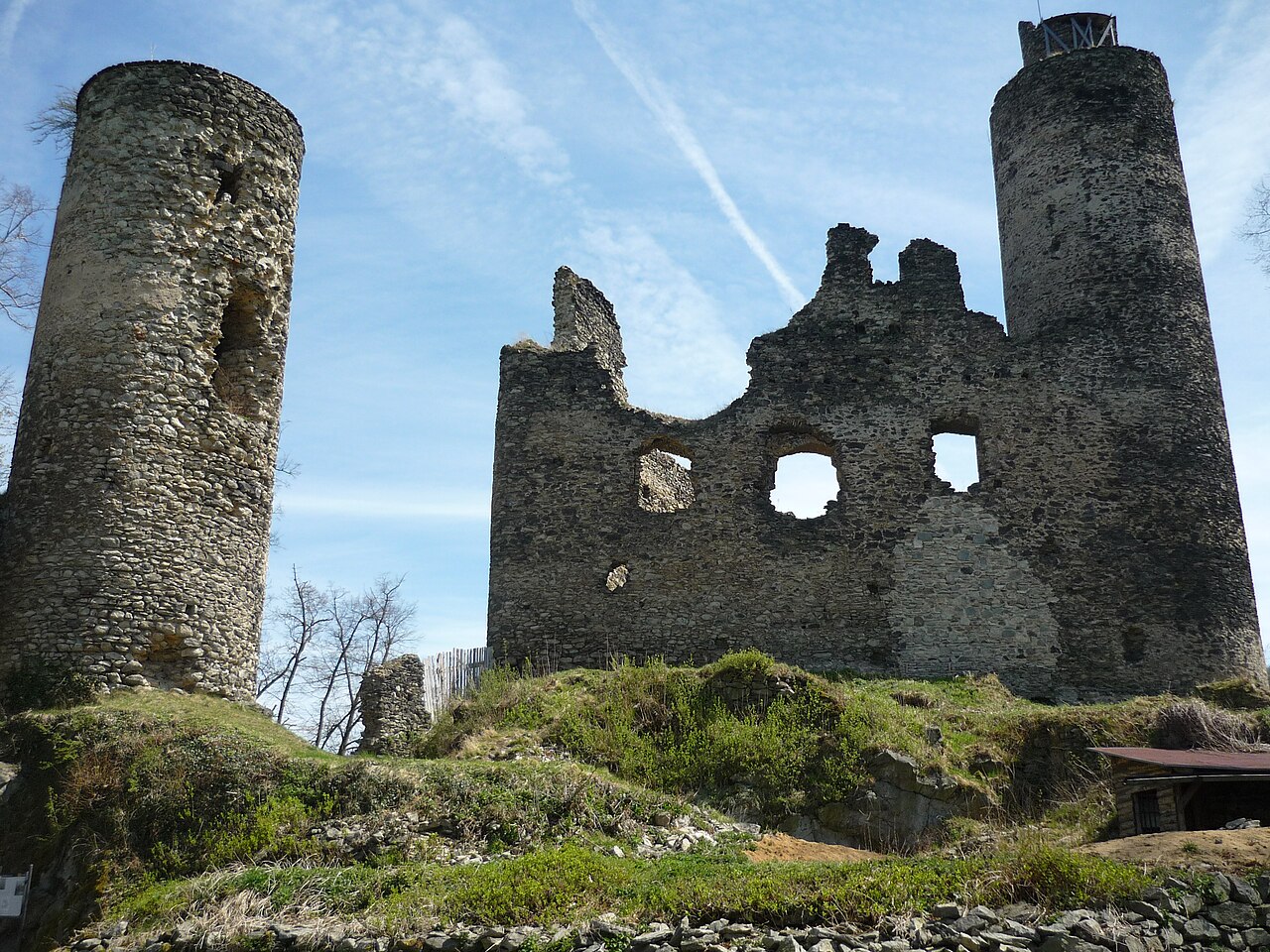
Oltářík castle ruins in Czechia
Late Medieval (14th–15th c.)
Ruins

Oltářík is a castle ruin located in Czechia dating back to the 15th century. This site represents the remains of a late medieval fortress, classified as archaeological ruins today. Although much of the original structure has been lost to time, the ruins offer valuable insight into the medieval defensive architecture and settlement patterns of the region.

Historical context and significance

The 15th century was a period marked by frequent conflicts and shifting power dynamics in Central Europe, including the lands of the Bohemian Crown. Castles like Oltářík were often constructed as fortified residences for local nobility or as strategic defensive positions. While detailed records about Oltářík's founders or specific historical events remain scarce, its construction during the late medieval period situates it within a turbulent era of feudal warfare and territorial disputes.

Architectural features of Oltářík castle

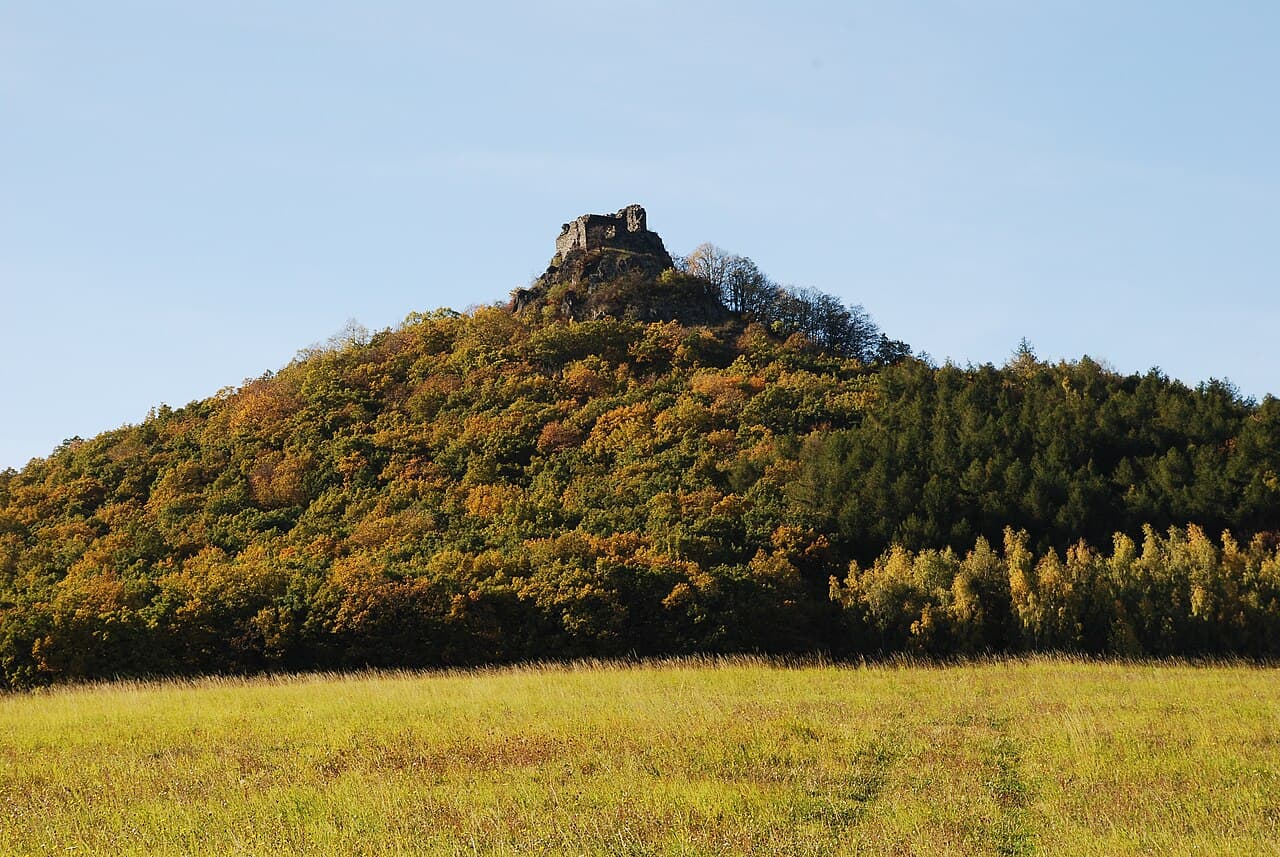
As an archaeological ruin, Oltářík retains remnants of its original fortifications. The castle was likely built on a naturally defensible site, possibly a hill or rocky outcrop, typical for hill castles of the period, although its exact classification remains uncertain due to limited surviving structures.

The remains include portions of stone walls and foundations that hint at the castle's layout. Defensive features such as battlements, towers, or a gatehouse may have existed but are no longer clearly identifiable. The castle's design would have reflected the military architectural trends of the late medieval era, emphasizing protection against siege engines and infantry attacks.

Archaeological research and preservation

Oltářík is primarily known today through archaeological investigation rather than standing architecture. Excavations have helped to uncover the castle's footprint and provided artifacts that shed light on the daily life and defensive strategies of its inhabitants. The site is preserved as a ruin, with efforts focused on stabilizing the remaining structures and preventing further decay.

Visitors to the site can observe the ruins in their natural setting, gaining an appreciation for medieval castle construction and the challenges of preservation. Interpretive signage or guided tours may be available locally to enhance understanding of the castle's historical role.

Location and accessibility

While the exact city or town of Oltářík castle is not definitively recorded, it is situated within the modern borders of Czechia. The castle's ruins are accessible to visitors interested in medieval history and archaeology, though facilities may be limited due to the site's archaeological nature.

Visiting tips

  • Wear sturdy footwear as the terrain around ruins can be uneven.
  • Check local tourism resources for information on access and any guided tours.
  • Visit during daylight hours to fully appreciate the site and surrounding landscape.

Legacy of Oltářík castle

Though now a ruin, Oltářík castle remains a testament to the medieval fortification efforts in the region. Its remains contribute to the cultural heritage of Czechia and provide a tangible connection to the late medieval period. The castle's archaeological significance continues to attract researchers and history enthusiasts interested in medieval military architecture and regional history.

Frequently asked questions (FAQ)

What is the historical significance of Oltářík Castle?
Oltářík Castle is a remarkable example of medieval architecture in Czechia, showcasing a blend of Gothic and Renaissance styles. It played a crucial role in regional defense during the Middle Ages and is tied to various historical events that shaped the area.
When was Oltářík Castle built?
The construction of Oltářík Castle began in the late 14th century, with significant expansions occurring in the following centuries. Its architectural features reflect the changing styles and historical contexts of the periods in which it was modified.
What are the opening hours for Oltářík Castle?
Oltářík Castle is typically open to visitors from 9 AM to 5 PM, with extended hours during the summer months. It's advisable to check the official website for any changes or special events that may affect opening times.
Can I buy tickets in advance for Oltářík Castle?
Yes, tickets for Oltářík Castle can be purchased in advance through the official website or at the ticket office upon arrival. Buying tickets ahead of time is recommended during peak tourist seasons to avoid long queues.
Is it possible to access Oltářík Castle with a wheelchair?
The castle has made efforts to improve accessibility, providing ramps and designated paths for wheelchair users. However, some historical areas may still present challenges, so it's best to inquire on-site for specific accessibility options.
When is the best time to visit Oltářík Castle?
The best time to visit Oltářík Castle is during the spring and early autumn months when the weather is mild, and the gardens are in full bloom. Visiting during these seasons allows you to enjoy the scenic beauty surrounding the castle.
What nearby attractions can I explore after visiting Oltářík Castle?
After exploring Oltářík Castle, visitors can enjoy nearby attractions such as the picturesque village of Český Krumlov and the stunning landscapes of the Šumava National Park. Both locations offer a rich cultural experience and beautiful natural scenery.
How do I get to Oltářík Castle from the nearest city?
To reach Oltářík Castle from the nearest city, you can take a train or bus to the closest town and then use local transport or a taxi service. It's approximately a 30-minute drive from the city center, making it an easy day trip for visitors.
What are the ticket prices for Oltářík Castle?
Ticket prices for Oltářík Castle vary depending on the type of tour and age group, with discounts available for children, students, and seniors. Adults can expect to pay a modest fee, and family packages are also available for those traveling with children.

Photo gallery

Oltářík
Click to view

Photo by Marek Kocánek•CC BY-SA 3.0

1 photo • Click any image to view in full screen

Information

Archaeological Site / Ruins

Loading map...

Visitor reviews

No reviews yet. Been here? Write the first review and help other travelers!

Write the first review

Visited this castle? Share your experience

Your review helps other travelers and adds first-hand knowledge to our encyclopedia.

Write a review

(5/5)

0/2000 characters

Your review will be visible after admin approval

Nearby castles

2.8 km

Skalka Castle

Vlastislav, Czech Republic

Skalka Castle stands as a striking example of medieval fortification and Baroque adaptation in the Bohemian Central Highlands near Vlastislav, Czechia. Constructed in the early 14th century, this hill castle was originally built as a bergfried-type fortress, a form centered around a massive defensive tower. Over the centuries, it witnessed noble ownership, military conflicts, destruction, and transformation, leaving behind a rich architectural and historical legacy. The castle's earliest documented owner was Petr von Skalka, recorded between 1357 and 1360, firmly establishing the site as a noble residence. Through the 14th and 15th centuries, the castle passed through several prominent families, including the Cappleri de Sulewicz lineage, which held it until the mid-16th century. The castle's strategic importance was underscored during the Thirty Years' War, when in 1639, Swedish troops burned it, ending its function as a noble fortress. Medieval origins and architectural features Skalka Castle was constructed on a basalt outcrop, utilizing the natural rock formation to enhance its defenses. The core of the fortress was the oval-shaped bergfried, rising approximately 15.5 meters above ground level. Built from locally sourced light-colored sandstone (opuka), the tower was positioned to command extensive views across the surrounding landscape. Its unique access via a drawbridge from a higher palace block situated on an artificially raised ledge made it especially defensible. The castle complex included a compact core and an outer bailey, separated by a moat carved directly into the rock on the southern side. This moat served as a formidable barrier against attackers. While most of the castle's structures have not survived above ground, the bergfried remains the most prominent and evocative remnant, symbolizing the castle's medieval military function. Prison inscriptions and the hunger tower Within the bergfried, inscriptions dating from the early 17th century (1605 and 1615) reveal its use as a hunger tower, a type of prison where detainees were held under harsh conditions. These inscriptions provide valuable insight into the castle's evolving role from a noble residence to a place of incarceration during turbulent times. Destruction and baroque transformation The castle's decline followed its destruction by Swedish forces in 1639 during the Thirty Years' War. It was never rebuilt as a fortress. Instead, in the late 17th century, Jan Hrzán von Harras commissioned the construction of a Baroque chateau at the foot of the ruined castle rock. This two-story rectangular building was built using stones salvaged from the decayed fortress, symbolizing a transition from medieval military architecture to Baroque residential elegance. Architectural details of the chateau The chateau's facade features long pilasters that visually unify the two floors, with ornamental window moldings characteristic of the Baroque style. Inside, a corridor on the first floor was vaulted with a segmental arch during renovations in 1959. The building is attributed to the architect Antonio della Porta, known for his work in the region during that period. Estate grounds and ancillary buildings Surrounding the chateau was an economic courtyard that supported estate operations, including a brewery, distillery, sheepfold, gamekeeper's lodge, and pheasantry. The presence of fruit trees indicates a managed landscape designed for both utility and aesthetic appeal, reflecting the lifestyle of the noble owners during the Baroque era. Historical ownership and later uses After the Hrzán family, the estate passed through several noble hands, including Marie Putzová z Adlerthurn in 1719, the Hatzfeld family from 1730 to 1796, and the Schönborn family until 1945. The Schönborns were notable owners who maintained the estate through the 19th and early 20th centuries. Following World War II, the Baroque chateau was repurposed as a storage facility for the Litoměřice State Regional Archives. It was also the birthplace of Cardinal Christoph Schönborn in 1945, linking the site to significant modern history. Repairs in 1959 helped preserve the structure, although the castle's interior furnishings were not retained. Modern preservation and cultural significance Since 2001, the castle and chateau have been owned by the Vlastislav Municipality, which has undertaken efforts to preserve the site and promote its cultural heritage. The second floor of the chateau has been adapted for exhibitions and cultural events, showcasing the history of Skalka Castle and the surrounding region. A modern viewing platform near the bergfried offers visitors panoramic views of the Bohemian Central Highlands, connecting the site’s medieval past with its present-day cultural role. Security measures continue on the ground and first floors of the chateau to stabilize the building fabric and ensure visitor safety. Visitor experience and exhibitions Exhibitions within the chateau feature the castle’s history alongside local art inspired by the landscape, creating a dynamic cultural space that honors both the medieval and Baroque heritage of Skalka. Although the original medieval interior has not survived, the site remains a poignant symbol of regional history and architectural evolution.

Late Medieval (14th–15th c.)
Details
4.3 km

Košťálov Castle

Czechia, Czech Republic

Košťálov Castle stands as a remarkable example of a 14th-century hill castle in the Czech Republic, perched atop a commanding basalt hill nearly 500 meters above sea level. Its location near the village of Třebenice affords sweeping views across the Bohemian landscape, including iconic landmarks such as Hazmburk and Říp. This strategic vantage point underscores the castle's historical role as a defensive stronghold and noble residence during the medieval period.The castle's earliest written record dates to 1372, yet architectural analysis suggests construction in the first half of the 14th century, with some historians positing an origin as early as circa 1276. While the exact founder remains uncertain, the fortress is traditionally linked to a nobleman named Petr of Košál or Košálov. Throughout its history, Košťálov served as a fortified residence for local Bohemian nobility, notably associated with the Kaplíř of Sulevice family, who controlled the castle until 1609. Ownership then passed to Adam of Vchynice.Medieval history and strategic importanceKošťálov Castle played a significant role during the turbulent times of the Hussite Wars in the early 15th century. In 1422, military activity near the castle was recorded, highlighting its strategic significance within regional conflicts. The castle functioned not only as a noble residence but also as a military fortress, guarding important routes and asserting control over the surrounding territory.By the mid-16th century, the Kaplíř family relocated their main residence to a nearby manor house, initiating a period of gradual decline for Košťálov. This shift in habitation led to the castle's abandonment, with records describing it as deserted by 1622. Despite its decline, the site has been preserved as a cultural monument since 1964, reflecting its enduring historical and architectural value.Architectural features and castle layoutUpper castle and donjon palaceKošťálov is classified as a donjon-type castle, characterized by a central stronghold tower that combined defensive and residential functions. The heart of the upper castle is a three-story rectangular palace, which housed a notable knight's hall on the second floor. This hall was distinguished by four large windows on opposite walls, designed to flood the interior with natural light, a rare feature for medieval fortifications emphasizing comfort alongside defense.Lower castle and economic structuresThe castle complex originally included a lower castle area that contained at least two residential buildings and various economic facilities vital for sustaining the fortress. Archaeological excavations in the 19th century uncovered kitchen installations in the northeastern section of the lower castle, including fragments of tiled stoves and pottery, indicating active culinary operations. Additionally, the northwest part of the lower castle revealed evidence of a smithy, with finds such as keys, horseshoes, and horse tack confirming blacksmithing and stable-related activities.Defensive works and preservationDefensive walls once encircled the lower castle, remnants of which were visible until the mid-1800s. However, subsequent construction has obscured much of these earthworks. The upper castle retains more substantial ruins, including a northeastern section of the curtain wall that still rises between four and five meters high. Early 20th-century efforts to stabilize the ruins using cement mortar were partially successful, though ongoing deterioration continues to challenge preservation.Cultural significance and artistic inspirationKošťálov Castle has inspired numerous artists and cultural figures. In the 1830s, the renowned Czech poet Karel Hynek Mácha sketched the ruins, capturing their romantic and historical aura. Later, in the 1950s, the modernist painter Emil Filla also depicted the castle, reflecting its continued influence on Czech art and heritage.The castle's legendary founding date, claimed to be in the 8th century according to a 16th-century chronicle by Václav Hájek of Libočany, lacks historical evidence but contributes to the site's mystique and cultural narrative.Visiting košťálov castle todayToday, Košťálov Castle stands as a partially preserved medieval ruin accessible to visitors interested in Bohemian history and architecture. Its elevated position offers panoramic views that enhance the visitor experience, while the visible remains provide insight into medieval castle construction and lifestyle. The site is protected as a cultural monument, ensuring ongoing conservation efforts.Visitors can explore the upper castle ruins, including the prominent curtain wall and the foundations of the donjon palace. The surrounding landscape invites exploration and reflection on the castle's historical role within the region.

High Medieval (11th–13th c.)
Details
7.8 km
Kostomlaty Castle — Czech Republic castle

Kostomlaty Castle

Kostomlaty pod Milešovkou, Czech Republic

Kostomlaty Castle stands as a significant medieval fortress located in the municipality of Kostomlaty pod Milešovkou in the Czech Republic. Established in the early 14th century by the noble lords of Rýzmburk, also known as the lords of Osek, who descended from the Hrabišici family, the castle exemplifies the strategic and architectural developments of its time. Its history is deeply intertwined with the political and military upheavals of medieval Bohemia, reflecting the turbulent era of the Hussite Wars and the shifting ownership among prominent noble families. The earliest documented mention of Kostomlaty Castle dates to 1333, when Boreš of Osek sold the fortress to Chotěbor of Herštejn. Shortly thereafter, in 1335, the castle entered royal possession under Charles IV, then Moravian margrave and later King of Bohemia and Holy Roman Emperor. This transition marked Kostomlaty as part of the royal estates, subsequently managed as a fief. By 1370, records indicate the involvement of the influential Žerotín family, highlighting the castle's role in local ecclesiastical and administrative affairs. Medieval history and ownership Throughout the late 14th and early 15th centuries, Kostomlaty Castle experienced frequent changes in ownership. In 1388, it was acquired by Jindřich Škopek of Dubá, whose family played a pivotal role during the Hussite Wars. The castle's strategic hilltop location made it a key defensive site during this period of religious and political conflict. Albrecht Škopek, a successor, notably defended the castle against repeated Hussite attacks. However, in 1434, the fortress was captured by the Hussite leader Jakoubek of Vřesovice, who became its owner the following year. The Vřesovice branch of the Kostomlaty family maintained control until the early 17th century. By the early 1600s, Kostomlaty Castle had fallen out of favor as a noble residence, deemed outdated compared to emerging architectural standards. Nobles relocated to more modern estates in the surrounding village, leading to the castle's abandonment by 1606. The outbreak of the Thirty Years’ War in 1618 resulted in the confiscation of the estate, which was then granted to the Černín family, who retained ownership for centuries. Architectural features and layout Kostomlaty Castle is a classic example of a bergfried-style hill castle, a common fortification type in medieval Central Europe. Its design comprises two main parts: the upper castle and the lower castle. The upper castle features the central defensive bergfried tower flanked by two palatial buildings arranged around an irregular trapezoidal courtyard. The lower castle served as a spacious outer bailey, containing various economic and service buildings essential for the castle's operation. Defensive structures Access to the lower castle was secured through a rectangular gatehouse, protected by a distinctive round tower notable for its square interior and a machicolation supported by robust stone corbels. This defensive feature allowed defenders to drop projectiles or boiling substances on attackers below. Remnants of the original approach road and a section of a barbican gate survive, illustrating the layered defenses employed. A transverse moat and a curtain wall separated the upper and lower castles, forming a formidable defensive barrier. A third gate faced the bergfried, providing controlled access to the inner sanctum. In the mid-15th century, the western palace was heightened by an additional storey, identifiable today by three large windows and a door connecting it directly to the bergfried's entrance. The bergfried itself is crowned by a slender upper structure encircled by a gallery, often described as resembling a "máselnice" or butter churn, a local architectural term. A wooden spiral staircase was added inside the tower during the 19th century, enhancing access to the upper levels. Fortifications and outworks The castle's defense was reinforced by two main rings of curtain walls. The outer wall, known as the parkán wall, enclosed the broader castle complex, while an inner curtain wall provided a secondary line of defense. Mid-15th-century enhancements included two square bastions on the southern parkán wall facing inward, and a two-room building adjoining the eastern section of the parkán, likely serving as additional defensive or service spaces. Archaeological investigations have uncovered two fortified enclosures related to siege activities surrounding the main castle. The larger enclosure, approximately 370 meters southwest, is roughly oval-shaped and measures about 210 by 70 meters. It is surrounded by a substantial earthen rampart up to five meters high and fourteen meters thick, with a double ditch system protecting its southern boundary. A smaller enclosure lies about 175 meters west of the castle, its function less clear but considered part of the defensive complex. Archaeological finds and cultural significance Excavations in the siege enclosures have yielded a variety of metal artifacts, including arrowheads, axes, nails, chain links, padlocks, horseshoes, knives, crossbow bolts, and early gunpowder weapon projectiles. These finds provide tangible evidence of the military engagements and the evolution of medieval warfare at Kostomlaty. In the 19th century, the lower castle's courtyard saw the construction of a recreational inn by Josef Fenzel in 1841, who also displayed archaeological finds on-site. Although this development disturbed potential archaeological layers, it contributed to the site's cultural heritage. The inn and an associated lookout tower were destroyed in the 1950s, but the site remains a focal point for historical interest. Today, the castle exists mainly as ruins, with fragments of the bergfried, palaces, curtain walls, and gate structures still visible. The remains of the 19th-century inn and cellar also survive in the lower castle area. Located at an elevation of 566 meters above sea level, the castle offers panoramic views of nearby mountain ranges and settlements, enhancing its appeal as a historical and tourist site. Local folklore adds a mystical dimension to Kostomlaty, with tales of a nearby spring reputed for its healing properties. The castle also featured as a filming location in 2007 for a movie inspired by the fairy tales of Jan Drda, linking the site to Czech cultural traditions and storytelling. Conservation and modern use Interest in preserving Kostomlaty Castle revived towards the end of the 20th century. Since 1998, a civic organization has led conservation efforts focused on stabilizing the remaining structures and preventing further decay. These initiatives culminated in the restoration and reopening of the main bergfried tower as a lookout point in 2014, allowing visitors to appreciate both the castle's architecture and its commanding views. The castle's preservation highlights the importance of medieval hill castles in Czech heritage, offering insights into feudal life, military architecture, and regional history. Kostomlaty remains an evocative site where history, archaeology, and legend converge, attracting scholars, tourists, and cultural enthusiasts alike.

High Medieval (11th–13th c.)
Details