Olsztynek
Olsztynek Castle, located in the town of Olsztynek, Poland, is a remarkable example of a late medieval hill castle constructed by the Teutonic Order in the 14th century. Founded between 1349 and 1366 under the command of Günter von Hohenstein, the castle was strategically positioned on a peninsula surrounded by the waters of Lake Jemiołowo, providing natural defense advantages. Its primary purpose was administrative and military rather than religious, making it unique among Teutonic castles, which often served as monastic centers or grand masters’ residences.
Architectural design and construction
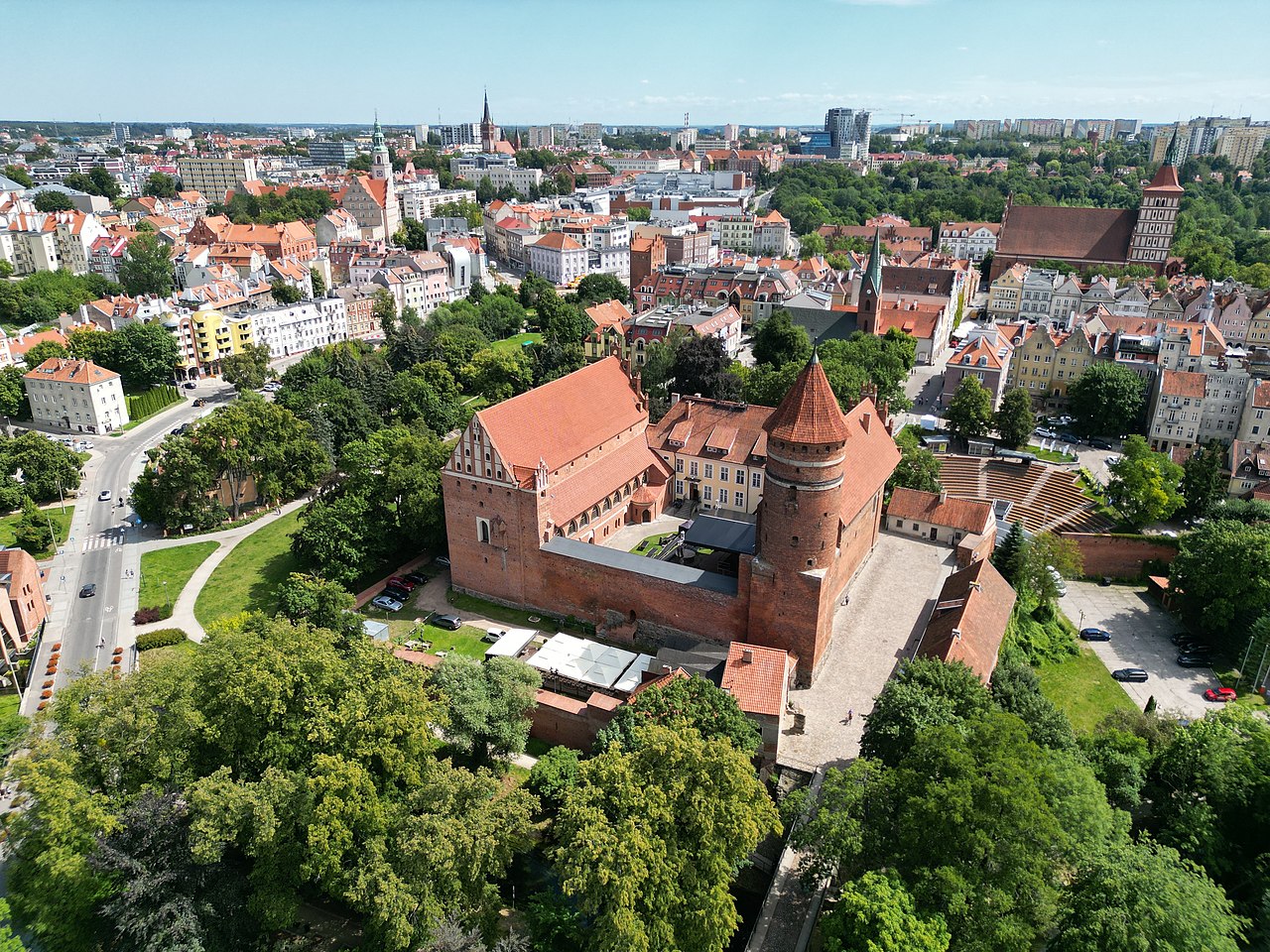
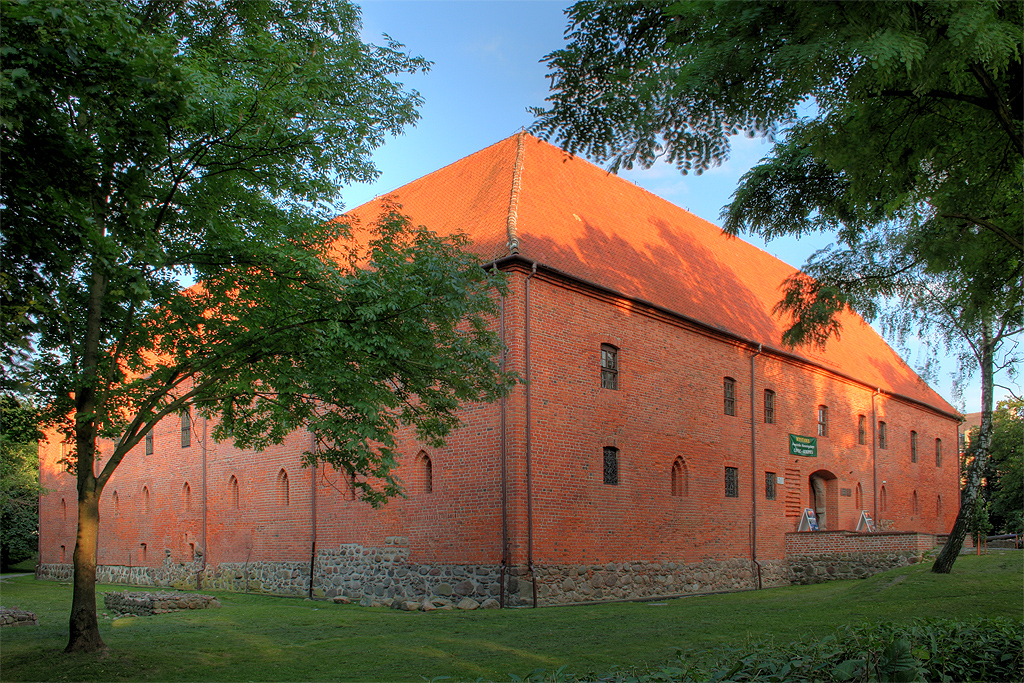
The castle was built on a regular rectangular plan with three main wings and a defensive wall featuring a southern gate. It was constructed using red brick typical of gothic teutonic architecture, laid on a foundation of granite stone. The northern wing was the principal residential building, measuring approximately 10.7 by 28.4 meters. This three-story structure was vaulted in the basement with cross-ribbed vaults supported by a central pillar, housing essential rooms such as the chapel, refectory, armory, and guest chambers. The castle’s upper floors served as granaries and included a gallery for guards with numerous arrow slits, emphasizing its defensive function.
Additional fortifications included a second line of curtain walls with corner towers surrounding the castle, enhancing its defensive capabilities. The castle’s fortifications were integrated with the town’s walls and a water-filled moat, creating a fortified complex that included a small fortified suburb with economic functions such as a malt house and brewery.
Historical significance and events
Olsztynek Castle played a significant role in the turbulent history of the region, especially during the conflicts between the Teutonic Order and the Kingdom of Poland. After the Battle of Grunwald in 1410, the castle and town surrendered without resistance to King Władysław II Jagiełło. However, during the subsequent Polish-Teutonic wars, the castle was deliberately destroyed in 1414 by the Teutonic Grand Master Michał Küchmeister to prevent its capture. It was rebuilt shortly thereafter and continued to serve as a military and administrative center.
During the Thirteen Years’ War (1454–1466), the castle initially sided with the Prussian Confederation opposing the Teutonic Order but later reverted to the Order’s control. In the Polish-Teutonic war of 1519–1521, the castle was captured by Polish forces under hetman Mikołaj Firlej and subsequently became part of the Duchy of Prussia following the secularization of the Teutonic Order in 1525. It then served as the residence of a ducal starost (governor).
Later transformations and current use
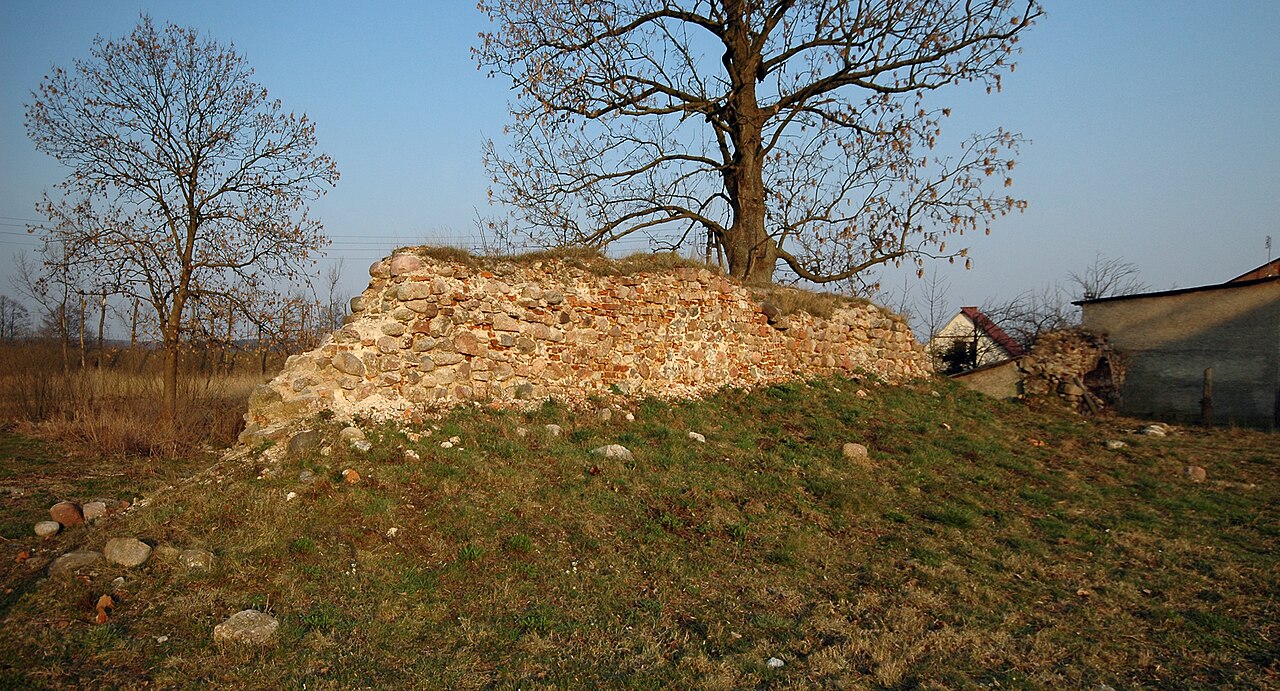
In the 17th century, the castle lost much of its military importance and was converted into an arsenal during the Polish-Swedish wars. Defensive walls were dismantled, and arrow slits were replaced with larger windows, reflecting its reduced defensive role. By the late 18th century, many medieval structures were demolished, leaving mainly the basement and ground floor of the northern wing.
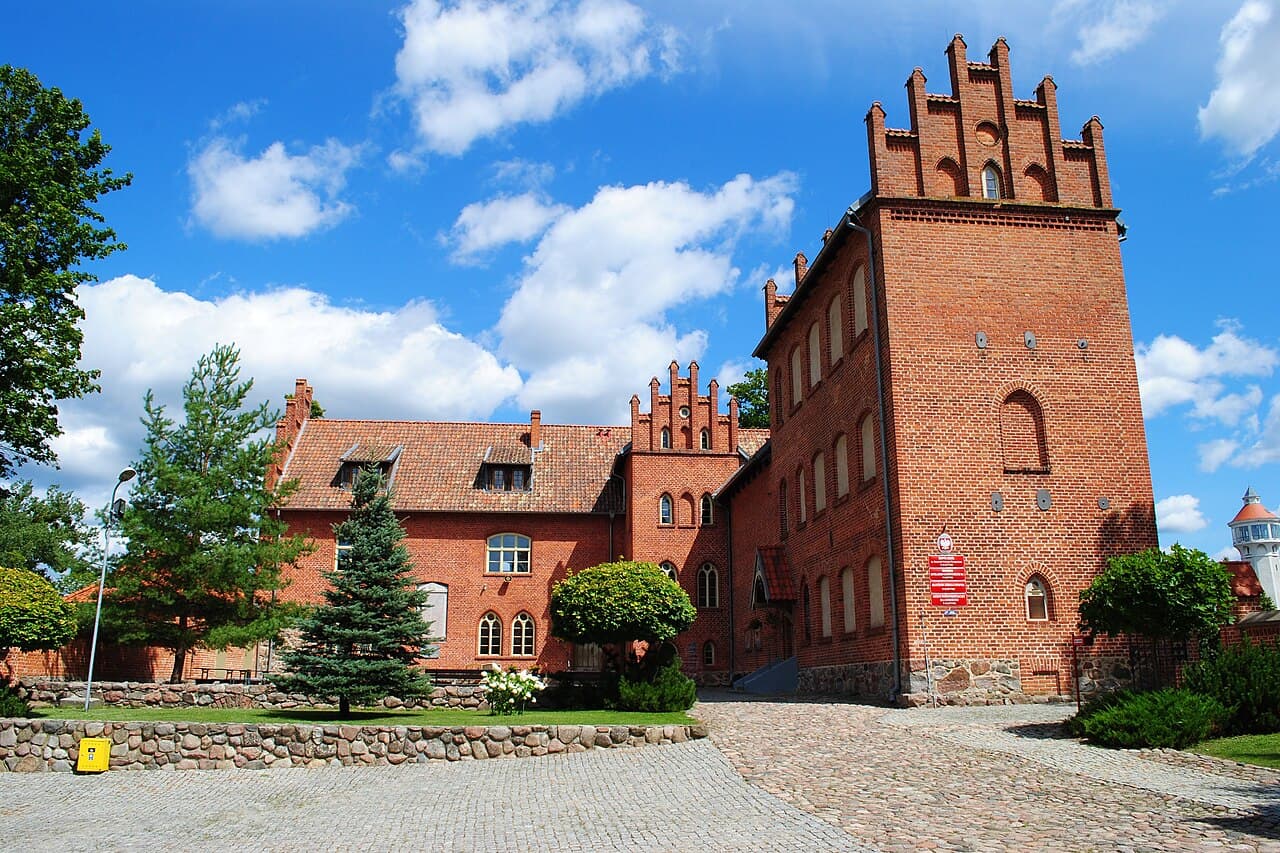
Between 1847 and 1849, the castle ruins were adapted into a school, with a new building erected on the foundations of the eastern wing. The castle survived significant damage during both World Wars and was restored between 1946 and 1954. Today, it continues to function as an educational institution, preserving its historical legacy.
Architectural remnants and cultural heritage
Despite neogothic renovations, Olsztynek Castle retains clear traces of its medieval defensive layout. The surviving vaulted cellars with cross-ribbed vaults and fragments of the lower facades are valuable architectural elements that connect the present structure to its 14th-century origins. The castle’s massive bergfried (main tower) is a distinctive feature, emphasizing its role as a fortress rather than a monastic complex.
A commemorative plaque honors Emil Adolf von Behring, a Nobel Prize-winning immunologist who studied at the castle when it served as a school. The castle’s location on a hill overlooking the former lake and its integration with the town walls highlight its strategic importance in controlling trade routes and regional security.
Visitor information and significance
Olsztynek Castle offers visitors a unique glimpse into the military and administrative history of the Teutonic Order in Poland. Its well-preserved medieval foundations combined with later adaptations illustrate the evolution of castle architecture and function over several centuries. The site is an important cultural monument reflecting the complex history of the region and the enduring legacy of medieval fortifications in shaping local identity.
Frequently asked questions (FAQ)
- How do I get to Olsztynek Castle?
- Olsztynek Castle is located on Zamkowa Street in the town of Olsztynek, Poland. It is accessible by car and public transport, with local buses connecting the castle to nearby cities. The castle is situated on a hill, so comfortable walking shoes are recommended for the approach.
- What is the historical significance of Olsztynek Castle?
- Olsztynek Castle was a key military and administrative center of the Teutonic Order in the 14th and 15th centuries. It played a pivotal role during the Battle of Grunwald and subsequent Polish-Teutonic conflicts, reflecting the turbulent history of the region.
- Can I visit the interior of Olsztynek Castle?
- The castle currently functions as an educational institution, so public access to the interior may be limited. However, visitors can explore the exterior, the castle grounds, and view the preserved medieval architectural elements integrated into the school buildings.
- When is the best time to visit Olsztynek Castle?
- The best time to visit Olsztynek Castle is during the late spring to early autumn months when the weather is favorable for exploring the castle grounds and the surrounding town. Seasonal events and historical reenactments may also be held during this period.
- Is there an entrance fee to visit Olsztynek Castle?
- There is no general entrance fee to explore the castle grounds and exterior. However, special exhibitions or guided tours, if available, may require a ticket. It is advisable to check locally for current visitor information and any fees.
Photo gallery

Information
Sources & official resources
Verify the information above using these authoritative references.
Loading map...
Visitor reviews
No reviews yet. Been here? Write the first review and help other travelers!
Write the first reviewVisited this castle? Share your experience
Your review helps other travelers and adds first-hand knowledge to our encyclopedia.