Olomouc Fortress — Czech Republic castle

Olomouc Fortress

Olomouc Fortress: bastioned fortress in Czechia
Post-Renaissance (17th–18th c.)
Well Preserved

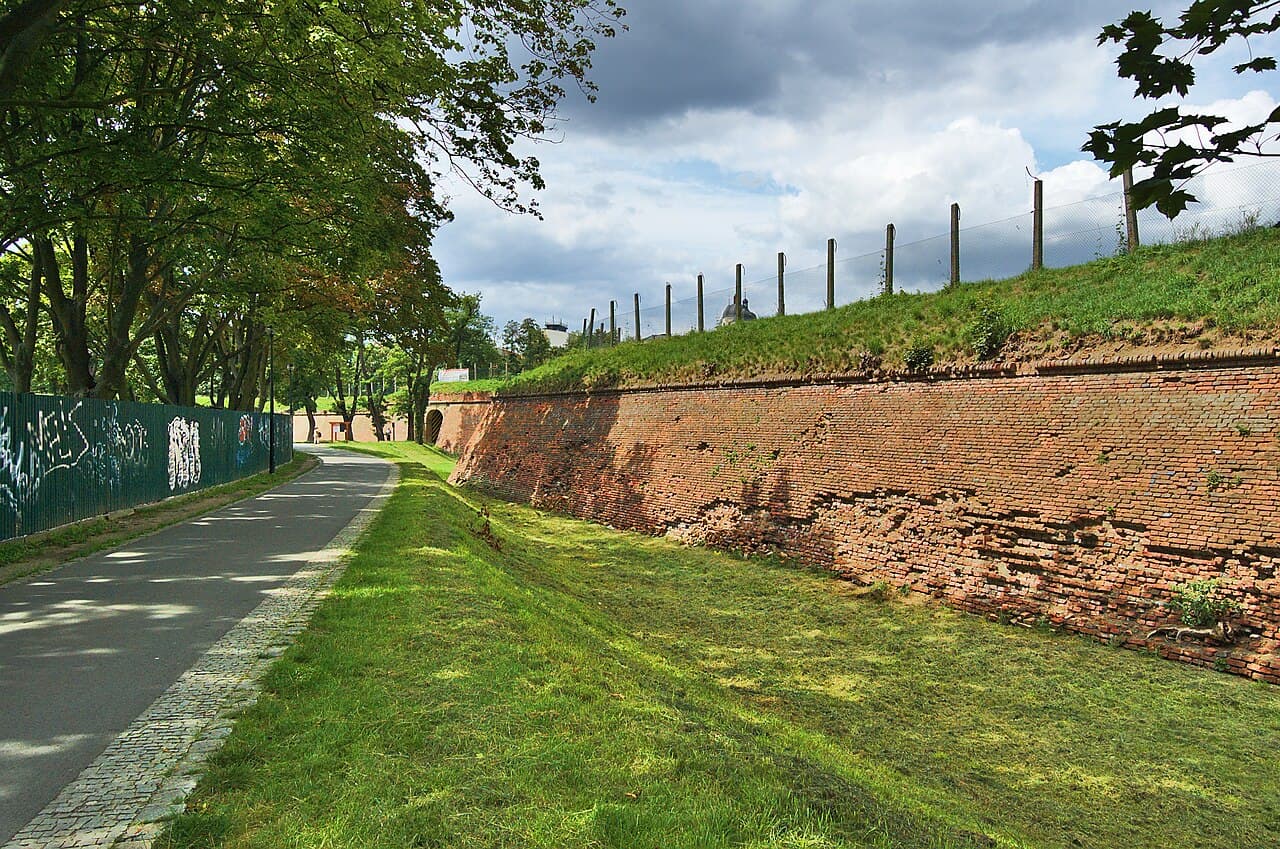
Olomouc Fortress is a significant bastioned fortress located in the city of Olomouc, in the historical region of Moravia, Czechia. This fortress is renowned for its extensive fortifications that reflect the military architectural advancements of the Early Modern period. It played a crucial role in the defense of the region, especially during the turbulent periods of the 17th and 18th centuries.

Historical background and strategic importance

The origins of Olomouc Fortress date back to the medieval era, but its most notable development occurred after the Thirty Years' War, when the Habsburg monarchy invested heavily in modernizing its defensive structures across its territories. The fortress was transformed into a bastioned fortress during the 17th century, incorporating the latest military engineering concepts designed to withstand artillery sieges.

Its location in Olomouc, a key regional center, made it a strategic stronghold controlling important trade routes and military passages in Moravia. The fortress was part of a broader defensive system aimed at protecting the Habsburg lands from invasions, particularly from the Ottoman Empire and later from Prussian forces.

Architectural features and layout

The fortress is characterized by its star-shaped bastions, which allowed defenders to cover all approaches with overlapping fields of fire, minimizing blind spots. These bastions were connected by thick curtain walls and surrounded by deep moats that further impeded enemy advances.

The design reflects the principles of the trace italienne style, a hallmark of bastioned fortresses built in the Early Modern period. The fortress complex includes multiple layers of defense, such as ravelins, hornworks, and covered ways, which enhanced its defensive capabilities.

Inside the fortress, there were various military buildings including barracks, arsenals, and command posts. The fortress also contained storage facilities for ammunition and provisions, enabling it to withstand prolonged sieges.

Role in military conflicts

Throughout its history, Olomouc Fortress was involved in several military conflicts. It successfully resisted sieges during the Austro-Prussian War in 1866, demonstrating the effectiveness of its fortifications. The fortress's ability to endure prolonged attacks made it a formidable defensive position.

After the 19th century, with the advent of new military technologies and changes in warfare tactics, the fortress gradually lost its strategic importance. However, it remained an important military site until the early 20th century.

Preservation and current status

Today, Olomouc Fortress is recognized as a valuable cultural and historical monument. Parts of the fortress are well preserved, showcasing the impressive military architecture of the Early Modern period. The site is accessible to visitors and serves as a reminder of the region's military history.

Efforts have been made to maintain and restore sections of the fortress to ensure its structural integrity and to allow for educational and tourism activities. The fortress contributes to the cultural heritage of Olomouc and attracts history enthusiasts interested in military architecture.

Architectural significance and influence

The design of Olomouc Fortress exemplifies the evolution of fortress architecture in response to the development of gunpowder artillery. Its bastioned layout and incorporation of multiple defensive elements influenced the construction of other fortifications in Central Europe.

The fortress stands as an important example of the trace italienne style adapted to the specific geographic and strategic needs of the Moravian region. Its preservation allows for the study of military engineering techniques from the 17th century onwards.

Frequently asked questions (FAQ)

How do I get to Olomouc Fortress?
Olomouc Fortress is conveniently located in the city center of Olomouc, Czechia. You can reach it by public transportation, including buses and trams, or by walking from nearby accommodations and attractions.
What is the historical significance of Olomouc Fortress?
Olomouc Fortress has a rich history dating back to the 13th century, serving as a military stronghold and a key site during various conflicts in Central Europe. It reflects the architectural evolution from medieval fortifications to modern military structures.
When was Olomouc Fortress built?
Construction of Olomouc Fortress began in the early 17th century and continued over several decades. It was completed in the late 18th century, showcasing various styles and influences from different periods.
Can I take guided tours of Olomouc Fortress?
Yes, guided tours are available and provide an in-depth look at the fortress's history and architecture. It's recommended to check the fortress's official website for tour schedules and availability.
Why is Olomouc Fortress a popular tourist destination?
Olomouc Fortress attracts visitors due to its historical significance, stunning architecture, and panoramic views of the city. Additionally, it is situated near other attractions, making it a perfect stop for those exploring Olomouc.
Is it possible to visit Olomouc Fortress with children?
Yes, Olomouc Fortress is family-friendly and offers a variety of activities suitable for children. The spacious grounds and historical exhibits can engage younger visitors while providing educational insights.
What are the opening hours for Olomouc Fortress?
Olomouc Fortress is typically open to visitors from 9 AM to 6 PM, but hours may vary seasonally. It is advisable to check the official website for the most current opening hours before your visit.
What are the ticket prices for Olomouc Fortress?
Ticket prices for Olomouc Fortress are generally affordable, with discounts available for students and seniors. Children under a certain age may enter for free, so it's best to consult the official site for specific pricing information.
What is the best time to visit Olomouc Fortress?
The best time to visit Olomouc Fortress is during the spring and early fall when the weather is mild, and tourists are fewer. These seasons allow for a more enjoyable exploration of the fortress and its beautiful surroundings.
Are there any nearby attractions to Olomouc Fortress?
Yes, Olomouc Fortress is located near several attractions, including the Holy Trinity Column and the Olomouc Zoo. Exploring these nearby sites can enhance your visit and provide a deeper understanding of the region's culture and history.

Photo gallery

Olomouc Fortress
Click to view

Photo by Jiří Komárek•CC BY-SA 4.0

1 photo • Click any image to view in full screen

Information

Bastioned Fortress

Loading map...

Visitor reviews

No reviews yet. Been here? Write the first review and help other travelers!

Write the first review

Visited this castle? Share your experience

Your review helps other travelers and adds first-hand knowledge to our encyclopedia.

Write a review

(5/5)

0/2000 characters

Your review will be visible after admin approval

Nearby castles

0.6 km

Olomouc Castle

Olomouc, Czech Republic

Olomouc Castle stands as a monumental testament to the rich historical tapestry of the Czech Republic. Located in the city of Olomouc, this hill castle originated in the 11th century and has played a pivotal role in the region's political, religious, and military history. Its strategic position atop Václavský Hill overlooking the Morava River valley made it a key stronghold from the early medieval period onward. The castle's earliest mention in written records appears in the Chronica Boemorum in 1055, marking it as one of the oldest documented fortifications in Moravia. Over centuries, Olomouc Castle evolved from a prehistoric settlement into a fortified stone fortress, a bishop's residence, and a complex ecclesiastical center. The castle grounds encompass a diverse array of architectural styles, reflecting continuous adaptations from the High Medieval era through the Baroque period and beyond. Early origins and strategic significance The site of Olomouc Castle reveals a deep historical stratigraphy, with archaeological evidence of human activity dating back to the Eneolithic (Copper Age), the Late Bronze Age associated with the Věteřov culture, and the Hallstatt period of the early Iron Age. This long continuity of occupation underscores the location's importance as a natural defensive position and cultural hub. During the late 8th century, the fortified settlement on Václavský Hill became a significant center within the Great Moravian Empire, a powerful Slavic state that dominated Central Europe. Archaeological finds such as ceramics and weapons from this era attest to the site's military and administrative role. After the empire's decline in the early 10th century, the fortress continued to develop, reaching its zenith in the latter half of the 10th century as a commanding stronghold on a vital trade and communication route across Moravia. By the mid-11th century, the wooden fortifications were replaced by a robust stone fortress, signaling increased political stability and the growing influence of the Přemyslid dynasty. This stone castle served as the seat for the Přemyslid appanage princes who governed Olomouc, cementing the castle's role as a regional power center. Medieval prominence and architectural evolution The castle's historical prominence is highlighted by its connection to significant events and figures. In 1306, Wenceslaus III, the last ruler of the Přemyslid dynasty, was assassinated within the castle grounds, an event that marked the end of his dynasty's reign and altered the political landscape of Bohemia and Moravia. Ecclesiastical influence grew alongside the castle's military importance. The establishment of the Olomouc bishopric in 1063 integrated the castle into the religious governance of the region. The original church dedicated to St. Mary Magdalene was replaced by the St. Wenceslaus Cathedral in 1131, a monumental Gothic structure that remains a focal point of the castle complex. Adjacent to the cathedral stands Zdíkův palác, the bishop's palace, notable for its rectangular plan and a distinctive cylindrical stone tower. Romanesque architectural elements survive in parts of these buildings, including a characteristic window and the Chapel of St. Barbara. The castle complex expanded over the centuries with additions reflecting changing architectural styles. The 13th century brought Gothic renovations to the cathedral, while the early 16th century saw Renaissance rebuilding of the chapter house. The Baroque period from the 17th to 18th centuries introduced dramatic alterations, including new chapels and residential buildings, while the 19th century added Neo-Romanesque features such as the Chapel of the Virgin Mary Opatrovnice, designed by architect Franz Kottas. Baroque transformation and later developments Following damage sustained during the Thirty Years’ War, the castle underwent extensive reconstruction in the Baroque style. This transformation spanned nearly a century, reshaping the medieval fortress into a grand ecclesiastical complex. The Baroque period also enriched the castle grounds with artistic works, including the 1724 statue of St. John of Nepomuk by sculptor Jiří Antonín Heinz. The castle's religious character was further emphasized by the construction of chapels and residences for clergy, such as the bell-ringers’ house and the parsonage. The Church of St. Anna and other sacred buildings contribute to the spiritual atmosphere that persists at the site. Archaeological research and cultural significance Between 1972 and 1995, comprehensive archaeological excavations uncovered approximately 20,000 early medieval artifacts, illuminating the castle's multifaceted history. These finds include Romanesque masonry, bronze fittings, gilded decorations, and pottery with distinctive engobe finishes. The artifacts reveal extensive cultural exchanges with neighboring regions like Poland and Bohemia. Today, many of these archaeological remains are preserved in situ or displayed at the Olomouc Regional Museum. The castle's designation as a national cultural monument in 1962 and receipt of the European Heritage Label in 2015 recognize its outstanding historical and architectural value. Architectural layout and surviving features The castle complex is elongated, measuring roughly 200 meters long and 80 meters wide, and was originally enclosed by formidable stone walls. Its layout centers around Václavské náměstí (Wenceslaus Square), an open courtyard aligned with the cardinal directions. The eastern sector houses the St. Wenceslaus Cathedral and Zdíkův palác, with Romanesque and Gothic architectural details. The southern area includes the bell-ringers’ house, chapels, and artist studios, while the western side contains clergy residences such as the parsonage and vicar's house. The northern section features the chapter deanery and the economic courtyard, now home to the Archdiocesan Museum. The castle's defensive structures include thick stone walls and towers designed to control and protect the surrounding region. Archaeological evidence of these fortifications highlights the castle's military significance during the medieval period. Notable visitors and cultural legacy Throughout its history, Olomouc Castle has hosted numerous notable figures. The assassination of King Wenceslaus III in 1306 is one of the castle's most dramatic historical events. In the 18th century, the young Wolfgang Amadeus Mozart stayed in the Chapter Provost's house on the castle grounds, where he composed his Symphony No. 6 in F major. More recently, the castle welcomed distinguished visitors such as Mother Theresa and Pope John Paul II, underscoring its ongoing spiritual and cultural significance. Current condition and visitor experience Today, Olomouc Castle is partially preserved, with many of its medieval and Baroque structures intact or restored. The site offers visitors a unique glimpse into a millennium of Central European history, combining archaeological remains with impressive religious architecture. The castle remains an active religious center and a cultural landmark in Olomouc. Visitors can explore the castle grounds, including the cathedral, bishop's palace, chapels, and museum exhibitions. The castle's layered history and architectural diversity make it a compelling destination for those interested in medieval fortifications, ecclesiastical heritage, and Central European culture.

High Medieval (11th–13th c.)
Details
15.8 km
Sternberk Castle — Czech Republic castle

Sternberk Castle

Šternberk, Czech Republic

Šternberk Castle stands as a remarkable example of a high medieval hill castle in the Czech Republic, embodying centuries of architectural evolution and historical significance. Founded in the mid-13th century by Zdeslav of Šternberk, the castle was originally constructed as a fortified seat to secure the surrounding lands granted to him by the Bohemian crown. Its earliest documented mention dates to 1269, although construction began several decades earlier, reflecting the strategic importance of the site atop a rocky promontory overlooking the town of Šternberk and the Nízký Jeseník mountain range. The castle’s long history is marked by a series of ownership changes, architectural transformations, and episodes of conflict and restoration. Initially a stronghold of the Šternberk noble family, it later served as an episcopal residence under Bishop Albrecht Aleš of Šternberk in the 14th century, who enhanced the castle’s chapel with decorations inspired by the artistic styles prevalent at the court of Emperor Charles IV. This period underscored the castle's religious and political importance within the region. Medieval origins and early history The foundation of Šternberk Castle is closely tied to the military and political events of the mid-13th century. Zdeslav of Šternberk was rewarded for his role in repelling a Cuman invasion in 1253, receiving lands and the title of royal cup-bearer. The castle was built to consolidate his power and protect the territory. Throughout the 13th and 14th centuries, the castle was expanded and fortified, adapting to the needs of its noble occupants. During the 14th century, under Bishop Albrecht Aleš, the castle's chapel was adorned with artistic elements reflecting the Gothic style dominant at the time. This included frescoes and architectural details that connected the castle to the cultural milieu of the Bohemian royal court. Turbulence and renaissance transformation The 15th century brought significant challenges as Šternberk Castle became embroiled in the Hussite Wars. In 1430, it was occupied by Hussite forces, marking a period of conflict and instability. The castle sustained damage during these wars and later during the Thirty Years’ War in the 17th century, which left it in a state of disrepair. Following a destructive fire in the 17th century, the castle underwent substantial reconstruction under the ownership of the Berka family. They introduced Renaissance architectural elements, including a new wing featuring the Vizitkový Hall, celebrated for its intricate rib vaulting. This hall exemplifies Renaissance innovation in structural design and aesthetic refinement, combining both strength and decorative complexity. Ownership by the minsterberk princes and liechtenstein family By the late 16th century, Šternberk Castle passed to the Silesian princes of Minsterberk, descendants of King George of Poděbrady. Their tenure lasted until the mid-17th century when the castle was acquired by Prince Hans Adam I of Liechtenstein around the turn of the 18th century. The Liechtenstein family maintained ownership until the end of World War II, overseeing periods of decline as well as restoration. The Liechtensteins’ stewardship included a major Neo-Gothic restoration in 1886, led by Viennese architect Karl Gandolph Kayser. This renovation repaired structural damage and introduced Gothic revival elements such as pointed arches and decorative stonework, blending historical preservation with 19th-century stylistic trends. The castle’s interiors were updated while preserving key medieval and Renaissance features. 20th-century developments and conservation efforts In the early 20th century, between 1907 and 1909, a forest park was designed adjacent to the castle by Viennese architect Albert Esche. This landscaped area enhanced the castle’s natural surroundings and provided a picturesque setting that complements its elevated hilltop position. After World War II, the castle was nationalized, and although the Liechtenstein family sought its recovery, it remained under state ownership. Over time, parts of the castle and its fortifications showed signs of deterioration, including the eastern retaining wall of the parkán defensive enclosure, the stone bridge leading to the main entrance, and sections of the courtyard walls. Recent conservation initiatives, particularly a major restoration from 2019 to 2022, have focused on stabilizing and preserving these vulnerable elements. These efforts ensure the castle’s structural integrity and allow visitors to experience its rich historical layers. Architectural features and layout Šternberk Castle’s architecture is a palimpsest of styles and periods, reflecting its continuous adaptation over centuries. The original medieval fortress layout includes multiple wings and defensive walls, strategically positioned on a rocky outcrop approximately 300 meters above sea level. The Renaissance wing, built during the Berka family’s tenure, stands out for its Vizitkový Hall with its sophisticated rib vaulting, a hallmark of Renaissance structural ingenuity. The castle chapel, with its 14th-century medieval decoration, remains a significant cultural and religious feature, linking the site to the artistic heritage of the Bohemian crown. The 19th-century Neo-Gothic restoration introduced pointed arches, decorative battlements, and other Gothic revival motifs, harmonizing with the castle’s medieval character while enhancing its aesthetic appeal. The castle complex also includes former economic and administrative buildings that supported its role as a seat of local power. Defensive structures and surroundings The castle’s fortifications include the parkán, an outer defensive enclosure typical of medieval hill castles, designed to protect the main fortress from attack. The stone bridge leading to the entrance exemplifies medieval engineering adapted to the rocky terrain. The adjacent forest park, created in the early 20th century, provides a scenic natural buffer and recreational space, enhancing the visitor experience and preserving the castle’s historic landscape context. Cultural significance and public access Today, Šternberk Castle is managed by the National Heritage Institute’s regional office in Olomouc and serves as a museum open to the public. The first floor houses exhibitions of historic furnishings, artworks, tapestries, and antique weaponry, offering a tangible connection to the castle’s multifaceted history. The Liechtenstein family resided on the second floor until the end of World War II, after which the castle transitioned to state ownership. Its preservation and public accessibility reflect ongoing efforts to celebrate and maintain Czechia’s rich medieval and Renaissance heritage. Šternberk Castle remains a prominent cultural landmark, attracting visitors interested in medieval architecture, Renaissance art, and the complex history of Bohemia’s noble families. Its layered architectural styles and well-preserved interiors offer a unique window into Central European history.

High Medieval (11th–13th c.)
Details
22.6 km

Plumlov Castle

Plumlov, Czech Republic

Plumlov Castle is a historic fortress located in the town of Plumlov, in the Olomouc Region of Czechia. Originally constructed around 1300, it represents a significant example of medieval fortification in the region. The castle's history reflects the turbulent events of Central Europe, including fires, wars, and architectural transformations spanning several centuries. Early construction and medieval origins The original Plumlov Castle was built in the late medieval period, around the beginning of the 14th century. It was strategically positioned to oversee and control the surrounding lands, typical of hill castles of that era. The initial structure featured defensive walls, towers, and a keep, designed to withstand sieges and provide a noble residence. Destruction and rebuilding in the 16th and 17th centuries In 1586, the castle suffered a devastating fire that necessitated extensive reconstruction. The rebuilding efforts reflected architectural trends of the Renaissance period, incorporating more comfortable residential features alongside defensive elements. However, the castle's fortunes declined during the Thirty Years' War (1618–1648), when it was severely damaged and looted by the Swedish army. The high castle: a new chapter (1680-1688) Between 1680 and 1688, a new structure known as the high castle was constructed adjacent to the ruins of the original medieval castle. This new building embodied the architectural style of the late 17th century, focusing more on residential comfort and status rather than purely military defense. The high castle was built in a manner reflecting the transition from fortress to noble residence, with more refined interiors and less emphasis on fortifications. Demolition of the old castle and current state By 1801, the old medieval castle was largely demolished due to its ruined state and the changing needs of the owners. Today, only the high castle remains standing, serving as a historical monument and a reminder of the layered history of Plumlov. The surviving structure is partially preserved and provides insight into the architectural evolution from medieval fortress to early modern noble residence. Architectural features and significance The remaining high castle showcases elements typical of late 17th-century architecture, including robust stone walls, large windows, and a layout designed for residential use rather than defense. The castle complex originally included courtyards, defensive walls, and towers, though much of these features have been lost or altered over time. Strategic location and defensive design Plumlov Castle's original location on elevated ground provided a natural defensive advantage, controlling key routes and the surrounding landscape. The medieval fortifications included battlements and a moat, which were common defensive features of hill castles in Central Europe. Historical importance Throughout its history, Plumlov Castle was a witness to significant historical events, including the Thirty Years' War and regional power struggles. Its repeated destruction and rebuilding reflect the broader socio-political changes in Czech lands from the medieval period through the early modern era. Visiting Plumlov Castle today While the old castle no longer exists, the high castle remains a point of interest for visitors to Plumlov. It offers a glimpse into the architectural and historical heritage of the region. Visitors can explore the castle grounds and appreciate the blend of medieval and early modern architectural elements preserved in the structure. Access and visitor information The castle is accessible to the public, with visiting hours typically during daylight. It is situated within the town of Plumlov, making it convenient for tourists exploring the Olomouc Region. Information about guided tours, ticket prices, and special events can usually be obtained locally.

Late Medieval (14th–15th c.)
Details