Olomouc Castle
Olomouc Castle stands as a monumental testament to the rich historical tapestry of the Czech Republic. Located in the city of Olomouc, this hill castle originated in the 11th century and has played a pivotal role in the region's political, religious, and military history. Its strategic position atop Václavský Hill overlooking the Morava River valley made it a key stronghold from the early medieval period onward.
The castle's earliest mention in written records appears in the Chronica Boemorum in 1055, marking it as one of the oldest documented fortifications in Moravia. Over centuries, Olomouc Castle evolved from a prehistoric settlement into a fortified stone fortress, a bishop's residence, and a complex ecclesiastical center. The castle grounds encompass a diverse array of architectural styles, reflecting continuous adaptations from the High Medieval era through the Baroque period and beyond.
Early origins and strategic significance
The site of Olomouc Castle reveals a deep historical stratigraphy, with archaeological evidence of human activity dating back to the Eneolithic (Copper Age), the Late Bronze Age associated with the Věteřov culture, and the Hallstatt period of the early Iron Age. This long continuity of occupation underscores the location's importance as a natural defensive position and cultural hub.
During the late 8th century, the fortified settlement on Václavský Hill became a significant center within the Great Moravian Empire, a powerful Slavic state that dominated Central Europe. Archaeological finds such as ceramics and weapons from this era attest to the site's military and administrative role. After the empire's decline in the early 10th century, the fortress continued to develop, reaching its zenith in the latter half of the 10th century as a commanding stronghold on a vital trade and communication route across Moravia.
By the mid-11th century, the wooden fortifications were replaced by a robust stone fortress, signaling increased political stability and the growing influence of the Přemyslid dynasty. This stone castle served as the seat for the Přemyslid appanage princes who governed Olomouc, cementing the castle's role as a regional power center.
Medieval prominence and architectural evolution
The castle's historical prominence is highlighted by its connection to significant events and figures. In 1306, Wenceslaus III, the last ruler of the Přemyslid dynasty, was assassinated within the castle grounds, an event that marked the end of his dynasty's reign and altered the political landscape of Bohemia and Moravia.
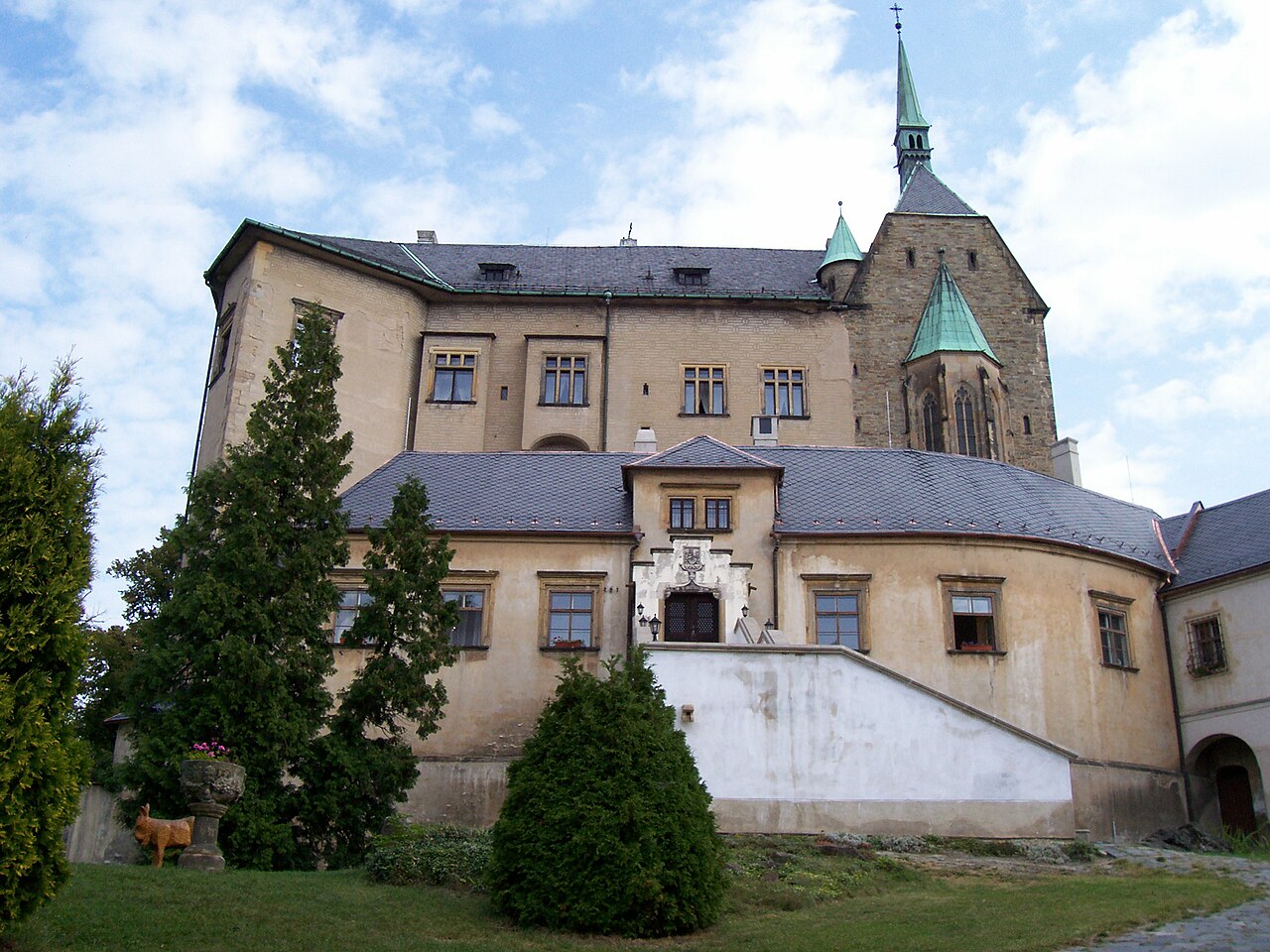
Ecclesiastical influence grew alongside the castle's military importance. The establishment of the Olomouc bishopric in 1063 integrated the castle into the religious governance of the region. The original church dedicated to St. Mary Magdalene was replaced by the St. Wenceslaus Cathedral in 1131, a monumental Gothic structure that remains a focal point of the castle complex. Adjacent to the cathedral stands Zdíkův palác, the bishop's palace, notable for its rectangular plan and a distinctive cylindrical stone tower. Romanesque architectural elements survive in parts of these buildings, including a characteristic window and the Chapel of St. Barbara.
The castle complex expanded over the centuries with additions reflecting changing architectural styles. The 13th century brought Gothic renovations to the cathedral, while the early 16th century saw Renaissance rebuilding of the chapter house. The Baroque period from the 17th to 18th centuries introduced dramatic alterations, including new chapels and residential buildings, while the 19th century added Neo-Romanesque features such as the Chapel of the Virgin Mary Opatrovnice, designed by architect Franz Kottas.
Baroque transformation and later developments
Following damage sustained during the Thirty Years’ War, the castle underwent extensive reconstruction in the Baroque style. This transformation spanned nearly a century, reshaping the medieval fortress into a grand ecclesiastical complex. The Baroque period also enriched the castle grounds with artistic works, including the 1724 statue of St. John of Nepomuk by sculptor Jiří Antonín Heinz.
The castle's religious character was further emphasized by the construction of chapels and residences for clergy, such as the bell-ringers’ house and the parsonage. The Church of St. Anna and other sacred buildings contribute to the spiritual atmosphere that persists at the site.
Archaeological research and cultural significance
Between 1972 and 1995, comprehensive archaeological excavations uncovered approximately 20,000 early medieval artifacts, illuminating the castle's multifaceted history. These finds include Romanesque masonry, bronze fittings, gilded decorations, and pottery with distinctive engobe finishes. The artifacts reveal extensive cultural exchanges with neighboring regions like Poland and Bohemia.
Today, many of these archaeological remains are preserved in situ or displayed at the Olomouc Regional Museum. The castle's designation as a national cultural monument in 1962 and receipt of the European Heritage Label in 2015 recognize its outstanding historical and architectural value.
Architectural layout and surviving features
The castle complex is elongated, measuring roughly 200 meters long and 80 meters wide, and was originally enclosed by formidable stone walls. Its layout centers around Václavské náměstí (Wenceslaus Square), an open courtyard aligned with the cardinal directions.
The eastern sector houses the St. Wenceslaus Cathedral and Zdíkův palác, with Romanesque and Gothic architectural details. The southern area includes the bell-ringers’ house, chapels, and artist studios, while the western side contains clergy residences such as the parsonage and vicar's house. The northern section features the chapter deanery and the economic courtyard, now home to the Archdiocesan Museum.
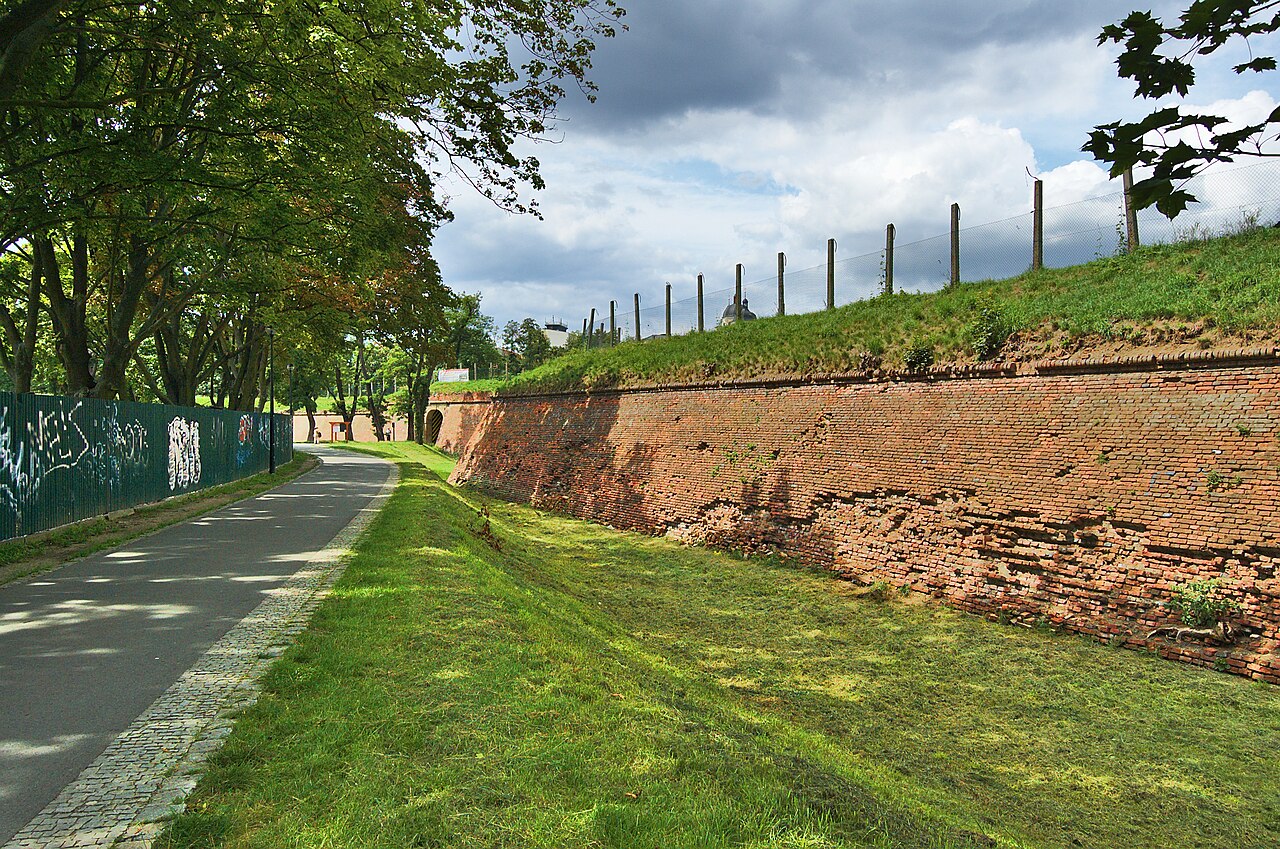
The castle's defensive structures include thick stone walls and towers designed to control and protect the surrounding region. Archaeological evidence of these fortifications highlights the castle's military significance during the medieval period.
Notable visitors and cultural legacy
Throughout its history, Olomouc Castle has hosted numerous notable figures. The assassination of King Wenceslaus III in 1306 is one of the castle's most dramatic historical events. In the 18th century, the young Wolfgang Amadeus Mozart stayed in the Chapter Provost's house on the castle grounds, where he composed his Symphony No. 6 in F major.
More recently, the castle welcomed distinguished visitors such as Mother Theresa and Pope John Paul II, underscoring its ongoing spiritual and cultural significance.
Current condition and visitor experience
Today, Olomouc Castle is partially preserved, with many of its medieval and Baroque structures intact or restored. The site offers visitors a unique glimpse into a millennium of Central European history, combining archaeological remains with impressive religious architecture. The castle remains an active religious center and a cultural landmark in Olomouc.
Visitors can explore the castle grounds, including the cathedral, bishop's palace, chapels, and museum exhibitions. The castle's layered history and architectural diversity make it a compelling destination for those interested in medieval fortifications, ecclesiastical heritage, and Central European culture.
Frequently asked questions (FAQ)
- What is the historical significance of Olomouc Castle?
- Olomouc Castle is a landmark of Czech history, originally built in the 10th century. It served as a royal residence and an important administrative center for the region, reflecting the power of the Moravian princes and later the Habsburgs.
- When was Olomouc Castle built?
- Olomouc Castle's construction began in the 10th century, making it one of the oldest castles in the Czech Republic. Over the centuries, it has undergone numerous renovations and expansions, showcasing various architectural styles.
- What are the opening hours for Olomouc Castle?
- Olomouc Castle is open to visitors year-round, with varying hours depending on the season. Generally, it operates from 9 AM to 5 PM, but it's recommended to check the official website for any seasonal changes or special events.
- Can I access Olomouc Castle with a wheelchair?
- Yes, Olomouc Castle is committed to accessibility and offers facilities for wheelchair users. Ramps and designated pathways are available, but some areas may have limited access due to the castle's historical architecture.
- What is the best time to visit Olomouc Castle?
- The best time to visit Olomouc Castle is during the spring and early autumn, when the weather is mild and the gardens are in full bloom. Additionally, these seasons often see fewer tourists, allowing for a more enjoyable exploration of the grounds.
- Are there any nearby attractions to Olomouc Castle?
- Yes, nearby attractions include the Holy Trinity Column, a UNESCO World Heritage Site, and the Olomouc Astronomical Clock. The city itself is rich in history and features charming squares, museums, and parks worth exploring.
- How much do tickets cost for Olomouc Castle?
- Ticket prices for Olomouc Castle vary based on age and the type of tour. Generally, adult tickets range from 100 to 150 CZK, while discounts are often available for students and seniors.
Information
Website
Visit websiteSources & official resources
Verify the information above using these authoritative references.
Loading map...
Visitor reviews
No reviews yet. Been here? Write the first review and help other travelers!
Write the first reviewVisited this castle? Share your experience
Your review helps other travelers and adds first-hand knowledge to our encyclopedia.