Olkusz
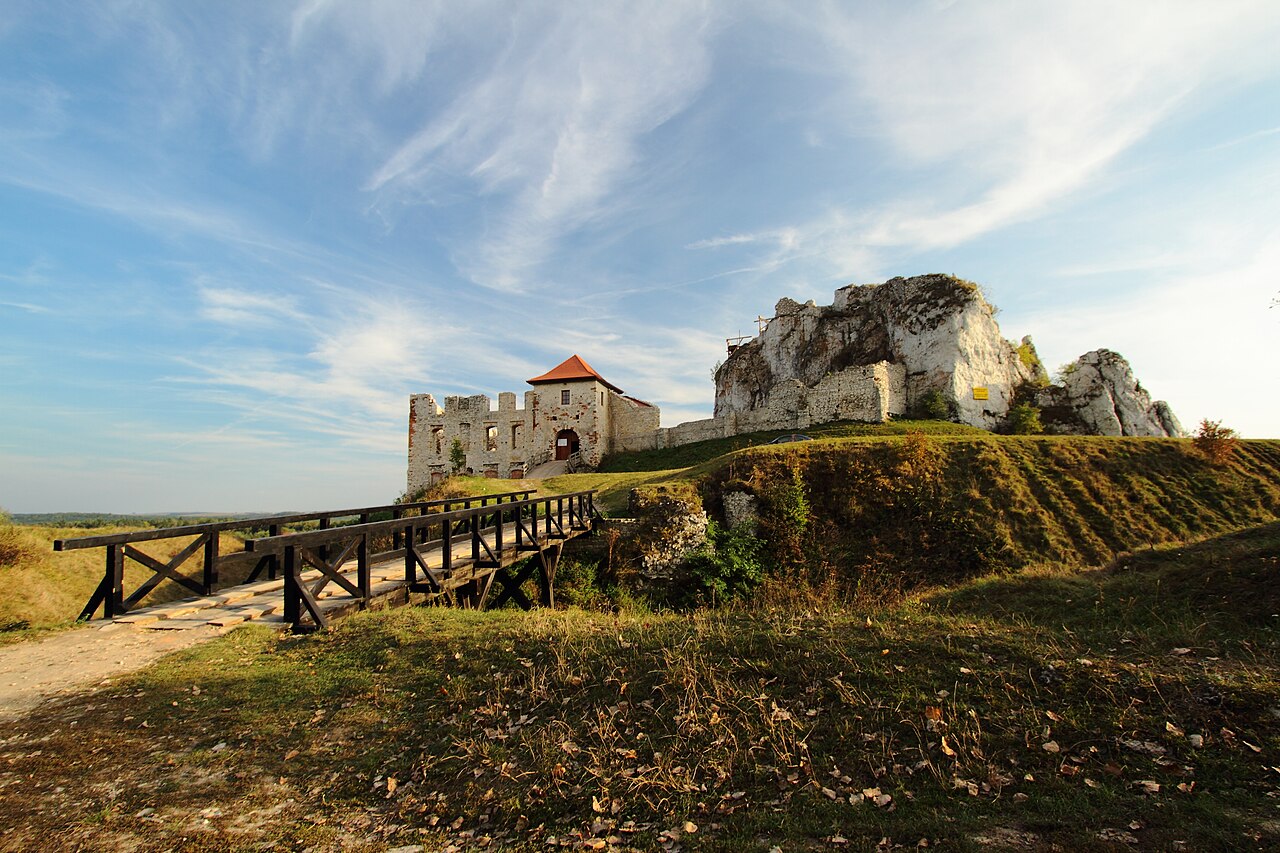
Castle in Olkusz is a historically significant late medieval bastioned fortress located in the town of Olkusz, Poland. Although mentioned by the renowned chronicler Jan Długosz in his annals, the castle remained a subject of historical hypothesis for many years due to the lack of physical evidence. It was only in September 2001, through meticulous archaeological excavations, that the remains of this fortress were finally uncovered, shedding light on its existence and historical context.
The excavations took place near the Church of St. Andrew, where beneath layers of soil, archaeologists discovered fragments of walls constructed from distinctive red sandstone. These remnants included the foundations of a gate that likely served as an entrance to the castle complex. Additionally, a sizable chamber measuring approximately 11 by 13 meters was uncovered, which is believed to be part of a later expansion phase of the fortress rather than the original structure.
Historical context and construction
The castle is attributed to the reign of Casimir the Great (Kazimierz Wielki), a Polish monarch known for his extensive castle-building program during the 14th century. The discovery of 14th-century ceramics at the site supports this dating, suggesting the fortress was constructed as part of the defensive network established under his rule. Casimir the Great’s castles were typically designed to protect important trade routes and local settlements, and Olkusz’s location indicates its strategic importance in the region.
Architectural features and layout
Although much of the castle remains buried, the uncovered fragments reveal characteristics typical of a bastioned fortress. The use of red sandstone walls indicates the availability of local building materials and reflects the regional architectural style of the period. The presence of a gate foundation suggests controlled access points, essential for defense. The large uncovered chamber may have served as a hall or storage area during the castle’s operational phase.
Potential undiscovered remains
Archaeologists believe that additional parts of the castle, particularly from the original Kazimierz Wielki construction phase, remain buried underground. Further excavations are necessary to reveal more about the castle’s full extent, its architectural evolution, and to possibly reconstruct its original appearance. These future investigations will be critical to understanding the castle’s role in the defensive system of medieval Poland.
Cultural and heritage significance
The castle in Olkusz holds an important place in the local heritage as an example of medieval military architecture and Polish royal fortifications. Its rediscovery has contributed to a deeper understanding of the region’s history during the late medieval period. Although now in a state of archaeological ruins, the site attracts interest from historians, archaeologists, and visitors fascinated by Poland’s medieval past.
Preservation efforts focus on protecting the uncovered remains and promoting further research. The castle’s proximity to the historic Church of St. Andrew enhances its cultural landscape, offering visitors a glimpse into the intertwined religious and military history of Olkusz.
Visiting the site
While the castle remains primarily an archaeological site with limited visible structures, visitors to Olkusz can explore the area near the church where the excavations took place. Information boards and local guides provide context about the castle’s history and significance. The site is a valuable destination for those interested in medieval fortifications and Polish history.
Frequently asked questions (FAQ)
- When was the castle in Olkusz built?
- The castle was built in the 14th century during the reign of Casimir the Great, as evidenced by archaeological finds including 14th-century ceramics.
- What type of castle is Olkusz castle?
- Olkusz castle is classified as a bastioned fortress, characterized by its defensive walls and gate foundations made from red sandstone.
- Can visitors see the castle ruins today?
- Today, the castle remains primarily an archaeological site with limited visible ruins. Visitors can explore the area near the Church of St. Andrew where excavations were conducted.
- Are there plans for further archaeological work at the site?
- Yes, further archaeological excavations are planned to uncover more of the castle's original structure and better understand its historical phases.
- Why is the castle significant in Polish history?
- The castle is significant as part of the network of fortifications built under Casimir the Great, reflecting medieval military architecture and regional defense strategies.
Information
Loading map...
Visitor reviews
No reviews yet. Been here? Write the first review and help other travelers!
Write the first reviewVisited this castle? Share your experience
Your review helps other travelers and adds first-hand knowledge to our encyclopedia.