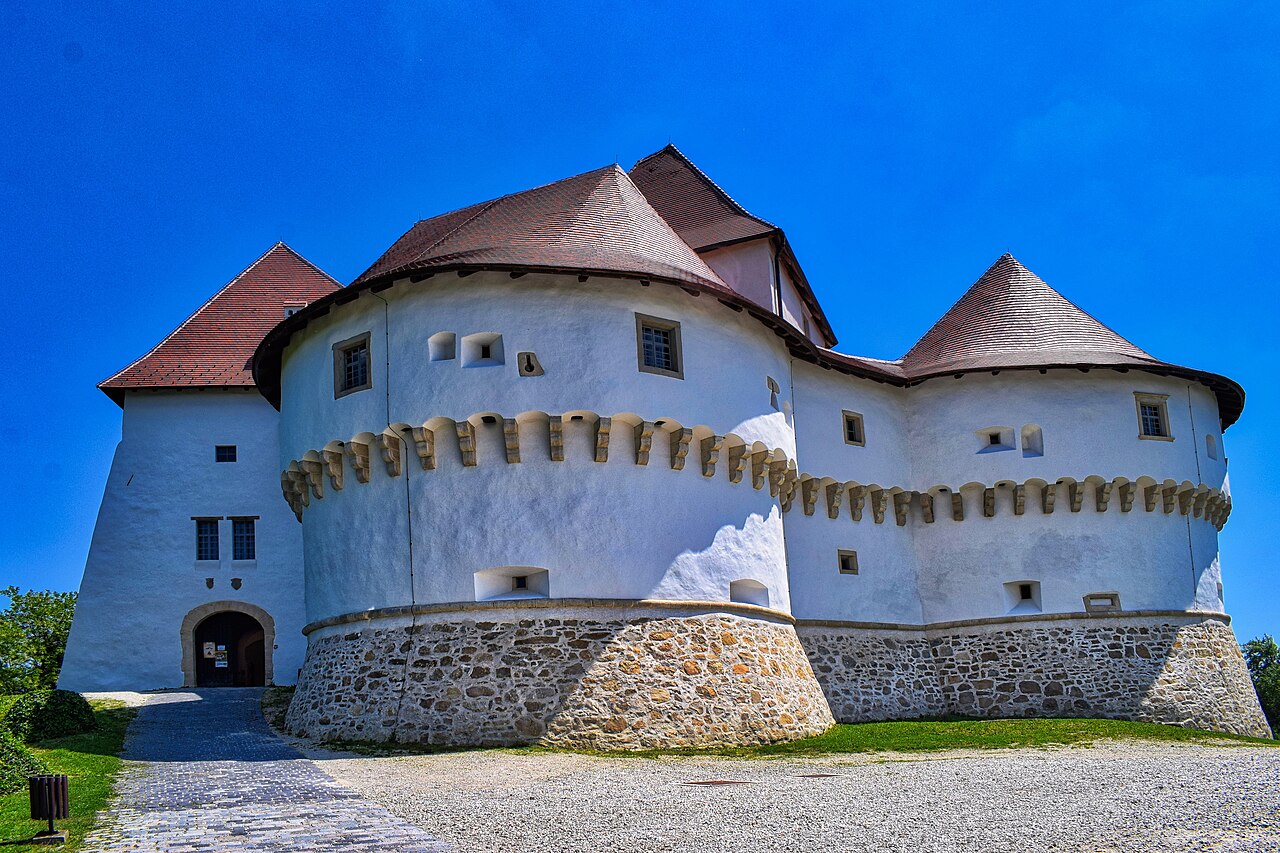
Olimje Castle
Olimje Castle is a notable 16th-century Renaissance castle located in the village of Olimje, Slovenia. The site has a long history, with its origins dating back to around the year 1000. Originally, the location was occupied by an earlier fortification belonging to the noble counts von Peilestein, among whom was Hemma of Gurk, an 11th-century saint and prominent family member. This early medieval stronghold laid the foundation for the castle that stands today.
In approximately 1550, the castle underwent significant reconstruction under Count Tattenbach, who transformed it into a Renaissance-style residence. This renovation included the addition of a defensive ditch, a common feature designed to protect the castle from Turkish incursions that threatened the region during that period. The defensive measures reflect the turbulent geopolitical climate of the 16th century in Central Europe.
Transition to a monastic complex
In 1658, the castle changed ownership when it was acquired by Baron Ivan Zakmardy of Zagreb. He initiated the transformation of the castle into a religious institution by donating it to the Pauline order monks from Lepoglava, Croatia in 1663. The Paulines undertook a comprehensive conversion of the castle between 1665 and 1675, adapting the structure to serve as a monastery.
One of the most remarkable additions during this period was the construction of a baroque church within the castle complex. The church features an altar dedicated to the Assumption of Mary, which is considered one of the finest examples of baroque altar art in Slovenia. The artistic work was further enhanced in 1740 by the monk Ivan Ranger, who painted the entire presbytery with vivid frescoes. Additionally, a side chapel was built and decorated, enriching the spiritual and artistic value of the site.
The historic pharmacy and cultural heritage
The monastery is also renowned for housing one of the oldest pharmacies in Europe, established by the Paulines. This historic pharmacy reflects the monastic tradition of herbal medicine and healing practices. Inside the monastery, visitors can find a fresco honoring Paracelsus, a pioneering figure in the development of early modern medicine and pharmacology.
Impact of secular reforms and later history
The monastery's religious activities were curtailed by the anticlerical reforms of Emperor Joseph II in the late 18th century. Because the monastery did not operate a school or other charitable institution and was not a parish, the monks were forced to leave. Subsequently, Olimje became a parish in 1785, marking a shift in its ecclesiastical status.
In 1805, the noble Attems family purchased the former monastery. Financial difficulties, including high taxes, compelled the owners to demolish the north and west wings of the castle, reducing its original size and altering its architectural footprint.
20th-century challenges and restoration
After World War II, the castle was nationalized by the state. In 1974, a significant earthquake inflicted serious damage on the structure. This event prompted a thorough restoration effort supported by national, municipal, and parish funds to preserve the castle's historical and cultural significance.
In 1990, the sanctuary and parish were entrusted to the Conventual Franciscans. They revived the monastery on August 15, 1999, after a hiatus of 217 years. Today, the Franciscans maintain the site, welcoming both pilgrims and tourists. They also established a herbal apothecary to continue the tradition of medicinal herb use linked to the monastery's historic pharmacy.
Architectural features and artistic highlights
The castle complex combines elements from its Renaissance origins with later Baroque modifications introduced by the Pauline monks. The defensive ditch from the 16th century remains a testament to the castle's military function during a period of regional conflict. The baroque church stands out with its richly decorated interior, including the altar of the Assumption of Mary and the frescoes by Ivan Ranger, which represent significant artistic achievements of the Baroque era in Slovenia.
The monastery's pharmacy is an important cultural landmark, reflecting the monastic dedication to healing and science. The fresco honoring Paracelsus connects Olimje to the broader history of European medicine and pharmacology.
Visitor experience and cultural significance
Olimje Castle today serves as both a religious center and a cultural monument. Visitors can explore the castle's historic architecture, the baroque church, and the preserved pharmacy. The site offers insight into the region's history from medieval times through the Renaissance and Baroque periods, as well as the impact of religious and secular changes over the centuries.
The ongoing care by the Conventual Franciscans ensures that Olimje remains a living heritage site, balancing its roles as a place of worship, historical interest, and tourist attraction. The herbal apothecary continues the monastic tradition of natural healing, attracting visitors interested in history, architecture, and traditional medicine.
Frequently asked questions (FAQ)
- How do I get to Olimje Castle?
- Olimje Castle is located in the picturesque village of Olimje in Slovenia. It is accessible by car, and there is parking available nearby. Public transport options may include buses that connect to the nearest towns, followed by a short walk to the castle.
- What is the historical significance of Olimje Castle?
- Olimje Castle dates back to the 16th century and has a rich history tied to the region's noble families. It served as a defensive structure and later as a residence, reflecting the architectural styles of its time. The castle is also closely associated with the nearby monastery, contributing to the area's cultural heritage.
- When was Olimje Castle built?
- Olimje Castle was originally built in the late 16th century, specifically around 1550. Over the years, it has undergone several renovations and restorations, preserving its historical architecture while adapting to modern needs. Its long history makes it a fascinating site for visitors interested in medieval architecture.
- Can I take guided tours of Olimje Castle?
- Yes, guided tours are available for visitors who wish to learn more about the castle's history and architecture. These tours typically provide detailed insights into the castle's past and its significance in Slovenian history. Be sure to check the castle's official website for tour schedules and availability.
- Why is Olimje Castle a popular tourist destination?
- Olimje Castle is popular for its stunning architecture, beautiful surroundings, and rich historical background. Visitors are drawn to its picturesque setting and the serene atmosphere of the nearby gardens and landscape. Additionally, the castle's proximity to other attractions, such as the Olimje Monastery, enhances its appeal.
- Is it possible to visit the castle year-round?
- Yes, Olimje Castle is open to visitors throughout the year, though opening hours may vary by season. It’s advisable to check the official website for the most current information on opening times and any special events. Visiting during different seasons can offer unique experiences of the castle and its surroundings.
- What are the ticket prices for Olimje Castle?
- Ticket prices for Olimje Castle vary depending on age and group size, with discounts often available for children and seniors. Generally, tickets are affordable, ensuring that the castle remains accessible to a wide audience. For the latest pricing information, be sure to visit the official website before your visit.
- What is the best time to visit Olimje Castle?
- The best time to visit Olimje Castle is during the spring and early autumn months when the weather is mild and the surrounding nature is in full bloom. These seasons offer a pleasant experience for exploring the castle grounds and nearby attractions. Additionally, special events and exhibitions may be held during these times, enhancing your visit.
- Are there any nearby attractions to Olimje Castle?
- Yes, there are several nearby attractions worth exploring, including the Olimje Monastery, known for its beautiful gardens and herbal pharmacy. The surrounding region also features picturesque hiking trails and charming villages. Visitors can easily spend a full day enjoying both the castle and its surrounding areas.
Information
Loading map...
Visitor reviews
No reviews yet. Been here? Write the first review and help other travelers!
Write the first reviewVisited this castle? Share your experience
Your review helps other travelers and adds first-hand knowledge to our encyclopedia.