Fort George (Ontario)
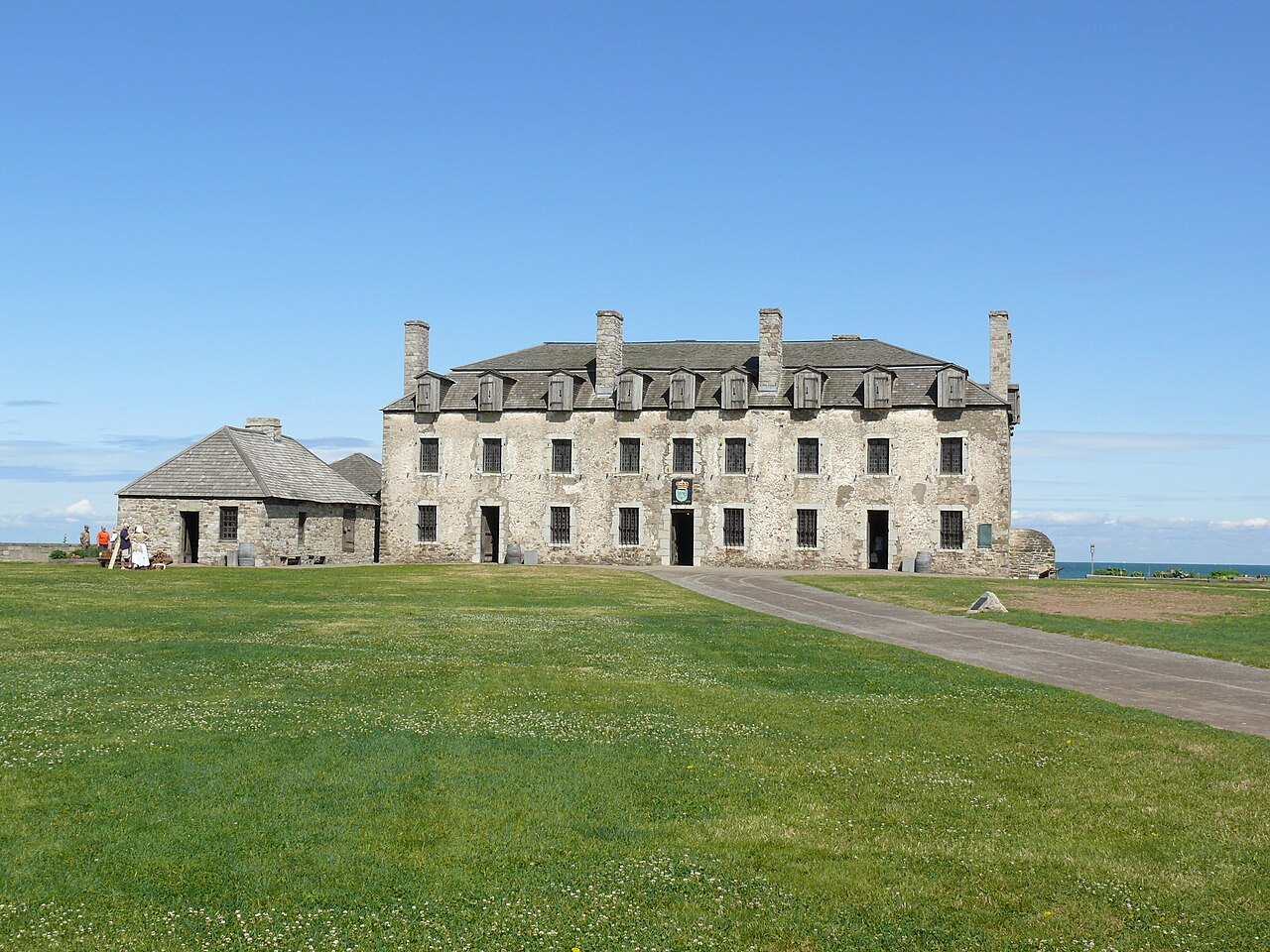
Fort George is a historic bastioned fortress located in Niagara-on-the-Lake, Ontario, Canada. Originally constructed in the 1790s by the British Army, it was built to replace the earlier Fort Niagara as a key military stronghold on the Niagara River. The fort played a significant role during the War of 1812, serving variously under British, Canadian militia, and briefly, United States Army control. Although it suffered extensive damage during the conflict, Fort George remains a prominent symbol of early Canadian military history.
Construction and design of Fort George
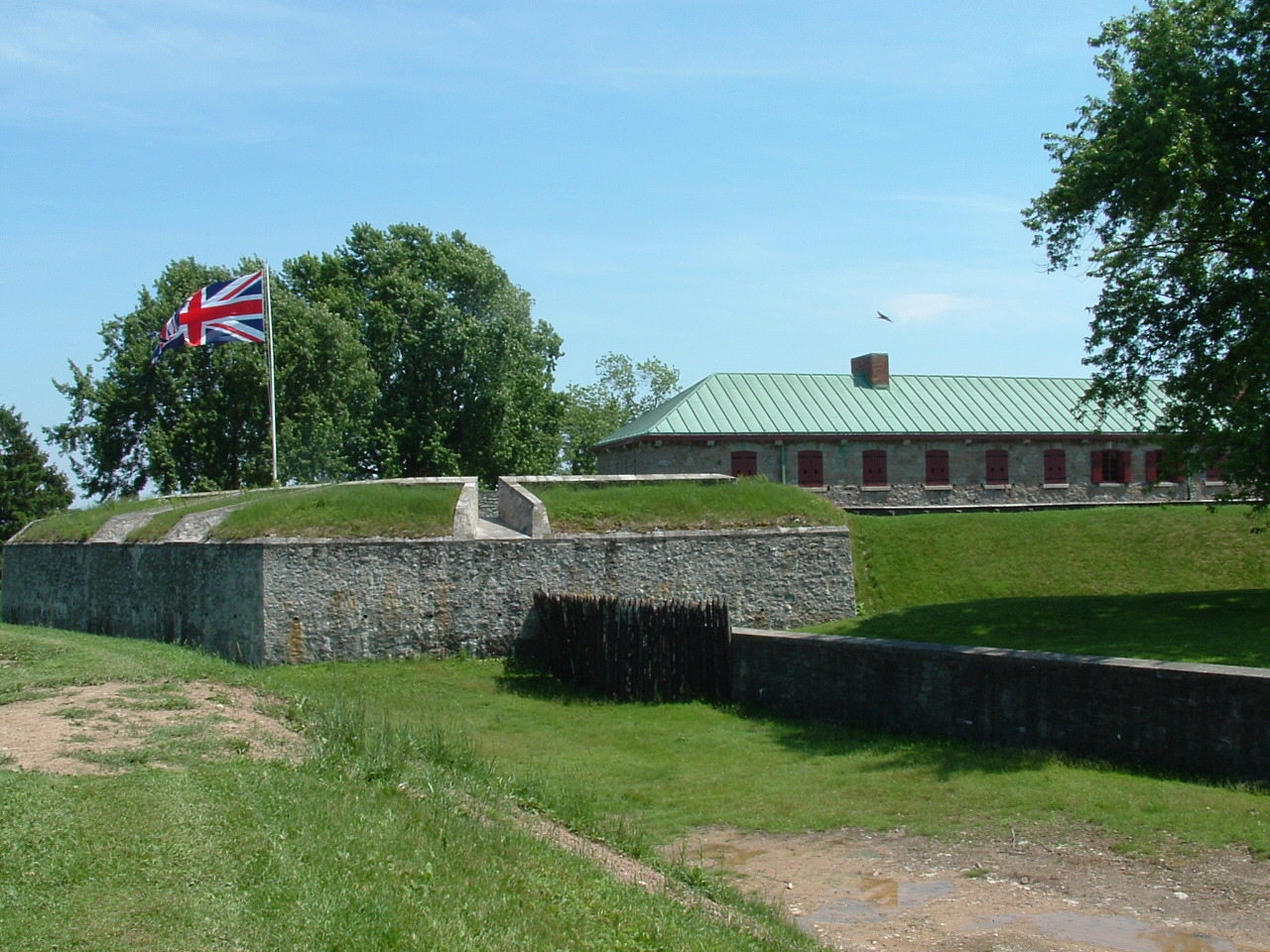
The fort was designed as a bastioned fortress, a style characterized by angular bastions projecting from the main walls, allowing for defensive artillery coverage of all approaches. Fort George features an irregular-shaped earthwork layout with six bastions strategically placed to maximize defense against attackers. The fortifications included ramparts, ditches, and glacis to provide multiple defensive layers. The original structures were primarily wooden and earthworks, typical of late 18th-century military engineering in North America.
The design reflected post-Renaissance military architecture principles, emphasizing artillery defense and overlapping fields of fire. The fort's location on the Niagara River was strategic for controlling access between Lake Ontario and the interior of the continent, making it a critical point of defense against American forces.
Historical significance and military use
Fort George was established by the British in the 1790s to strengthen their position in the region following the American Revolutionary War. It served as the primary British military base in the Niagara frontier. During the War of 1812, the fort was the site of the Battle of Fort George in May 1813, during which American forces launched a successful assault that led to significant destruction of the fort's structures.
After the battle, American troops occupied Fort George for approximately seven months. The British recaptured the fort in December 1813 but did not immediately restore it fully, as they had also regained control of Fort Niagara, which was considered a more defensible position. The fort's design flaws and damage led to its gradual replacement by Fort Mississauga in the 1820s.
Despite the decline of Fort George as a frontline military installation, the site continued to be used by the military through the 19th century and up until the end of the First World War. Its strategic importance diminished as military technology and tactics evolved.
Preservation and reconstruction efforts
In the late 1930s, the Niagara Parks Commission undertook a significant reconstruction project to restore Fort George as a historic site. This effort aimed to preserve the fort's heritage and educate the public about its role in Canadian and North American history. The reconstructed fort opened to the public in 1940 and has since functioned as a living history museum.
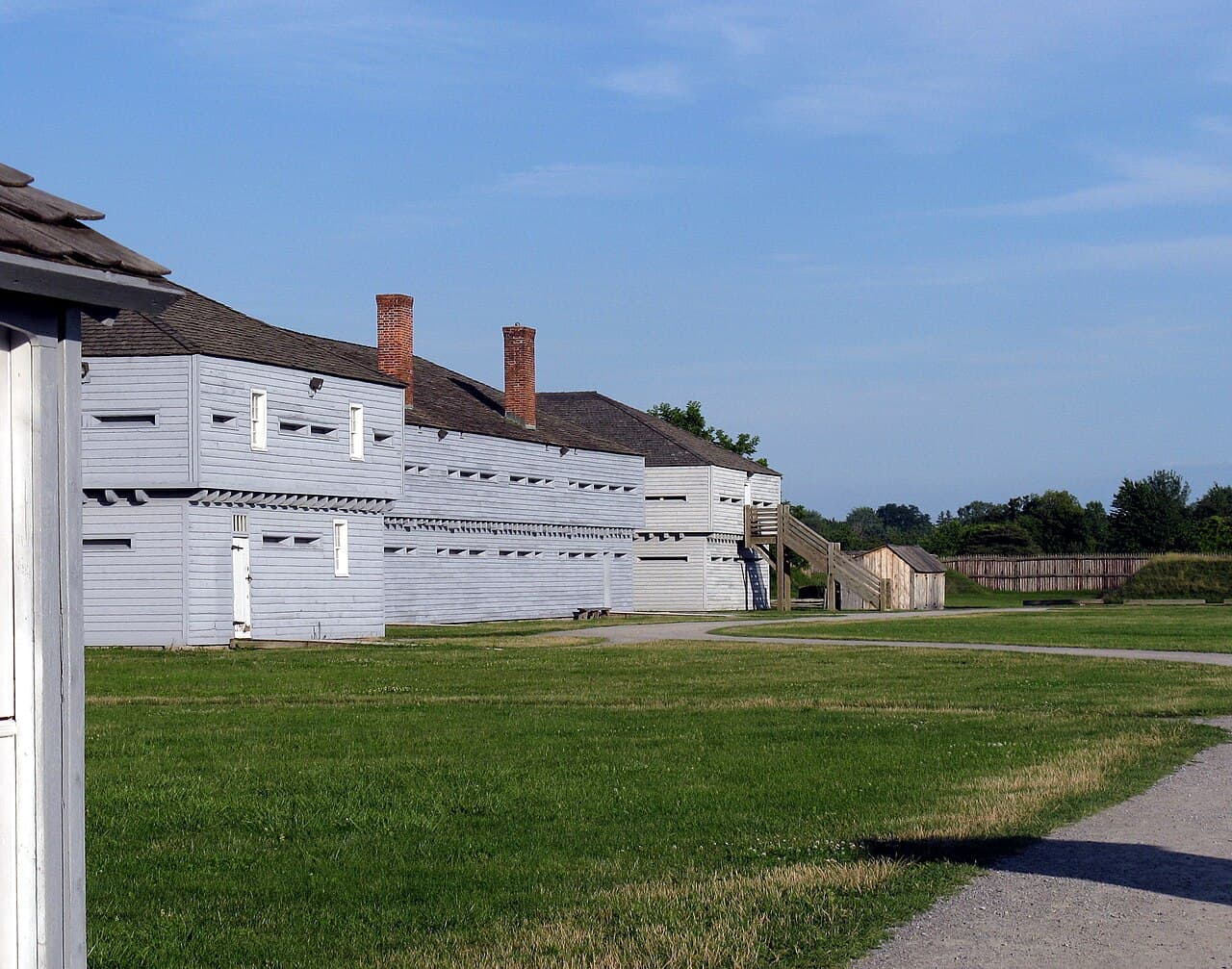
Today, the site includes several reconstructed buildings within the original earthworks, providing visitors with a tangible sense of 19th-century military life. The only surviving original building is the restored gunpowder magazine, which offers a direct physical link to the fort's original construction. The fort is managed by Parks Canada as part of the Fort George National Historic Site, which also encompasses Navy Hall located to the east.
Educational and cultural importance
Fort George serves as a key educational resource for understanding the War of 1812 and the military history of early Canada. The site hosts reenactments, guided tours, and interpretive programs that explore the fort's strategic role, the daily lives of soldiers, and the broader geopolitical conflicts of the era. It also highlights the early 20th-century historic preservation movement that saved the site from complete ruin.
The fort's location in Niagara-on-the-Lake places it within a region rich in heritage tourism, complementing other historic sites and attractions. Visitors can explore the fort's bastioned walls, barracks, and parade grounds, gaining insight into the challenges of frontier defense and colonial military architecture.
Frequently asked questions (FAQ)
- What is the historical significance of Fort George?
- Fort George, built in the early 1800s, played a crucial role during the War of 1812 as a strategic military base for British forces. It was here that key battles took place, shaping the future of Canada and its relationship with the United States.
- When was Fort George constructed?
- Construction of Fort George began in 1800 and was completed in 1802. The fort was designed to protect the western approach to the Niagara River and served as a stronghold during various conflicts.
- What are the opening hours for visiting Fort George?
- Fort George is typically open to visitors from May to October, with hours varying throughout the season. It is advisable to check the official Fort George website for the most current hours of operation before planning your visit.
- Can I access Fort George with a wheelchair?
- Yes, Fort George is committed to accessibility and provides options for visitors with mobility challenges. Certain areas of the fort are wheelchair accessible, but it is recommended to contact the site in advance for specific details.
- What is the best time to visit Fort George?
- The best time to visit Fort George is during the summer months when guided tours and reenactments are regularly scheduled. Additionally, the pleasant weather makes exploring the grounds more enjoyable.
- Are there any ticket prices for entering Fort George?
- Yes, there is an admission fee to enter Fort George, with discounts available for seniors, students, and families. Tickets can be purchased at the entrance or online, allowing for a smoother entry process.
- What nearby attractions can I visit while at Fort George?
- While visiting Fort George, you can also explore the charming town of Niagara-on-the-Lake, renowned for its historic architecture, wineries, and theaters. The nearby Niagara Parks offers stunning landscapes and additional historical sites to enhance your visit.
Photo gallery

Photo by Balcer•Public domain
Information
Loading map...
Visitor reviews
No reviews yet. Been here? Write the first review and help other travelers!
Write the first reviewVisited this castle? Share your experience
Your review helps other travelers and adds first-hand knowledge to our encyclopedia.