Odiham Castle
Odiham Castle, also known locally as King John's Castle, is a significant medieval fortress located west of the village of North Warnborough in Hampshire, England. Constructed between 1207 and 1214 by King John of England, it stands as one of only three castles built during his reign. The castle's strategic location near the River Whitewater, roughly halfway between Windsor and Winchester, reflects its dual purpose as a royal residence and a military stronghold.
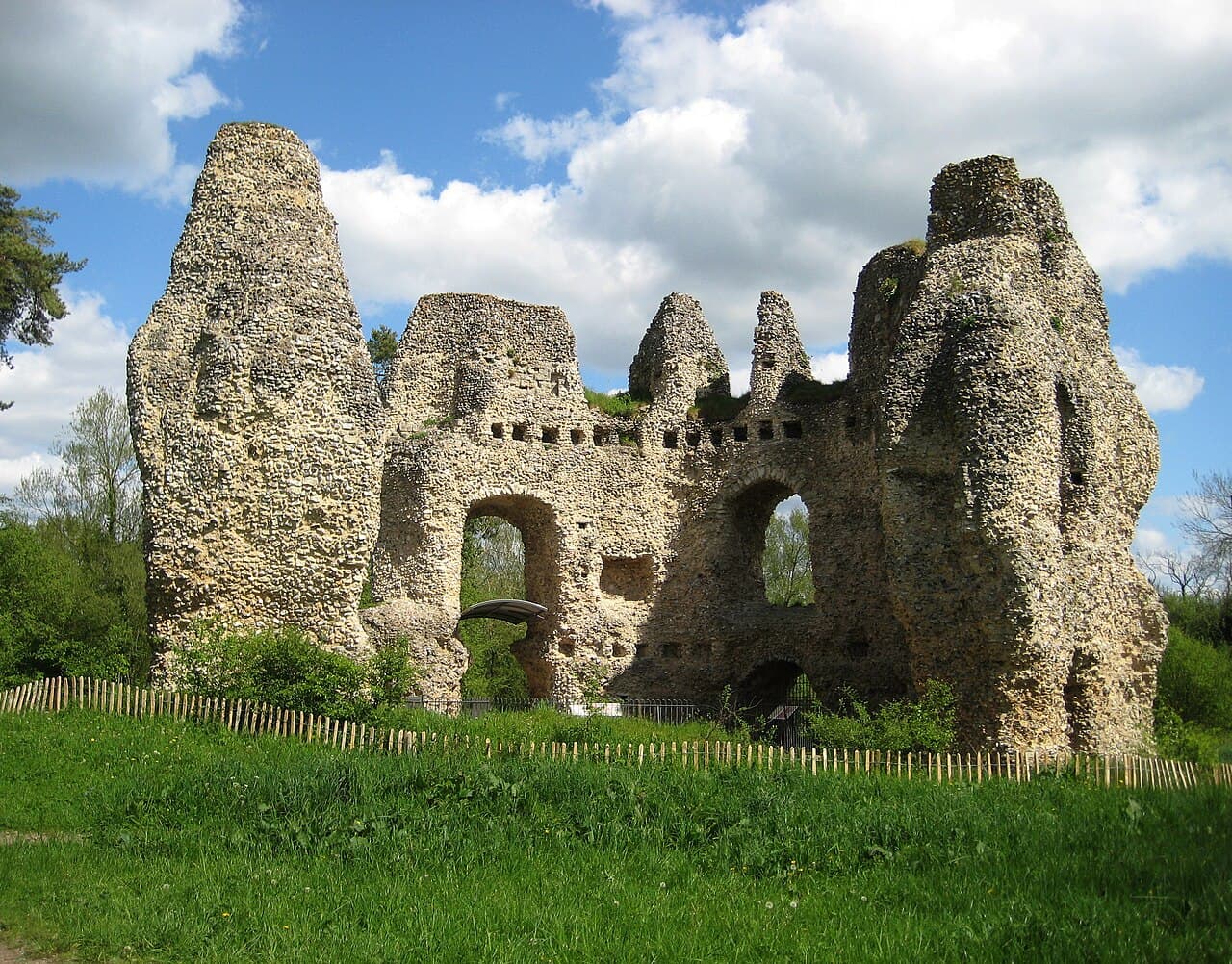
The castle's centerpiece is a distinctive three-storey octagonal stone keep, originally surrounded by a substantial moat and flanked by two moated baileys. This design offered layered defenses typical of early 13th-century fortifications. The keep itself was built atop a raised earth mound, which was later heightened by about five meters following the French siege in 1216 during the First Barons' War. This siege, lasting two weeks, ended with the castle's surrender to French forces allied with rebellious English barons, marking a pivotal moment in the castle's history.
Construction and architectural features
The initial construction of Odiham Castle combined robust stonework for the keep with earthworks and timber palisades for the outer defenses. The octagonal shape of the keep is notable for its rarity and represents an advanced architectural choice aimed at improving defensive capabilities and internal space utilization. The castle's defensive system included an inner round moat and a square outer moat, creating a formidable barrier against attackers.
Following the damage sustained during the 1216 siege, the castle underwent significant rebuilding. The mound supporting the keep was raised to enhance its defensive advantage, and the inner moat was either added or reinforced. These improvements reflect the evolving military architecture of the period and the castle's importance as a royal stronghold.
Within the castle grounds, several key buildings were constructed or enhanced over time. A domus regis (king's house) signified its role as a royal residence. Noteworthy additions included a kitchen built on a bridge over the inner moat, facilitating efficient food preparation and service, and a new hall outside the keep for administrative and social functions. Another residential building was constructed over the moat's southeast side, expanding living quarters and reflecting the castle's adaptation to noble domestic needs.
Historical significance and notable events
Odiham Castle is deeply intertwined with key events of English medieval history. It is reputed to be the departure point for King John in 1215 when he rode to Runnymede to affix his seal to the Magna Carta, a foundational document limiting royal authority and establishing legal principles that have endured for centuries.
Despite signing the Magna Carta, King John soon violated its terms, triggering the First Barons' War. During this conflict, the castle was besieged by French knights supporting the rebel barons. The siege's outcome, with the castle falling after two weeks, underscored the castle's strategic importance and the turbulent political climate of the time.
In 1236, the castle was granted by King Henry III to his sister Eleanor, who married Simon de Montfort in 1238. Simon was a powerful nobleman and leader of the baronial opposition during the Second Barons' War. Under their ownership, the castle saw expansions and enhancements, reflecting its status as a prominent noble household. After Simon's death in 1265 and Eleanor's exile, Odiham reverted to the Crown.
During the reign of Edward II, the castle was granted to Robert le Ewer, who later attempted to retake it by force after falling out of favor, causing damage that was repaired by 1322. Subsequently, Edward III granted the castle to his queen, Philippa of Hainault.
One of the castle's most notable historical episodes was its role as a prison for King David II of Scotland, captured at the Battle of Neville's Cross in 1346. David was held captive at Odiham for eleven years, during which he was lightly guarded and allowed to maintain a household, illustrating the castle's function as a royal detention site.
Decline and later history
By the 15th century, Odiham Castle had lost much of its military significance and was primarily used as a hunting lodge. Over the following centuries, the castle fell into disrepair. By 1605, it was described as a ruin, with much of its dressed stone quarried by locals for other uses.
The construction of the Basingstoke Canal in 1792 further altered the castle's landscape, cutting through the southern bailey and destroying much of it. This industrial-era modification reflects the changing priorities and land use in the region.
In the 20th century, archaeological excavations conducted by Hampshire County Council Museum Services in 1953 and between 1981 and 1985 revealed important details about the castle's layout, construction phases, and historical evolution. These investigations have contributed significantly to the understanding and preservation of Odiham Castle's heritage.
Current condition and visitor experience
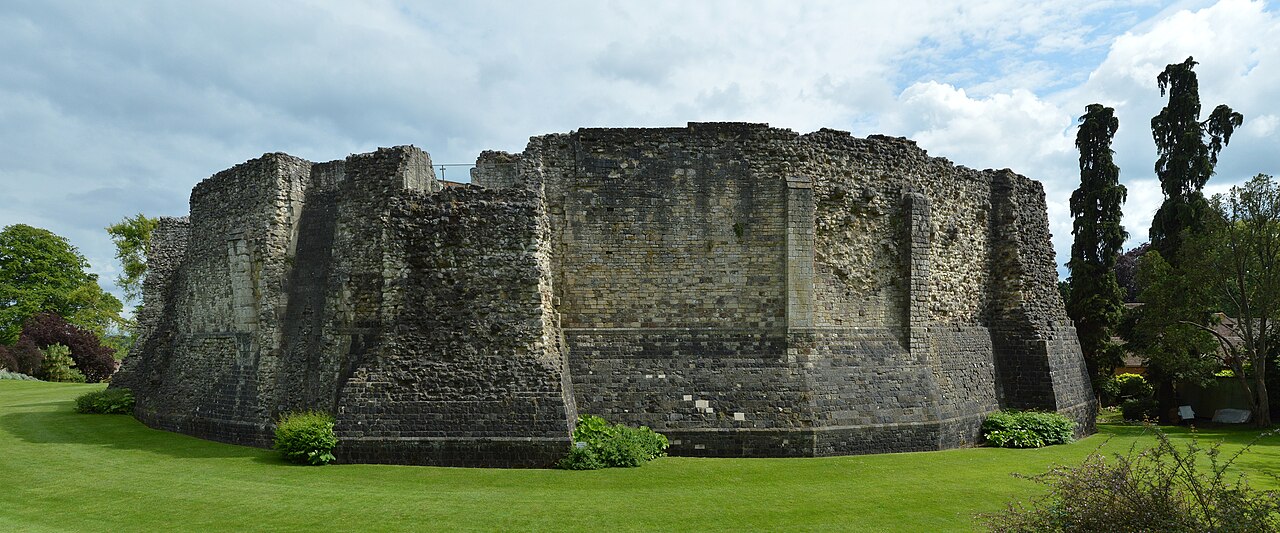
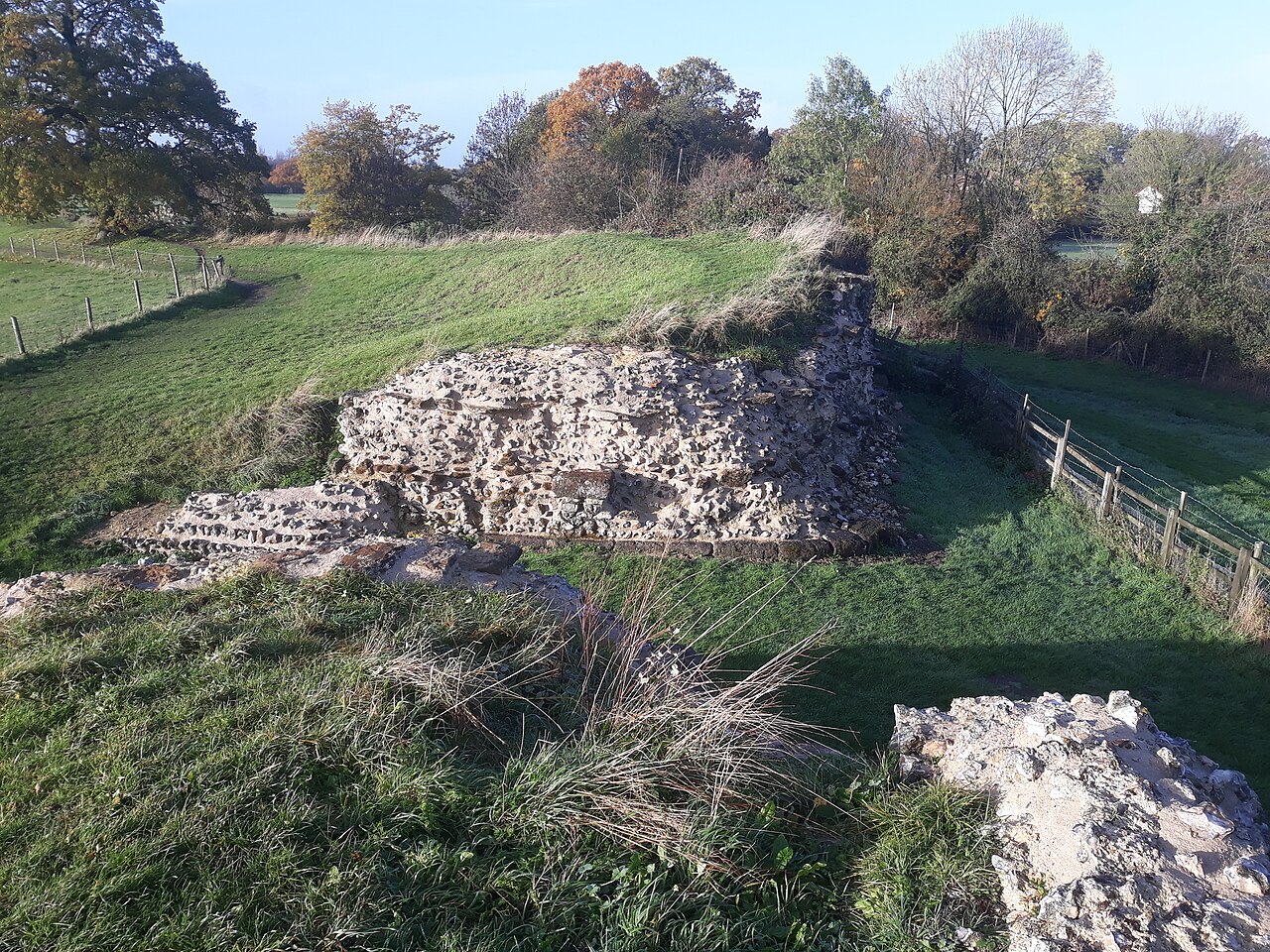
Today, Odiham Castle remains as a partially preserved ruin, with the most prominent surviving feature being the flint core of the octagonal keep's walls. The surrounding earthworks and remnants of the moats provide visitors with a tangible sense of the castle's original scale and defensive complexity.
The southern moat survives as a small, overgrown pond, divided by the Basingstoke Canal, which itself has become a historical feature adjacent to the ruins. Conservation efforts, notably in September 2007, led by Hampshire County Council and English Heritage, have helped stabilize the keep's remains, ensuring their longevity for educational and cultural appreciation.
Odiham Castle is freely accessible to the public, offering a fascinating glimpse into medieval castle architecture and English royal history. Its connection to the Magna Carta and its role in significant medieval conflicts make it a site of considerable historical and cultural importance. Visitors can explore the ruins and surrounding landscape, appreciating the castle's strategic location and its layered history from royal fortress to noble residence and eventual decline.
Architectural legacy
The castle's octagonal keep is a rare example of early 13th-century military architecture, demonstrating innovative design choices aimed at defense and habitation. The combination of stone keep, moats, baileys, and earthworks exemplifies the transitional period in castle construction from timber to stone fortifications.
Although much of the dressed stone has been lost, the remaining flint core and earthworks allow for study of medieval construction techniques and castle planning. The kitchen bridge and hall additions reflect adaptations to changing residential and administrative needs over the castle's active use.
Historical context in the region
Odiham Castle played a strategic role in the defense and administration of Hampshire and the surrounding region during the turbulent 13th and 14th centuries. Its location between key royal centers made it a vital asset for controlling movement and asserting royal authority.
The castle's involvement in national conflicts such as the baronial wars and the imprisonment of a Scottish king highlights its importance beyond a local fortress, linking it to broader political and military developments in medieval England.
Frequently asked questions (FAQ)
- How do I visit Odiham Castle and what are the opening hours?
- Odiham Castle is freely accessible to the public year-round. There are no formal opening hours as it is an open ruin site, so visitors can explore the castle and grounds at their convenience during daylight hours.
- What is the historical significance of Odiham Castle?
- Odiham Castle was built by King John in the early 13th century and is linked to the Magna Carta. It played important roles in the First and Second Barons' Wars and served as a prison for King David II of Scotland.
- What remains of Odiham Castle can I see today?
- Visitors can see the flint core of the octagonal keep's walls, earthworks, and remnants of the moats. The Basingstoke Canal runs through the southern bailey area, altering the original layout but adding historical context.
- Is Odiham Castle wheelchair accessible?
- Due to the nature of the ruins and uneven terrain, Odiham Castle has limited wheelchair accessibility. Visitors with mobility issues should take care and may want to contact local visitor information for advice.
- Are there any guided tours or informational materials available at Odiham Castle?
- There are no regular guided tours at Odiham Castle, but informational panels are available on-site to help visitors understand the castle's history and features. Local heritage organizations occasionally offer special events or tours.
Photo gallery

Information
Ticket prices
Free
Current owner
Hampshire County Council
Website
Visit websiteAddress
West of Mill Ln, North Warnborough, Hampshire, England
Sources & official resources
Verify the information above using these authoritative references.
Loading map...
Visitor reviews
No reviews yet. Been here? Write the first review and help other travelers!
Write the first reviewVisited this castle? Share your experience
Your review helps other travelers and adds first-hand knowledge to our encyclopedia.