Nysa
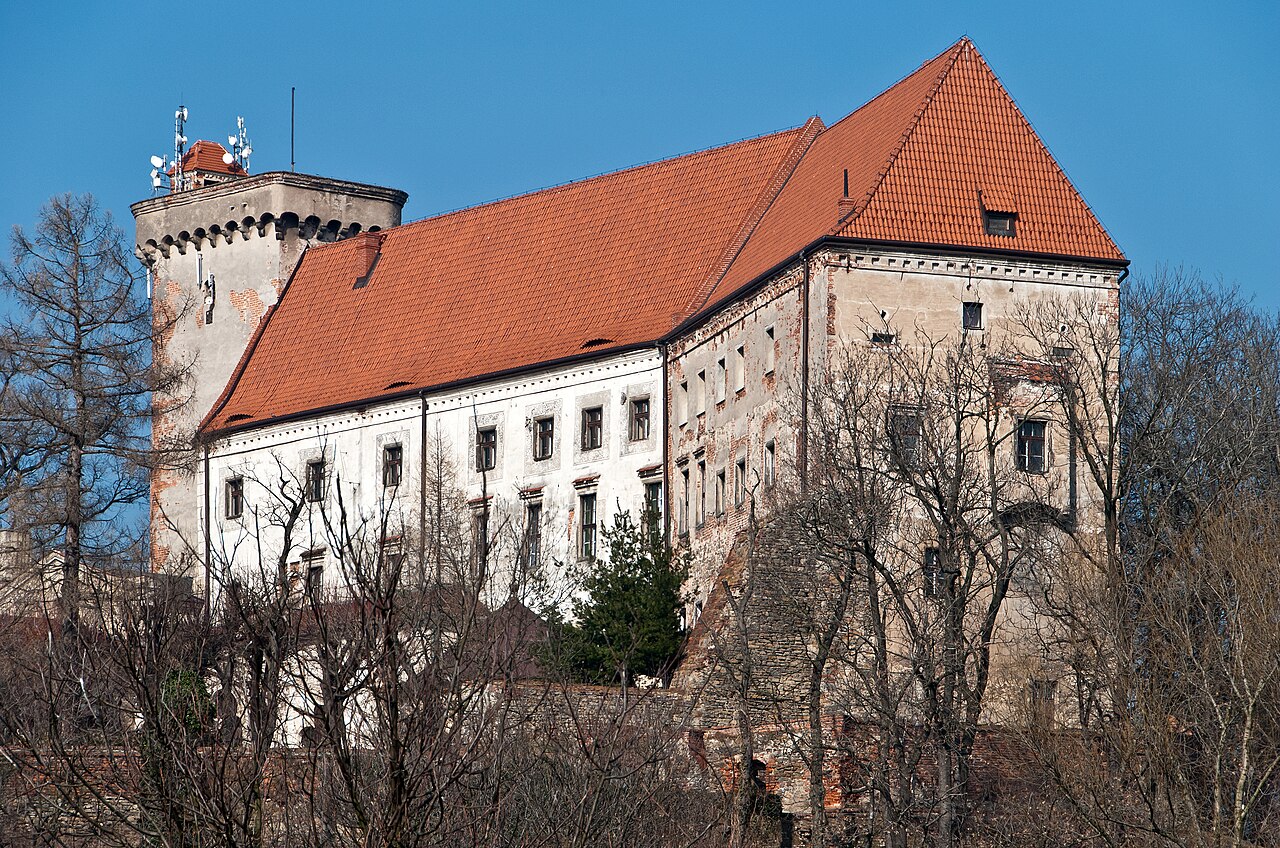
Nysa Castle stands as a significant historical monument in the town of Nysa, Poland, reflecting centuries of architectural evolution and ecclesiastical power. Known as the episcopal residence of the Nysa-Otmuchów principality, the castle's origins trace back to the late medieval period, with its first mentions in written sources dating from the 13th century. Over time, it developed from a wooden manor to a fortified complex and later into a Renaissance palace, embodying the shifting priorities from defense to residential grandeur.
Early history and episcopal significance
Nysa is one of the oldest towns in Silesia, with evidence suggesting a settlement existed here in the early Middle Ages. Initially overshadowed by nearby Otmuchów, which served as the seat of a border castellany, Nysa's status grew when the bishopric of Wrocław acquired the territory. The town and its lands were mentioned as episcopal property in a papal bull issued by Pope Adrian IV in 1155. During the tenure of Bishop Jarosław (1198-1201), son of Duke Bolesław I the Tall, the bishopric expanded its holdings to include the Nysa lands, despite attempts by the Silesian Piasts to reclaim the area. Eventually, the former castellany evolved into the episcopal principality of Nysa-Otmuchów, with Nysa as its capital.
Origins of the castle
The first episcopal manor was located in the southeastern part of Nysa, with the earliest written record dating to 1260. This initial structure was likely a wooden building without defensive features. By 1292, a castle is mentioned, which was subsequently incorporated into the town's fortifications during the 14th century. This development coincided with the efforts of Bishop Przecław of Pogorzela around 1350, who fortified the town with defensive walls and numerous towers, enhancing the security of the episcopal principality.
Architectural evolution and fortifications
In the latter half of the 14th century, a second, lower ring of defensive walls known as the outer bailey or forewall was constructed outside the main town walls. The castle itself was separated from the town by a moat, with access only from the town side. Around 1459, Bishop Jodok Rožmberk undertook significant expansions, transforming the castle into a splendid residence. He relocated the episcopal seat from Otmuchów to Nysa, and the castle became the primary residence for the bishops of Wrocław. In 1510, Bishop Jan Thurzo built a new gate allowing direct access to the castle, enhancing its connectivity with the town.
Renaissance transformation
A devastating fire in 1524 destroyed much of Nysa, including the castle. Restoration efforts led by Bishop Jakub von Salza introduced Renaissance architectural elements, a style further developed in the second half of the 16th century by Marcin Gerstmann. The castle was rebuilt as a four-winged complex surrounding an inner courtyard. Notably, the castle featured three towers guarding the northwest, west, and south corners, all oriented towards the town, emphasizing its role as a symbol of episcopal authority rather than military defense.
Baroque additions and later developments
In 1615, Bishop Charles, Archduke of Austria, constructed a new palace wing in the southwestern part of the castle. This included an impressive reception hall, reflecting the increasing importance of residential comfort and ceremonial functions over military utility. By the early 17th century, the castle's defensive role diminished as the episcopal residence evolved into a more palatial complex.
Transition to a palace
Recognizing the need for a modern residence, Bishop Charles Waza initiated the construction of a new three-winged palace around 1625. This palace gradually assumed the role of the episcopal seat by the end of the 17th century, relegating the older castle buildings to service and economic functions. The palace was expanded with a fourth wing in the early 18th century, further enhancing its grandeur.
Military use and secularization
Following the 1742 Prussian annexation of northern Nysa, the episcopal residence was transferred to military authorities. After the 1810 secularization of church properties, the castle underwent partial demolition and was repurposed as military storage. New utilitarian buildings were erected against the southeastern defensive walls with towers, reflecting the site's shift from noble residence to military utility.
Preservation and current state
Today, Nysa Castle survives in a heavily altered form but retains significant historical elements. The late 17th-century two-story episcopal manor building remains, separated from the town center by a moat. Two Gothic towers, likely dating from the 14th century and modified in later periods, still stand. One tower adjoins a preserved section of brick defensive walls featuring a semicircular passage over a branch of the Biała Głuchołaska River, which flows into the town and forms the castle moat.
Architectural and cultural significance
The castle exemplifies the complex history of ecclesiastical power in Silesia, illustrating the transition from medieval fortifications to Renaissance and Baroque palatial architecture. Its preservation offers valuable insights into the defensive strategies and residential preferences of the bishops who ruled the Nysa-Otmuchów principality. The site remains a testament to the region's rich cultural heritage and continues to attract interest for its historical and architectural importance.
Frequently asked questions (FAQ)
- When was Nysa Castle originally built?
- Nysa Castle was originally built in the 13th century, with significant expansions occurring in 1342 and later centuries.
- What architectural styles are visible at Nysa Castle?
- Nysa Castle exhibits a blend of late medieval Gothic, Renaissance, and Baroque architectural styles due to its multiple phases of construction and renovation.
- Can visitors explore the castle's towers and moat?
- Yes, visitors can explore the preserved Gothic towers and the moat area, which are key features of the castle's defensive system.
- What historical role did Nysa Castle play?
- Nysa Castle served as the episcopal residence and administrative center of the Nysa-Otmuchów principality, reflecting ecclesiastical power in Silesia.
- Is Nysa Castle accessible year-round?
- The castle is generally accessible to visitors year-round, but opening hours may vary seasonally; it is advisable to check locally before planning a visit.
Information
Current owner
Municipality of Nysa
Loading map...
Visitor reviews
No reviews yet. Been here? Write the first review and help other travelers!
Write the first reviewVisited this castle? Share your experience
Your review helps other travelers and adds first-hand knowledge to our encyclopedia.