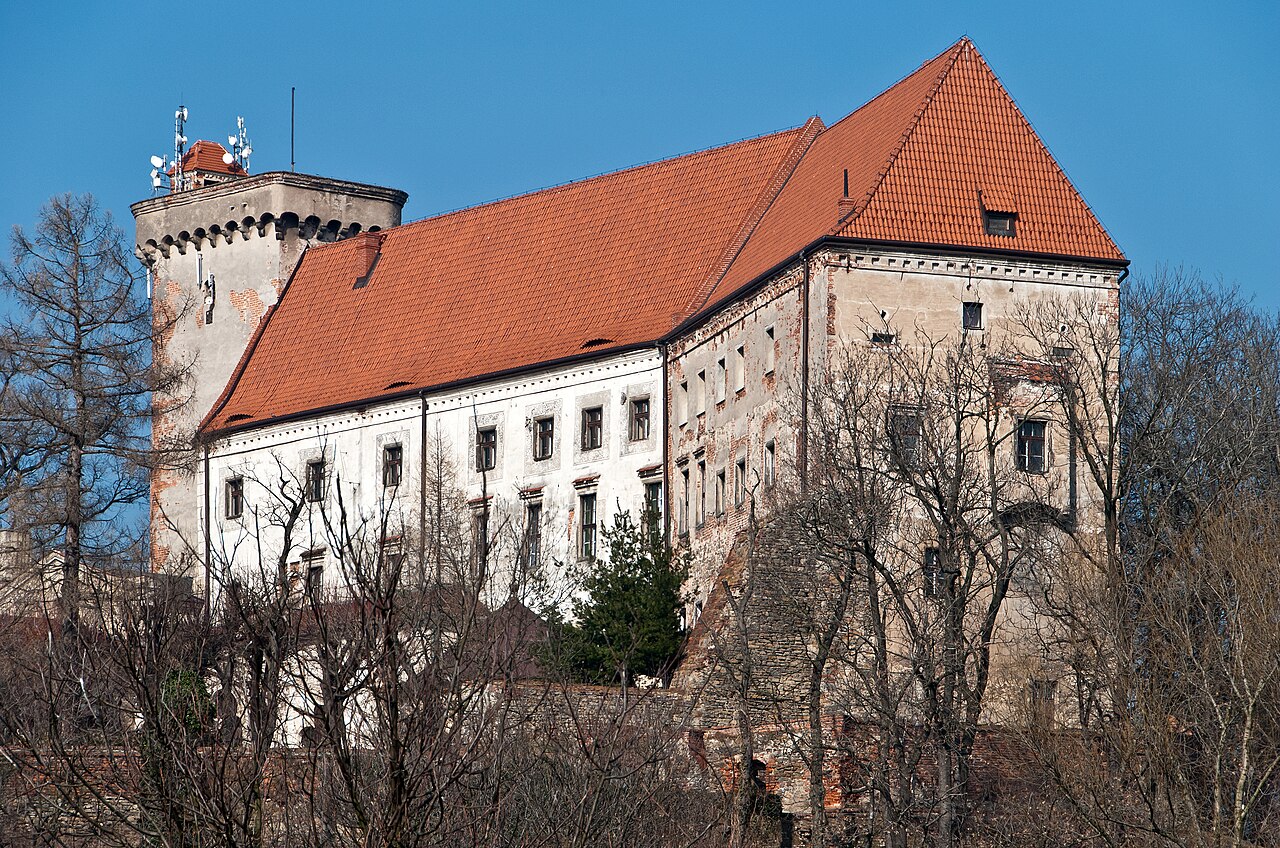
Biała Nyska
The Biała Nyska castle stands as a testament to the complex history of territorial disputes and architectural evolution in southwestern Poland. Located in the village of Biała Nyska, this site has witnessed transformations from a medieval defensive stronghold to a Renaissance and later Baroque palace, reflecting the shifting political and cultural landscape of the region.
The earliest known mention of a fortification at Biała Nyska dates back to 1285, describing a wooden stronghold owned by the Świdnica-Jawor dukes. During the 1270s, the area became a focal point of conflict between Bishop Tomasz II of Wrocław and Duke Henryk IV Probus of Wrocław, who sought to assert control over the bishopric's lands. Biała Nyska was among the 65 villages seized by the duke, an act that provoked strong opposition from the bishopric authorities.
Medieval origins and bolko i's fortification efforts
Following the ascension of Wenceslaus II of Bohemia to the Kraków throne in 1290, Duke Bolko I the Strict of Świdnica-Jawor embarked on a campaign to fortify his domains. This included the strategically important bishopric territories around Nysa and Otmuchów, aimed at securing the borderlands. In 1292, Bolko I initiated the construction of a new castle at Biała, likely intended as a stone fortress to replace the earlier wooden structure. However, by 1296, due to an agreement with Bishop Tomasz II, the unfinished castle was demolished, illustrating the delicate balance of power between secular and ecclesiastical authorities.
Renaissance reconstruction and baroque transformation
Centuries later, in the 16th century, the site saw a revival with the erection of a new castle on the remains of the medieval fortification. This structure was subsequently transformed during the 18th century into a palace surrounded by a moat, embodying the architectural tastes and residential needs of the period. The palace was a brick and stone building, plastered and designed on a quadrangular plan featuring an internal courtyard and a distinctive cylindrical tower positioned at one corner.
Surrounding the palace, an English-style landscaped park was developed, enhancing the estate's aesthetic appeal and reflecting contemporary trends in garden design. This park included a notable island feature, adding to the picturesque quality of the grounds.
Ownership and decline in the 20th century
The last private owner of the Biała Nyska estate was Baron Krystian Rudolf von Falkenhauzen, who tragically ended his life in 1940. The turmoil of World War II brought significant damage to the palace, with heavy destruction occurring in 1945. Despite its historical importance, the ruins were neglected in the post-war period.
During the 1970s, under the authority of local government bodies and without the consent of heritage conservators, the ruins were ordered to be dismantled. This led to the loss of much of the structural remains, leaving only scant traces of the original castle and palace complex.
Current state and heritage significance
Today, the site of Biała Nyska castle is primarily characterized by the remains of the English-style park with its island and the surviving entrance gate to the former palace grounds. The castle itself exists only as ruins, with no substantial above-ground structures remaining to convey its former grandeur.
Despite the physical losses, Biała Nyska remains an important cultural and historical landmark. It offers valuable insights into the medieval fortification practices, the evolution of aristocratic residences in Poland, and the turbulent history of Silesian borderlands. The site invites further archaeological and conservation efforts to preserve what remains of this multifaceted heritage.
Architectural features and layout
The original medieval castle, though never completed, was planned as a stone fortress, likely featuring defensive walls and a keep. The later Renaissance and Baroque palace incorporated a quadrilateral layout with an internal courtyard, a typical design for residential castles of the period. The cylindrical tower at the corner served both defensive and aesthetic purposes, a common feature in such palatial structures.
The moat surrounding the palace was not only a defensive measure but also an ornamental element, integrating water features into the landscape design of the estate. The English-style park, with its informal layout and naturalistic elements, contrasted with the geometric rigidity of earlier formal gardens, reflecting changing tastes in landscape architecture.
Historical context and territorial disputes
Biała Nyska's history is deeply intertwined with the power struggles of the late 13th century between secular rulers and ecclesiastical authorities. The seizure of the village by Duke Henryk IV Probus and the subsequent fortification efforts by Bolko I illustrate the strategic importance of this borderland area. The castle's demolition in 1296 underlines the fragile nature of political agreements and the influence of the church in territorial governance.
Throughout the centuries, the site adapted to the changing political realities, transitioning from a military fortress to a noble residence. This evolution mirrors broader trends in Central European castle architecture, where defensive needs gradually gave way to comfort and display of status.
Visiting and preservation challenges
Currently, visitors to Biała Nyska will find limited physical remains of the castle and palace, with the main attraction being the historic park and the entrance gate. The site's condition as ruins and the loss of most structures pose challenges for preservation and interpretation.
Efforts to protect and promote the heritage of Biała Nyska would benefit from archaeological research and conservation initiatives aimed at stabilizing the ruins and enhancing visitor experience. The site's story offers rich material for educational programs about medieval and early modern Polish history and architecture.
Frequently asked questions (FAQ)
- What is the historical significance of Biała Nyska castle?
- Biała Nyska castle played a key role in the territorial disputes of the late 13th century between the Świdnica-Jawor dukes and the Wrocław bishopric, illustrating the complex power dynamics of medieval Silesia.
- Can I visit the ruins of Biała Nyska castle today?
- Yes, visitors can explore the site, although only the ruins of the castle and palace remain, along with the historic English-style park and entrance gate.
- When was the original castle at Biała Nyska built?
- The original fortification was initiated around 1290 by Duke Bolko I, but it was never completed and was demolished in 1296 following an agreement with the Wrocław bishop.
- What architectural styles are represented at Biała Nyska?
- The site reflects a transition from medieval defensive architecture to Renaissance and Baroque palace styles, including a quadrangular plan and a cylindrical tower.
- Why was the castle demolished in 1296?
- The castle was demolished as part of a political agreement between Duke Bolko I and Bishop Tomasz II to resolve territorial disputes and maintain ecclesiastical authority.
Information
Loading map...
Visitor reviews
No reviews yet. Been here? Write the first review and help other travelers!
Write the first reviewVisited this castle? Share your experience
Your review helps other travelers and adds first-hand knowledge to our encyclopedia.