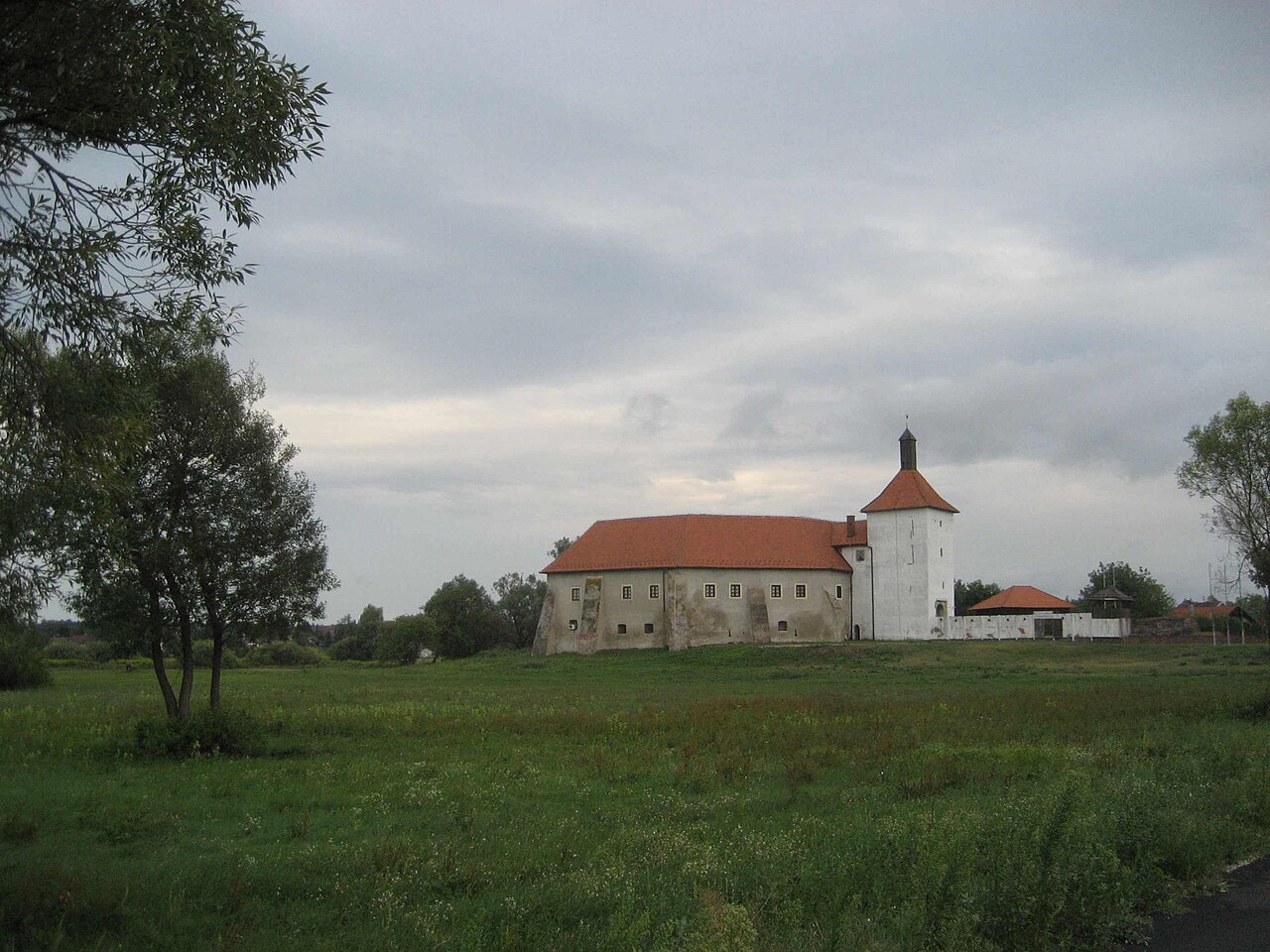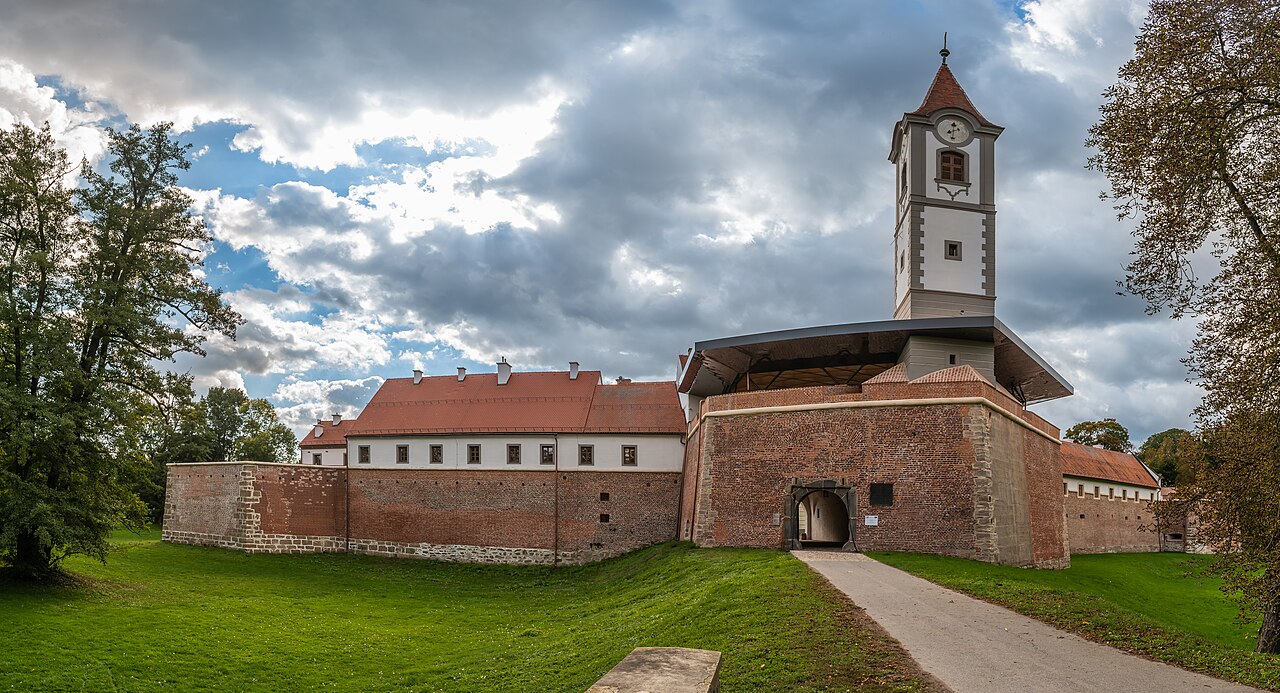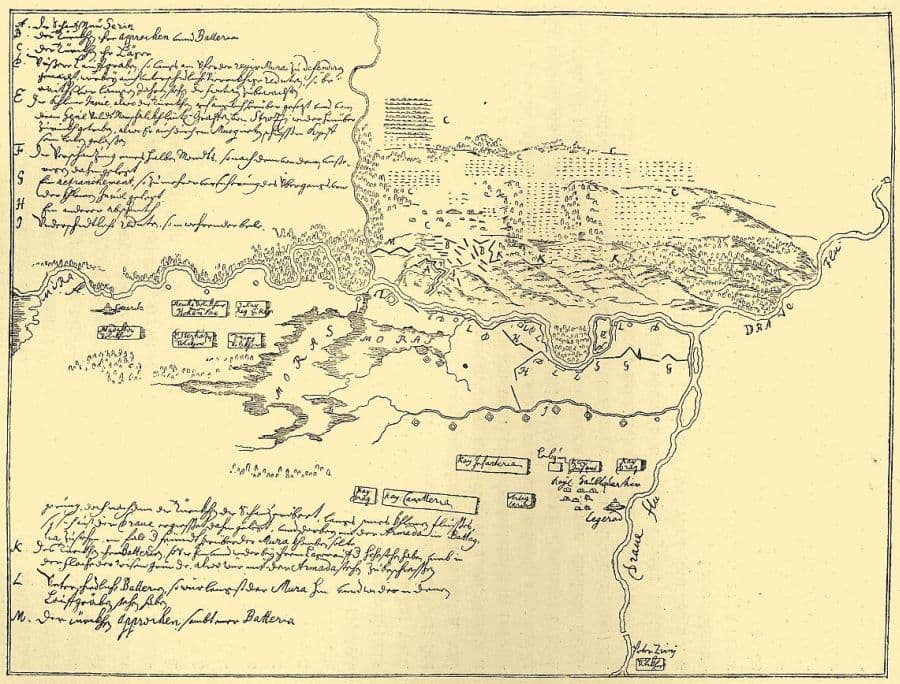
Novi Zrin (Hungarian: Zrínyiújvár or Új-Zrínyivár) was a strategically significant fortress constructed between 1661 and 1664 by the prominent Zrinski (Zrínyi) noble family. Located near the village of Donja Dubrava in the northernmost part of Croatia, close to the border village of Őrtilos in Hungary, the fortress was positioned at the confluence where the Mura River flows into the Drava River. This location was chosen for its strategic importance in controlling river access and defending against Ottoman incursions into Central Europe.
Strategic importance and purpose
The fortress of Novi Zrin was built during a period of intense military conflict between the Habsburg Monarchy and the Ottoman Empire. Its primary purpose was to serve as a defensive bulwark to prevent Ottoman forces from advancing further into Croatian and Hungarian territories. The Zrinski family, notable for their military leadership and resistance against Ottoman expansion, commissioned the fortress as part of a broader defensive strategy in the region.
Construction and architectural features
Constructed over a brief period from 1661 to 1664, Novi Zrin was designed as a fortified stronghold incorporating the military architectural principles of the late Renaissance period, adapted to the needs of frontier defense. Although detailed architectural records are limited due to its relatively short existence and subsequent destruction, it is known that the fortress featured thick defensive walls, bastions for artillery placement, and a fortified gate complex. The design aimed to withstand prolonged sieges and artillery bombardment, reflecting the evolving nature of warfare in the 17th century.
Location and natural defenses
The fortress's placement at the river confluence provided natural defensive advantages. The surrounding waters created natural moats and obstacles for attacking forces, enhancing the fortress's defensive capabilities. The terrain also allowed for control over important river routes, which were vital for military logistics and movement.
Sieges and military engagements
During its brief operational period, Novi Zrin was subjected to multiple Ottoman attacks between 1662 and 1664. These assaults tested the fortress's defenses but failed to breach its walls, demonstrating its effective design and the resilience of its garrison.
The 1664 siege and destruction
In early June 1664, a massive Ottoman army, estimated to number up to 100,000 troops and led by the Grand Vizier Köprülü Fazıl Ahmed Pasha, laid siege to Novi Zrin. Despite determined resistance, the fortress was overwhelmed and ultimately destroyed on 7 July 1664. The fall of Novi Zrin marked a significant event in the ongoing Ottoman-Habsburg conflicts, illustrating the intense military pressures on frontier fortifications during this era.
Legacy and current status
Today, Novi Zrin exists as archaeological ruins that provide valuable insights into 17th-century military architecture and the turbulent history of the Croatian-Hungarian borderlands. The site is a point of historical interest for scholars and visitors interested in the military history of the region and the legacy of the Zrinski family. Preservation efforts focus on maintaining the ruins and promoting awareness of the fortress's historical significance.
Cultural significance
The fortress is remembered as a symbol of resistance against Ottoman expansion and the military prowess of the Zrinski family. It holds a place in Croatian and Hungarian historical narratives as a testament to the struggles faced by border regions during the 17th century.
Visiting information
While the fortress remains are in ruins, the site is accessible to visitors interested in exploring the historical landscape. Interpretive signage and archaeological markers help contextualize the remains for tourists and history enthusiasts. Visitors should check local resources for access conditions and any guided tour availability.
Frequently asked questions (FAQ)
- When was Novi Zrin fortress built?
- Novi Zrin fortress was constructed between 1661 and 1664 by the Zrinski noble family to defend against Ottoman advances.
- What was the strategic purpose of Novi Zrin?
- The fortress was built to prevent Ottoman military forces from advancing further into Croatian and Hungarian territories.
- Who led the final siege on Novi Zrin?
- The final siege in 1664 was led by the Ottoman Grand Vizier Köprülü Fazıl Ahmed Pasha with an army of up to 100,000 men.
- What remains of Novi Zrin today?
- Today, Novi Zrin exists as archaeological ruins that reveal its historical military significance and architecture.
- Can visitors explore the Novi Zrin site?
- Yes, the ruins are accessible to visitors, with informational signage providing historical context, though facilities are limited.
Photo gallery

Photo by Raimondo Montecuccoli•Public domain
Information
Loading map...
Visitor reviews
No reviews yet. Been here? Write the first review and help other travelers!
Write the first reviewVisited this castle? Share your experience
Your review helps other travelers and adds first-hand knowledge to our encyclopedia.