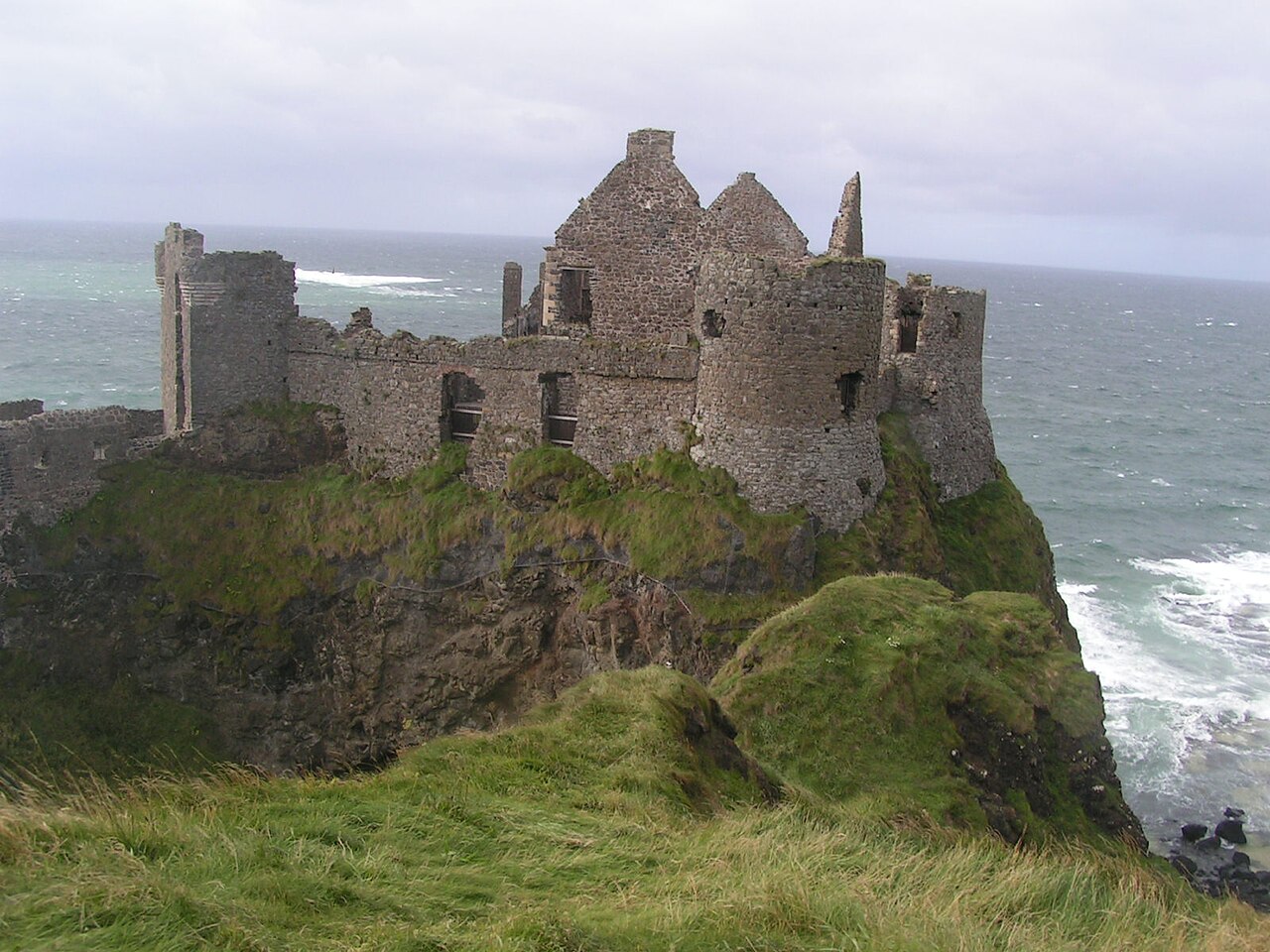
Northburgh Castle
Northburgh Castle, also known as Green Castle or Greencastle Castle, is a significant late medieval fortress located in Greencastle, County Donegal, Ireland. Constructed beginning in 1305 by the powerful Anglo-Norman noble Richard Óg de Burgh, 2nd Earl of Ulster, the castle was strategically positioned to control the entrance to Lough Foyle, a vital maritime route on the northwestern coast of Ireland. Its location underscored its military and administrative importance during the turbulent years of Anglo-Norman expansion in Ulster.
Historical context and construction
The castle was built during the early 14th century as part of Richard Óg de Burgh's efforts to consolidate and extend Anglo-Norman influence across Ulster. The construction commenced in 1305, reflecting the architectural trends of the late medieval period. Northburgh Castle was designed not only as a military stronghold but also as a symbol of lordly power and governance in a contested border region.
The castle's architecture exhibits clear influences from the fortifications of Edward I of England, known for his extensive castle-building campaigns in Wales. This influence is evident in the castle's twin-towered gatehouse, a feature that was a hallmark of Edwardian castle design, combining strong defensive capabilities with an imposing visual statement.
Architectural features and layout
Northburgh Castle is characterized by its oval-shaped enclosure, which is somewhat unusual compared to the more common rectangular or circular plans of contemporary castles. This shape allowed for a flexible defense perimeter and made use of the natural topography.
The twin-towered gatehouse serves as the main entrance and was designed for both defense and control of access. The gatehouse would have included murder holes, arrow slits, and a portcullis to repel attackers. Behind the gatehouse lies a large, later-added tower, which may have served as a keep or stronghold within the castle complex.
The curtain walls surrounding the enclosure were robustly built, with battlements and walkways for defenders. The castle's design reflects a transitional phase in castle architecture, moving from purely military fortifications to incorporating administrative and residential functions.
Military history and later use
Within a decade of its completion, Northburgh Castle was captured by Edward Bruce in 1316 during his campaign in Ireland. This event highlights the castle's strategic importance in the ongoing conflicts between Anglo-Norman lords and native Irish forces.
In subsequent centuries, the castle became associated with the O'Doherty clan, a prominent Gaelic family in the region. They used the castle as a stronghold, reflecting the shifting power dynamics in Ulster through the late medieval and early modern periods.
The castle suffered damage from cannon fire during the turbulent 17th century, which contributed to its decline and eventual ruin. Despite this, many of its structural elements remain visible today, providing valuable insights into medieval military architecture.
Current condition and public access
Today, Northburgh Castle stands as a partially preserved ruin managed by the Irish government. Its remains include the gatehouse, curtain walls, and the large tower, which continue to attract historians, architects, and visitors interested in medieval fortifications.
The castle is accessible from the nearby town of Greencastle and the shore of Lough Foyle, making it a popular destination for tourists exploring the history and natural beauty of County Donegal.
Architectural significance and legacy
Northburgh Castle represents an important example of late medieval castle architecture in Ireland. Its design reflects the influence of English royal fortifications while adapting to local conditions and needs. The castle's combination of military, administrative, and symbolic functions illustrates the evolving role of castles during the period.
The oval enclosure and twin-towered gatehouse are particularly notable features, demonstrating advances in defensive design and the integration of imposing gateways as both practical and psychological barriers.
As a historical monument, Northburgh Castle offers valuable insights into the complex interactions between Anglo-Norman settlers and Gaelic Irish clans, as well as the broader political and military history of medieval Ireland.
Frequently asked questions (FAQ)
- How do I get to Northburgh Castle in Greencastle?
- Northburgh Castle is located near the town of Greencastle in County Donegal, Ireland. It can be reached by car or local transport, with access points from the town center and the shore of Lough Foyle.
- What is the historical significance of Northburgh Castle?
- Built in 1305 by Richard Óg de Burgh, Northburgh Castle controlled the strategic entrance to Lough Foyle. It played a key role in Anglo-Norman expansion and later became a stronghold for the O'Doherty clan.
- Can I explore the castle ruins?
- Yes, the castle ruins are open to the public. Visitors can explore the remains of the twin-towered gatehouse, curtain walls, and other structures, though some areas may be restricted for safety.
- When was Northburgh Castle built and by whom?
- Northburgh Castle was constructed beginning in 1305 by Richard Óg de Burgh, 2nd Earl of Ulster, as part of his efforts to secure the region.
- Why is the twin-towered gatehouse important?
- The twin-towered gatehouse is a distinctive feature influenced by Edward I's castle designs. It served both defensive and administrative functions, controlling access and providing a strong defensive position.
Information
Current owner
Irish government
Loading map...
Visitor reviews
No reviews yet. Been here? Write the first review and help other travelers!
Write the first reviewVisited this castle? Share your experience
Your review helps other travelers and adds first-hand knowledge to our encyclopedia.