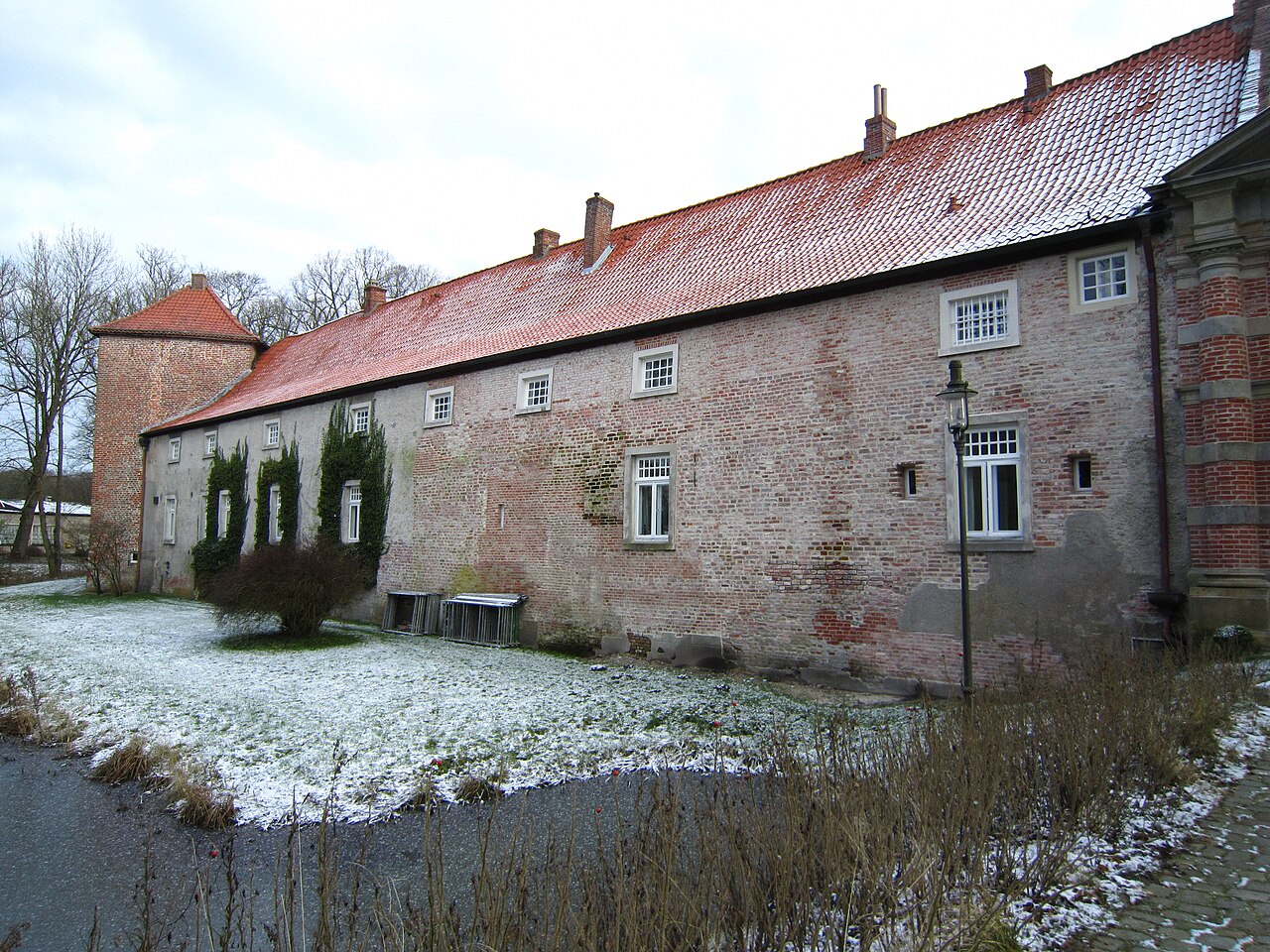
Norderburg Castle
Norderburg Castle is a notable example of a moated castle with origins dating back to the 14th century, located in Dornum, Germany. This castle has witnessed significant historical events and transformations that have shaped its current form and function. Initially constructed during the late medieval period, it was strategically designed to utilize a water-filled moat for defense, a common feature among castles aiming to deter sieges and attacks during that era.
Historical background and destruction
The castle's early history is marked by its destruction in 1514 during the Saxonian rebellion, a conflict that affected many fortifications across the region. This event led to the castle's ruin, but it was not left to decay indefinitely. In 1534, Hicko Kankena undertook the task of rebuilding Norderburg Castle, restoring it with architectural elements reflecting the evolving styles of the early Renaissance period while maintaining its defensive characteristics.
Architectural features and design
Norderburg Castle is distinguished by its impressive facade, which is flanked by two striking lion statues guarding the entrance, symbolizing strength and protection. The castle's interior includes an ornately designed Knight's Hall, which served as a ceremonial and gathering space for the castle's occupants. Additionally, the castle houses a great hall that is renowned for its baroque paintings, showcasing artistic developments from the 17th and 18th centuries that were incorporated during later renovations.
Moat and defensive structures
The moat surrounding the castle not only provided a physical barrier against invaders but also enhanced the castle's aesthetic appeal. The defensive walls and towers, typical of late medieval fortifications, were designed to offer vantage points for surveillance and protection. Though the castle's military role diminished over time, these features remain integral to its historic character.
Ownership and functional transformations
Throughout its history, Norderburg Castle has undergone several changes in ownership, reflecting the shifting political and social landscape of the region. Beyond its role as a noble residence, the castle was repurposed as a private school and later as a college, adapting its spaces to educational functions. Since 1951, it has been home to a middle school, continuing its legacy as a center for learning and community engagement.
Preservation and current status
The castle is currently well preserved, with ongoing efforts to maintain both its structural integrity and historical elements. Its adaptation for educational use has helped ensure its upkeep and accessibility to the public. Visitors to Norderburg Castle can appreciate its blend of medieval architecture and baroque artistic features, as well as its role in regional history and contemporary culture.
Cultural significance and visitor information
Norderburg Castle stands as a significant cultural landmark in Dornum, offering insights into the architectural evolution from the late medieval to the baroque period. Its combination of defensive structures and decorative interiors provides a comprehensive view of castle life and design over several centuries. The castle's ongoing use as a school also highlights its integration into modern community life, making it a unique site for both historical study and educational activities.
Visitors interested in exploring the castle can observe its moat, lion statues, Knight's Hall, and baroque great hall. The castle's location in Dornum places it within a region rich in history and architectural heritage, contributing to its appeal as a destination for those interested in medieval fortifications and their later adaptations.
Frequently asked questions (FAQ)
- When was Norderburg Castle originally built and by whom?
- Norderburg Castle was originally built in the 14th century during the late medieval period. The exact founder is not well documented, but it was established as a moated fortress typical of that era.
- What happened to Norderburg Castle during the Saxonian rebellion?
- The castle was destroyed in 1514 during the Saxonian rebellion, which led to significant damage. It was later rebuilt in 1534 by Hicko Kankena, restoring its structure and defensive features.
- What are the notable architectural features of Norderburg Castle?
- Notable features include the impressive facade guarded by two lion statues, the ornately designed Knight's Hall, and the great hall decorated with baroque paintings, reflecting its historical evolution.
- Is Norderburg Castle open to the public for visits?
- While primarily functioning as a middle school since 1951, the castle may have limited public access. Visitors should check local resources or contact the school for visiting information.
- How has the use of Norderburg Castle changed over time?
- Originally a defensive moated castle, it was later used as a private school and college. Since 1951, it has served as a middle school, integrating educational functions into the historic structure.
Information
Loading map...
Visitor reviews
No reviews yet. Been here? Write the first review and help other travelers!
Write the first reviewVisited this castle? Share your experience
Your review helps other travelers and adds first-hand knowledge to our encyclopedia.