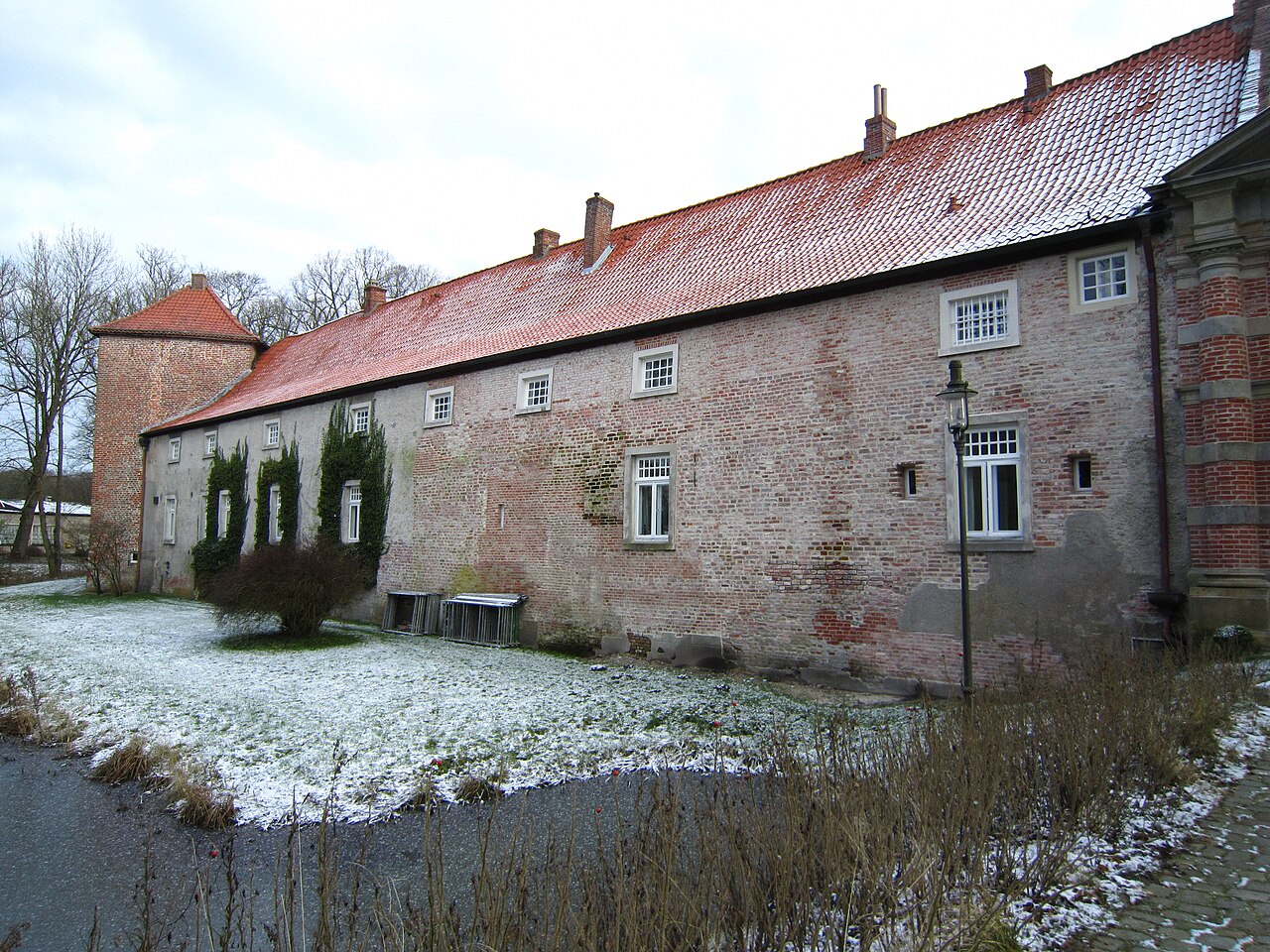
Lütetsburg Castle
Lütetsburg Castle stands as a significant historical and architectural monument in East Frisia, Germany. Its origins trace back to the late 14th century when the East Frisian chieftain Lütet Manninga expanded his family estate after losing his ancestral home to devastating floods between 1373 and 1377. The castle evolved from the family property known as Uthoff into the moated stronghold called Lützborch, marking the beginning of a centuries-long legacy of noble residence and regional influence.
Architectural evolution and historical significance
The castle's architecture reflects a complex history of construction, destruction, and restoration. Originally built in the Renaissance period, the castle has undergone numerous transformations. The basic form of the outer ward dates to the 15th century, while the imposing gate towers were added in the 17th century. Throughout its history, Lütetsburg Castle faced significant challenges including theft and damage during the Saxon Feud of 1517, ravages of the Thirty Years’ War, a destructive fire in 1893, and bombing damage in the Second World War.
The current structure is a modern four-winged brick building constructed between 1956 and 1962 on the foundations dating back to 1517. This reconstruction was designed by Prince Wilhelm Edzard zu Inn- und Knyphausen and executed by architect Hans Heinrich von Oppeln. It features a monumental yet simple design with two towers and harmonizes with the surrounding landscape, showcasing a blend of historical foundations and mid-20th-century architectural sensibilities.
The Inn- und Knyphausen family and their legacy
The castle has been closely associated with the Inn- und Knyphausen family for centuries. Notable family members include Dodo zu Innhausen und Knyphausen (1583–1636), who served under Swedish King Gustav Adolf during the Thirty Years’ War, and Wilhelm von Knyphausen, who fought alongside the British in the American Revolutionary War in 1776. The family continues to reside in the castle today, maintaining its status as a private residence and symbol of noble heritage.
Castle park: a landscape of history and nature
Transformation by Edzard Mauritz zu Inn- und Knyphausen
The castle is surrounded by the extensive Lütetsburg Castle Park, one of the largest and most beautiful parks in northern Germany, covering approximately 30 hectares. The park was transformed in the early 19th century by Edzard Mauritz zu Inn- und Knyphausen, who inherited the title of Earl in 1816. He redesigned the original Baroque garden into a naturalistic landscape garden, planting exotic trees and shrubs, digging canals and streams, and constructing earth banks. This transformation reflected early Romantic garden principles, blending art, nature, and personal symbolism.
Monuments and symbolic structures
The park contains several memorials and sculptures expressing personal and family sentiments. Among these are a stone pyramid commemorating Edzard Mauritz’s mother and first wife, a friendship temple dedicated to a close friend, and the Caroline Island with a memorial for his deceased daughter Caroline. These features contribute to the park's character as a space of remembrance and reflection.
Later developments and botanical diversity
After Edzard Mauritz’s death, his descendants made few structural changes but introduced extensive plantings of rhododendrons and azaleas, which added vibrant color and transformed the park into a festive, blooming landscape. In 1932, Fürst Wilhelm Edzard zu Inn- und Knyphausen undertook a significant redevelopment of the park. Post-World War II efforts focused on repairing war damage and restoring the castle and grounds.
Today, the park features a rich variety of over 150 exotic and native plant species. Its several kilometers of walking trails offer visitors a peaceful environment for recreation and contemplation. Historical elements such as ornate benches with inscriptions remain, inviting guests to rest and appreciate the garden's tranquil beauty.
Access and current status
Lütetsburg Castle remains a private residence and is not open for public tours inside. However, the castle park is accessible to visitors and serves as a cultural and natural attraction in the region. The harmonious integration of the castle's architecture with the landscape and the park's blend of historical design and botanical richness make it a notable destination for those interested in castle architecture, landscape gardening, and East Frisian heritage.
Information
Website
Visit websiteSources & official resources
Verify the information above using these authoritative references.
Loading map...
Visitor reviews
No reviews yet. Been here? Write the first review and help other travelers!
Write the first reviewVisited this castle? Share your experience
Your review helps other travelers and adds first-hand knowledge to our encyclopedia.