Njasviz Castle
Nesvizh Castle, located in the Minsk region of Belarus, stands as a monumental example of Renaissance architecture combined with innovative military design. Established in 1582 under Prince Mikołaj Krzysztof Radziwiłł, the castle evolved from a medieval wooden fortification into a grand stone palace and bastion complex. It served as the principal residence of the powerful Radziwiłł family, one of the most influential noble dynasties in the Grand Duchy of Lithuania and later the Polish-Lithuanian Commonwealth.
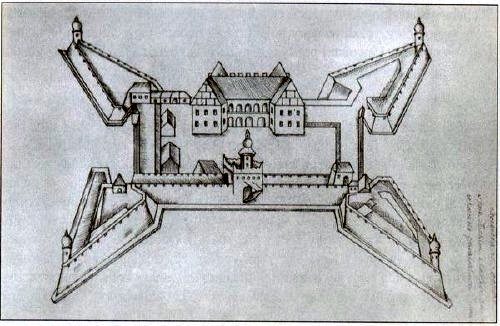
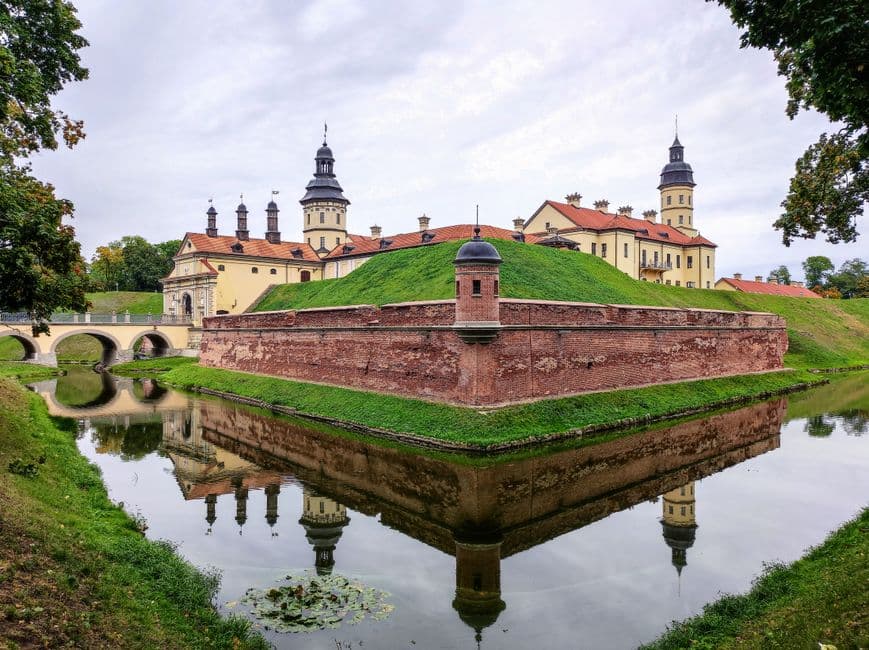
The castle is a pioneering example of the neo-Italian bastion fortification system in Belarus, reflecting advanced military architectural principles of the late 16th century. Its strategic location on a natural peninsula formed by the Usha River and surrounding ponds allowed for formidable defense enhanced by a moat, bastions, and a ravelin. The fortress was designed to house a large private army and artillery, demonstrating its significant military importance for several centuries.
Historical development and Radziwiłł legacy
The site of Nesvizh Castle was initially occupied by a wooden stronghold built by the Kiszka family in the early 16th century. After the estate passed to the Radziwiłł family in 1533, it became the center of their expansive holdings. The construction of the stone castle began in 1582, incorporating elements of the earlier structure. The Italian architect Giovanni Maria Bernardoni played a crucial role in the castle's design, blending Italian Renaissance and early Baroque influences.
Throughout the 16th to 18th centuries, the castle was continually expanded and remodeled. The Radziwiłłs transformed it from a purely defensive fortress into an opulent residence with extensive galleries, ceremonial halls, and a renowned library. The castle also became a cultural hub, hosting theaters and art collections. However, it faced numerous challenges, including damage during the Great Northern War in 1706 when Swedish forces sacked the fortress.
Restorations and architectural enhancements
Following the war, the castle underwent significant restoration and enlargement under the guidance of German and Italian architects, including Antoni Zaleski. The renovations introduced Baroque stucco decorations, pilasters, and sculptural elements that enhanced the castle's grandeur. The three separate buildings surrounding the central courtyard were unified into a single architectural ensemble, crowned with decorative towers and turrets that contribute to its romantic silhouette.
Architectural features and defensive innovations
The castle's layout exemplifies the symmetry and harmony characteristic of Renaissance design. The main residential building is a three-story rectangular structure with four octagonal corner towers topped by battlements. The central façade is adorned with a high pediment featuring the Radziwiłł coat of arms, stucco moldings, and relief sculptures that emphasize its elegance and solemnity.
The entrance gate is a distinctive two-story stone structure with a vaulted tunnel leading into the courtyard. This design creates a dramatic perspective and is typical of Belarusian castle architecture. The fortifications include an earthen rampart faced with stone, bastions at the corners, and a moat originally dry but later flooded for enhanced defense. Secret passages and vaulted chambers within the ramparts allowed for secure movement and storage during sieges.
Military significance and artillery
Nesvizh Castle was well-equipped with artillery, housing over 100 cannons in the 17th century. It featured a foundry for casting bronze and iron guns, many of which bore decorative reliefs and were named after saints or mythical creatures. This arsenal underscored the castle's role as a military stronghold and the seat of the Radziwiłł private army.
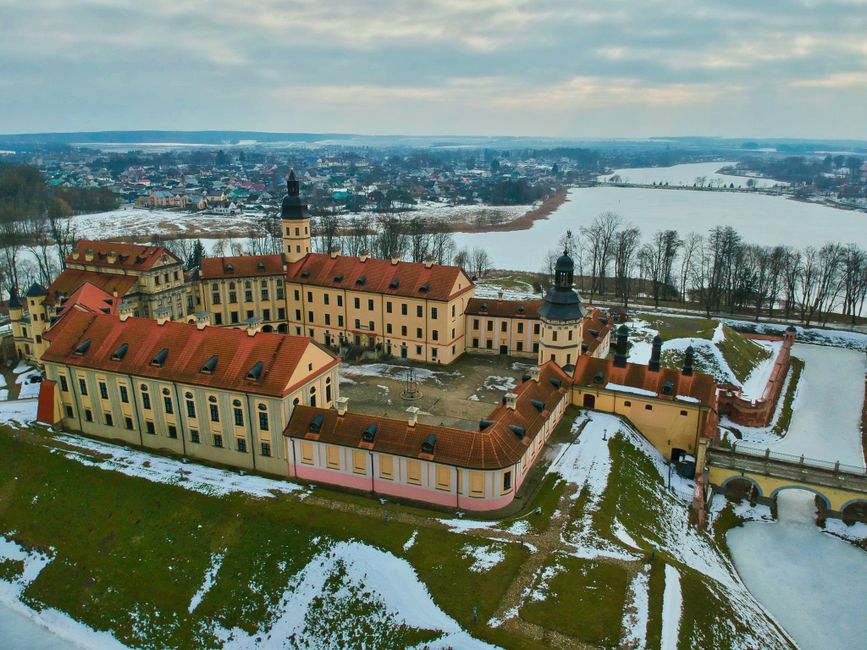
Photo by Egor Kunovsky
Corpus Christi Church and cultural heritage
Adjacent to the castle is the Corpus Christi Church, constructed between 1587 and 1603 by Giovanni Maria Bernardoni. It is recognized as the first Jesuit temple patterned after Il Gesù in Rome and the earliest Baroque church in Eastern Europe. The church houses the coffins of 72 Radziwiłł family members, each marked with the Trąby coat of arms. Its richly decorated interior includes late Baroque frescoes and a Venetian Holy Cross altar, reflecting the family's religious and cultural prominence.
Landscape park and surroundings
The castle is surrounded by an extensive landscape park spanning over 100 hectares, divided into several thematic zones. The English-style park, designed in the late 19th century by Prince Anton Radziwiłł and his wife Marie de Castellane, features a long tree-lined dam, exotic plants, and decorative courtyards. Other areas include the Old Park with historic trees, the romantic New Park with symbolic elements linked to local legends, and the Japanese Park with eastern motifs.
Modern history and preservation
Nesvizh Castle endured numerous upheavals in the 19th and 20th centuries, including looting during the Napoleonic wars and damage during both World Wars. During the Soviet era, it was repurposed as a sanatorium, and the park fell into neglect. After Belarus regained independence, the castle was designated a national historical and cultural reserve in 1994.
A major fire in 2002 caused severe damage to the roofing and interiors, prompting extensive restoration efforts completed by 2012. Today, the castle retains key elements of its Renaissance and Baroque architecture, including the moat, ramparts, entrance bridge, and the courtyard. Since 2005, Nesvizh Castle has been a UNESCO World Heritage Site, recognized for its outstanding architectural innovation, historical significance, and cultural heritage.
Frequently asked questions (FAQ)
- What is the historical significance of Njasviz Castle?
- Njasviz Castle, also known as the Nesvizh Castle, is a UNESCO World Heritage Site and a prime example of Belarusian Renaissance architecture. Built in the 16th century, it served as the residence of the Radziwill family, influential magnates in the region, and has witnessed many historical events that shaped Belarus.
- When was Njasviz Castle built?
- Njasviz Castle was initially constructed in the late 15th century, with significant expansions and renovations occurring in the following centuries. The castle reflects various architectural styles, including Gothic, Renaissance, and Baroque, showcasing its evolution over time.
- Can I visit Njasviz Castle year-round?
- Yes, Njasviz Castle is open for visitors year-round, although specific opening hours may vary by season. It's recommended to check the official website for the most up-to-date information on visiting hours and any seasonal events.
- What are the ticket prices for Njasviz Castle?
- Ticket prices for Njasviz Castle vary depending on the type of tour and visitor age. Generally, adult tickets are reasonably priced, while children, students, and seniors often receive discounts, making it accessible for families.
- Is it possible to take guided tours at Njasviz Castle?
- Yes, guided tours are available at Njasviz Castle, providing visitors with in-depth insights into its history and architecture. These tours are led by knowledgeable guides who can enhance your experience with fascinating stories and facts about the castle.
- What is the best time to visit Njasviz Castle?
- The best time to visit Njasviz Castle is during the late spring and early autumn months when the weather is mild and ideal for exploring the grounds. Additionally, visiting during these seasons allows you to enjoy the beautiful gardens and surrounding landscapes in full bloom.
- How do I get to Njasviz Castle from Minsk?
- Getting to Njasviz Castle from Minsk is convenient and can be done by car, bus, or guided tour. The journey typically takes around 1.5 to 2 hours, making it a perfect day trip for those staying in the capital.
- What nearby attractions can I visit while in Njasviz?
- While visiting Njasviz Castle, you can also explore the charming town of Nesvizh, which features beautiful parks and historical sites. Nearby, the town of Slutsk and the picturesque landscape of the Belarusian countryside offer additional cultural experiences and scenic views.
- Is Njasviz Castle accessible for individuals with disabilities?
- Njasviz Castle strives to be accessible to all visitors, including those with disabilities. The castle has implemented various accommodations, including ramps and designated pathways, to ensure everyone can enjoy the rich history and architecture it has to offer.
Photo gallery

Photo by Sun452


Information
Website
Visit websiteSources & official resources
Verify the information above using these authoritative references.
Loading map...
Visitor reviews
No reviews yet. Been here? Write the first review and help other travelers!
Write the first reviewVisited this castle? Share your experience
Your review helps other travelers and adds first-hand knowledge to our encyclopedia.