Niemcza Castle
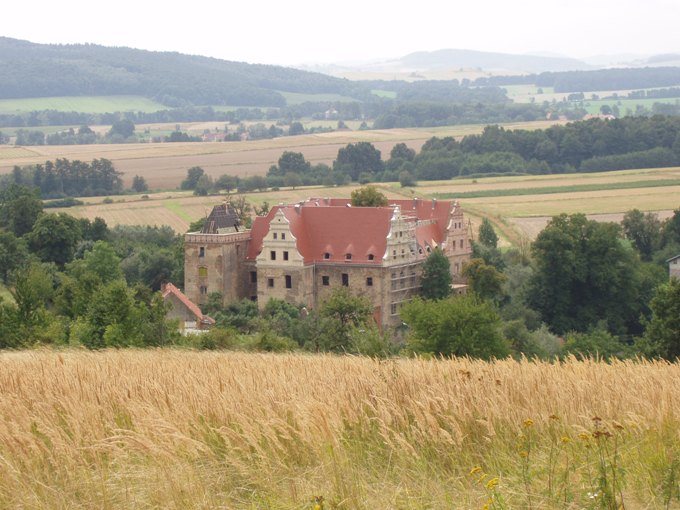
Niemcza Castle stands prominently on a steep hill in the town of Niemcza, Poland, showcasing a rich history that spans from early medieval fortifications to Renaissance architectural grandeur. Its strategic location, naturally protected by the Ślęza River on the eastern side, made it a vital defensive stronghold in the region for centuries. The castle's history is deeply intertwined with the broader political and military developments of Silesia, illustrating the evolution of castle architecture and regional governance.
The site of Niemcza Castle was originally settled by the Vandals in the 4th century, followed by the Slavic Silinger tribe. The earliest known fortress dates back to the 10th century, initially constructed from wood. This early fortification was part of a network of defenses in the area, reflecting the turbulent times and the need to protect local populations from invasions and regional conflicts.
By the late 13th century, the wooden structure was replaced with a more durable stone castle, marking a significant development in its defensive capabilities. Around 1295, the stone castle was established, becoming a key element in the region's fortification system. During this period, Niemcza was a contested site, reflecting shifting control between Polish and Bohemian rulers. The castle's name, recorded as "Nemzi" by the medieval chronicler Monachus Sazavensis, is the oldest documented place name in Silesia, emphasizing its historical importance.
Medieval history and military significance
In 990, Polish forces captured Niemcza from Bohemian control, underscoring its strategic value. The castle withstood significant sieges, including those by Emperor Henry II in 1017 and Duke Břetislav II in 1093, both unsuccessful attempts to seize the fortress. By the mid-12th century, Niemcza Castle had become the seat of a castellan, a local governor charged with administration and defense of the surrounding territory.
The castle's military role continued into the 14th and 15th centuries. After coming under Bohemian suzerainty in 1329, Niemcza was affected by the Hussite Wars (1419–1436), during which it suffered destruction. It was rebuilt in the late 1400s under Duke Frederick I of Brzeg-Legnica, reaffirming its defensive and administrative importance in the region.
Renaissance transformation and architectural features
The Renaissance period brought significant changes to Niemcza Castle, transforming it from a purely military fortress into a ducal residence with artistic and cultural significance. Around 1585, Duke George II of Brzeg commissioned a major reconstruction overseen by architects Bernhard Niuron and H. Lugano. This renovation introduced sgraffito wall decorations, a technique involving scratching plaster layers to reveal contrasting colors, which adorned the castle's exterior walls.
One of the most distinctive architectural additions was a covered gallery (krużganek), inspired by a similar feature built at Prague Castle in 1545. This gallery not only enhanced the castle's aesthetic appeal but also served as a sheltered walkway connecting different parts of the residence. The castle acquired the alternative name Hedwigsburg during this period, reflecting its elevated status as a ducal seat.
The Renaissance reconstruction included an octagonal structure decorated with intricate sgraffito, which survived until 1964 before being demolished due to deterioration. Despite damage from a fire in 1735 and later simplifications during an 1830 rebuilding, some Renaissance elements, especially on the northern wing, were preserved or restored in the 20th century.
Later history and current condition
Throughout the Thirty Years’ War, Niemcza Castle endured the surrounding town's devastation but remained relatively intact. The castle's function evolved over the centuries, shifting from a noble residence to various civilian uses including administrative offices, a courthouse, a clothing factory, and eventually a museum.
A Baroque chapel dedicated to St. Hedwig was constructed between 1711 and 1712, connected to the castle by a gate wing. Unfortunately, structural instability led to its demolition in 1964, leaving only the footprint visible today. Conservation efforts in 1992 aimed to restore some of the castle's decorative features, particularly the sgraffito on the northern wing.
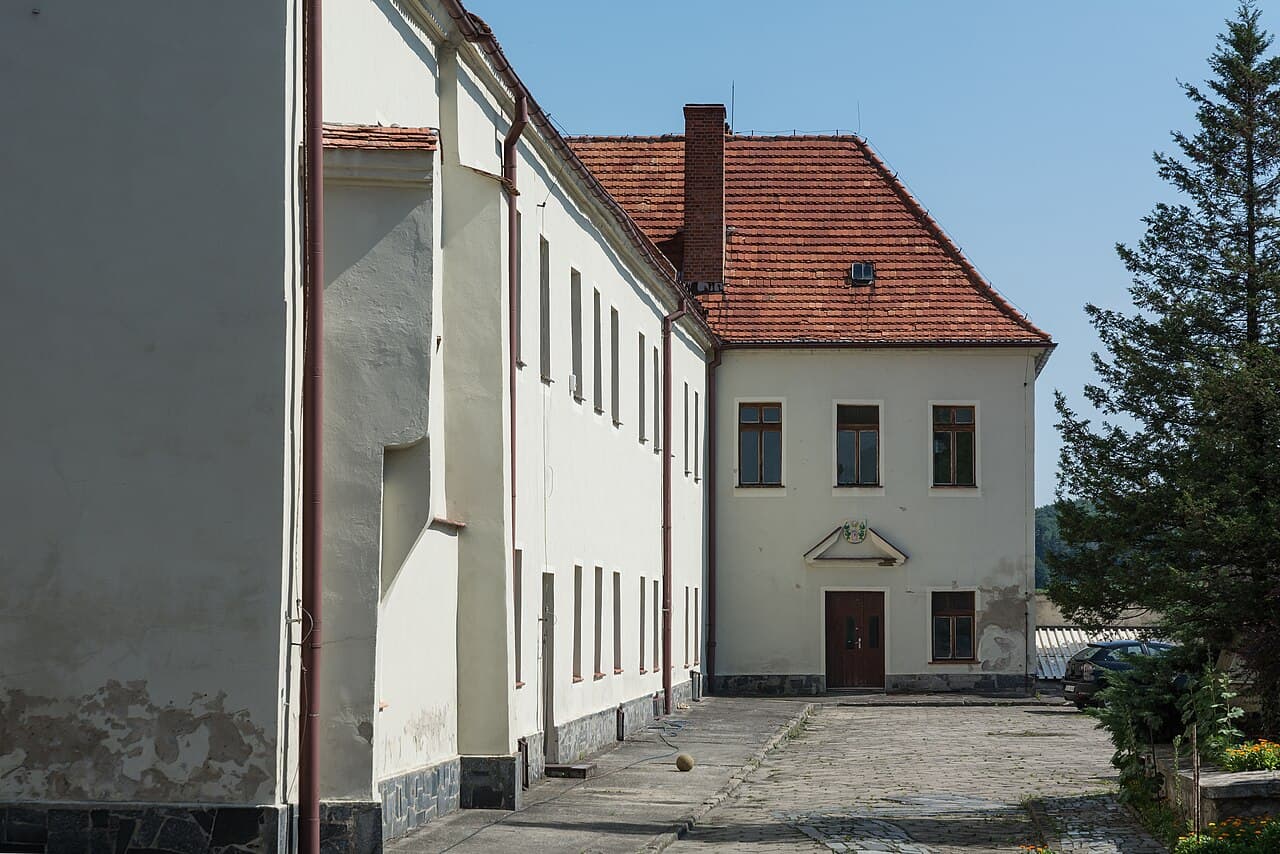
The current surviving structure consists primarily of a two-story building arranged in two wings. The main entrance, facing the courtyard, is marked by a triangular pediment, added during later renovations. Remnants of the original defensive system survive, including sections of the stone walls and two city gates dating from the late 13th century.
Overall, Niemcza Castle presents a layered architectural and historical narrative, illustrating the transition from medieval fortification to Renaissance residence and later adaptations. Its combination of military, residential, and religious elements offers valuable insight into the region's complex history and cultural heritage.
Frequently asked questions (FAQ)
- When was Niemcza Castle originally built and what materials were used?
- Niemcza Castle was originally built as a wooden fortress in the 10th century. It was rebuilt in stone around 1295, marking its transition to a more durable medieval castle.
- What are the notable architectural styles visible at Niemcza Castle?
- The castle features a mix of medieval fortifications and Renaissance architectural elements, including sgraffito wall decorations and a covered gallery inspired by Prague Castle.
- Can visitors see remnants of the castle's defensive structures?
- Yes, visitors can observe fragments of the original stone walls and two city gates from the late 13th century, which were part of the castle's medieval defensive system.
- What happened to the Baroque chapel of St. Hedwig at Niemcza Castle?
- The Baroque chapel dedicated to St. Hedwig, built between 1711 and 1712, was demolished in 1964 due to structural instability. Only its footprint remains visible today.
- How has the function of Niemcza Castle changed over time?
- Niemcza Castle evolved from a medieval fortress to a Renaissance ducal residence, later serving various civilian purposes such as administrative offices, a courthouse, a clothing factory, and a museum.
Photo gallery

Information
Loading map...
Visitor reviews
No reviews yet. Been here? Write the first review and help other travelers!
Write the first reviewVisited this castle? Share your experience
Your review helps other travelers and adds first-hand knowledge to our encyclopedia.