Gola Castle

Gola Castle: a Renaissance fortress in Poland
Gola, Poland
Renaissance (15th–17th c.)
Partially Preserved

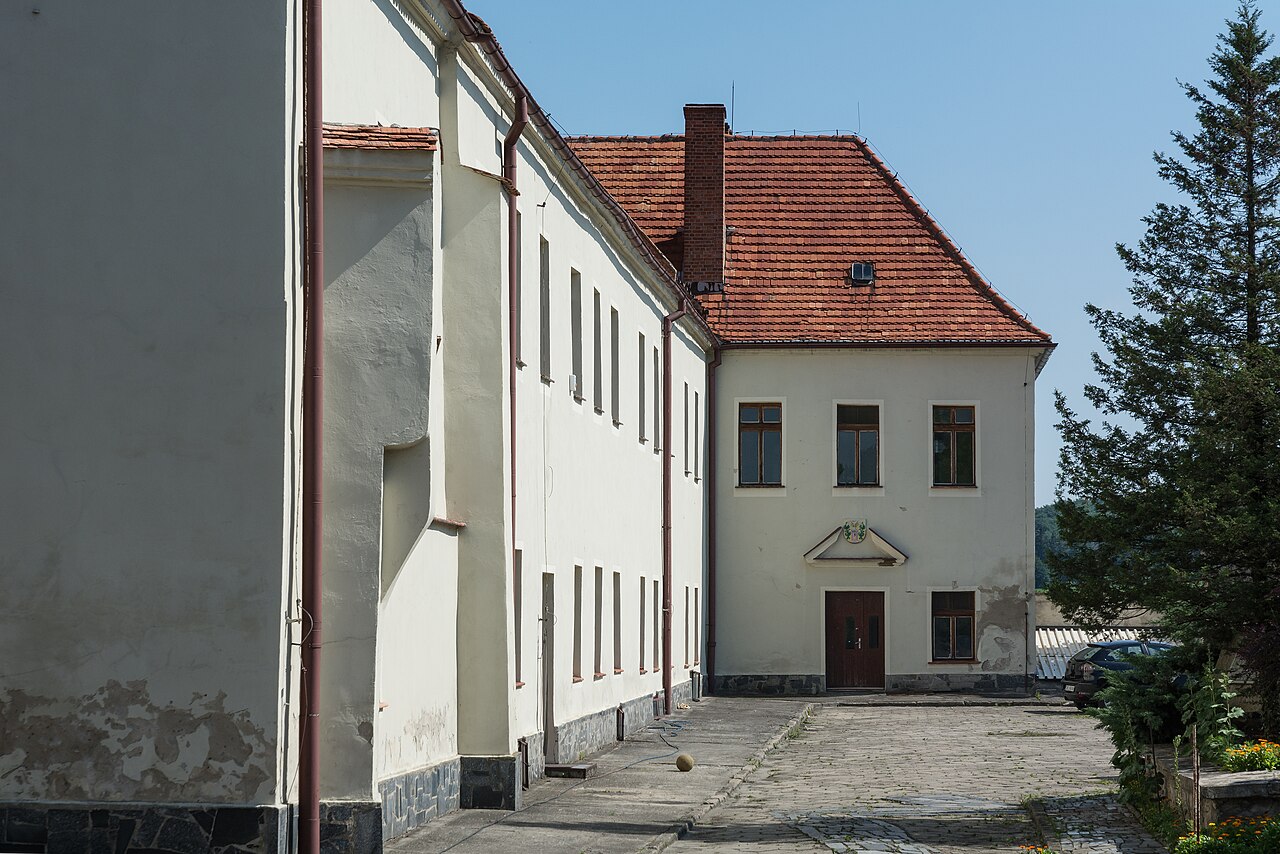
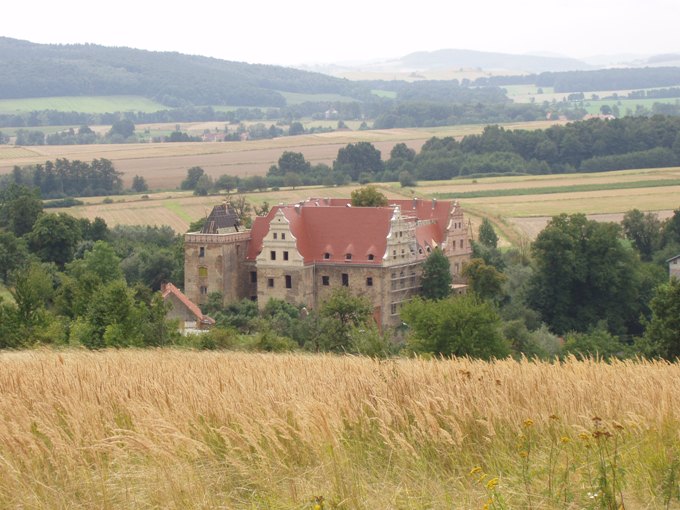
Gola Castle, located in Gola, Poland, is a significant example of Renaissance castle architecture in the region, originally constructed beginning in 1580 by Leonard von Rohnau, as indicated by an inscription above its main entrance. The castle was built primarily from granite rock, a material choice that highlights its robust construction and enduring presence. This fortress stands as one of the oldest and largest Renaissance castles in the area, with a history that likely traces back to an earlier medieval stronghold on the same site.

Medieval origins and defensive features

Before the Renaissance reconstruction, the site hosted a medieval castle with a primarily defensive purpose. Evidence of this earlier fortification includes a steep escarpment on the western side, a wet moat on the eastern side, and double stone walls encircling the structure. These features were typical defensive measures intended to protect the castle from attacks and sieges during the turbulent medieval period.

Renaissance construction and architectural design

The Renaissance castle was designed as a quadrilateral building enclosing an interior courtyard, a common layout for castles of this period that combined both residential and defensive functions. In the center of the courtyard grows a remarkable 300-year-old linden tree, adding a natural focal point within the castle grounds. Between 1600 and 1610, the castle underwent enlargement, including the addition of a tower on the eastern corner at the beginning of the 17th century. This tower remains a defining feature of the castle's silhouette, preserving the Renaissance-era shape of the building to this day.

Sgraffito decoration and portal restoration

The castle is notable for its sgraffito decoration on the walls, a Renaissance artistic technique involving layers of plaster tinted in contrasting colors to create intricate patterns and designs. The portal has been reconstructed to reflect the original Renaissance style, enhancing the castle's historic authenticity and aesthetic appeal.

18th to 20th-century transformations and decline

In the early 18th century, Gola Castle underwent further transformations, adapting to changing architectural tastes and possibly functional needs. However, the castle suffered significant damage during the 1945 bombardment in World War II. Following the war, the last owners, the von Prittwitz und Gaffron family, were expelled, and the castle gradually fell into a state of ruin. Despite this decline, efforts have been made to protect and preserve the castle and its surrounding park.

The park and natural environment

The castle is surrounded by a 13-hectare park that lies below the castle's elevation, featuring a diverse collection of over 1600 trees representing approximately 35 species from around the world. The park is irrigated by a large water system, including the Gola river, which runs through the grounds and waters seven ponds. Although many ponds have become overgrown, the park retains a unique atmosphere created by the interplay of water and vegetation.

Flora and fauna diversity

The park hosts a rich variety of flora and fauna, with a notable avenue of centenarian beech trees lining the main path from the castle to the lower parts of the park. A detailed inventory conducted in autumn 2001 catalogued 1619 trees across 36 species, underscoring the park's ecological value and biological diversity.

Current status and preservation efforts

Today, Gola Castle and its park are under strict protection to preserve their historical and natural heritage. While the castle remains partially in ruins due to wartime damage and subsequent neglect, restoration efforts have focused on maintaining its Renaissance character, including the reconstructed portal and preservation of the sgraffito decorations. The park's ecological significance also receives attention, ensuring the survival of its diverse species and the unique landscape that complements the castle's historic presence.

Frequently asked questions (FAQ)

How do I get to Gola Castle?
Gola Castle is located in the picturesque village of Gola, Poland. You can reach the castle by car, with parking available nearby, or by using local public transportation options that connect to the village.
What is the historical significance of Gola Castle?
Gola Castle dates back to the late Middle Ages and has played a crucial role in the region's history. It served as a defensive stronghold and a residence for local nobility, showcasing the architectural styles of its time.
When was Gola Castle built?
Gola Castle was constructed in the 14th century, with significant renovations taking place in the subsequent centuries. Its design reflects the medieval architectural trends prevalent in Poland during that era.
Can I take guided tours of Gola Castle?
Yes, guided tours of Gola Castle are available for visitors. These tours provide in-depth insights into the castle's history, architecture, and the surrounding area, making for an enriching experience.
Why is Gola Castle considered an architectural gem?
Gola Castle is considered an architectural gem due to its well-preserved medieval structures and unique design elements. The blend of Gothic and Renaissance styles, along with its picturesque setting, makes it a notable landmark.
Is it possible to visit Gola Castle year-round?
Gola Castle is open to visitors year-round, though opening hours may vary seasonally. It's advisable to check the official website or contact the castle management for the latest visiting information before planning your trip.
What are the ticket prices for Gola Castle?
Ticket prices for Gola Castle are generally affordable, with discounts available for children, students, and seniors. You can purchase tickets on-site or through the castle's official website for convenience.
What is the best time to visit Gola Castle?
The best time to visit Gola Castle is during the late spring and early autumn months when the weather is pleasant and the surrounding gardens are in full bloom. However, each season offers a unique charm, making it worthwhile to visit any time of the year.
Are there any nearby attractions to Gola Castle?
Yes, several attractions are located near Gola Castle, including historical sites, natural parks, and charming local villages. Exploring the surrounding area can enhance your visit and provide a deeper appreciation of the region's culture and history.

Information

Hill Castle

Loading map...

Visitor reviews

No reviews yet. Been here? Write the first review and help other travelers!

Write the first review

Visited this castle? Share your experience

Your review helps other travelers and adds first-hand knowledge to our encyclopedia.
Write a review

(5/5)

0/2000 characters

Your review will be visible after admin approval

Nearby castles

0.3 km
Gola Dzierżoniowska Castle — Poland castle

Gola Dzierżoniowska Castle

, Poland

Gola Dzierżoniowska Castle, known in German as Schloss Guhlau, is a notable example of a Renaissance hill castle located in the village of Gola Dzierżoniowska in the Lower Silesian Voivodeship of south-western Poland. Constructed in the second half of the 16th century, this castle stands approximately 4 km north-west of Niemcza, 18 km east of Dzierżoniów, and about 47 km south of Wrocław, the regional capital. Historical context and construction The castle was built during the Renaissance period, a time when fortifications began to shift from purely defensive medieval structures to more comfortable residences that also reflected the growing importance of aesthetics and status. Gola Dzierżoniowska Castle was originally constructed as a fortified manor house, combining both residential and defensive functions. The castle's location on a hill provided strategic advantages, allowing surveillance over the surrounding landscape and protection against potential attackers. The precise founder of the castle is not definitively recorded, but it was likely commissioned by a local noble family during the late 16th century, a period marked by relative stability in the region that allowed for such residential fortifications to be established. Architectural features The castle exhibits characteristic elements of Renaissance architecture adapted to a fortified hill castle. It features a compact layout with thick defensive walls and a rectangular plan. The castle's defensive system included bastions and possibly a moat, typical for the period, designed to withstand artillery attacks which were becoming more common in the 16th century. The main structure includes a central residential building with vaulted cellars, living quarters, and representative halls. The castle's windows and doorways display Renaissance stylistic details such as semicircular arches and stone framing. Defensive towers or bastions at the corners would have enhanced the castle's fortification, although some of these features may have been altered or lost over time. Historical significance and ownership Throughout its history, Gola Dzierżoniowska Castle has changed ownership multiple times, reflecting the complex political and social changes in Silesia. The castle was part of the estates of various noble families who contributed to its maintenance and occasional modifications. Its role evolved from a purely defensive fortress to a noble residence and administrative center. The castle survived the turbulent periods of the Thirty Years' War and later conflicts in the region, although it likely suffered damage and underwent repairs and renovations. In the modern era, the castle has been recognized for its cultural and historical value, contributing to the heritage of Lower Silesia. Current condition and preservation Today, Gola Dzierżoniowska Castle is partially preserved. While not fully intact, significant portions of its structure remain, offering insight into its original Renaissance design and defensive features. Preservation efforts have aimed to stabilize and protect the ruins, making it accessible for visitors interested in the architectural and historical heritage of the region. The castle's location amidst the scenic landscape of Lower Silesia enhances its appeal as a historical site. Visitors can explore the remains of the walls, towers, and other architectural elements that illustrate the castle's past. Visitor information and cultural importance Gola Dzierżoniowska Castle is a point of interest for tourists and historians alike. It is included in regional heritage trails that highlight the rich history of Silesian castles. The castle's proximity to Niemcza and Wrocław makes it accessible for day trips and educational visits. While the castle does not function as a museum with extensive exhibitions, it offers an authentic experience of a Renaissance hill castle's remains. The site encourages exploration of its architectural features and understanding of the historical context of Silesia during the Renaissance.

Renaissance (15th–17th c.)
Details
3.6 km

Niemcza

Niemcza, Poland

Niemcza Castle stands as a significant historical monument in Niemcza, Poland, embodying centuries of architectural evolution and regional history. Its origins trace back to the early medieval period, with evidence of settlement in the area dating as far back as the 5th century. Initially, the site was a fortified stronghold belonging to the Ślężan tribe, serving as a strategic defensive position on the northern edge of an elongated hill. Following the incorporation of Silesia into the realm of the first Piast dynasty rulers in the 10th century, a robust castellany was established here. This early medieval fortification was notable for its unique combination of wooden-earth ramparts and a rare sloping stone palisade, a defensive feature uncommon in the region at the time. The castle's strategic location and formidable defenses were proven during its heroic resistances against sieges, notably in 1017 during an invasion by the forces of the German Emperor Henry II, and again in 1093 when it withstood a Czech assault. Medieval transformation and fortification In the latter half of the 13th century, under the direction of Duke Bolko I of Świdnica, the original wooden stronghold was replaced by a stone castle. Although the exact architectural details of this castle remain uncertain, it likely featured an irregular plan adapted to the contours of the earlier fortifications. One of the few surviving records from this period mentions the construction of a chapel within the castle grounds in 1288, underscoring its dual role as both a military and residential site. By around 1282, Niemcza had been granted town rights by Duke Henry IV Probus, which marked its growing importance. Toward the end of the 13th century, the town was enclosed by defensive walls that were integrated with the castle's fortifications, enhancing the overall security of the settlement. In 1311, Niemcza became part of the Duchy of Legnica-Brzeg, a significant political entity in Silesia. The castle and town suffered destruction during the Hussite Wars in 1430, but reconstruction efforts in the mid-15th century restored and possibly expanded the castle's structures, reflecting the ongoing military and administrative needs of the region. Renaissance rebuilding and architectural evolution The late 16th century brought a major transformation to Niemcza Castle under the initiative of Duke George II of Brzeg. Around 1585, the castle was rebuilt into a multi-winged Renaissance residence under the guidance of the renowned architect Bernard Niuron. This renovation introduced a regularized architectural layout and richly decorated facades adorned with sgraffito decorations, a hallmark of Renaissance style in Silesia. The castle's interiors and external appearance were significantly enhanced, reflecting the tastes and status of its noble owners. During the turbulent first half of the 17th century, the castle's hill was fortified with modern bastion-style fortifications to adapt to new military technologies and threats. Despite these efforts, Niemcza Castle endured substantial damage during the Thirty Years' War, including its capture in 1633 by forces under General Wallenstein. The war left many Silesian castles in ruins, and Niemcza was no exception. Later history and preservation challenges Following the death of the last male Piast duke, George William, in 1675, Niemcza came under direct Habsburg rule for nearly seven decades. In the early 18th century, specifically between 1712 and 1724, a chapel dedicated to Saint Hedwig was constructed in the southern part of the castle courtyard, adding to its religious and cultural significance. A devastating fire in 1735 caused extensive damage to the castle hill, leading to further rebuilding efforts. However, by 1830, renovations had removed the last visible Gothic and Renaissance elements, significantly altering the castle's historic character. Additional restoration work was carried out in 1927. After World War II, the castle's interiors were repurposed for industrial use, housing clothing factories, which impacted the preservation of its historical fabric. In the 1960s, the castle hill experienced structural instability, resulting in the demolition of the Saint Hedwig chapel due to landslides. Architectural features and current state Today, Niemcza Castle comprises two-story buildings arranged around an irregular internal courtyard. The defensive features that once defined the castle, such as battlements and fortification walls, are no longer visible, reflecting its transformation from a military fortress to a residential and administrative complex over the centuries. The castle's layered history, from its early medieval origins through Renaissance grandeur and modern challenges, makes it a fascinating subject for study. Its location on a hilltop provided strategic advantages that influenced its design and historical role in the region. Historical significance in silesian heritage Niemcza Castle played a pivotal role in the defense and administration of Silesia, witnessing key historical events including sieges, political transitions, and architectural developments. Its endurance through wars and reconstructions exemplifies the resilience of Silesian cultural heritage. Visiting and cultural importance While the castle no longer retains its original defensive structures, it remains a prominent landmark in Niemcza. Its restored condition and historical layers attract visitors interested in medieval and Renaissance architecture, as well as regional history.

High Medieval (11th–13th c.)
Details
3.6 km
Niemcza Castle — Poland castle

Niemcza Castle

Niemcza, Poland

Niemcza Castle stands prominently on a steep hill in the town of Niemcza, Poland, showcasing a rich history that spans from early medieval fortifications to Renaissance architectural grandeur. Its strategic location, naturally protected by the Ślęza River on the eastern side, made it a vital defensive stronghold in the region for centuries. The castle's history is deeply intertwined with the broader political and military developments of Silesia, illustrating the evolution of castle architecture and regional governance. The site of Niemcza Castle was originally settled by the Vandals in the 4th century, followed by the Slavic Silinger tribe. The earliest known fortress dates back to the 10th century, initially constructed from wood. This early fortification was part of a network of defenses in the area, reflecting the turbulent times and the need to protect local populations from invasions and regional conflicts. By the late 13th century, the wooden structure was replaced with a more durable stone castle, marking a significant development in its defensive capabilities. Around 1295, the stone castle was established, becoming a key element in the region's fortification system. During this period, Niemcza was a contested site, reflecting shifting control between Polish and Bohemian rulers. The castle's name, recorded as "Nemzi" by the medieval chronicler Monachus Sazavensis, is the oldest documented place name in Silesia, emphasizing its historical importance. Medieval history and military significance In 990, Polish forces captured Niemcza from Bohemian control, underscoring its strategic value. The castle withstood significant sieges, including those by Emperor Henry II in 1017 and Duke Břetislav II in 1093, both unsuccessful attempts to seize the fortress. By the mid-12th century, Niemcza Castle had become the seat of a castellan, a local governor charged with administration and defense of the surrounding territory. The castle's military role continued into the 14th and 15th centuries. After coming under Bohemian suzerainty in 1329, Niemcza was affected by the Hussite Wars (1419–1436), during which it suffered destruction. It was rebuilt in the late 1400s under Duke Frederick I of Brzeg-Legnica, reaffirming its defensive and administrative importance in the region. Renaissance transformation and architectural features The Renaissance period brought significant changes to Niemcza Castle, transforming it from a purely military fortress into a ducal residence with artistic and cultural significance. Around 1585, Duke George II of Brzeg commissioned a major reconstruction overseen by architects Bernhard Niuron and H. Lugano. This renovation introduced sgraffito wall decorations, a technique involving scratching plaster layers to reveal contrasting colors, which adorned the castle's exterior walls. One of the most distinctive architectural additions was a covered gallery (krużganek), inspired by a similar feature built at Prague Castle in 1545. This gallery not only enhanced the castle's aesthetic appeal but also served as a sheltered walkway connecting different parts of the residence. The castle acquired the alternative name Hedwigsburg during this period, reflecting its elevated status as a ducal seat. The Renaissance reconstruction included an octagonal structure decorated with intricate sgraffito, which survived until 1964 before being demolished due to deterioration. Despite damage from a fire in 1735 and later simplifications during an 1830 rebuilding, some Renaissance elements, especially on the northern wing, were preserved or restored in the 20th century. Later history and current condition Throughout the Thirty Years’ War, Niemcza Castle endured the surrounding town's devastation but remained relatively intact. The castle's function evolved over the centuries, shifting from a noble residence to various civilian uses including administrative offices, a courthouse, a clothing factory, and eventually a museum. A Baroque chapel dedicated to St. Hedwig was constructed between 1711 and 1712, connected to the castle by a gate wing. Unfortunately, structural instability led to its demolition in 1964, leaving only the footprint visible today. Conservation efforts in 1992 aimed to restore some of the castle's decorative features, particularly the sgraffito on the northern wing. The current surviving structure consists primarily of a two-story building arranged in two wings. The main entrance, facing the courtyard, is marked by a triangular pediment, added during later renovations. Remnants of the original defensive system survive, including sections of the stone walls and two city gates dating from the late 13th century. Overall, Niemcza Castle presents a layered architectural and historical narrative, illustrating the transition from medieval fortification to Renaissance residence and later adaptations. Its combination of military, residential, and religious elements offers valuable insight into the region's complex history and cultural heritage.

High Medieval (11th–13th c.)
Details