Niedzica
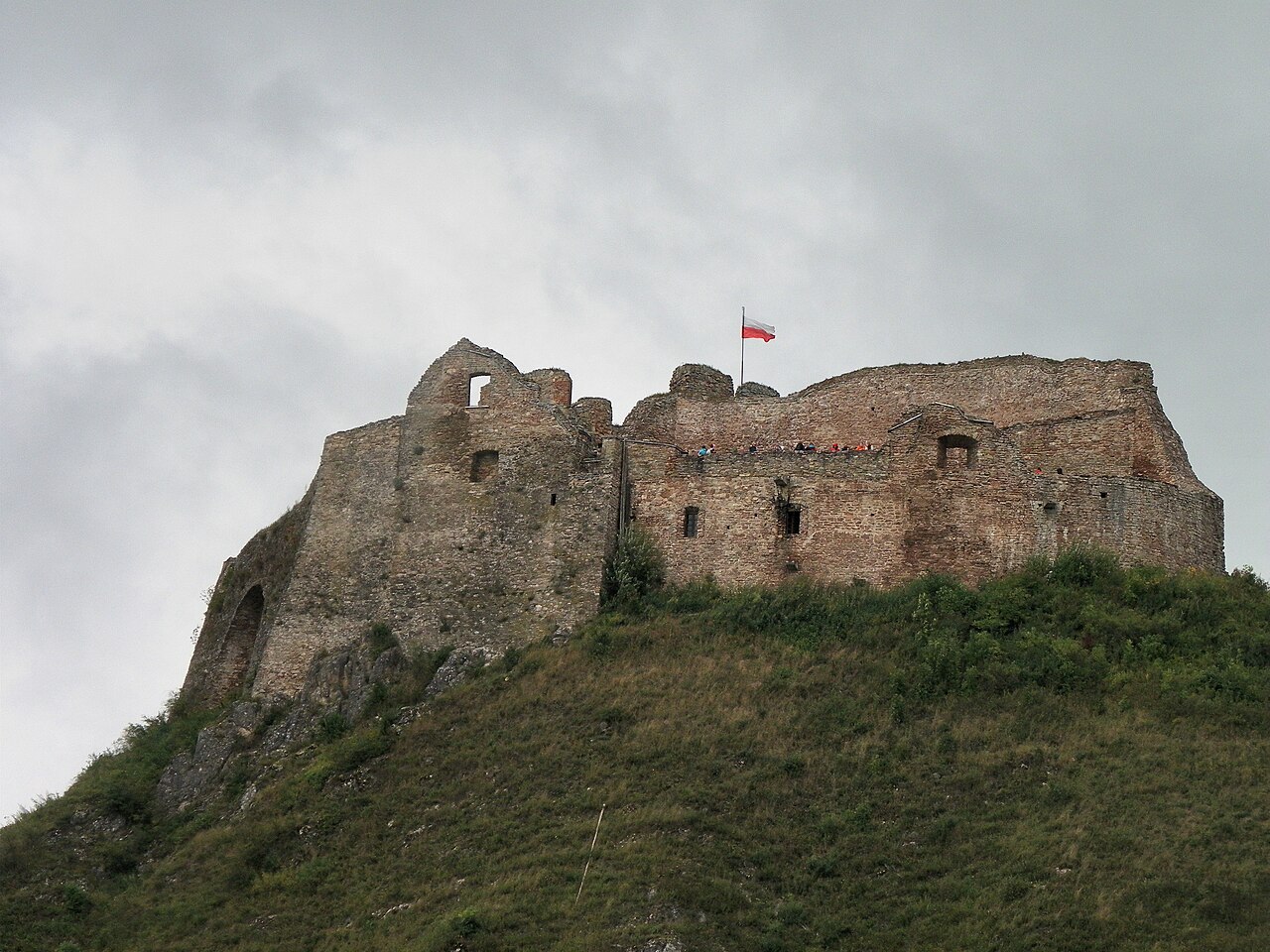
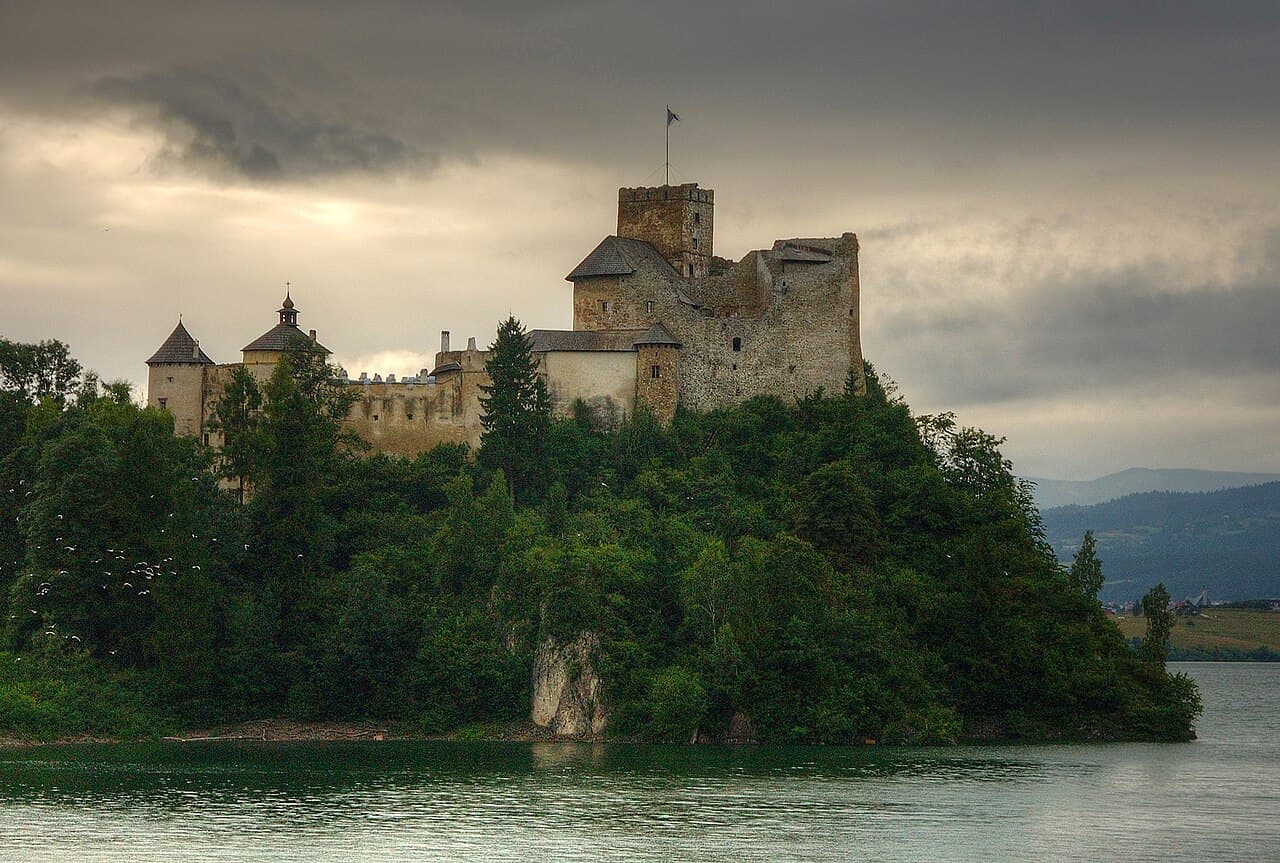
Niedzica Castle, also known as Dunajec Castle, is a remarkable late-medieval bastioned fortress located in the village of Niedzica in the Malopolskie region of southern Poland. Perched on a limestone hill overlooking the Dunajec River and the artificial Czorsztyn Lake, the castle stands as a testament to centuries of Polish-Hungarian history and architectural evolution. Its strategic location at the border of historical Poland and Hungary made it a vital military and political stronghold from the 14th century onward.
Early origins and medieval construction
The origins of Niedzica Castle trace back to the early 14th century, around 1310, when a wooden and earth fortification was established by Kokos of Brezovica, a Hungarian nobleman. This initial structure served as a frontier guard post on the northern edge of the Kingdom of Hungary, positioned directly opposite the Polish Czorsztyn Castle across the Dunajec River. Around 1330, under the ownership of Wilhelm Drugeth, the palatine of Hungary, the fortress was rebuilt in stone, featuring a tower keep situated above a steep escarpment, residential buildings, and a chapel. The entrance was defended by a drawbridge, typical of medieval defensive architecture.
Expansion and fortification in the 15th century
Following Drugeth's death in 1342, the castle returned to the Berzeviczy family, who expanded the inner defenses and enclosed the lower bailey with a wall and a small gate tower. In the period from 1463 to 1470, under the ownership of Emeryk Zapolyi, the castle underwent significant reconstruction. He fortified the middle castle walls, constructed a large residential house and a southern gate tower, and expanded the outer bailey. These enhancements transformed Niedzica into a formidable bastioned fortress, capable of withstanding artillery, a reflection of evolving military technology in the late medieval period.
Historical significance and ownership changes
Niedzica Castle played a pivotal role in the complex political landscape of Central Europe. It was a key site in the Polish-Hungarian relations, especially following the 1412 Treaty of Lubowla, when the castle was part of the collateral for a loan from the Polish king to the Hungarian king Sigismund. The castle remained a contested border post, witnessing various sieges and changes in ownership. In the early 16th century, it was seized by supporters of Ferdinand of Habsburg and later by followers of King John Zapolya during the Hungarian civil wars.
Later owners and architectural modifications
In the late 16th and early 17th centuries, the castle was acquired by the Horvath family of Plaveč, who undertook extensive renovations to adapt the fortress for the use of heavy artillery. This included replacing the southern gate tower with a bastion featuring a northwest entrance gate, adding a bastion at the southwest corner, raising the curtain walls topped with decorative attics, extending the western residential wing, and surrounding the lower courtyard with arcaded galleries. These modifications reflect the transition from medieval to early modern fortification styles.
Decline, restoration, and modern use
During the 17th and 18th centuries, Niedzica Castle was leased to the Giovanellich family, during whose tenure the oldest parts of the castle fell into disrepair. By the late 18th century, parts of the castle were uninhabitable. In 1817, after a fire at their family residence in Plaveč, the Horvath family returned to Niedzica and transformed the castle into a rural magnate residence. The castle remained in Hungarian noble hands until 1943, when the Salamon family abandoned it due to the approaching front of World War II.
After World War II, the castle was looted by Soviet troops and local inhabitants. It was nationalized under the agrarian reform decree and transferred in 1949 to the Association of Art Historians. Extensive conservation and restoration efforts have since preserved the castle, which now operates as a museum complex. Visitors can explore the upper castle with its original medieval layout, the middle castle housing the museum and viewing terraces, and the lower castle converted into a café and guest rooms furnished in historic style.
Architectural features and natural setting
The castle's architecture is a dense complex of buildings arranged around a courtyard, enclosed by residential wings with arcades, towers, and fortified walls. The hill on which the castle stands is composed of weather-resistant limestone resting on shale and marl, providing a stable foundation despite surface erosion. Modern engineering interventions have reinforced the hill to ensure long-term stability.
The creation of the artificial Czorsztyn Lake in 1994 by damming the Dunajec River transformed the castle's surroundings, submerging the valley below and enhancing the castle's picturesque silhouette as it rises dramatically above the water level. This unique setting adds to the castle's allure as one of Poland's most scenic historic sites.
Cultural heritage and museum collections
The castle museum holds a rich collection of archaeological artifacts, historical documents, and ethnographic exhibits from the Spiš region. Noteworthy are collections of antique clocks, 18th and 19th-century firearms, hunting rifles, and taxidermied game. A significant addition to the museum is the Hungarian collection donated by Ákos Engelmayer, former Hungarian ambassador to Poland, featuring maps, engravings, and historical items related to Hungary's heritage.
The legendary inkaski quipu
Among the castle's most fascinating stories is the discovery of an Inca quipu beneath the threshold of the middle castle gate by Andrzej Benesz, a descendant of the castle's former owners. This collection of knotted cords, used by the Incas for record-keeping, is linked to a dramatic family history involving Sebastian Berzeviczy, who married a South American Indian princess. Their descendants fled political turmoil in South America and returned to Europe, bringing with them this enigmatic artifact. The quipu remains undeciphered, adding an aura of mystery and intrigue to Niedzica Castle's cultural legacy.
Visitor experience and significance
Today, Niedzica Castle is a popular tourist destination, offering visitors a glimpse into medieval and early modern fortification architecture, rich historical narratives, and stunning views of the Pieniny Mountains and Czorsztyn Lake. The castle's museum, café, and guest accommodations provide a comprehensive cultural experience. Its well-preserved condition and picturesque setting make it a jewel of Polish heritage and a symbol of the complex history between Poland and Hungary.
Frequently asked questions (FAQ)
- How do I get to Niedzica Castle?
- Niedzica Castle is located in the beautiful Pieniny Mountains in Poland. Visitors can easily reach the castle by car or public transport from nearby towns, with ample signage directing you to the site. The nearest major city is Nowy Targ, from where local buses can take you to Niedzica.
- What is the historical significance of Niedzica Castle?
- Niedzica Castle, built in the 14th century, played a crucial role in the region's defense and has a rich history linked to Hungarian nobility. It is also famous for its legends, including tales of hidden treasures and the area’s historical ties to the Inca civilization. This blend of history and folklore makes the castle a fascinating destination for visitors.
- When was Niedzica Castle constructed?
- Niedzica Castle was constructed in the early 14th century, specifically around 1325, as a defensive structure. Over the centuries, it has undergone several renovations and restorations, preserving its historical charm while adapting to modern needs. Visitors can explore its various architectural styles reflecting different periods.
- Can I take guided tours of Niedzica Castle?
- Yes, guided tours are available at Niedzica Castle, providing visitors with in-depth insights into its history, architecture, and legends. The tours are usually conducted in Polish, but English-speaking guides can be arranged upon request. It's advisable to check in advance for tour availability and schedules.
- Why is Niedzica Castle considered an architectural gem?
- Niedzica Castle showcases a unique blend of Gothic and Renaissance architectural styles, making it a standout structure in the region. Its strategic location on a hilltop offers stunning views of the surrounding landscape, further enhancing its aesthetic appeal. The castle's well-preserved interiors and picturesque exterior contribute to its reputation as an architectural gem.
- Is it possible to visit Niedzica Castle year-round?
- Yes, Niedzica Castle is open to visitors year-round, although opening hours may vary by season. During the peak summer months, the castle is open daily, while winter hours may be more limited. It's recommended to check the official website for the latest information on hours and any seasonal events.
- What are the ticket prices for visiting Niedzica Castle?
- Ticket prices for Niedzica Castle are quite reasonable, with discounts available for students and seniors. As of the latest information, general admission is typically around 15 PLN, while reduced tickets are about 10 PLN. Visitors should verify the current pricing on the official website before their visit.
- What is the best time to visit Niedzica Castle?
- The best time to visit Niedzica Castle is during the spring and early autumn months when the weather is mild, and the surrounding scenery is vibrant. Summer can be busy with tourists, while winter offers a unique charm with snow-covered landscapes. Regardless of the season, each visit presents a different and captivating experience.
- Are there any nearby attractions to explore after visiting the castle?
- Yes, there are several attractions near Niedzica Castle, including the picturesque Dunajec River, where you can enjoy rafting or kayaking. Additionally, the nearby Pieniny National Park offers stunning hiking trails and breathtaking views. Visitors can also explore the charming village of Niedzica and sample local cuisine in nearby restaurants.
Photo gallery

Information
Loading map...
Visitor reviews
No reviews yet. Been here? Write the first review and help other travelers!
Write the first reviewVisited this castle? Share your experience
Your review helps other travelers and adds first-hand knowledge to our encyclopedia.