Czorsztyn
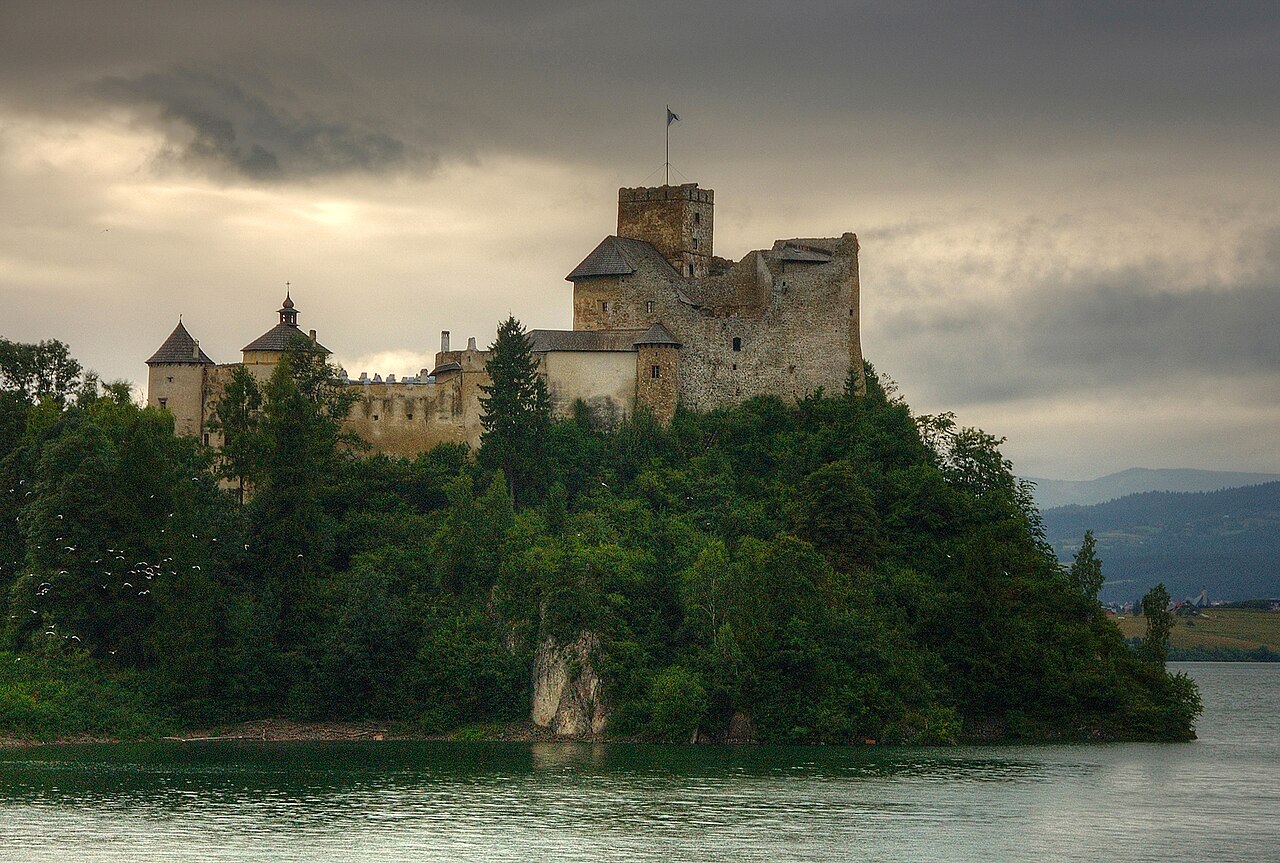
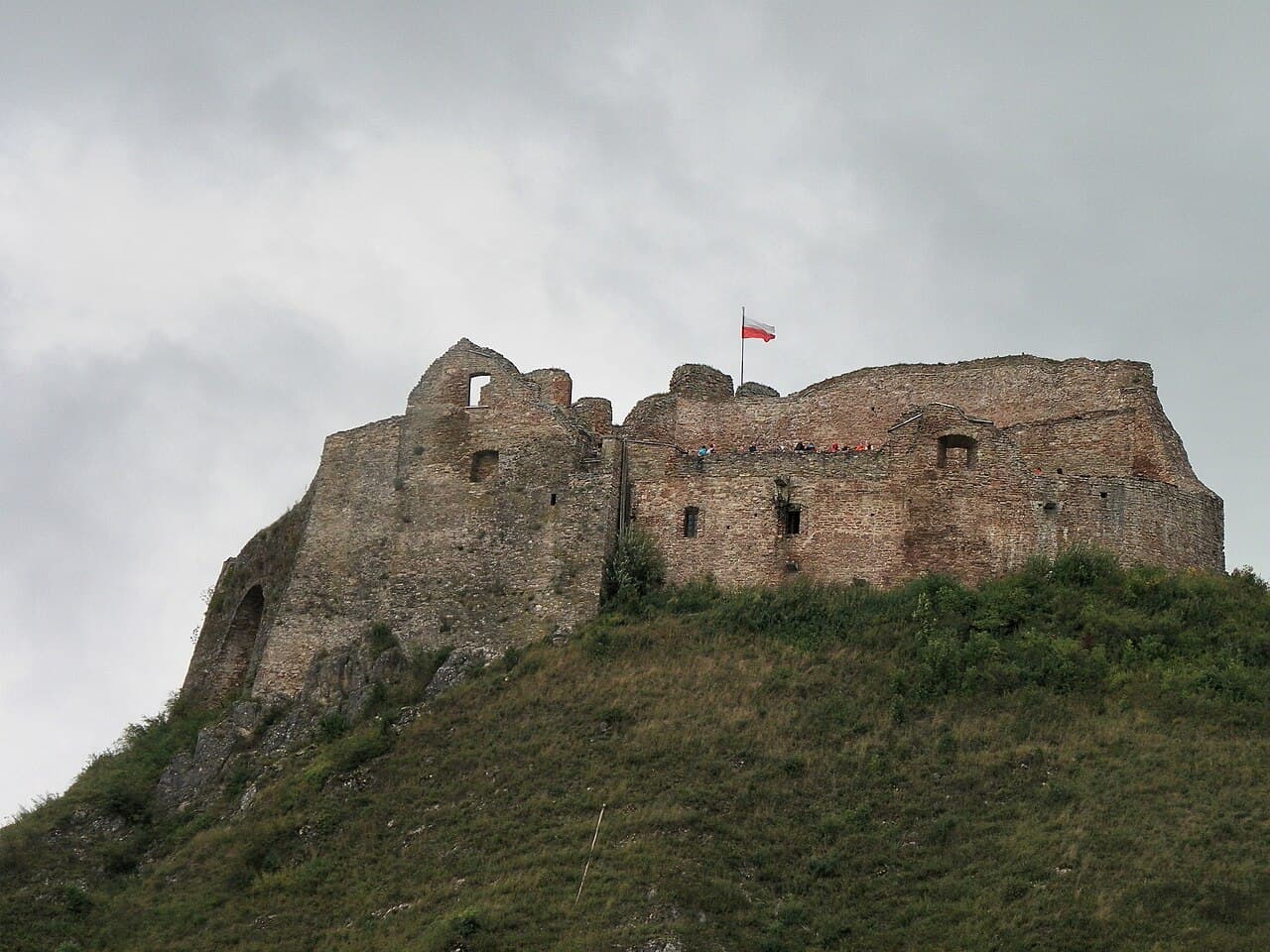
Czorsztyn Castle stands as a striking ruin atop Zamkowa Góra hill, overlooking the Dunajec River in southern Poland. Its origins trace back to the late 13th century, initially established as a wooden stronghold connected to the Clarisse monastery in Stary Sącz. Over centuries, the castle evolved into a significant medieval fortress and royal residence, playing a vital role in border defense and trade control between Poland and Hungary.
The castle's name likely derives from the German words "Schorstein" or "Schorrenstein," meaning a sharply protruding rock, reflecting its dramatic hilltop setting. Early written records mention the site as "Wronin" in 1320, though archaeological research suggests this referred to the same castle rather than a separate nearby fortification. Initially, the castle consisted of a stone tower approximately 10 meters in diameter with thick walls, surrounded by wooden earthworks.
Medieval origins and royal expansion
During the reign of King Casimir III the Great in the 14th century, Czorsztyn Castle underwent significant stone reconstruction and expansion. The wooden defenses were replaced with a robust curtain wall adapted to the terrain, enclosing a residential building and a gatehouse. This period marked the castle's transformation into a crucial border fortress opposing Hungarian advances and controlling the important trade route from Kraków to Buda.
The castle also functioned as a customs post, initially owned by the Clarisse nuns before becoming royal property in the mid-14th century. Throughout the late Middle Ages, Czorsztyn served as a royal residence for monarchs such as King Casimir III and King Louis I of Hungary, who used it as a stopover during travels. In 1384, the castle famously welcomed Jadwiga of Poland, daughter of Louis I, who would become queen.
Defensive enhancements and starost stewardship
Under the rule of King Władysław Jagiełło, Czorsztyn became a pledged starostwo (administrative district), with starosts responsible for its upkeep. The early 15th century saw further fortifications, including a second defensive wall and a fortified gatehouse with a barbican turret, designed to slow attackers and improve defense. The castle's Gothic architectural style is evident in the pointed arches and battlements added during this time.
In the 16th century, a lower castle was constructed on a terrace below the main fortress, enclosed by stone walls with a semicircular bastion. This area housed essential service buildings such as stables, a brewery, and kitchens, supporting the castle's daily functions.
Renaissance transformation under jan baranowski
The most extensive renovations occurred between 1629 and 1643 under the stewardship of Jan Baranowski. He introduced Renaissance architectural elements and modernized the castle to meet evolving military needs, particularly adapting it for firearm defense.
A prominent feature from this period is the four-story rectangular artillery tower, known as the Baranowski tower. It included embrasures for cannons and muskets, narrow windows, wooden floors, and a chimney, indicating its use as living quarters during peacetime. The tower's decorative swallowtail battlements and arcaded gallery added a distinctive Renaissance flair to the fortress.
Baranowski also enhanced the castle's defenses with a five-sided bastion replacing an earlier round tower, and inscribed portals celebrating his rule. The castle's armory during this time included hand cannons, muskets, and a bronze cannon, manned by a permanent guard, reflecting its continued military importance.
Social history and local impact
Archaeological findings reveal a vaulted cellar with oak doors dated 1633, believed to have been used as a prison for local inhabitants during Baranowski's administration. Historical accounts describe his harsh governance, illustrating the castle's role not only as a military stronghold but also as a center of local authority and control.
Military conflicts and decline
Czorsztyn Castle witnessed significant military action in the mid-17th century. In 1651, it was briefly occupied by peasant rebels led by Aleksander Kostka-Napierski during a regional uprising. The castle's defenses held firm against the attacking forces of Bishop Piotr Gemicki, demonstrating the strength of Baranowski's fortifications. The rebels surrendered after negotiations, and Napierski was executed for treason.
In 1655, during the Swedish invasion known as the Deluge, King Jan II Kazimierz Waza sought refuge within Czorsztyn Castle, entrusting it with the royal treasury and jewels. This event underscores the fortress's strategic value even in its later years.
The castle's decline began in the late 18th century. After suffering damage during regional conflicts and a devastating fire in 1790 that destroyed its roofs, Czorsztyn was abandoned and fell into ruin. The surrounding lands were annexed by Austria during the partitions of Poland, with the castle passing into private hands and lacking sufficient maintenance.
Modern conservation and cultural significance
Despite its ruinous state, Czorsztyn Castle remains a potent symbol of Polish medieval heritage. In the 19th and 20th centuries, efforts were made to preserve the ruins, including the establishment of a strict reserve in 1922. Archaeological excavations and stabilization work have revealed much about the castle's complex history and architecture.
The construction of the Czorsztyn reservoir in 1997 transformed the surrounding landscape, creating a lake that reflects the castle's ruins and enhances its picturesque setting. Today, visitors can explore the partially restored Baranowski tower, curtain walls, gatehouse remains, vaulted cellars, and foundations of the original cylindrical tower. Educational trails and interpretive panels provide insight into the castle's historical and architectural significance.
The castle grounds also protect a unique natural microclimate, home to rare flora such as the Pieniny yellowwort (Pszoanak pieniński), linking cultural heritage with environmental conservation. Czorsztyn Castle stands as a testament to centuries of Polish history, military architecture, and the enduring legacy of the region's medieval past.
Frequently asked questions (FAQ)
- How do I get to Czorsztyn Castle?
- Czorsztyn Castle is easily accessible by car, located just off the main roads in southern Poland. There are also public transport options available, including buses that connect to nearby towns. Once you arrive in Czorsztyn, signage will guide you to the castle.
- What is the historical significance of Czorsztyn Castle?
- Czorsztyn Castle dates back to the 14th century and played a crucial role in the defense of the region against invasions. It served as a key stronghold for the Polish nobility and was strategically positioned to control trade routes along the Dunajec River. Its ruins today tell the story of its storied past and significance in Polish history.
- When was Czorsztyn Castle built?
- Czorsztyn Castle was originally constructed in the early 14th century, with its first mentions appearing in historical records in 1320. Over the centuries, it underwent various modifications and expansions, reflecting the architectural styles of different periods. Today, it stands as a testament to medieval military architecture.
- Can I take guided tours of Czorsztyn Castle?
- Yes, guided tours are available at Czorsztyn Castle, providing visitors with in-depth knowledge about its history and architecture. These tours are typically offered in multiple languages and allow you to explore areas of the castle that are not accessible on your own. It's advisable to check the schedule in advance and book your spot.
- Why is Czorsztyn Castle a popular tourist attraction?
- Czorsztyn Castle is popular due to its stunning location overlooking Lake Czorsztyn and the surrounding Pieniny Mountains. The breathtaking views, combined with the rich history and well-preserved architecture, make it an ideal destination for history enthusiasts and nature lovers alike. Additionally, nearby attractions enhance the overall experience for visitors.
- Is it possible to visit Czorsztyn Castle year-round?
- Yes, Czorsztyn Castle is open to visitors year-round, though hours may vary depending on the season. During the peak summer months, the castle is open longer to accommodate tourists. It's best to check the official website for the most current opening hours and any seasonal events.
- What are the ticket prices for Czorsztyn Castle?
- Ticket prices for Czorsztyn Castle are generally affordable, with discounts available for students and seniors. Children under a certain age may enter for free, making it a great family-friendly destination. Be sure to check the official website for the latest pricing and any special offers.
- What is the best time to visit Czorsztyn Castle?
- The best time to visit Czorsztyn Castle is during the spring and summer months when the weather is pleasant and the surrounding landscape is vibrant. Autumn also offers beautiful foliage views, while winter can provide a serene, snowy backdrop. Each season has its unique charm, so choose based on your preferences.
- Are there any nearby attractions to visit while at Czorsztyn Castle?
- Yes, nearby attractions include the picturesque Dunajec River Gorge and the Pieniny National Park, both ideal for hiking and enjoying nature. You can also explore the charming village of Czorsztyn or visit the nearby Niedzica Castle, which adds to the historical experience. These locations complement your visit to Czorsztyn Castle perfectly.
Photo gallery

Information
Website
Visit websiteSources & official resources
Verify the information above using these authoritative references.
Loading map...
Visitor reviews
No reviews yet. Been here? Write the first review and help other travelers!
Write the first reviewVisited this castle? Share your experience
Your review helps other travelers and adds first-hand knowledge to our encyclopedia.