Newcastle Castle
Newcastle Castle in the historic county of Glamorgan, Wales, stands as a remarkable example of Norman military architecture and medieval fortification. Established in the early 12th century, this ringwork castle played a significant role in the Norman consolidation of South Wales and showcases architectural evolution from the late 12th century through the Tudor period.
The castle was initially constructed around 1106 by William de Londres, one of the renowned Twelve Knights of Glamorgan, as part of the Norman invasion and colonization efforts in Wales. William was a loyal knight to the Norman baron Robert Fitzhamon, and Newcastle marked the westernmost extent of Fitzhamon's lordship. The original fortification was a ringwork—a defensive earthwork with a timber palisade—strategically positioned to control the surrounding territory and river access.
Norman origins and 12th-century fortifications
In response to ongoing Welsh resistance, notably the uprising led by the Welsh lord Morgan ap Caradog of Afan, the castle's defenses were significantly upgraded in the late 12th century. Either William Fitz Robert, 2nd Earl of Gloucester, shortly before his death in 1183, or King Henry II, who assumed lordship of Glamorgan after William's death, reinforced Newcastle Castle by constructing a formidable 2-meter-thick curtain wall around a 40-meter-long courtyard. This stone curtain wall replaced the earlier timber defenses, marking a transition to more permanent and imposing fortifications.
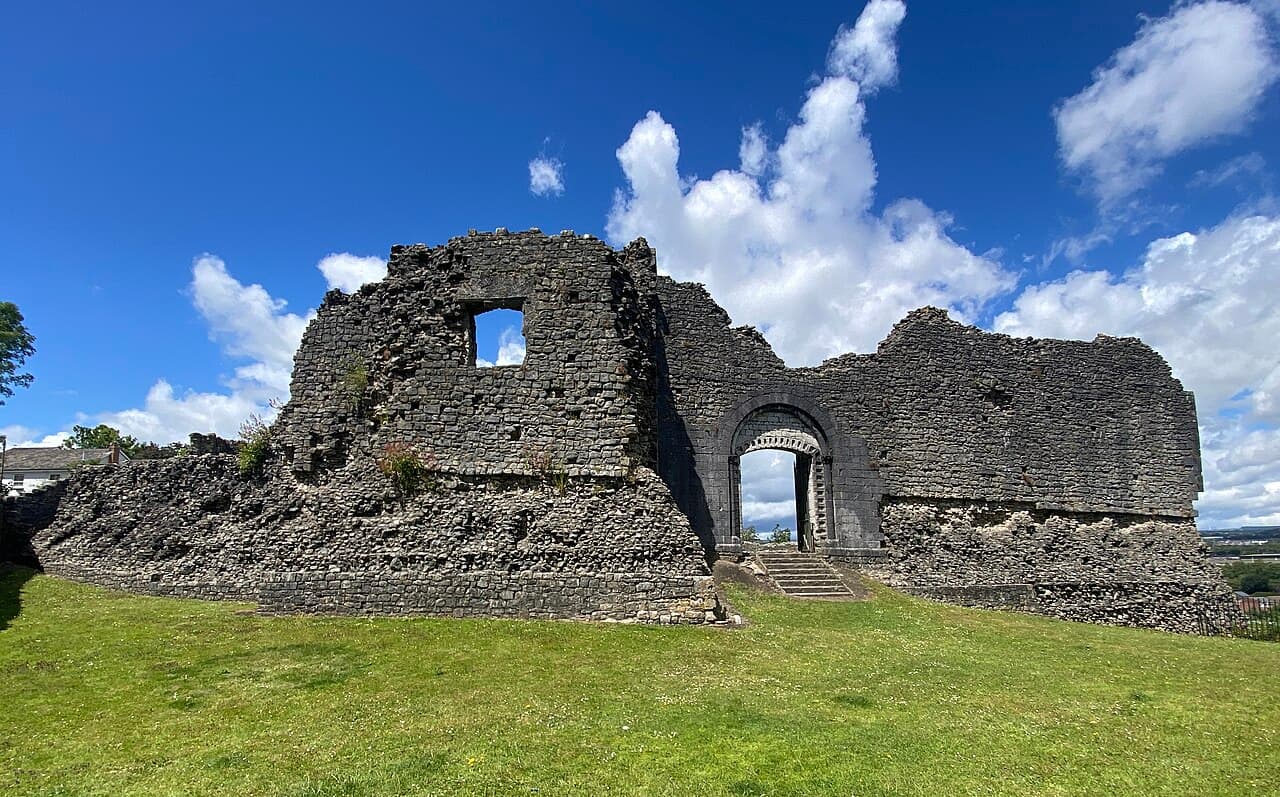
The curtain walls were supported by two square towers, designed for both defense and residential purposes. While only the base of the west tower survives today, the south tower remains intact with its three stories, illustrating the castle's architectural complexity. The castle's Norman doorway is particularly notable for its high-quality stonework, characteristic of late 12th-century craftsmanship.
Medieval ownership and political significance
Following the death of Henry II in 1189, the lordship of Newcastle Castle passed to Prince John, who subsequently granted it to the Welsh lord Morgan ap Caradog. The castle remained under Welsh control until Morgan's death around 1208, after which his son Lleison inherited it. Upon Lleison's death circa 1214, ownership transferred to Isabel, Countess of Gloucester, the first wife of King John.
In 1217, the castle briefly belonged to the Anglo-Norman baron Gilbert Fitz Richard, who handed it over the same year to Gilbert de Turberville. Despite owning Newcastle, Gilbert de Turberville preferred residence at Coity Castle, a nearby stronghold, which perhaps contributed to Newcastle's lesser prominence in later medieval times.
16th-century remodeling and Tudor influence
During the 16th century, Newcastle Castle underwent significant remodeling to adapt to changing residential needs and architectural tastes. The south tower was transformed into comfortable living quarters, featuring the addition of Tudor windows and fireplaces. These modifications reflect the transition from purely military functions to more domestic uses, common among castles in the Tudor period.
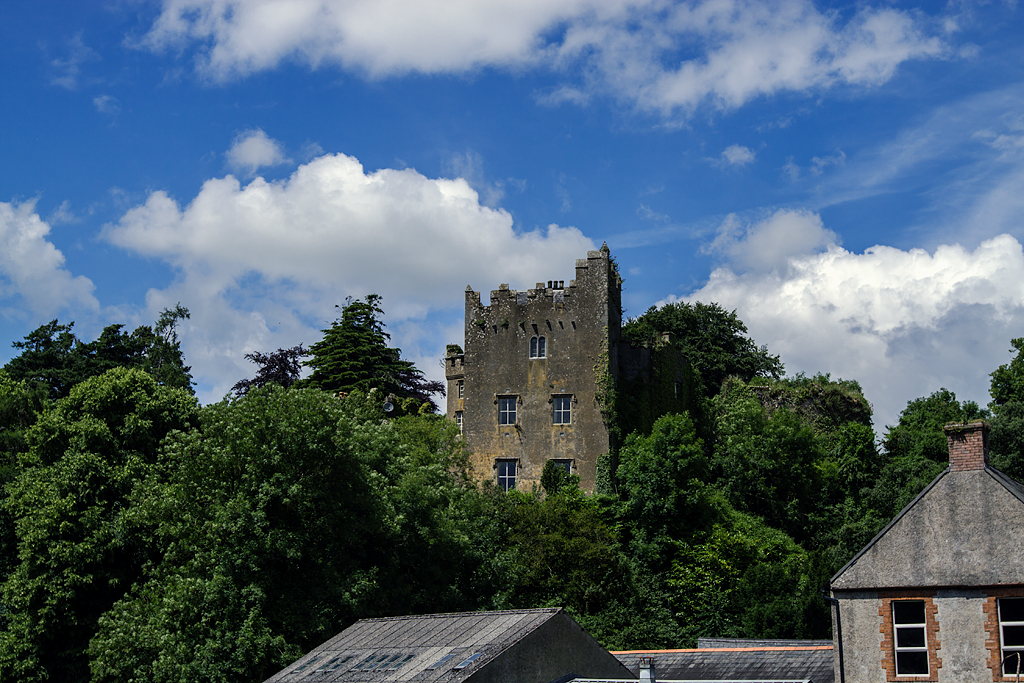
Despite these changes, much of the castle fell into ruin over subsequent centuries, with only the first floor of the original rectangular tower house surviving, heavily overgrown. The castle's location on the right bank of the River Suir provided natural defense and scenic surroundings, although today the site is often grazed by livestock, limiting close access.
Architectural features and current status
Newcastle Castle is characterized by its robust stone curtain walls, surviving medieval towers, and the remnants of its original ringwork earthworks. The castle's Norman doorway remains a highlight for visitors and historians alike, showcasing the skill of medieval masons.
The castle is currently under the care of Cadw, the Welsh government's historic environment service. It is open to the public free of charge throughout the year, offering visitors a glimpse into Norman military architecture and the layered history of medieval Wales.
Nearby historical sites
Adjacent to Newcastle Castle is the site of a late 12th or early 13th-century church, now in ruins, which adds to the historical atmosphere of the area and provides insight into the ecclesiastical history connected with the castle's occupants.
Visiting Newcastle Castle
Visitors to Newcastle Castle can explore the castle grounds, admire the surviving towers and curtain walls, and appreciate the strategic location overlooking the surrounding landscape. The site offers a tangible connection to the Norman conquest and medieval Welsh history.
While the castle itself is accessible year-round, visitors should note that the surrounding pastures may be used for grazing livestock, which can limit direct access to some parts of the ruins. The castle's free admission and maintained condition make it an attractive destination for history enthusiasts and casual tourists alike.
Frequently asked questions (FAQ)
- What is the historical significance of Newcastle Castle?
- Newcastle Castle is a key Norman fortress marking the western extent of Robert Fitzhamon's lordship during the Norman invasion of Wales. It reflects medieval military architecture and the complex history of Welsh-English relations.
- When was Newcastle Castle built and by whom?
- The castle was initially constructed around 1106 by William de Londres, one of the Twelve Knights of Glamorgan, as part of the Norman conquest of South Wales.
- Can I visit Newcastle Castle year-round?
- Yes, Newcastle Castle is open to the public free of charge throughout the year, managed by Cadw, the Welsh historic environment service.
- What architectural features are notable at Newcastle Castle?
- Notable features include the 2-meter-thick Norman curtain walls, the late 12th-century Norman doorway, and the 16th-century remodeled south tower with Tudor windows and fireplaces.
- Is Newcastle Castle accessible for visitors with livestock grazing nearby?
- The castle grounds are sometimes used for grazing cattle, which may limit direct access to certain areas. Visitors should exercise caution and respect any local guidelines when visiting.
Photo gallery

Information
Current owner
Cadw
Loading map...
Visitor reviews
No reviews yet. Been here? Write the first review and help other travelers!
Write the first reviewVisited this castle? Share your experience
Your review helps other travelers and adds first-hand knowledge to our encyclopedia.