Ardfinnan Castle
Ardfinnan Castle stands as one of the earliest Norman castles in Ireland, constructed in 1185 under the direction of the Norman Crown. Located in County Tipperary, this high medieval hill castle occupies a strategic position on a large rocky incline above a ford on the River Suir. The castle’s location was carefully chosen to control a vital river crossing, which was essential for Norman military and administrative control in the region. Its proximity to the towns of Cahir and Clonmel situates it within an important historical landscape of medieval Ireland.
The castle was built alongside its sister fortress, Lismore Castle, as part of a network of fortifications established by the Normans to secure their expanding territory. Ardfinnan Castle's design reflects typical 12th-century Norman military architecture, emphasizing defense and control. Its parallelogram shape encloses a fortified courtyard, with a prominent keep and a fortified entrance gateway that would have served as the main point of access and defense. The castle’s walls and towers were constructed to withstand sieges and provide a secure base for Norman lords and their garrisons.
Architectural features and layout
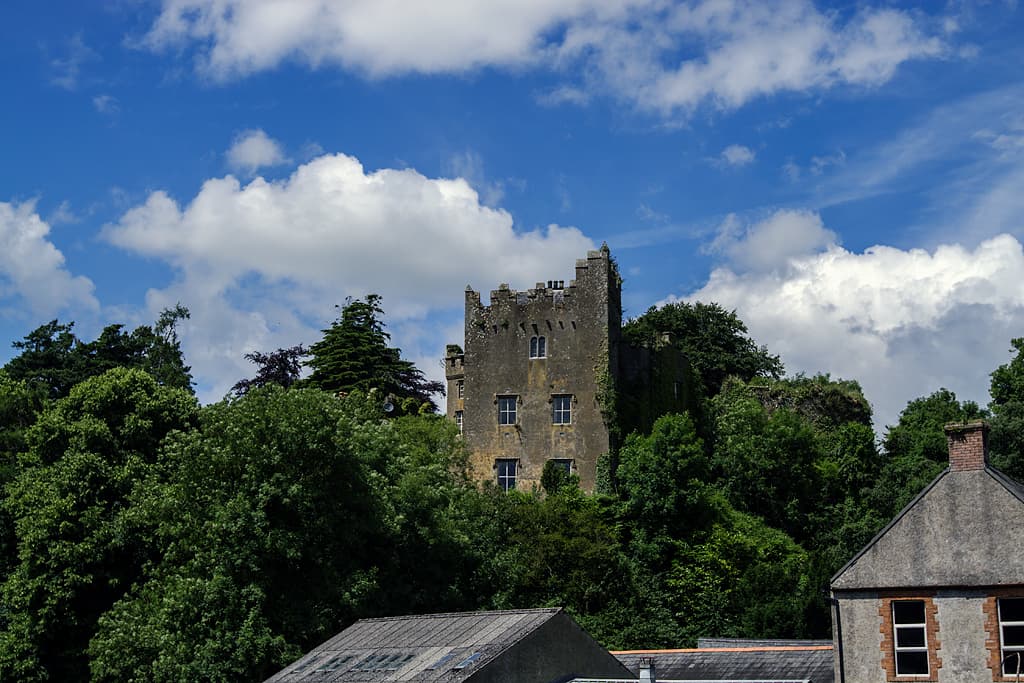
The castle’s layout is notable for its combination of defensive and domestic elements. The keep is located near the eastern end, accompanied by a circular 13th-century preceptory tower, which adds to the defensive strength of the structure. To the west, the ruins of two towers and a great hall indicate the presence of significant living and administrative spaces within the castle walls. These structures would have accommodated the lord’s household, soldiers, and administrative staff.
The castle’s position atop a rocky outcrop provides commanding views over the Suir valley, with the Knockmealdown Mountains to the south and the Galtee Mountains to the northwest. This vantage point was crucial for monitoring movements along the river and surrounding lands. The castle’s defensive perimeter is further strengthened by its proximity to the riverbank, where an old watermill and the river crossing add layers of strategic importance.
Historical context and significance
Ardfinnan Castle was constructed during a period of intense Norman expansion into Ireland, following the initial invasion in 1169. The castle played a key role in establishing Norman dominance in the region, serving both as a military stronghold and a center of administration. Its construction reflects the broader strategy of consolidating power through fortified sites that could control key transport routes and local populations.
The castle’s sister site, Lismore Castle, shares a similar origin and purpose, highlighting the coordinated Norman efforts to secure their newly acquired territories. Over the centuries, Ardfinnan Castle witnessed various conflicts and changes in ownership, although much of its detailed history remains less documented compared to larger Irish castles.
Current condition and accessibility
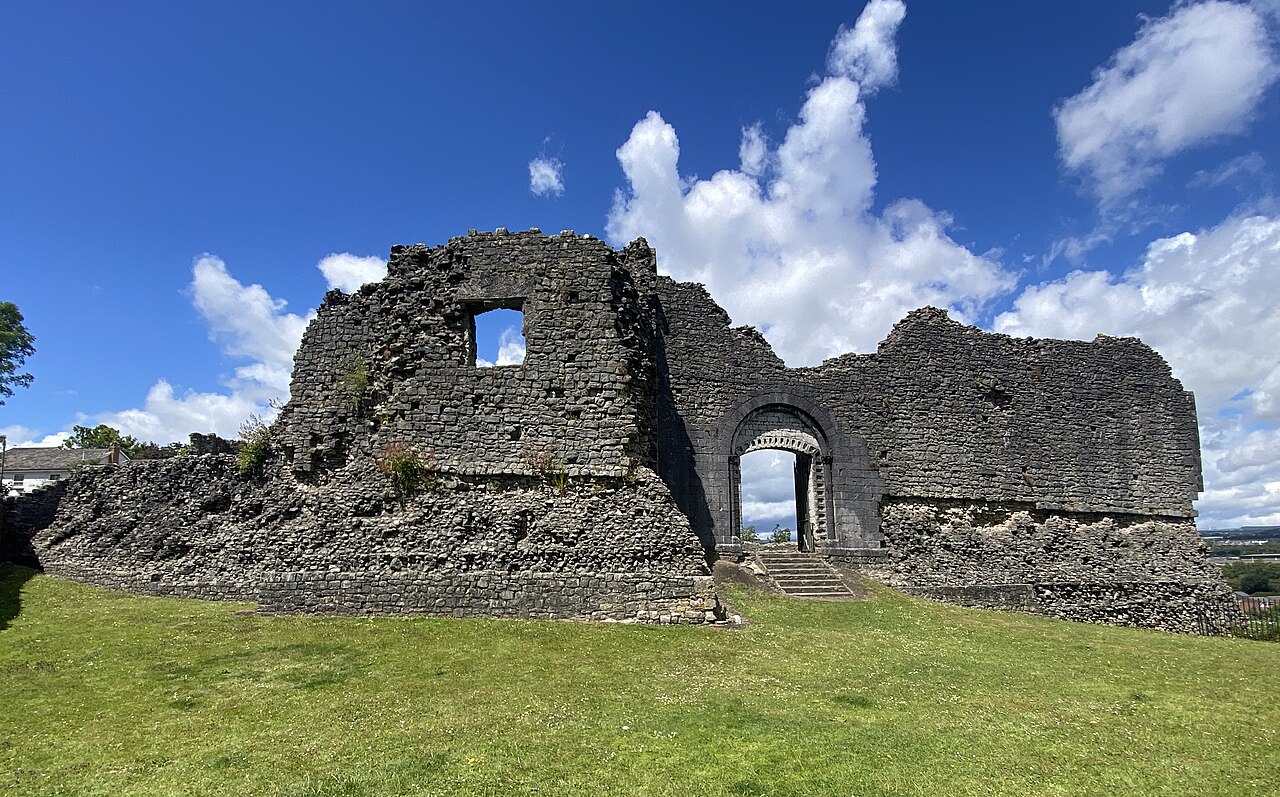
Today, Ardfinnan Castle remains a private residence and is not open to the public. The castle is partially obscured by the surrounding Castle Wood, which conceals much of its structure from view. While some ruins of the towers and great hall remain visible, the full extent of the castle’s original form is difficult to discern without access to the grounds.
The castle’s preservation status is considered partially preserved, with significant portions of the medieval fabric still intact. Its location and private ownership have limited archaeological exploration and public engagement, but the site remains an important monument of Norman military architecture in Ireland.
The castle’s role in the landscape
Ardfinnan Castle’s strategic placement at a river crossing illustrates the Norman emphasis on controlling natural and man-made routes. The nearby old watermill and bridge highlight how the castle was integrated into the local economy and infrastructure. The surrounding landscape, including the Suir valley and nearby mountain ranges, provided natural defenses and resources essential for sustaining the castle’s occupants.
The castle’s enduring presence in County Tipperary contributes to the understanding of Norman influence on Irish medieval architecture and settlement patterns. Despite limited public access, Ardfinnan Castle remains a significant historical and architectural landmark within the region.
Frequently asked questions (FAQ)
- How do I get to Ardfinnan Castle?
- Ardfinnan Castle is located in County Tipperary, Ireland. You can reach it by car via the N24 road, and there is limited parking available nearby. Public transport options are also available, with regular bus services connecting to surrounding towns.
- What is the historical significance of Ardfinnan Castle?
- Ardfinnan Castle dates back to the 12th century and was built by the Anglo-Normans as a defensive structure. It played a crucial role in the local power dynamics and has witnessed numerous historical events over the centuries. Today, it stands as a testament to Ireland's rich medieval heritage.
- When was Ardfinnan Castle constructed?
- Ardfinnan Castle was constructed in the 12th century, around the year 1185. It was established as a stronghold for the Anglo-Normans and has undergone various modifications throughout its history. The castle's architecture reflects the typical designs of medieval fortifications.
- Can I visit Ardfinnan Castle?
- Yes, Ardfinnan Castle is open to the public for exploration. Visitors can walk around the ruins and enjoy the scenic views of the surrounding countryside. However, please note that there are no guided tours available, so you may want to bring along a guidebook for more information.
- Why is the architecture of Ardfinnan Castle significant?
- The architecture of Ardfinnan Castle showcases the typical features of medieval Irish castles, including high stone walls and defensive structures. Its layout reflects the strategic importance it held during its time, designed to withstand sieges and protect its inhabitants. The remaining ruins provide insights into the construction techniques of the period.
- Is it possible to access the castle grounds?
- Yes, the castle grounds are accessible to visitors, and you can freely explore the area. The site is generally open year-round, but be aware that some sections may be uneven or overgrown. Wear appropriate footwear for a comfortable visit.
- What are the opening hours for Ardfinnan Castle?
- Ardfinnan Castle is open to visitors at all times, as it is a public heritage site. However, it is advisable to visit during daylight hours for safety and to fully appreciate the surroundings. Always check local resources for any updates or changes in access.
- What is the best time to visit Ardfinnan Castle?
- The best time to visit Ardfinnan Castle is during the spring and summer months, from April to September, when the weather is generally milder and more pleasant for outdoor activities. This period also allows for beautiful views of the lush Irish landscape surrounding the castle. Additionally, visiting during the weekdays may provide a quieter experience.
- Are there any nearby attractions to visit?
- Yes, there are several nearby attractions worth exploring, including the beautiful River Suir and the scenic village of Ardfinnan itself. You can also visit the nearby town of Clonmel, which offers more historical sites and amenities. Exploring the surrounding countryside can enhance your overall experience of the region.
- What are the ticket prices for entering Ardfinnan Castle?
- There is no charge for visiting Ardfinnan Castle, as it is a public heritage site. Visitors can enjoy the historical ruins and beautiful surroundings free of cost. However, consider supporting local heritage initiatives through donations if you appreciate the site.
Photo gallery

Information
Loading map...
Visitor reviews
No reviews yet. Been here? Write the first review and help other travelers!
Write the first reviewVisited this castle? Share your experience
Your review helps other travelers and adds first-hand knowledge to our encyclopedia.