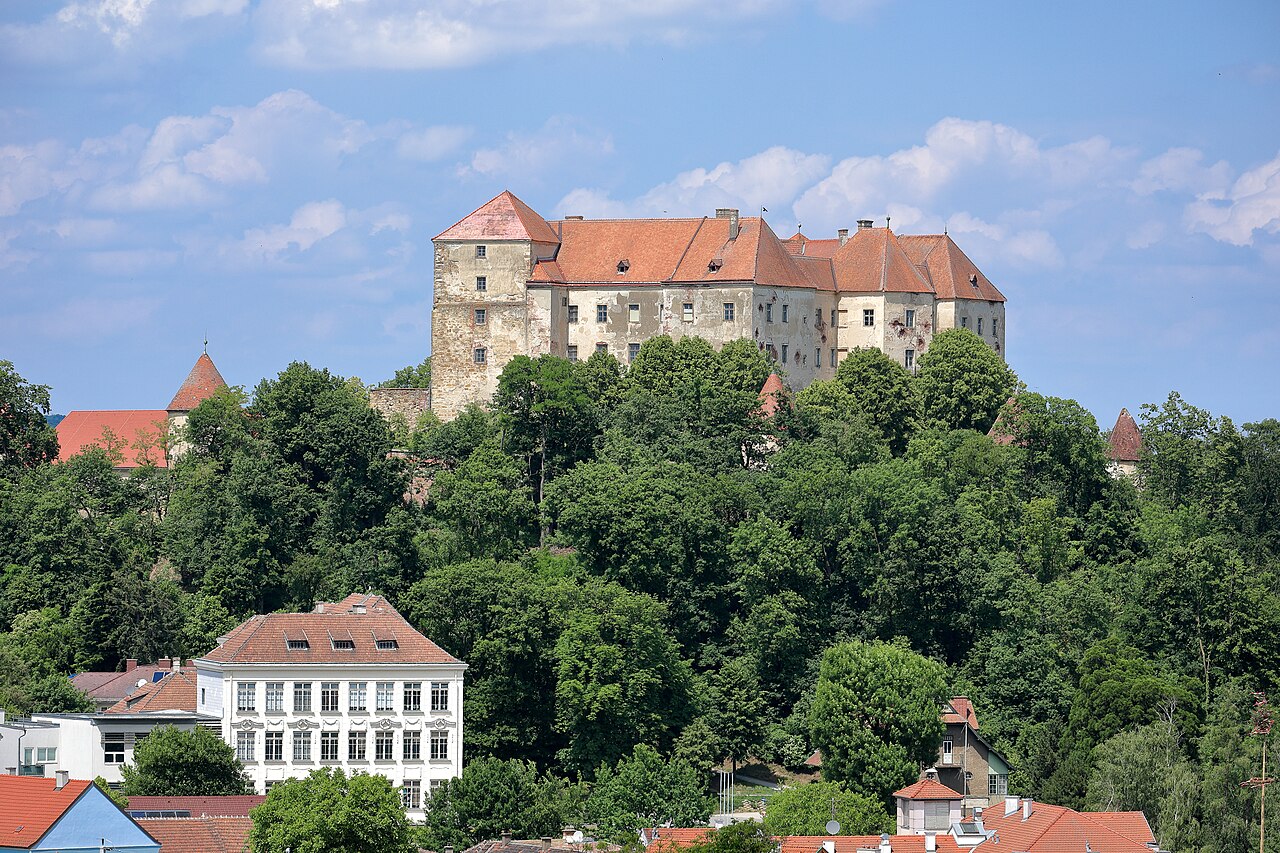
Neulengbach Castle
Neulengbach Castle stands prominently above the town of Neulengbach in Austria, showcasing a remarkable blend of medieval military architecture and Renaissance residential enhancements. Founded around 1189, this castle was originally constructed as a stronghold for the local ruling family, the Lengenbachs. Its strategic location and imposing structure made it a significant center of power in the region during the High Medieval period.
Medieval origins and early history
The castle's initial construction in the 12th century reflects typical high medieval defensive architecture, designed to assert control over the surrounding territory. The original owners, the Lengenbach family, established the castle as the seat of their local rule. Following the extinction of the Lengenbach lineage in 1236, ownership passed to the influential Babenberg family, who were prominent rulers in Austria during the Middle Ages.
During the late Middle Ages, Burg Neulengbach served as the residence of a state governor, indicating its continued administrative importance. The castle's role evolved from a purely military fortress to a center of regional governance.
Architectural features and expansions
Defensive structures
The castle is characterized by a double defensive ring fortified with eight round towers, a design that enhanced its defensive capabilities against siege warfare common in the medieval period. The three-storey main building provided elevated vantage points for surveillance and defense.
Renaissance enhancements
In the early 17th century, under the ownership of Rudolf Khuen of Belasy, the castle underwent significant transformation from a fortress to a more comfortable residential castle. This included the addition of a magnificent Renaissance portal, which reflects the architectural trends of the period.
The courtyard was also enhanced with Tuscan columns and a decorative fountain, elements that emphasized the castle's shift towards residential luxury and aesthetic appeal rather than solely military functionality.
Modern history and preservation
In January 1912, a devastating fire destroyed the entire interior of Neulengbach Castle, causing significant damage to its historic fabric. Despite this setback, the castle remained a notable landmark in the region.
By 1920, the municipality acquired the castle and repurposed it as a children's home, demonstrating adaptive reuse of historic buildings during the 20th century. In 1952, the castle was sold into private hands, marking another chapter in its long history.
Cultural significance and current status
Today, Neulengbach Castle is recognized for its combination of high medieval defensive architecture and Renaissance residential features. Its imposing towers and fortified walls continue to dominate the local landscape, while the Renaissance portal and courtyard elements offer insight into the evolving tastes and functions of castles in Austria over the centuries.
The castle remains a symbol of the region's medieval heritage and architectural development, attracting interest from historians, architects, and visitors fascinated by Austria's noble past.
Frequently asked questions (FAQ)
- How do I visit Neulengbach Castle?
- Neulengbach Castle is privately owned and access may be limited. Visitors should check local tourism websites or contact the Neulengbach municipality for current visiting opportunities and guided tours.
- What is the historical significance of Neulengbach Castle?
- Neulengbach Castle was founded in the 12th century and served as a local power center for the Lengenbach family, later owned by the Babenbergs, and functioned as a state governor's seat in the late Middle Ages.
- When was Neulengbach Castle built?
- The castle was constructed in the 12th century, around 1189, during the High Medieval period.
- Can I see Renaissance architectural features at Neulengbach Castle?
- Yes, the castle includes a magnificent Renaissance portal and a courtyard with Tuscan columns and a fountain, added in the early 17th century under Rudolf Khuen of Belasy.
- Is Neulengbach Castle well preserved?
- The castle suffered a major fire in 1912 that destroyed its interior, but it has been partially restored and retains significant medieval and Renaissance architectural elements.
Information
Sources & official resources
Verify the information above using these authoritative references.
Loading map...
Visitor reviews
No reviews yet. Been here? Write the first review and help other travelers!
Write the first reviewVisited this castle? Share your experience
Your review helps other travelers and adds first-hand knowledge to our encyclopedia.