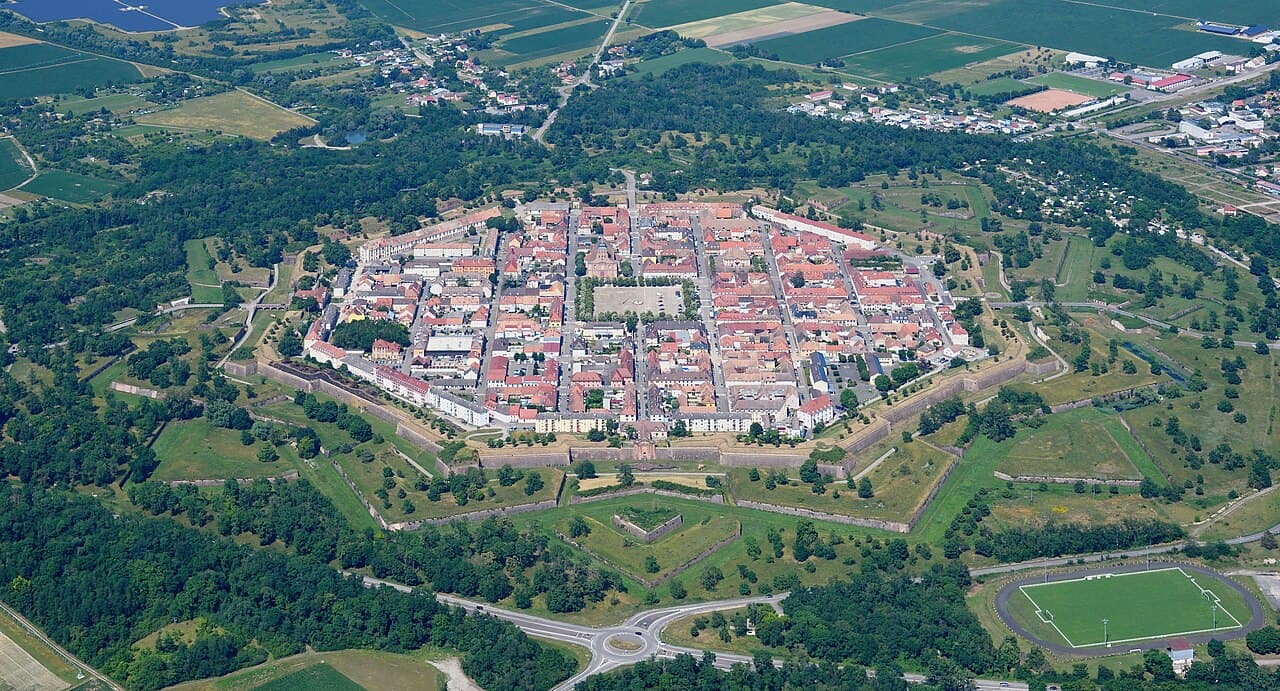
Neuf-Brisach
Neuf-Brisach is a remarkable example of a bastioned fortress town located in the department of Haut-Rhin in Alsace, north-eastern France. Constructed in the 17th century following the Treaty of Ryswick in 1697, this fortified town was strategically built to replace the lost fortress of Breisach on the opposite bank of the Rhine, which France ceded to the Holy Roman Empire. The name "Neuf-Brisach" literally means "New Breisach," reflecting its purpose as a new defensive stronghold to secure the border between France and the German states.
Historical context and strategic importance
The establishment of Neuf-Brisach was a direct consequence of shifting territorial control after the Treaty of Ryswick ended the Nine Years' War. The loss of the original town of Breisach left a critical gap in French border defenses along the Rhine River. To address this vulnerability, the French crown commissioned the construction of a new fortified town designed to withstand the evolving art of siege warfare in the early modern period.
The town's location was carefully chosen for its strategic vantage point near the Rhine, providing control over river crossings and acting as a bulwark against incursions from the east. Neuf-Brisach thus played a pivotal role in the military landscape of Alsace and the Franco-German border region for centuries.
Architectural design and Vauban's influence
Neuf-Brisach is widely recognized as one of the most exemplary manifestations of the military engineering principles developed by Sébastien Le Prestre de Vauban, the preeminent French military engineer of the 17th century. Vauban's designs revolutionized fortress construction by introducing the bastioned trace—a star-shaped layout that maximized defensive firepower and minimized blind spots.
The fortress town features a distinctive octagonal layout surrounded by double ring walls with angular bastions projecting outward to cover each other with crossfire. This design allowed defenders to repel attackers with overlapping fields of fire, making direct assaults costly and difficult.
The fortifications include moats, ravelins (triangular outworks), and covered ways to protect defenders from enemy artillery. The town's grid street plan inside the walls reflects Renaissance urban planning ideals, combining military functionality with civilian habitation.
Key architectural features
- Bastions: Eight bastions form the star-shaped perimeter, each designed to cover adjacent walls and bastions.
- Moats and ditches: Surrounding the walls, these water-filled and dry ditches hindered enemy advances.
- Ravelins and glacis: Forward defensive structures to absorb artillery fire and delay attackers.
- Town gates: Fortified entrances with drawbridges and guardhouses controlling access.
- Internal street grid: A planned layout facilitating movement and defense within the town.
Military and cultural significance
Neuf-Brisach's fortifications exemplify the peak of Renaissance military architecture adapted to the realities of gunpowder warfare. The town served as a military garrison and defensive stronghold for France during numerous conflicts, including the War of the Spanish Succession and later European wars.
Its preservation offers invaluable insight into the evolution of fortification design from medieval castles to modern bastioned fortresses. The town's military architecture influenced fortress construction across Europe and remains a key study subject for military historians and architects.
UNESCO World Heritage designation
Recognizing its outstanding universal value, Neuf-Brisach was inscribed as a UNESCO World Heritage Site in 2008. The designation highlights its status as a quintessential example of Vauban's military engineering and its testimony to the development of fortifications between the 17th and 19th centuries.
The site preserves both the military structures and the urban fabric of the fortified town, allowing visitors to experience the integration of defense and daily life in a historic military settlement.
Visiting Neuf-Brisach today
Today, Neuf-Brisach remains a well-preserved bastioned fortress town. Visitors can explore the extensive fortifications, including the bastions, moats, and gates, as well as the orderly streets and historic buildings within the walls.
The town hosts guided tours, exhibitions, and events that interpret its military history and architectural significance. Its location in Alsace also makes it accessible for travelers interested in the broader cultural and historical heritage of the region.
Frequently asked questions (FAQ)
- When was Neuf-Brisach built and why?
- Neuf-Brisach was built in the 17th century after the Treaty of Ryswick in 1697 to replace the lost fortress of Breisach and secure the French-German border.
- What makes Neuf-Brisach architecturally significant?
- Neuf-Brisach is a prime example of Vauban's bastioned fortress design, featuring an octagonal layout with angular bastions and double ring walls.
- Is Neuf-Brisach a UNESCO World Heritage Site?
- Yes, Neuf-Brisach was inscribed as a UNESCO World Heritage Site in 2008 for its outstanding military architecture and historical importance.
- Can visitors explore the fortifications of Neuf-Brisach?
- Yes, the fortress town is well-preserved and open to visitors who can tour its bastions, moats, gates, and historic streets.
Photo gallery

Information
Architect
Sébastien Le Prestre de Vauban
Loading map...
Visitor reviews
No reviews yet. Been here? Write the first review and help other travelers!
Write the first reviewVisited this castle? Share your experience
Your review helps other travelers and adds first-hand knowledge to our encyclopedia.



