Château Saint-Léon

Château Saint-Léon in Eguisheim: history and architecture
Eguisheim, Grand-Est, France
High Medieval (11th–13th c.)
Restored

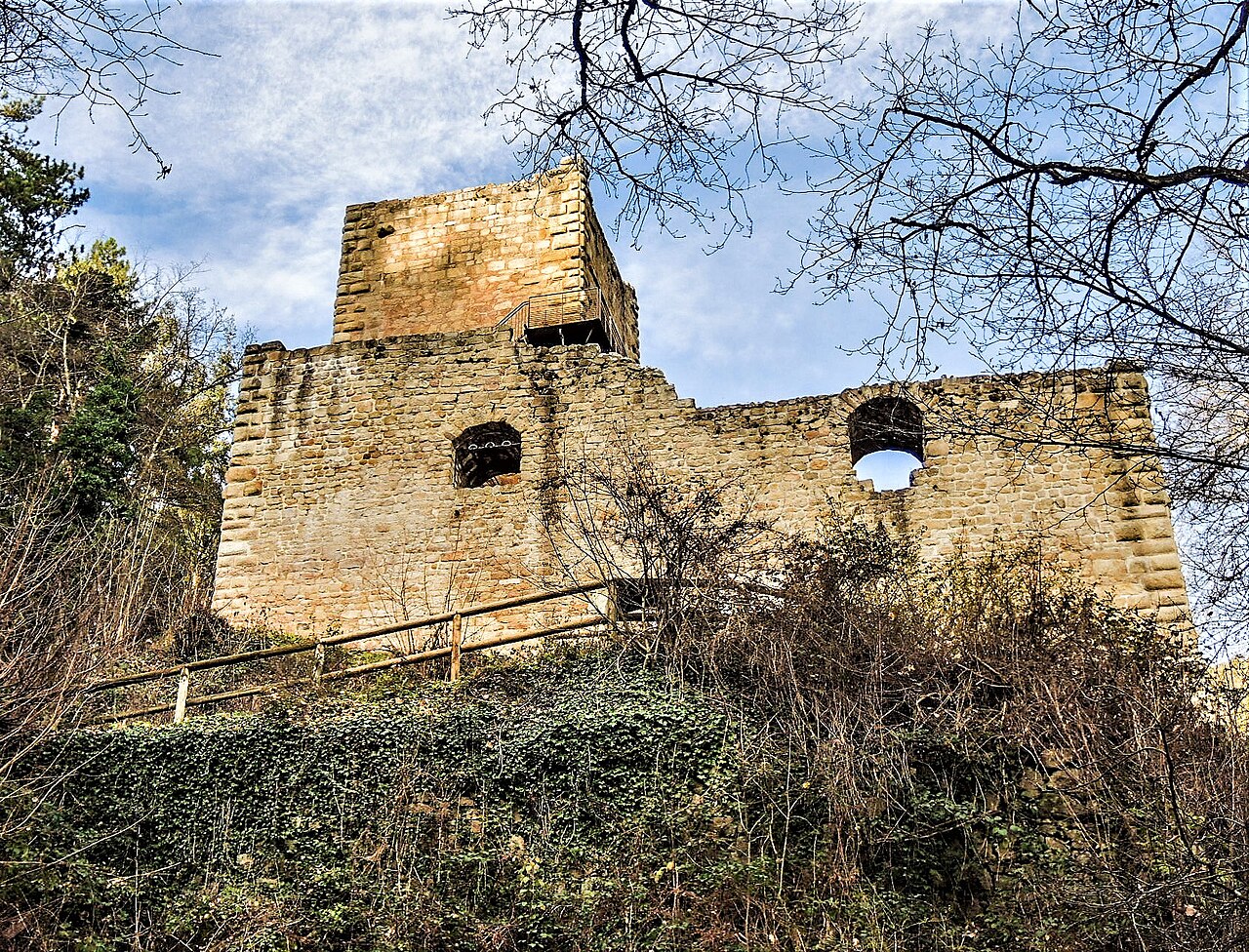
Château Saint-Léon stands prominently in the heart of Eguisheim, in the Grand-Est region of France. This hill castle dates back to the 13th century, originally constructed by the Counts of Eguisheim. Its strategic location and sturdy fortifications reflect the typical defensive architecture of the High Medieval period. The castle served as a significant seat of power, later coming under the control of the Bishop of Strasbourg, who maintained authority over it through an episcopal bailiff until the upheavals of the French Revolution in 1789.

Medieval origins and episcopal control

The castle's initial purpose was both defensive and administrative. Surrounded by a protective enceinte and a moat, Château Saint-Léon exemplified typical medieval military architecture designed to withstand sieges and control the surrounding territory. The moat, a common feature in hill castles of this era, was filled in by the 18th century, reflecting changes in military technology and the castle's evolving role. The castle functioned as a residence and administrative center for the bishop's bailiff, emphasizing its importance in ecclesiastical governance during the Middle Ages.

Architectural transformations and decline

Over the centuries, the castle complex underwent significant changes. By the 16th century, the southern residence was rebuilt with distinctive mullioned windows, indicating a shift towards more comfortable and stylistically refined living quarters. However, the castle's fortunes declined after a devastating fire in 1877, which destroyed houses built within the castle courtyard and against its walls. This fire left the castle in a state of ruin, with the once formidable structures falling into disrepair for many years.

Restoration and neo-Renaissance additions

The castle's revival began in 1885 when the Bishop of Strasbourg repurchased the site. This acquisition was facilitated by a local mediator, M. Stumpf, who envisioned the construction of a chapel dedicated to Saint Leo. The restoration works were entrusted to Charles Winkler, an architect renowned for his expertise in historic monument preservation. Winkler demolished the remains of the original keep to make way for the new chapel, completed in 1895. This chapel stands as a testament to the religious and cultural renewal of the site.

Alongside the chapel, Winkler undertook the restoration of the southern residence. He preserved the 16th-century mullioned windows while enhancing the building with a staircase turret and a neo-Renaissance balcony. These additions blend historical elements with the stylistic preferences of the late 19th century, reflecting the era's fascination with Renaissance revival architecture.

Architectural features and layout

Château Saint-Léon's layout is characteristic of a hill castle, with its elevated position providing natural defense advantages. The original enceinte formed a protective perimeter around the castle, complemented by the now filled-in moat. The castle courtyard, once home to various ancillary buildings, was partially lost to the 19th-century fire. The surviving structures, including the chapel and the restored residence, offer insight into the castle's layered history, combining medieval fortification elements with later religious and residential architecture.

The chapel of Saint Leo

The chapel dedicated to Saint Leo is a focal point of the castle's modern identity. Built on the site of the former keep, it symbolizes the transformation of the castle from a feudal fortress to a religious monument. The chapel's design by Charles Winkler incorporates elements of historic architectural styles, harmonizing with the castle's medieval origins while serving contemporary spiritual functions.

Historical significance and cultural heritage

Château Saint-Léon is more than a relic of medieval fortification; it embodies the complex history of Eguisheim and the broader Alsace region. Its connection to the Counts of Eguisheim and the Bishops of Strasbourg highlights the interplay between secular and ecclesiastical powers in medieval France. The castle's endurance through periods of conflict, decline, and restoration reflects the resilience of regional heritage and the ongoing efforts to preserve cultural landmarks.

Today, Château Saint-Léon stands as a restored attracting visitors interested in medieval architecture, religious history, and the evolution of castle design. Its combination of High Medieval fortifications and 19th-century neo-Renaissance restoration offers a unique glimpse into the architectural and historical layers that define many European castles.

Visiting Château Saint-Léon

Visitors to Eguisheim can explore the castle grounds and appreciate the blend of medieval and later architectural styles. While the original moat no longer exists, the elevated position and remaining structures provide a tangible connection to the castle's strategic and cultural past. The chapel remains an active site of worship and heritage, contributing to the castle's living history.

Frequently asked questions (FAQ)

How do I get to Château Saint-Léon?
Château Saint-Léon is located in Eguisheim, France, which is easily accessible by car or public transport. If you are coming by train, the nearest station is Colmar, from where you can take a local bus or taxi to Eguisheim.
What is the historical significance of Château Saint-Léon?
Château Saint-Léon dates back to the 10th century and is known for its role in the regional history of Alsace. It is associated with the legacy of Saint Léon, a significant figure in the Christianization of the region, making it a site of both cultural and religious importance.
When was Château Saint-Léon built?
Château Saint-Léon was constructed in the 10th century, with various renovations and expansions occurring over the centuries. Its architecture reflects the medieval design styles prevalent in that era, showcasing the historical development of castle construction in France.
Can I visit Château Saint-Léon?
Yes, Château Saint-Léon is open to visitors. Guided tours are available, allowing guests to explore its rich history and architecture while learning about its significance in the region.
Why is Château Saint-Léon considered an architectural gem?
Château Saint-Léon features impressive medieval architecture, characterized by its sturdy stone walls and unique design elements. Visitors can admire the blend of Romanesque and Gothic styles, which highlight the castle's historical evolution and cultural influences.
Is it possible to access Château Saint-Léon for individuals with mobility challenges?
Yes, efforts have been made to improve accessibility at Château Saint-Léon. However, due to the castle's historic nature, some areas may still pose challenges, so it's advisable to check with the staff for specific accommodations before your visit.
What are the best times to visit Château Saint-Léon?
The best times to visit Château Saint-Léon are during the spring and early autumn months when the weather is mild and the surrounding landscape is picturesque. Additionally, visiting during weekdays may help you avoid larger crowds.
What are the ticket prices for visiting Château Saint-Léon?
Ticket prices for Château Saint-Léon are generally reasonable, with discounts available for students and seniors. It is best to check the official website for the latest pricing and any special offers or group rates.
What are the opening hours for Château Saint-Léon?
Château Saint-Léon typically opens to visitors from 10 AM to 6 PM, with extended hours during the peak tourist season. Always check the castle's official website or contact them directly for the most up-to-date information regarding opening hours and any seasonal changes.
Are there any nearby attractions to Château Saint-Léon?
Yes, Eguisheim is known for its charming streets and vineyards, making it a delightful area to explore. Nearby attractions include the city of Colmar and the Alsace Wine Route, which offers a variety of picturesque villages and wine-tasting opportunities.

Information

Hill Castle

Loading map...

Visitor reviews

No reviews yet. Been here? Write the first review and help other travelers!

Write the first review

Visited this castle? Share your experience

Your review helps other travelers and adds first-hand knowledge to our encyclopedia.
Write a review

(5/5)

0/2000 characters

Your review will be visible after admin approval

Nearby castles

2.5 km
Éguisheim Castles — France castle

Éguisheim Castles

Route des Cinq Châteaux, France

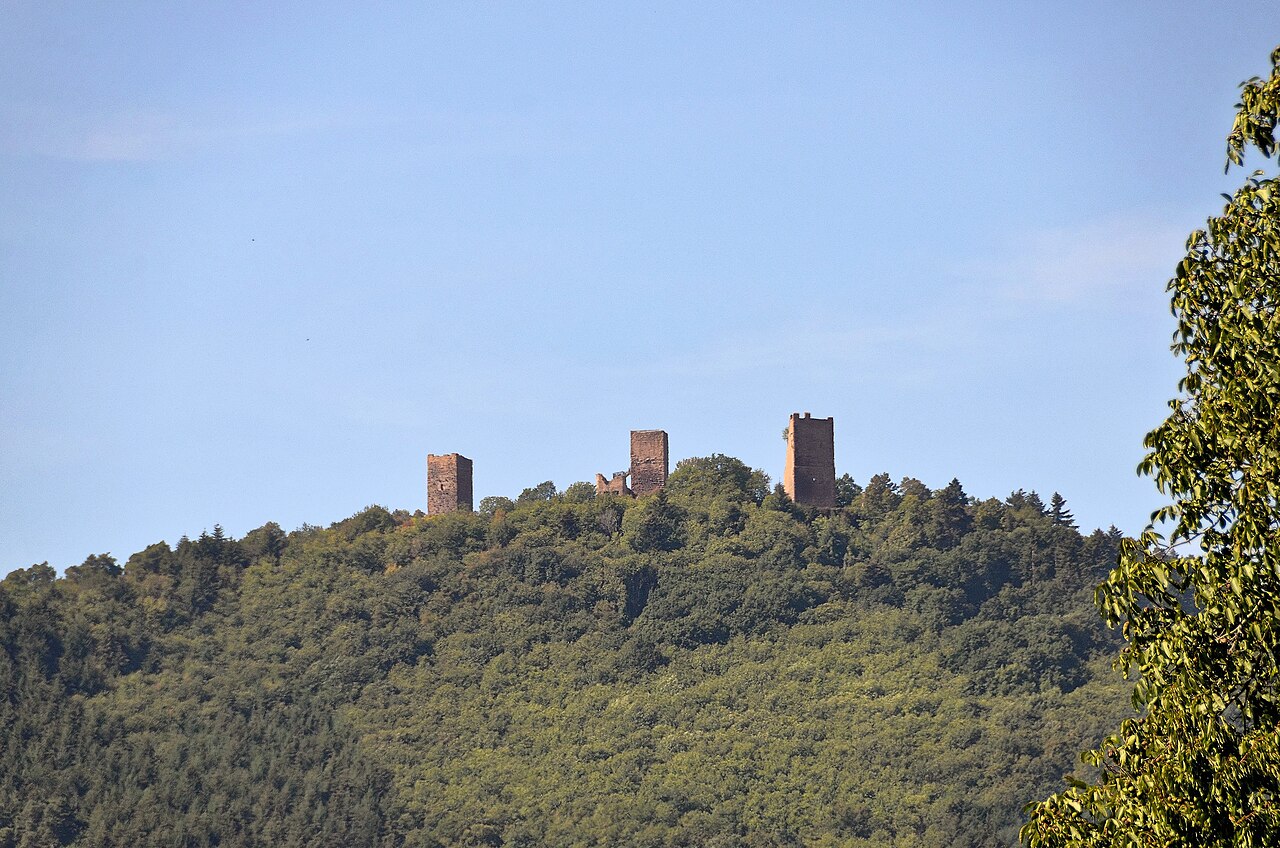
The Éguisheim Castles, also known as Châteaux d'Éguisheim, form a remarkable group of three medieval castle keeps perched above the village of Husseren-les-Châteaux in the Haut-Rhin department of Alsace, France. This cluster is part of the scenic Vosges region, often referred to as Southern Alsace, a landscape dotted with historic fortifications that reflect the area's turbulent medieval past. The three castles, named from north to south as Dagsbourg, Wahlenbourg, and Weckmund, stand on a small hill ridge, creating a unique ensemble of defensive structures that dominate the surrounding countryside. These castles are among the oldest and most significant medieval fortifications in the region, each with a distinct history and architectural character. The Wahlenbourg keep is the oldest, dating back to around 1000 AD, and is traditionally attributed to Hugues IV de Nordgau, Count of Éguisheim. It is also reputedly the birthplace of Pope Leo IX, Hugues' son, adding a notable historical figure to the castle's legacy. The other two keeps, Dagsbourg and Weckmund, were constructed in the 12th century, reflecting the strategic importance of the site through successive centuries. Historical significance and ownership The origins and early history of Wahlenbourg The Wahlenbourg keep, sometimes called Mittelbourg, was built on the site of a former Roman watchtower, indicating the long-standing military importance of the location. Its construction around 1006 by Hugues IV and his wife Heilwige de Dabo marked the establishment of a fortified residence that would witness numerous conflicts. The castle was destroyed in 1026 during a siege by Ernest II, Duke of Swabia, but was rebuilt, only to be destroyed again in 1144. Dagsbourg and Weckmund: expansion and conflict The Dagsbourg keep was erected around 1147 by the Count of Ferrette, who later built the Weckmund keep in the latter part of the 12th century. Unlike the other two keeps, Weckmund was primarily a defensive lookout, separated by a dry moat and not intended for permanent habitation. The complex's strategic value was underscored by its involvement in regional conflicts, including the 1197 siege by Philip of Swabia following revolts against the Holy Roman Emperor Henry VI. Later history and decline After the extinction of the Counts of Dabo-d'Éguisheim in 1225, ownership disputes arose between the Count of Ferrette and the Bishop of Strasbourg. The bishop secured control over the Dagsbourg and Wahlenbourg keeps, while the Weckmund keep remained with the count. The castles endured multiple assaults during the Hundred Years' War, including plundering by English troops in 1370 and 1380, and by the Armagnacs in 1444. In 1466, the castle complex was attacked and burned by the people of Mulhouse during the War of the Six Deniers. This event marked the beginning of the castles' decline. Although the Dagsbourg keep remained in use for another two centuries, by the 17th century the entire complex was abandoned and fell into ruin. Architectural features and layout Structural composition of the three keeps The three castles are situated on a low hill ridge, a common defensive strategy in the Vosges region. The Wahlenbourg keep was the central residence, featuring a division into three main areas: the count's residence at the summit, living quarters for retainers and officers below, and barracks and stables at the base. This tiered arrangement maximized defensive capabilities while accommodating the needs of the lord's household and military personnel. The Dagsbourg keep was built to the north and was habitable, serving as a fortified residence. The Weckmund keep, located to the south, was separated by a dry moat and functioned mainly as a lookout and defensive rampart, not intended for permanent habitation. This separation enhanced the defensive perimeter of the castle complex. Defensive features and military architecture The castles incorporated typical medieval defensive elements such as dry moats, stone keeps, and watchtowers. The Weckmund keep acted as a forward defense point, controlling access and providing early warning of approaching threats. The complex's position on a hill provided commanding views of the surrounding valleys and routes, essential for both defense and control of the region. Access and current condition Today, the Éguisheim Castles are in a state of ruin, with remnants of walls and keeps visible to visitors. The site is freely accessible, located a short 10-minute walk from the nearest parking area, making it a popular destination for hikers and history enthusiasts. The castles are part of the famous Route des Cinq Châteaux, a scenic trail that includes other notable fortresses such as Hohlandsbourg and Pflixbourg. This route is closed to vehicles from mid-November to mid-March, preserving the natural environment and the ruins during the winter months. The ruins offer a tangible connection to the medieval history of Alsace and provide insight into the architectural and military strategies of the time. Visitors can explore the remains of the three keeps and enjoy panoramic views of the Vosges landscape, making the Éguisheim Castles a significant cultural and historical landmark in the region. Historical monument status and cultural heritage The Éguisheim Castles have been recognized for their historical and cultural importance, with protection as official historical monuments since 1840. This designation underscores their value as heritage sites that preserve the legacy of medieval Alsace. Although the castles have not undergone extensive restoration, their ruins remain a powerful symbol of the region's feudal past and architectural heritage. The site is also notable for its connection to Pope Leo IX, one of the most prominent medieval church figures, believed to have been born at Wahlenbourg. This association adds a religious and historical dimension to the castles' significance, attracting visitors interested in both secular and ecclesiastical history. Visitor information and tourism Visitors to the Éguisheim Castles can enjoy hiking the trails that link the three keeps and surrounding castles along the Route des Cinq Châteaux. The accessible ruins provide an engaging experience for those interested in medieval architecture, history, and scenic landscapes. The site is open year-round, with vehicle access restrictions in winter to protect the environment. There are no entrance fees, and the site is maintained as a public heritage location. Nearby towns such as Eguisheim and Mulhouse offer additional cultural attractions, including museums, local cuisine, and traditional Alsatian architecture, making a visit to the Éguisheim Castles a well-rounded historical and cultural outing.

Renaissance (15th–17th c.)
Details
2.5 km
Hagueneck Castle — France castle

Hagueneck Castle

Hagueneck, France

Hagueneck Castle, also known locally as Château du Hagueneck, is a striking medieval ruin perched above the village of Wettolsheim in the Haut-Rhin department of France, within the historic region of Southern Alsace or the Vosges. This hill castle occupies a strategic granite outcrop approximately 440 meters above sea level, overlooking a densely wooded valley and forming part of a cluster of medieval fortifications that illustrate the region's feudal past. Constructed probably around 1230, Hagueneck Castle was initially established by local lords under the authority of the Bishop of Strasbourg. The castle's early function was likely more residential than military, as it was situated at the end of a wooded valley, away from main communication routes. The first documented owner, Burckhard de Hagueneck, a vassal of the bishop, is mentioned in 1263, confirming the castle's role within the bishopric's feudal system. The castle's historical timeline and ownership Ownership of the castle changed hands several times over the centuries, reflecting the complex political landscape of the region. Around 1300, the castle was sold to the Laubgassen family, who had lost their ancestral seat and sought refuge at Hagueneck. In 1304, it was burned during a conflict involving the noble Hattstatt and Hus families but was promptly rebuilt and fortified, underscoring its continued strategic and residential importance. Throughout the 15th century, the castle passed through various noble families, including the Rappoltstein family, who held it as a fief under the House of Habsburg. By the mid-16th century, around 1550, the castle was abandoned as a permanent residence, and by 1640 it was described as a ruin. The Thirty Years' War further devastated the castle when it was destroyed by Swedish troops, leading to its long-term abandonment. In 1674, the castle came under the ownership of the Knights Hospitaller (Johanniterkommende) based in Colmar. It remained in their possession until the French Revolution, when it was confiscated and sold as national property. The ruins later served as a residence for a local forest official during the 19th century before being acquired by the municipality of Wettolsheim in 1912, marking the beginning of preservation efforts. Architectural features and layout The castle's remains reveal a rectangular inner courtyard (Kernburg) and an eastern outer bailey (Vorburg), both enclosed by a formidable outer ring wall. The site is naturally defended by steep rock faces and enhanced by deep neck ditches on the southwestern and southeastern approaches, which served as formidable obstacles to attackers. The castle walls are constructed from locally quarried granite, with finely worked blocks and distinctive cushion-shaped boss stones marking corners, the central tower, and the main gate. Originally, window frames were made from yellow sandstone sourced from Rouffach, though these have not survived. A notable defensive feature is the semicircular flanking tower on the southeast side, likely guarding the main entrance located at the southern corner of the defensive wall. The addition of a zwinger in the early 15th century—a narrow outer ward—further enhanced security by forcing visitors or attackers to pass through a confined space before reaching the inner bailey. The bergfried and main residential building At the heart of the castle stands the bergfried, a tall square tower originally about 22 meters high, now partially collapsed to roughly 18 meters. Its interior is mostly solid, except for a narrow spiral staircase leading to the battlement platform protected by a low parapet. The bergfried's entrance is a distinctive round-arched doorway situated approximately 16 meters above ground, formerly accessed by a wooden gallery connecting to the ring wall. Unlike French donjons, this tower was not designed for habitation. Opposite the bergfried lies the palas, the castle's main residential building, occupying nearly half the inner bailey. It is a two-story structure facing the protected northeast side. The ground floor features narrow window openings that served as arrow slits or light sources for the outer bailey, while the upper floor had rounded-arched double windows, now preserved as pointed niches with wide seating. A surviving granite capital suggests a fireplace once warmed the interior. Preservation and cultural significance Despite its modest scale compared to neighboring fortresses, Hagueneck Castle holds significant cultural and historical value. Its ruins provide a window into the feudal era of Alsace and the architectural evolution of hill castles in the region. The castle is part of the Route of the 5 Castles, a popular tourist trail connecting several medieval fortifications, including Pflixbourg, Hohlandsbourg, and the three Éguisheim castles. The castle is freely accessible today, reachable by a short five-minute walk from the nearest road, offering visitors a secluded and atmospheric experience. It also anchors the Herzog path, a 2.8-kilometer forest trail that links the historic site to its natural surroundings, enhancing the visitor experience by combining cultural heritage with scenic nature. Restoration efforts have been ongoing since the late 19th century, with significant campaigns in 1884, 1932, 1972, and from 1981 onward under a local heritage association. Since 1923, the castle has been officially recognized as a historic monument, underscoring its importance to French cultural heritage. Visiting information and accessibility Visitors to Hagueneck Castle can explore the ruins at their own pace, enjoying the rugged landscape and panoramic views of the surrounding Vosges hills and the nearby town of Colmar. The site is ideal for history enthusiasts and hikers interested in medieval architecture and Alsace's rich past. The castle's location away from urban centers provides a peaceful retreat into nature and history.

Renaissance (15th–17th c.)
Details
3.3 km
Hohlandsbourg Castle — France castle

Hohlandsbourg Castle

Route des Cinq Châteaux, France

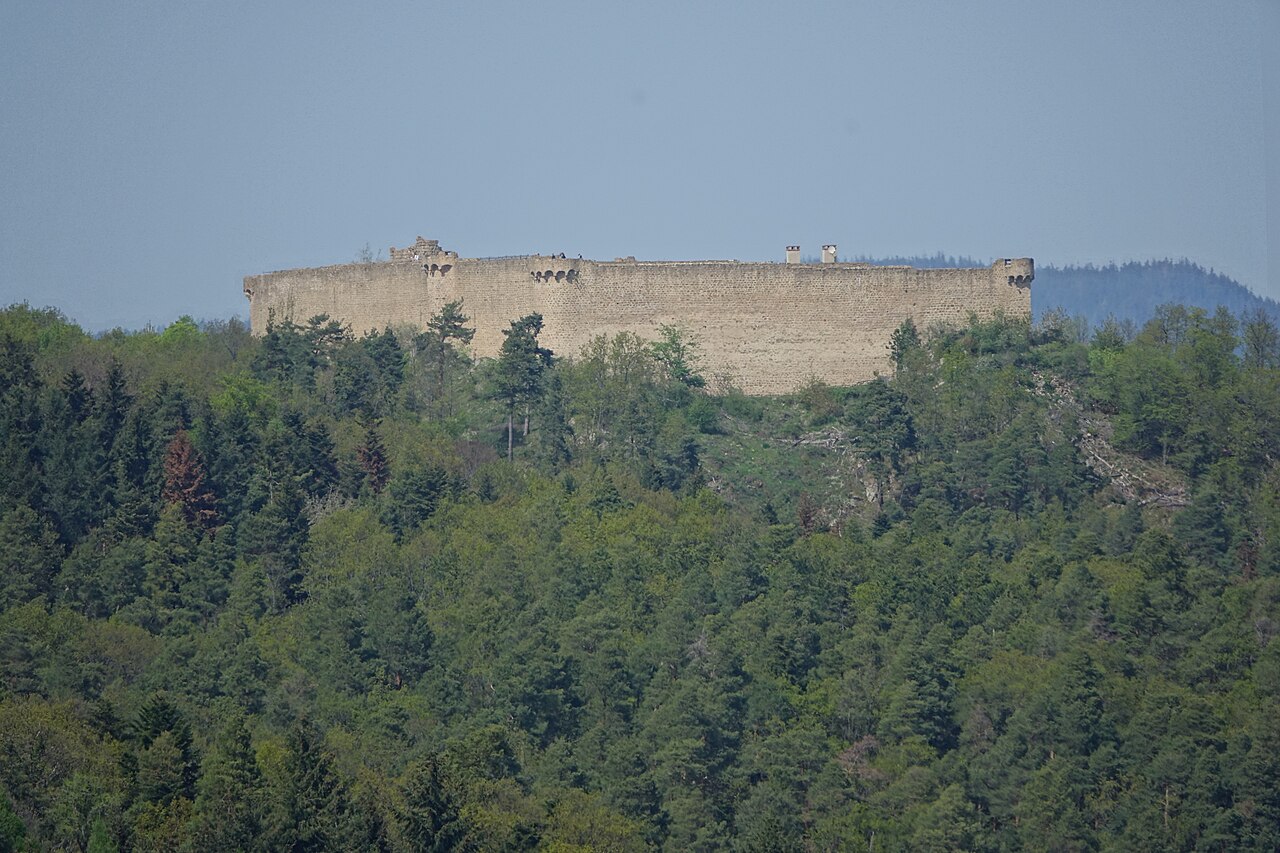
Hohlandsbourg Castle, also known locally as Château du Hohlandsbourg, Haut-Landsbourg, or Burg Hohlandsberg, stands prominently south of the village of Wintzenheim in the Haut-Rhin department of France. This historic fortress is situated in the region often referred to as Southern Alsace or the Vosges, perched atop a strategic mountaintop at an elevation of approximately 644 meters. The castle's location offers commanding views over the surrounding Alsace plain and the distant Vosges Mountains, making it a significant military and surveillance point during the medieval period. The castle was originally constructed in 1279 by Siegfried de Gundolsheim, the provost of the town of Colmar. This construction was undertaken under the influence of the Austrian royal Habsburg family, who sought to assert their control over the region. Almost immediately after its completion, the castle became a focal point of conflict. In 1281, Otto d'Ochsenstein, the bailiff of Alsace allied with the townspeople of Colmar, laid siege to the castle. The siege resulted in the fortress being set ablaze and destroyed, reflecting the turbulent political landscape of the time. Medieval origins and early conflicts Following its destruction, Hohlandsbourg Castle was rebuilt and gradually reinforced throughout the 14th and 15th centuries. The Count of Lupfen played a significant role in these expansions, enhancing the castle's defensive capabilities to adapt to evolving military technologies and threats. The castle's design from this period reflects typical high medieval military architecture, characterized by a large rectangular enclosure and robust defensive towers. 16th-century enhancements and strategic importance In the 16th century, the castle came under the ownership of Lazarus von Schwendi, a notable war chief and counselor to the Habsburgs. Von Schwendi is historically significant not only for his military role but also for cultural contributions, such as the introduction of Tokay vines from Hungary to the Alsace region. Under his stewardship, Hohlandsbourg Castle underwent further fortifications, including the addition of watchtowers and a triangular bastion protecting the main entrance. These enhancements were designed to withstand the increasing use of artillery and gunpowder in warfare, marking the castle's transition into a more modern fortress. Role during the thirty years' war and decline The castle's strategic position continued to make it a valuable military asset during the Thirty Years' War (1618–1648). In 1633, after the people of Colmar had freed themselves from Habsburg control, they seized the castle, which was then garrisoned by Swedish troops allied with the Habsburgs. Fearing its recapture by Austrian forces, the local population removed the castle's cannons to neutralize its military threat. Subsequently, under orders from Cardinal Richelieu, a small French force was stationed there to secure the area. However, when intelligence indicated that a powerful Austrian army was advancing to retake the fortress, the French forces deliberately rendered the castle unusable by blowing up the keep and setting fire to the structure in 1637. This decisive act marked the end of the castle's active military use and initiated its long period of decline into ruin. Architectural features and layout Hohlandsbourg Castle exemplifies the typical garrison castle design of its era, with barracks and ancillary industrial buildings arranged around a large central courtyard. The castle's perimeter is defined by a substantial rectangular enclosure measuring approximately 100 by 70 meters, originally constructed in the 13th century. This enclosure was later fortified with watchtowers added in the 16th century, enhancing surveillance and defense capabilities. The principal entrance to the castle is notably fortified by a triangular bastion from the same period, featuring a door equipped with a drawbridge. This entrance design reflects the military architectural innovations of the Renaissance period, aimed at countering artillery assaults and improving defensive resilience. Interior and visitor experience Today, the interior of Hohlandsbourg Castle may feel somewhat sparse due to the loss of many original structures over centuries of decay. Nonetheless, it remains a captivating site for visitors, offering not only a glimpse into medieval military architecture but also one of the most magnificent panoramic views in the region. The castle's elevated position provides sweeping vistas of the Alsace plain, the Vosges Mountains, and the surrounding countryside, making it a favored destination for tourists and history enthusiasts alike. The site includes a small museum that presents the castle's history and archaeological findings, a tavern for refreshments, and a gift shop. Unlike many other castles in the Alsace region, Hohlandsbourg Castle requires an entrance fee, reflecting its status as a well-maintained heritage site. Cultural significance and the route of the five castles Hohlandsbourg Castle is part of the famed Route of the 5 Castles, a popular tourist itinerary that also includes nearby Pflixbourg Castle and the trio of Éguisheim castles. This route highlights the rich medieval heritage of the Alsace region and offers visitors a comprehensive exploration of its historic fortifications. Access to the castle by vehicle is restricted from mid-November to mid-March annually, preserving the site and surrounding environment during the winter months. This seasonal closure encourages visitors to plan their trips during the warmer months when the castle is fully accessible and the landscape is at its most vibrant. Historical ownership and legacy Throughout its history, Hohlandsbourg Castle passed through the hands of several notable families and rulers. After its initial construction by Siegfried de Gundolsheim, it came under the control of the Ensisheims before being granted as a fiefdom to the Ribeaupierres in 1410. Subsequently, it became the property of the Counts of Lupfen, who undertook significant enlargements, and later the possession of Lazarus von Schwendi in the 16th century. Each owner contributed to the castle's evolution, reflecting the changing political and military landscape of Alsace over several centuries. Today, the castle stands as a well-preserved ruin, a testament to the region's turbulent history and architectural heritage. Its combination of high medieval origins, Renaissance fortifications, and dramatic history during the Thirty Years' War make it an invaluable cultural landmark in Alsace.

High Medieval (11th–13th c.)
Details