Neuerburg Castle
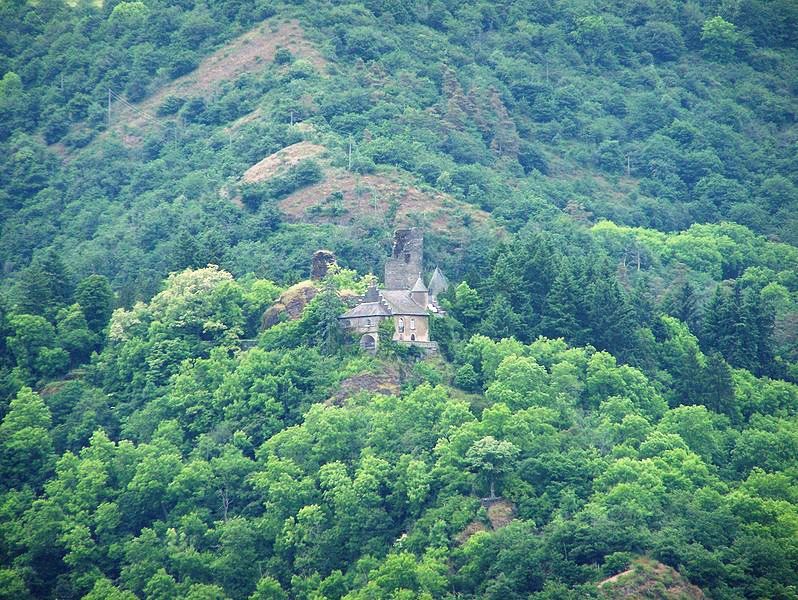
Neuerburg castle is a prominent hill castle situated in the western Eifel mountains, perched strategically above the town of Neuerburg in the Enzbach valley. Its origins trace back to the 12th century, with the earliest documented mention in 1132 when Theoderic of Neuerburg witnessed a deed of gift. However, the castle's foundation likely predates this record, as by 1270 it was recognized as an old fief under the Count of Vianden, who held it from the Count of Luxemburg. This early history places Neuerburg among the significant medieval fortifications of the region.
The castle's importance is underscored by the granting of town rights to Neuerburg in 1332, the same year that Frederick III, its last lord from the original line, died. Over the subsequent centuries, Neuerburg changed hands multiple times, reflecting the turbulent political landscape of the region. Between 1513 and 1540, Dietrich IV, Count of Manderscheid-Blankenheim, undertook substantial expansions that transformed the castle into a more formidable fortress. These modifications included the construction of bastions to accommodate artillery, a relatively advanced military feature for a castle of such antiquity.
Architectural evolution and fortifications
Neuerburg's architectural development illustrates the transition from a medieval castle to an artillery fortress. The castle's walls were thickened significantly, reaching up to 5.5 meters, to withstand cannon fire. Notably, the southwest bastions were designed as traditional round bastions, while the northern bastions adopted a polygonal shape, reflecting evolving military engineering techniques in the early 16th century. These bastions were part of the extensive fortification upgrades that made Neuerburg a stronghold capable of resisting the artillery sieges common in the Renaissance and early modern periods.
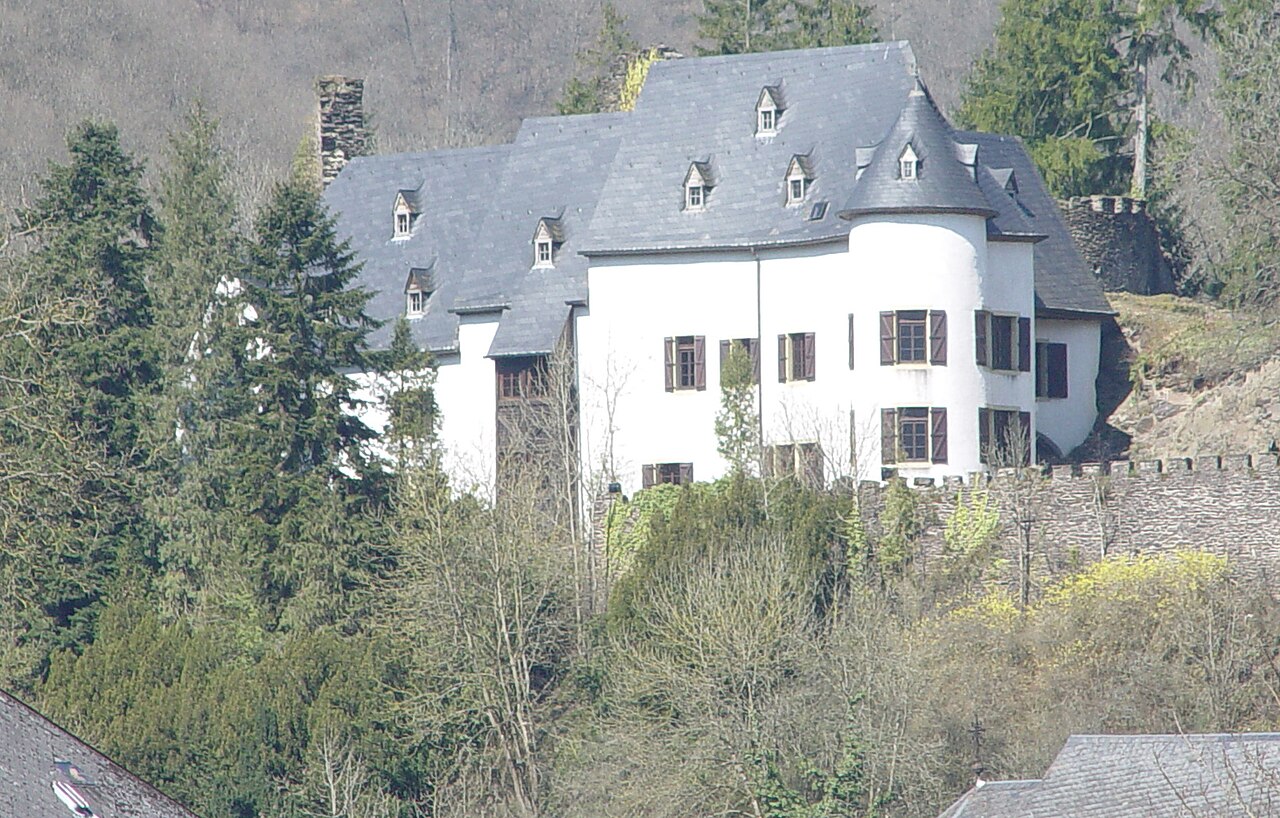
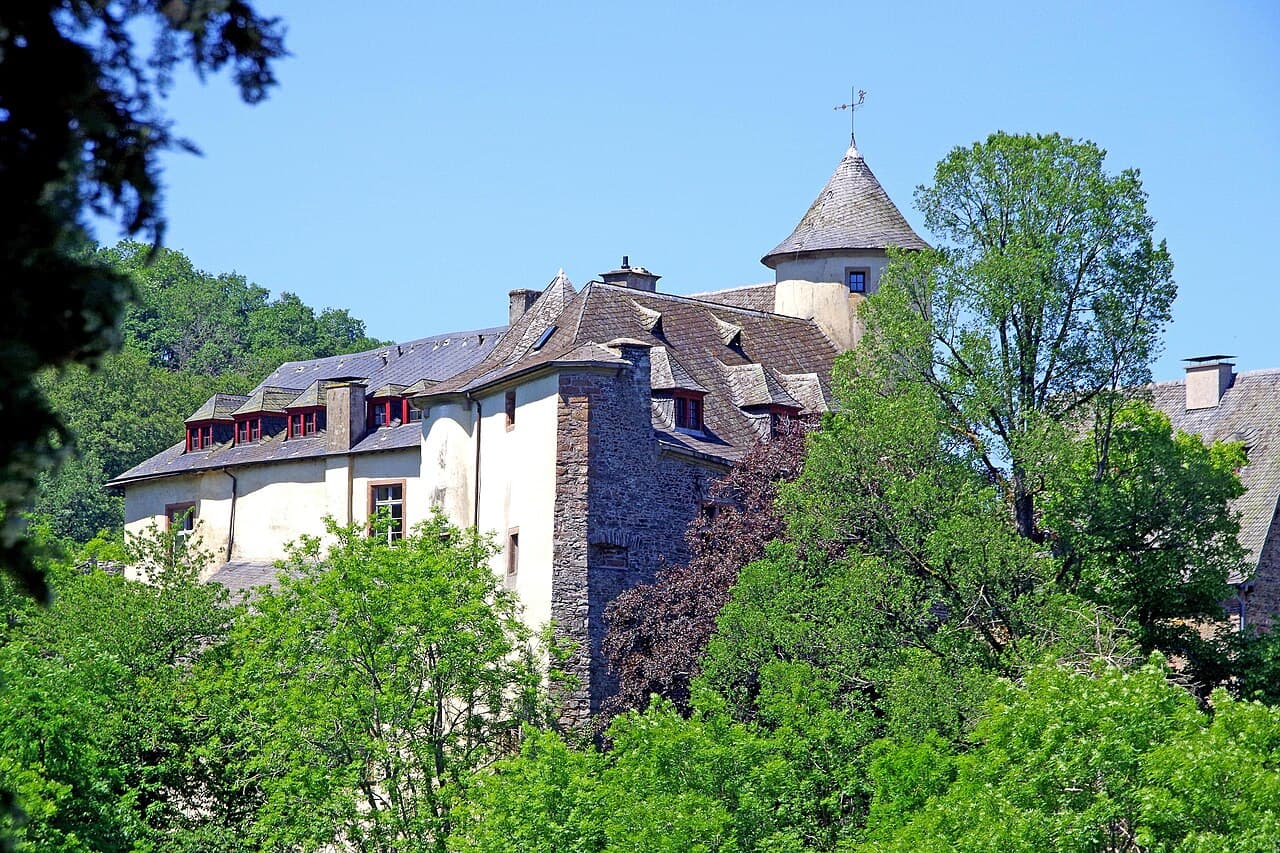
Alongside these military enhancements, a residential wing was added, indicating that Neuerburg continued to serve as a noble residence despite its defensive focus. The castle's layout includes an inner courtyard and a chapel, both of which remain accessible to visitors today. The castle's complex structure exemplifies the blend of residential comfort and military necessity characteristic of late medieval and Renaissance fortifications.
Historical significance and military role
Neuerburg played a notable role during several major conflicts, particularly the Thirty Years' War (1618-1648). At the war's outset, the castle was repaired, stocked with munitions, and garrisoned to defend against incursions by Swedish, Dutch, Irish, Polish, and French forces. Despite the garrison's problematic behavior, the castle successfully prevented the pillaging of the surrounding area, underscoring its strategic and protective importance.
The castle's military relevance continued through the War of the Palatine Succession and the Franco-Dutch War, during which it underwent further fortifications and also faced attacks. In 1692, French forces destroyed key fortifications by blowing up parts of the castle. Although some rebuilding occurred in 1701, Neuerburg never regained its former military prominence.
The final decline of Neuerburg as a fortress came during the Coalition Wars at the end of the 18th century, when French troops seized the castle and auctioned it off to raise funds. After a devastating fire in 1818, the castle's stones were sold and repurposed, leading to significant ruin. The property then passed into municipal hands and served various civic functions including an almshouse, archive, and jail until the early 20th century.
Later history and restoration
In 1926, the castle was acquired under a hereditary lease by the Bund Neudeutschland, a Catholic youth organization, which initiated partial restoration works. These renovations included the creation of a mezzanine level between the ground and first floors, which often served as a hiding place or refuge accessible through hidden entrances. This feature reflects the castle's adaptation to new uses beyond military defense.
Today, Neuerburg functions as a Jugendburg and youth hostel, managed by the Krump family under the stewardship of Bund Neudeutschland. The castle grounds, including the inner courtyard, chapel, and ruins, are open to the public, offering visitors a glimpse into its layered history and architecture.
Earlier history and medieval context
Historical records attribute the construction of Neuerburg around 1170 to Ludwig II of Thuringia, placing it within the context of Hohenstaufen castle-building traditions. It served as a prototype for such castles, combining military and administrative functions. By 1218, a noble ministerialis family had adopted the castle's name, and Countess Mechthild von Sayn, a notable figure, occasionally resided there following her husband's death.
In 1250, the castle was transferred to the Archbishopric of Cologne, marking its integration into ecclesiastical territorial administration. The castle was part of the Hunschaft of Breitscheid and included residential buildings for officials such as the forester and castle warden. The administrative district named after Neuerburg was established by 1290 and persisted with consistent boundaries into modern times.
Damage and reconstruction in the 20th century
Neuerburg suffered significant damage during World War II when American troops shelled the ruins in 1945, resulting in about 60 grenade hits. The main castle's battlements were partially destroyed, and the keep and its parapet sustained heavy damage. The east and south walls were largely leveled.
Post-war reconstruction efforts began in 1946, focusing on making the keep habitable again. These efforts reflect the ongoing commitment to preserving Neuerburg as a historical monument and functional youth center.
Frequently asked questions (FAQ)
- When was Neuerburg castle originally built?
- Neuerburg castle was originally constructed in the 12th century, with the first definite record dating to 1132.
- What architectural styles are represented in Neuerburg castle?
- Neuerburg castle features a mix of architectural styles, including medieval fortifications and Renaissance-era bastion enhancements.
- Is Neuerburg castle open to the public for visits?
- Yes, the inner courtyard, castle chapel, and ruins of Neuerburg castle are freely accessible to the public daily.
- What was Neuerburg castle's role during the Thirty Years' War?
- During the Thirty Years' War, Neuerburg was repaired, stocked with munitions, and garrisoned to defend against multiple invading forces.
- Who manages Neuerburg castle today?
- The castle is managed by the Bund Neudeutschland as a Jugendburg and youth hostel, with the Krump family overseeing operations.
- Are there any hidden or unique architectural features in Neuerburg castle?
- Yes, a mezzanine level created during 20th-century restorations serves as a hiding place accessible through secret entrances.
- What happened to Neuerburg castle during World War II?
- The castle was shelled by American troops in 1945, causing significant damage to the battlements, keep, and walls.
Photo gallery

Information
Opening hours
Open daily, grounds freely accessible
Ticket prices
Free
Current owner
Bund Neudeutschland
Loading map...
Visitor reviews
No reviews yet. Been here? Write the first review and help other travelers!
Write the first reviewVisited this castle? Share your experience
Your review helps other travelers and adds first-hand knowledge to our encyclopedia.