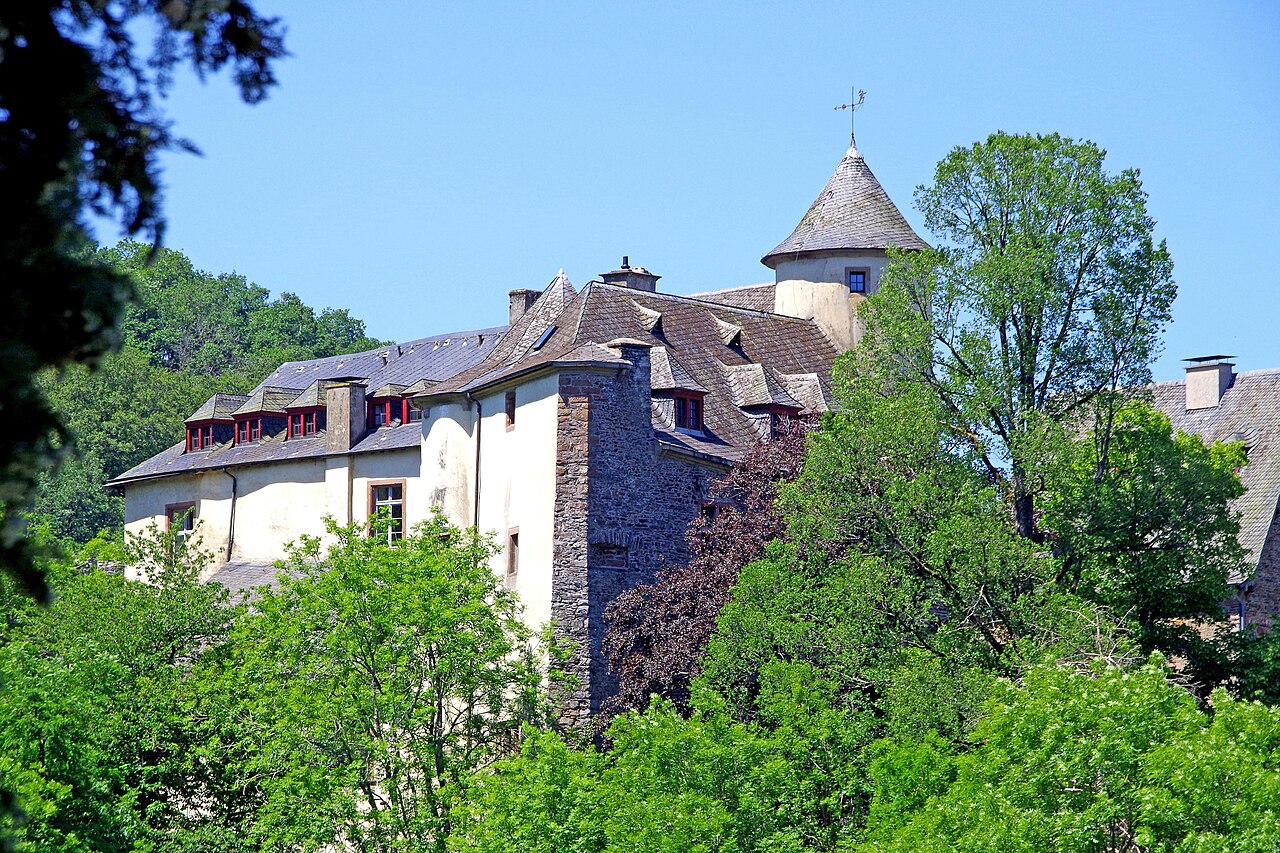
Hamm Castle
Hamm Castle, locally known as Schloss Hamm, is a striking example of a late medieval fortress nestled in the scenic Rhineland-Palatinate region of Germany. Located northwest of the city of Bitburg, the castle majestically crowns a large ridge with the Prüm stream encircling its base, providing a natural defensive advantage that was typical of medieval castle siting. This 14th-century castle stands as the largest of the castles in the Eifel region that remain privately occupied, blending historical authenticity with modern-day use.
The origins and historical significance of Hamm Castle
The earliest known mention of Hamm Castle dates back to 1052, when it was a feudal stronghold owned by the Counts of Vianden. These counts were closely related to the castle's original inhabitants, the Lords of Hamm, who acted as protectors of the Abbey of Prüm. This ecclesiastical connection highlights the castle's early role in regional power dynamics, both secular and religious.
Throughout its history, the castle passed through the hands of several notable noble families, including the Lords of Clervaux from Luxembourg and Belgium, the Counts of Tornaco and Renesse, and the Counts of Lannoy. Since 1909, the castle has been owned by the Count of Westerholt and Gysenberg, who continue to reside there, maintaining the castle's legacy as a living heritage site.
Architectural features and defensive design
Hamm Castle is characterized by its horse-shoe shaped keep and a main building flanked by two defensive towers, all dating from the 14th century. This layout reflects typical late medieval military architecture, designed to maximize protection and control over the surrounding landscape. The castle's position on a ridge with the Prüm stream forming a natural moat enhanced its defensibility.
The gate building, constructed in the 16th century, adds a Renaissance layer to the castle's architecture, illustrating its evolution over time. The castle walls were restored and crenelated between 1885 and 1896, reviving the medieval battlements that had likely deteriorated over the centuries.
Restoration and preservation efforts
The castle suffered significant damage in 1945 when the German SS set fire to it during the final stages of World War II. This event caused severe destruction to the structure. However, the castle was carefully rebuilt in the 1960s, with a final restoration completed in 1998 to preserve its historical integrity and adapt it for contemporary use.
Current use and cultural significance
Today, Hamm Castle remains a private residence while also serving as a venue for various outdoor activities and holiday apartment rentals. The castle is accessible to visitors, although access may be limited at times due to private events or residence use.
The castle's large courtyard and Knights Hall are popular spaces for hosting special occasions such as weddings—both civil and religious ceremonies take place here, with a charming Baroque chapel on site. The castle also hosts birthday celebrations, anniversaries, and champagne receptions, making it a vibrant cultural hub that connects its medieval heritage with modern social functions.
Architectural and historical context in the Eifel region
As the largest privately occupied castle in the Eifel, Hamm Castle stands out for its well-preserved late medieval architecture and continuous habitation. Its combination of medieval defensive structures and later additions provides valuable insight into the region's architectural evolution from the Middle Ages through the Renaissance and into the modern era.
The castle's strategic location above the Prüm stream and on a ridge exemplifies classic medieval military planning, while the survival of key features like the keep, defensive towers, and gatehouse offers a tangible connection to the feudal past of the Rhineland-Palatinate.
Significance for heritage and tourism
Hamm Castle contributes to the cultural heritage of the Rhineland-Palatinate by preserving architectural styles and noble lineage histories spanning nearly a millennium. Its use as a venue for public and private events enhances local tourism, inviting visitors to experience a living castle that bridges history and contemporary life.
Frequently asked questions (FAQ)
- What are the opening hours of Hamm Castle?
- Hamm Castle is open to visitors from Tuesday to Sunday, from 10 AM to 6 PM. Please note that the castle is closed on Mondays. It’s recommended to check the official website for any seasonal changes in operating hours.
- How do I get to Hamm Castle?
- Hamm Castle is easily accessible by public transportation. Visitors can take a train to Hamm Central Station and then a short bus ride or a 20-minute walk to reach the castle.
- What is the historical significance of Hamm Castle?
- Hamm Castle dates back to the late 13th century and has played a vital role in the region's history. It served as a noble residence and has witnessed numerous historical events, making it an important cultural landmark in Germany.
- Can I take guided tours of Hamm Castle?
- Yes, guided tours are available for visitors who want to learn more about the castle's history and architecture. These tours provide in-depth information and are led by knowledgeable guides, enhancing the overall experience.
- Is Hamm Castle accessible for visitors with disabilities?
- Hamm Castle strives to be accessible to all visitors. There are facilities in place to accommodate guests with mobility challenges, including ramps and accessible restrooms, although some areas may have limited access due to the castle's historical structure.
- When is the best time to visit Hamm Castle?
- The best time to visit Hamm Castle is during the spring and early autumn months when the weather is mild and pleasant. Additionally, this time often features fewer crowds, allowing for a more enjoyable experience exploring the grounds.
- What are the ticket prices for Hamm Castle?
- Ticket prices for Hamm Castle are very reasonable, with adult tickets priced at €8 and reduced rates for children and seniors. Group discounts are also available, making it an affordable option for families and tour groups.
- What nearby attractions can I visit while at Hamm Castle?
- While visiting Hamm Castle, you can also explore the beautiful Hamm Botanical Garden, located just a short distance away. Additionally, the city of Hamm offers various cultural and recreational activities, including museums and parks for a well-rounded day trip.
Loading map...
Visitor reviews
No reviews yet. Been here? Write the first review and help other travelers!
Write the first reviewVisited this castle? Share your experience
Your review helps other travelers and adds first-hand knowledge to our encyclopedia.