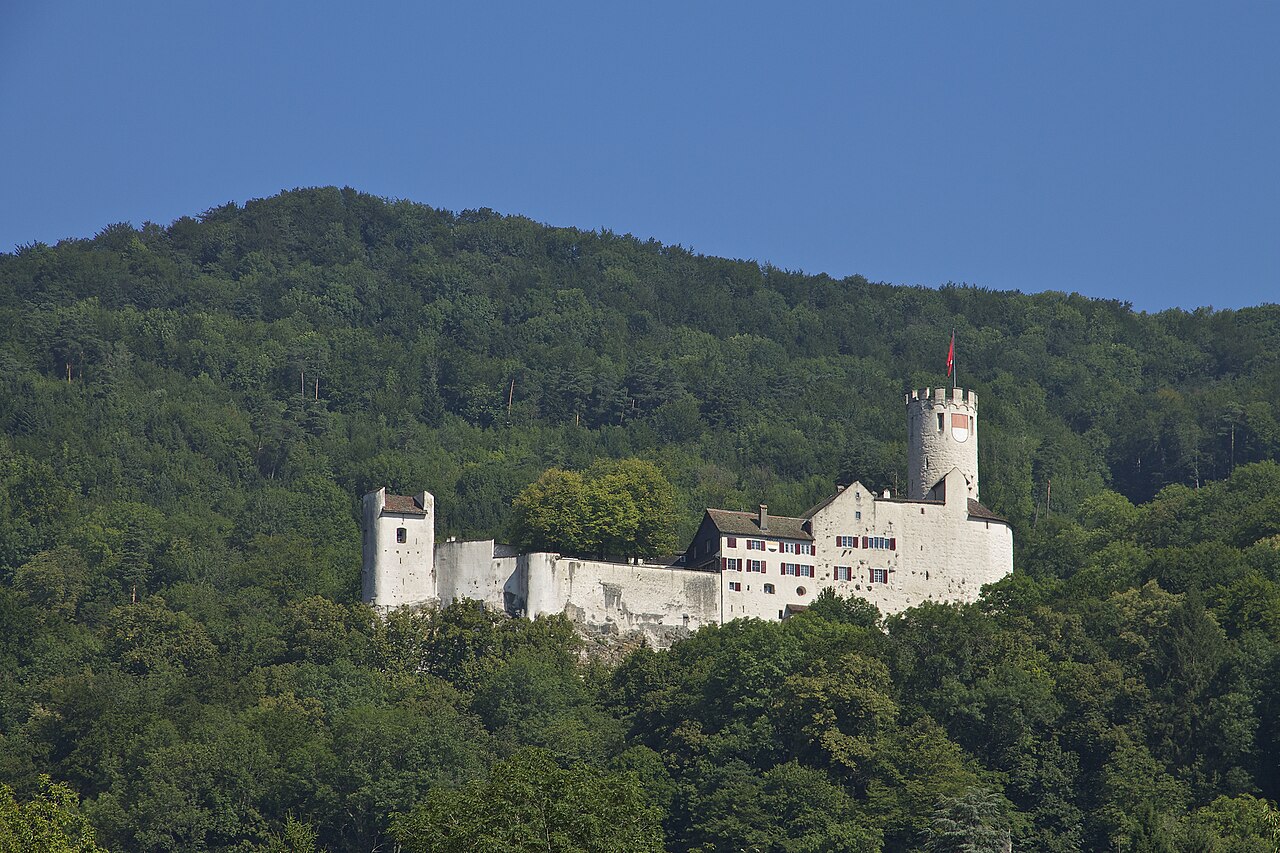
Neu Bechburg Castle
Neu Bechburg Castle, located in Oensingen, Switzerland, is a remarkable example of a high medieval hill castle that has witnessed centuries of historical evolution. Originally constructed around 1250 by the Barons of Bechburg, this fortress served as a noble stronghold reflecting the feudal power structures of the 13th century. Its strategic position on a narrow rocky ridge near the Roggen River provided natural defensive advantages, which were further enhanced by robust fortifications on all sides.
Historical significance and ownership transitions
The castle's history is marked by a succession of prominent owners that illustrate the shifting political landscape of medieval Switzerland. After its initial establishment by the Bechburg family, the castle passed through the hands of influential noble houses such as the Counts of Froburg, Nidau, Thierstein, Kyburg, and Buchegg. These transitions were often tied to broader regional power struggles and alliances.
A notable change occurred in 1415 when the castle and its lordship were jointly sold to the cities of Bern and Solothurn. By 1463, Solothurn had acquired full control, transforming Neu Bechburg into a bailiwick residence—a local administrative center that underscored its continued importance in governance.
In 1635, the castle briefly gained religious prominence as the temporary seat of the Bishop of Basel. However, the military and administrative functions of Neu Bechburg declined sharply following the French invasion of 1798, which led to the dissolution of feudal structures in the region.
Subsequently, the castle underwent a series of functional transformations. It served as a poorhouse, private residence, and inn, reflecting its adaptation to civilian uses. Parts of the structure were even quarried for stone, which contributed to its partial deterioration.
The property was purchased in 1835 by Johannes Riggenbach of Basel. His son, Friedrich Riggenbach, initiated restoration efforts around 1880, aiming to preserve and revitalize the castle. This period of restoration redefined Neu Bechburg's identity, emphasizing its palace-like qualities rather than purely military functions.
In 1975, ownership passed to Walter Pfluger-Baumgartner of Oensingen, who established the Neu Bechburg Castle Foundation to ensure ongoing preservation and care for this historic site.
Architectural features and layout
Neu Bechburg Castle is classified as a hill castle or spur castle, built on a natural rocky ridge approximately 86 meters long and 14 meters wide. This location provided commanding views and defensible terrain, essential for medieval fortifications.
The most prominent surviving element is the round donjon (keep), which stands nearly 30 meters high. Constructed from rough rubble stone, the donjon features battlements that would have served as defensive positions for guards and archers. This tower exemplifies medieval military architecture focused on durability and protection.
West of the donjon lie the remains of the Knight's Hall (Rittergaden), which was historically used for gatherings and feasts by the castle's noble occupants. Adjacent to this is the palace area (Palas) and an open terrace. The terrace was once covered by additional structures forming the western section of the castle complex, though much of this has been lost over time.
A small tower on the western edge of the terrace still stands, providing insight into the castle's original defensive perimeter and architectural complexity. The castle's fortifications include thick walls and strategically placed towers that exemplify the defensive priorities of the high medieval period.
Construction techniques and materials
The castle's construction utilized locally sourced stone, with rough rubble masonry characteristic of 13th-century building practices. The robust donjon and curtain walls were designed to withstand sieges and attacks, while the interior spaces balanced functionality with the comfort expected by nobility.
Restoration and preservation efforts
After a period of decline and partial ruin, the castle's restoration began in earnest in the late 19th century under Friedrich Riggenbach. These efforts focused on stabilizing the structure and restoring key architectural elements, transforming Neu Bechburg from a decaying fortress into a preserved heritage site.
Today, the castle remains partially preserved, with significant portions restored to reflect its historical appearance. The ongoing stewardship by the Neu Bechburg Castle Foundation ensures that this cultural landmark is maintained for educational and touristic purposes.
Cultural and touristic importance
Neu Bechburg Castle is an important cultural asset in the canton of Solothurn and the broader region of Switzerland. Its rich history, architectural features, and scenic location attract visitors interested in medieval history, architecture, and Swiss heritage.
The castle's blend of military and residential architecture offers valuable insights into the lifestyle and defensive strategies of medieval nobility. Its preservation allows for public engagement through guided tours, educational programs, and cultural events that celebrate its historical significance.
Visitors to Neu Bechburg can explore the castle's donjon, knight's hall, palace remains, and terrace, gaining a comprehensive understanding of its multifaceted past. The site’s elevated position also provides picturesque views of the surrounding landscape, enhancing its appeal as a tourist destination.
Frequently asked questions (FAQ)
- How do I get to Neu Bechburg Castle in Oensingen?
- Neu Bechburg Castle is located in Oensingen, Switzerland. Visitors can reach it by car or public transport; the nearest train station is Oensingen, from which the castle is accessible by a short taxi ride or a walk.
- What is the historical significance of Neu Bechburg Castle?
- Neu Bechburg Castle was built in the 13th century and served as a noble stronghold and administrative center. It reflects the feudal history of the region and was once the seat of the Bishop of Basel in 1635.
- Can I visit the interior of Neu Bechburg Castle?
- Yes, parts of Neu Bechburg Castle are open to the public, including the donjon and knight's hall remains. Guided tours provide insights into its medieval architecture and history.
- When is the best time to visit Neu Bechburg Castle?
- The castle is best visited during the warmer months from spring to early autumn when the weather is favorable for exploring the outdoor terraces and ruins.
- Is Neu Bechburg Castle wheelchair accessible?
- Due to its medieval hilltop location and uneven terrain, Neu Bechburg Castle has limited wheelchair accessibility. Visitors with mobility concerns should inquire in advance about available accommodations.
Information
Sources & official resources
Verify the information above using these authoritative references.
Loading map...
Visitor reviews
No reviews yet. Been here? Write the first review and help other travelers!
Write the first reviewVisited this castle? Share your experience
Your review helps other travelers and adds first-hand knowledge to our encyclopedia.