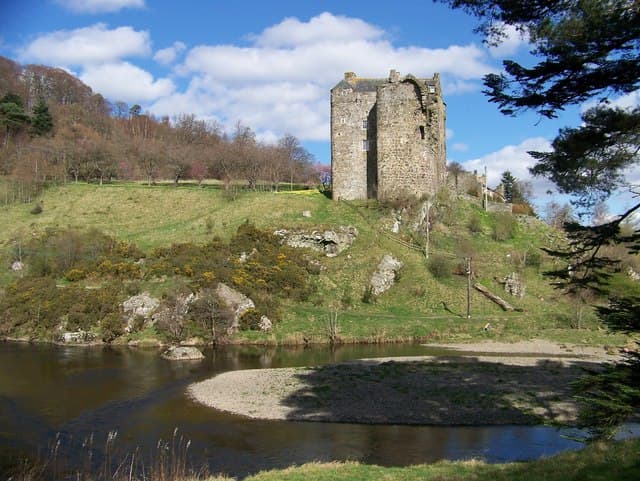
Neidpath Castle
Neidpath Castle stands as a remarkable example of a late medieval L-plan tower house perched overlooking the River Tweed near Peebles in the Scottish Borders. Its commanding position on a hill provided strategic advantage and scenic views, characteristic of hill castles designed for defense and residence. The castle’s origins trace back to the mid-13th century when an early fortification was likely established by Simon Fraser of Oliver Castle between 1263 and 1266. The existing structure, however, mainly reflects the architectural vision of Sir William de Haya, who probably constructed the present castle in the late 14th century.
The castle remained under the control of the Hay family for several centuries, serving as a significant stronghold and family seat until the 17th century. During this time, it witnessed notable historical events, including royal visits by Mary, Queen of Scots in 1563 and her son James VI in 1587. The latter’s visit is particularly remembered for his role in mediating a local dispute, underscoring the castle’s importance as a regional power center.
Architectural features and design
Neidpath Castle is distinguished by its L-shaped plan, with one arm of the L significantly shorter, creating a compact yet defensible layout. Constructed primarily from rubble masonry, the castle’s walls present a rugged texture that enhances its medieval character. The structure’s rounded corners improve its defensive capabilities by deflecting projectiles and reducing blind spots.
The castle’s battlements are notable for being roofed, a feature that provided protection for sentries patrolling the walls. The sentry walk is designed as a balustraded balcony, combining functionality with an elegant architectural element. Windows are deliberately few and narrow, emphasizing security, with two retaining their original iron bar protection.
Internally, the castle features vaulted ceilings in the basement and the first-floor hall, showcasing skilled medieval masonry. The great hall is divided into two levels by a wooden floor, allowing for versatile use of space. A pit dungeon is part of the castle’s design, reflecting the medieval justice system and the castle’s role in local governance.
Gardens and external features
Surrounding the castle are the remains of a partly walled garden and a series of garden terraces laid out at intervals of approximately eight meters. These terraces, documented as early as 1581, formed a formal sloping parterre that was remodeled in the late 17th century to include a summer house and other landscape features. The avenue of yew trees planted by the 2nd Earl of Tweeddale during the 1660s remains a striking element of the castle’s grounds.
Historical significance and events
The castle’s history is deeply intertwined with Scotland’s turbulent medieval and early modern periods. After its initial establishment by the Fraser family, ownership passed to the Hay family through marriage in the early 14th century, marking the beginning of a long tenure that shaped the castle’s development.
In the mid-17th century, Neidpath Castle played a strategic role during the Wars of the Three Kingdoms. It was garrisoned in 1645 to resist Royalist forces under James Graham, 1st Marquess of Montrose. The castle endured an attack during Oliver Cromwell’s invasion of Scotland in 1650. While historical accounts differ on whether the castle surrendered peacefully or withstood the longest siege south of the River Forth, it is clear that artillery fire caused significant damage, including the destruction of a 13th-century tower and damage to the west wing.
Post-conflict renovations were undertaken in the 1660s by the 2nd Earl of Tweeddale, who added outbuildings and enhanced the landscape with the planting of yew trees. Financial difficulties later led to the sale of the castle in 1686 to William Douglas, 1st Duke of Queensberry. The castle remained in the Douglas family, passing to the 1st Earl of March and later being leased to notable tenants such as historian Adam Ferguson.
By the late 18th century, neglect caused parts of the castle to collapse, notably the upper storeys of the wing by 1790. Literary figures like William Wordsworth and Walter Scott visited in the early 19th century, documenting the castle’s condition and lamenting the loss of ancient trees on the grounds. Ownership eventually passed to the Earl of Wemyss, who retains the estate today, with the heir bearing the courtesy title Lord Neidpath.
Current status and cultural role
Today, Neidpath Castle is recognized as a Category A listed building, highlighting its national importance and ensuring protective measures for its conservation. It was formerly designated a Scheduled Monument, reflecting its archaeological and historical significance.
The castle functions as a private venue for weddings and special events and serves as a filming location, contributing to its cultural relevance in contemporary media. Notable productions filmed here include the 1997 movie Merlin: The Quest Begins and the 2019 television series Sam and Colby. Visitors can arrange tours by appointment, offering a rare opportunity to explore its well-preserved medieval architecture and evocative grounds.
Visitor experience and exhibitions
Inside the castle, visitors encounter a blend of medieval architecture and curated exhibitions showcasing artifacts discovered in the surrounding region. These displays provide insight into the castle’s historical context and the daily lives of its former inhabitants. The pit dungeon, vaulted halls, and original iron-barred windows contribute to an immersive experience of Scotland’s feudal past.
The castle’s gardens and terraces, though partially ruined, evoke the grandeur of its landscaped past, with the surviving yew avenue offering a glimpse into 17th-century aristocratic tastes in horticulture and estate design.
Frequently asked questions (FAQ)
- How do I get to Neidpath Castle?
- Neidpath Castle is located just a short distance from Peebles, Scotland, easily accessible by car or public transport. If you are driving, there is parking available nearby. For those using public transport, local buses operate regularly from Edinburgh to Peebles.
- What are the opening hours for Neidpath Castle?
- Neidpath Castle is typically open to visitors from March to October, with specific hours varying by season. During the peak summer months, the castle often opens from 10 AM to 5 PM. It's advisable to check the official website for any seasonal changes or special events.
- Can I take guided tours of Neidpath Castle?
- Yes, guided tours are available at Neidpath Castle, providing visitors with in-depth knowledge about its history and architecture. These tours are led by knowledgeable guides who share fascinating stories about the castle's past and its significance in Scottish history. Visitors are encouraged to book in advance, especially during peak tourist season.
- What is the historical significance of Neidpath Castle?
- Neidpath Castle dates back to the 14th century and is a remarkable example of Scottish medieval architecture. It played a pivotal role in the region's history, having been involved in various conflicts and serving as a residence for notable Scottish families. The castle's well-preserved structure offers a glimpse into the past and illustrates the architectural evolution over centuries.
- Is it possible to host events at Neidpath Castle?
- Yes, Neidpath Castle can be rented for private events such as weddings, corporate gatherings, and special occasions. The stunning backdrop of the castle and its grounds makes it a unique venue. Interested parties should contact the castle management for availability and booking details.
- When is the best time to visit Neidpath Castle?
- The best time to visit Neidpath Castle is during the spring and summer months, from April to September, when the weather is generally more favorable. This period also coincides with the castle's opening season and various events that take place throughout the summer. Visiting during these months allows you to enjoy the beautiful surrounding scenery and gardens.
- What are the ticket prices for Neidpath Castle?
- Ticket prices for Neidpath Castle vary, with discounts often available for children, students, and seniors. As of the latest information, adult tickets are typically around £8, with family packages available for a better deal. It's recommended to check the official website for the most current pricing and any special offers.
- Are there any nearby attractions to visit?
- Yes, the Peebles area is rich in history and natural beauty, making it a great destination for visitors. Nearby attractions include the Tweed Valley Forest Park, where you can enjoy hiking and cycling, and the charming town of Peebles itself, known for its shops, cafes, and scenic riverside walks. A visit to Neidpath Castle can easily be combined with exploring these local highlights.
- Is Neidpath Castle accessible for visitors with disabilities?
- Neidpath Castle strives to be accessible to all visitors, although some areas may pose challenges due to the castle's historic architecture. The ground level is accessible, and staff can assist with navigating the site as needed. It's advisable to contact the castle in advance to discuss specific accessibility requirements and arrangements.
Photo gallery

Information
Website
Visit websiteSources & official resources
Verify the information above using these authoritative references.
Loading map...
Visitor reviews
No reviews yet. Been here? Write the first review and help other travelers!
Write the first reviewVisited this castle? Share your experience
Your review helps other travelers and adds first-hand knowledge to our encyclopedia.


