Neath Castle
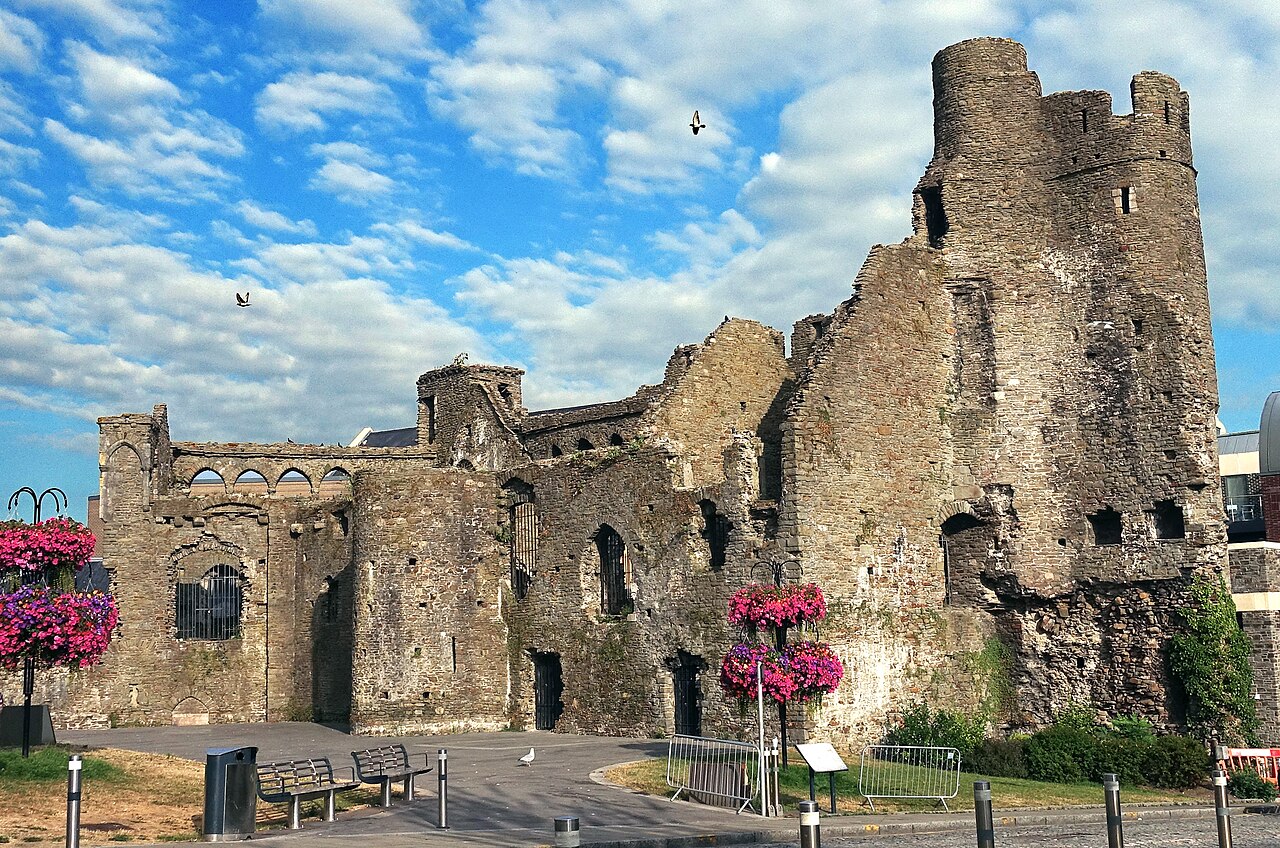
Neath Castle stands as a significant example of Norman military architecture in Wales, located in the town centre of Neath. Its origins date back to the early 12th century, with construction begun by Robert, Earl of Gloucester, the Lord of Glamorgan, between 1114 and 1130. The castle is closely linked to Richard I de Grenville, also known as Granville or Glanville, Lord of Neath, who is sometimes credited with founding the original fortification. The Welsh name for Neath, Castell-nedd, derives directly from the castle, underscoring its historical importance to the town and region.
The earliest known fortification was a timber motte-and-bailey castle situated west of the River Neath near the Roman fort of Nidum. This wooden structure, typical of early Norman defensive design, was likely abandoned around 1130 when Richard de Grenville established Neath Abbey nearby. The abbey may have reused materials from the original timber castle, marking a transition in the site’s use from military to religious purposes.
Following the abandonment of the first castle, a second, more durable stone castle was constructed on the opposite side of the river, in what is now Neath town centre. This castle was first documented in 1183 and is attributed to Gilbert de Clare, 5th Earl of Gloucester. It was built as a Norman stronghold to secure the region and served as a focal point during the turbulent conflicts between Norman lords and Welsh princes throughout the 13th and 14th centuries.
Medieval military history and conflicts
Neath Castle’s strategic location made it a target during the ongoing Welsh resistance against Norman rule. In 1231, it was captured by Llywelyn the Great, the powerful Welsh prince, with assistance from the local Welsh lord Morgan Gam. This event highlighted the castle’s vulnerability despite its fortifications and the strength of Welsh opposition in the region.
Throughout the 14th century, Neath Castle experienced further military action and political upheaval. In 1321, during a rebellion against King Edward II, the castle was deliberately destroyed by Humphrey de Bohun, 4th Earl of Hereford. The castle’s owner at the time, Hugh Despenser the Younger, who had acquired the lordship through marriage to Eleanor de Clare, undertook rebuilding efforts. These restorations may have included the addition of a gatehouse, enhancing its defensive capabilities.
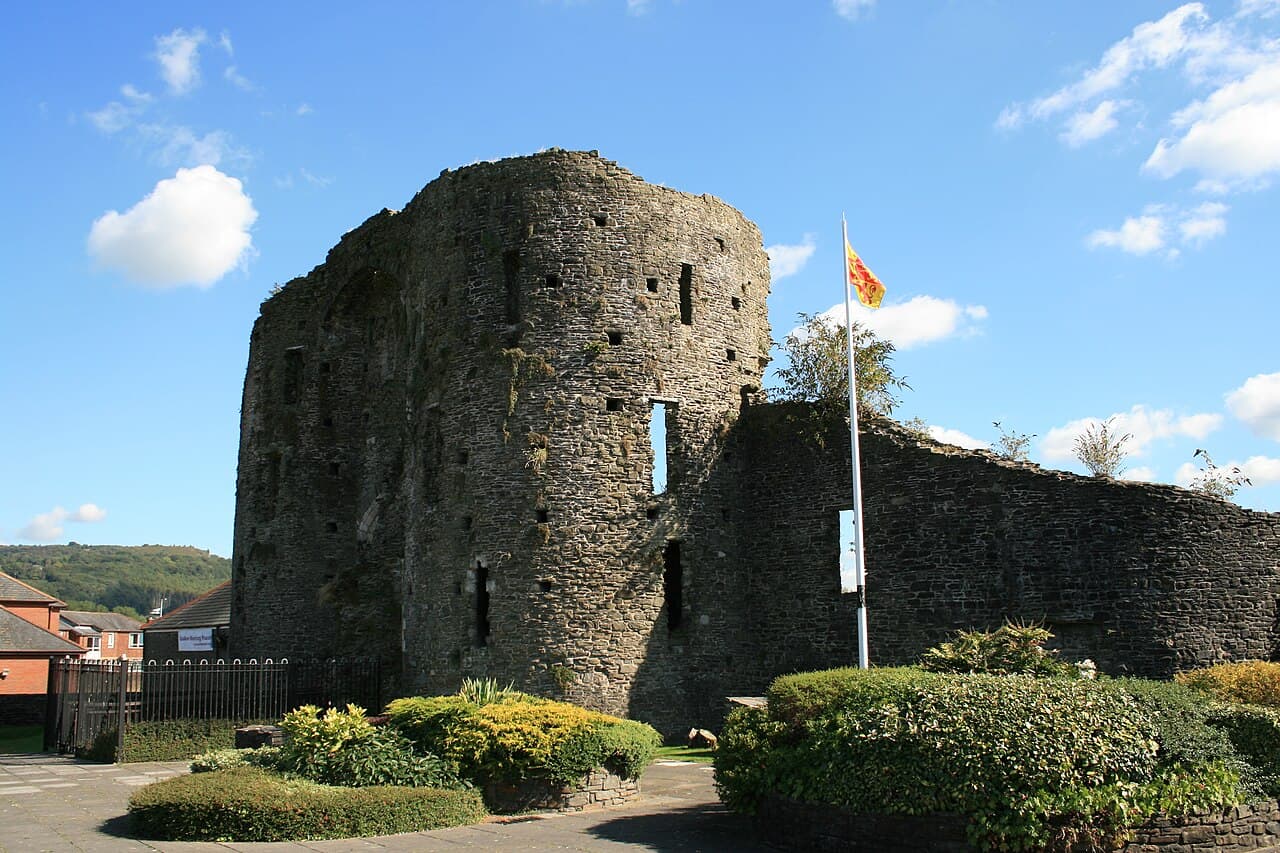
By 1377, the castle underwent significant reconstruction, resulting in the erection of the imposing gatehouse that remains the most prominent feature today. This phase of rebuilding was likely overseen under the authority of local constables such as Roger Kyngot. The gatehouse, constructed from local dark sandstone, is flanked by semicircular towers and originally featured a drawbridge crossing a defensive ditch. The entrance passage was equipped with murder holes to repel attackers.
Architectural features and layout
The castle’s layout reflects typical high medieval defensive architecture adapted to the local terrain. The site sits approximately eight meters above sea level in a valley shaped by the River Neath. The castle was surrounded by a D-shaped curtain wall enclosing the inner ward, parts of which survive today as low stone remains. A second D-shaped mural tower lies northeast of the gatehouse, integrated into the curtain wall.
Within the castle, several buildings once lined the inner side of the curtain wall, limiting open courtyard space. Only their foundations remain, but they indicate a compact arrangement of domestic and service structures typical of medieval castles. The right-hand tower of the gatehouse connects directly to the remnants of the town wall, which now survive only as low bases.
East of the gatehouse, surviving 12th-century earthworks mark the site of the original ringwork fortifications from the earliest timber phase. These earthworks provide valuable insight into the castle’s evolution from a wooden motte-and-bailey to a stone fortress.
Later history and preservation
Neath Castle remained in active use through the 17th century, serving both military and administrative functions. The office of Constable of Neath Castle persisted into the 18th century, with notable holders such as Sir Humphrey Mackworth from 1703. Eventually, the constableship merged with the mayoralty of Neath, reflecting the castle’s shift from a military bastion to a civic symbol.
From the 18th century onward, the castle grounds transitioned into a recreational area for the town’s residents. Archaeological excavations and conservation efforts began in 1962, aiming to protect the ruins and promote public awareness of the site’s heritage. Today, Neath Castle is recognized as a Grade II* listed building and a Scheduled Monument, ensuring its preservation for future generations.
The surviving ruins, particularly the great gatehouse, offer a tangible link to Neath’s medieval past and the complex history of Norman and Welsh interactions in the region. The castle’s layered construction phases and architectural features provide valuable study opportunities for historians and archaeologists interested in medieval military architecture.
Frequently asked questions (FAQ)
- When was Neath Castle originally built?
- Neath Castle was originally constructed in the early 12th century, between 1114 and 1130, by Norman lords including Robert, Earl of Gloucester.
- What remains of Neath Castle can be seen today?
- Visitors can see the ruins of the castle’s curtain walls, earthworks, and the impressive 14th-century gatehouse, which is the main surviving structure.
- Is Neath Castle accessible to the public?
- Yes, Neath Castle is located in the town centre and the ruins are accessible to the public as a recreational area.
- What historical events affected Neath Castle?
- Neath Castle was captured by Llywelyn the Great in 1231, destroyed during the 1321 rebellion against King Edward II, and rebuilt several times throughout the medieval period.
- Why is the gatehouse of Neath Castle significant?
- The gatehouse, built around 1377, is a key defensive feature with semicircular towers, a drawbridge, and murder holes, showcasing medieval military architecture.
Photo gallery

Information
Website
Visit websiteSources & official resources
Verify the information above using these authoritative references.
Loading map...
Visitor reviews
No reviews yet. Been here? Write the first review and help other travelers!
Write the first reviewVisited this castle? Share your experience
Your review helps other travelers and adds first-hand knowledge to our encyclopedia.