Naraío Castle
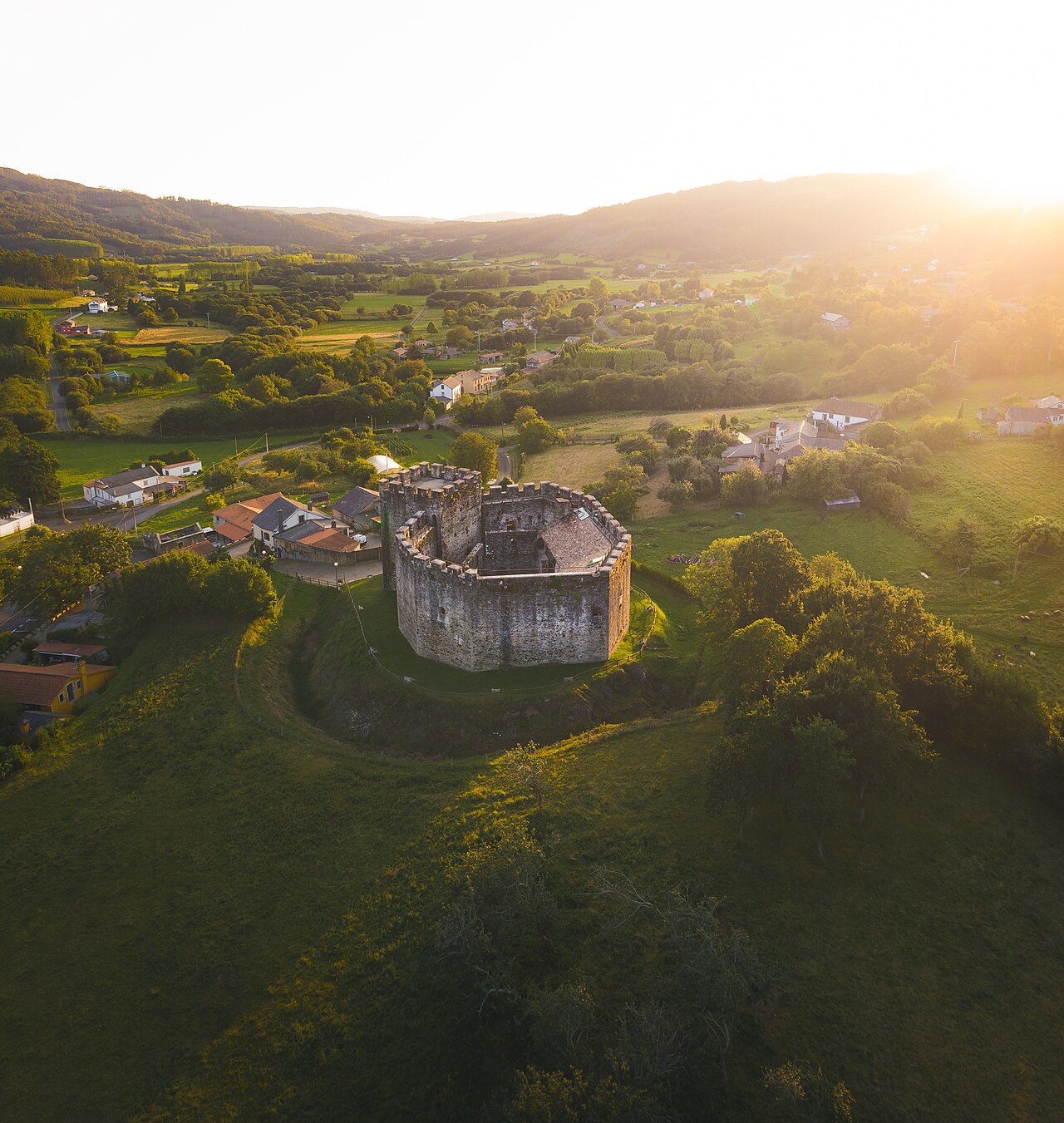
Naraío Castle stands as a remarkable example of a 14th-century medieval hill castle located in the municipality of San Sadurniño, in the region of Galicia, Spain. Built on a solid rock foundation within the spectacular protected area known as Xuvia-Castro, this fortress exemplifies the strategic military architecture of the Late Medieval period. Its position overlooking the Castro River provided a commanding view of the surrounding landscape, making it an unconquerable stronghold during its time.
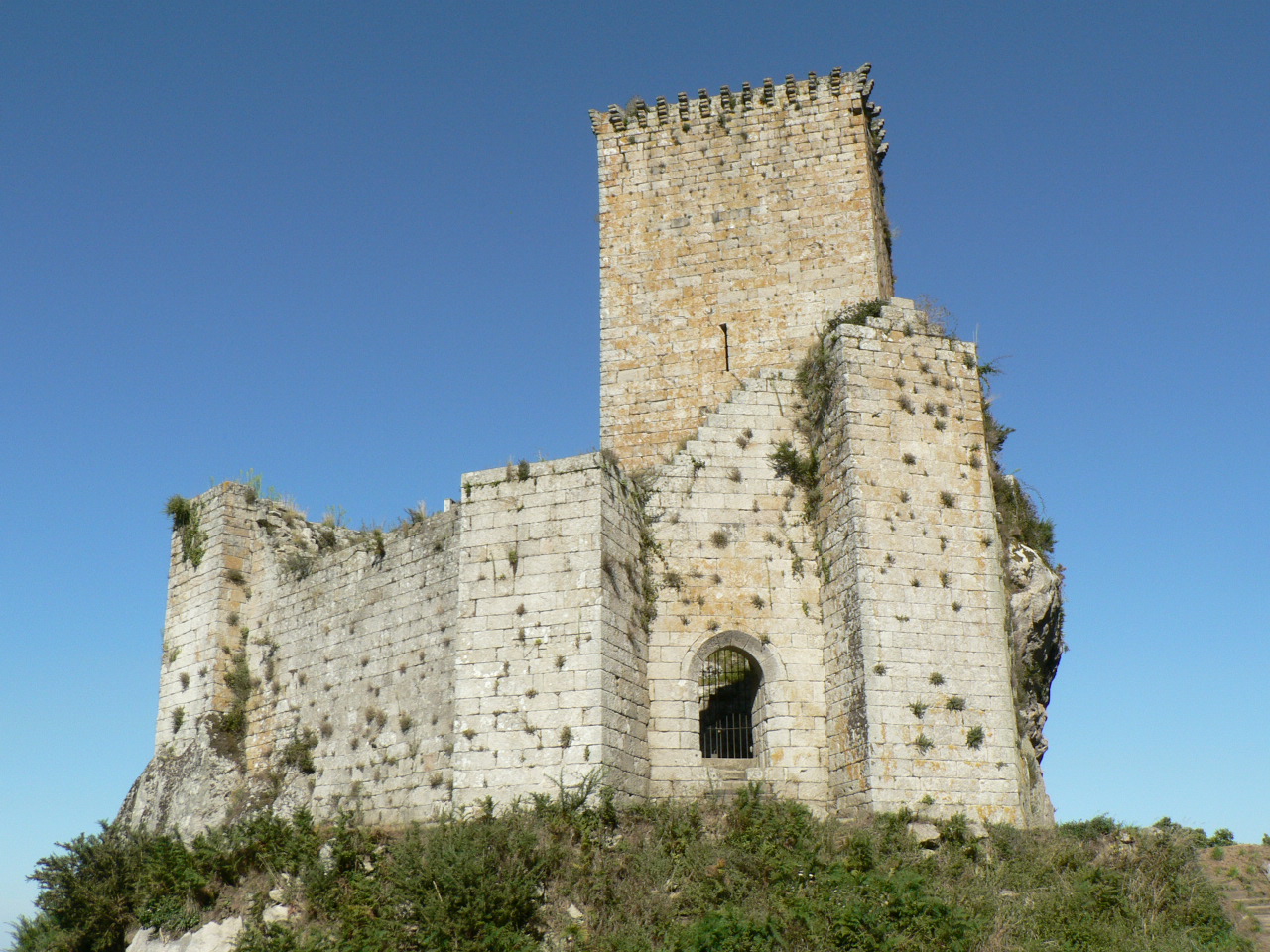
The castle’s origins trace back to an earlier fortress, as the remains visible today are believed to be the result of a reconstruction effort during the 14th century. The site’s defensive nature is underscored by its robust stone walls, towers, and buttresses, which encircle the central courtyard or patio de armas. Visitors approaching the castle encounter two fortified doors, both bearing the Andrade family coat of arms, a symbol of the noble house that controlled the castle after the mid-14th century.
Historical context and ownership
Naraío Castle played a significant role in the turbulent political landscape of medieval Galicia. Originally owned by Gonzalo Piñeiro, a nobleman loyal to King Pedro I of Castile—known as "Pedro the Cruel"—the castle became a focal point during the civil war against Henry II of Trastámara. Following Pedro I's defeat, Henry II's forces sought to consolidate power by targeting loyalist families, including the Piñeiro lineage.
The castle fell after a decisive battle at Anca, where the last defenders of the Piñeiro family were defeated. As a reward for his victory and allegiance, Henry II granted the castle and its lands to the Andrade family, a prominent noble house in Galicia. The Andrade stewardship marked a new chapter in the castle’s history, with significant architectural and defensive enhancements likely undertaken during their tenure.
By 1527, records indicate the castle had reverted to the Piñeiro family, suggesting a restitution of their ancestral rights. However, the castle’s military importance waned over the following centuries, and by the 17th century, it was largely abandoned and fell into ruin, overtaken by natural vegetation along the riverbank.
Architectural features and layout
Defensive structures and entrance
The castle’s design reflects the typical medieval defensive architecture of the Late Middle Ages. Its core is the patio de armas, an inner courtyard enclosed by thick stone walls that provided refuge and strategic advantage during sieges. Access to the castle is gained via a stone and wood staircase leading to a lintelled doorway that once accommodated a drawbridge and portcullis, defensive mechanisms designed to control and repel attackers.
Several doorways survive in varying states of preservation. Some feature rounded Romanesque arches, while others display the slightly pointed escarzano arches, a local Gothic variation. These architectural details highlight the castle’s phased construction and stylistic influences.
The tower of homage
The keep, or tower of homage, remains the most prominent feature of Naraío Castle. This imposing tower rises with four distinct floors, each covered by a vaulted ceiling, a hallmark of medieval stone construction providing both structural strength and fire resistance. The main entrance to the keep is uniquely positioned approximately nine meters above the courtyard level, a defensive design that allowed defenders to control access via removable ladders or stairs.
Additional architectural elements include a small twin window on the southern wall, divided by a slender stone mullion supporting two semicircular arches. This feature allowed light into the tower while maintaining defensive security. The presence of a latrine opening supported by corbels on the tower walls reflects the practical considerations of medieval castle life.
Archaeological significance and restoration efforts
Archaeological excavations at Naraío Castle have uncovered various remains around the tower and courtyard, shedding light on the castle’s construction phases and usage. The site’s location within the protected Xuvia-Castro natural area adds ecological and cultural value to its historical importance.
The castle was first studied in detail in the early 20th century by Andrés Avelino Comerma y Batalla, a Catalan engineer who documented its layout and surroundings. More extensive archaeological work began in 2007 under the guidance of Anxo Felpeto, an archaeologist based in Lugo. These efforts have contributed to the castle’s designation as a Bien de Interés Cultural (Asset of Cultural Interest) in 1994, ensuring legal protection and conservation support.
Currently, the castle is owned by the House of Alba, which has entrusted its care to the regional government of Galicia for preservation and public access. The ruins, though partially overgrown, remain a poignant reminder of Galicia’s medieval heritage and the region’s historic noble families.
Visitor experience and surroundings
Visitors to Naraío Castle can explore the remains via a path that includes a staircase leading up to the fortress. The vantage points from the castle offer impressive views, especially from across the river, where the full extent of the walls, towers, and buttresses can be appreciated. This perspective reveals the castle’s formidable defensive design and its integration with the natural landscape.
The castle lies approximately 12 kilometers from Moeche Castle, another significant medieval fortress in the area. A historical walking route connects the two sites, following the path of destruction wrought by the Irmandiños, a 15th-century popular revolt in Galicia that targeted feudal castles and noble estates.
While the castle today exists mainly as romantic ruins entwined with riverside vegetation, it remains an evocative destination for those interested in medieval history, architecture, and Galicia’s cultural landscape.
Frequently asked questions (FAQ)
- How do I get to Naraío Castle?
- Naraío Castle is located in San Saturnino, Spain, and can be reached by car or public transport from nearby cities. The closest major city is A Coruña, which is approximately an hour's drive away. Visitors can also take local buses that connect to San Saturnino, making it accessible for day trips.
- What is the historical significance of Naraío Castle?
- Naraío Castle dates back to the late medieval period and served as a defensive stronghold in the region. It played a crucial role in local conflicts and has been a symbol of heritage for the community. The castle's architecture reflects the strategic military designs of its time, making it an important historical landmark.
- When was Naraío Castle built?
- Naraío Castle was constructed in the 14th century, during a time when feudal lords built fortifications to protect their lands. The exact date of completion is not well-documented, but it has been a prominent feature in the landscape for centuries. Its enduring presence highlights the historical importance of the region.
- Can I visit Naraío Castle year-round?
- Yes, Naraío Castle is open to visitors throughout the year, although hours may vary by season. It is recommended to check the official website or contact local tourist information for the most current visiting hours. Special events and guided tours may be offered during peak tourist seasons.
- Why is Naraío Castle popular among tourists?
- Naraío Castle attracts visitors due to its rich history, stunning architecture, and picturesque surroundings. The castle provides a glimpse into the medieval past and offers beautiful views of the surrounding landscape. Its accessibility and proximity to other attractions make it a must-visit destination in the region.
- Is it possible to access the castle with a wheelchair?
- While Naraío Castle has made efforts to accommodate visitors with disabilities, the terrain around the castle can be challenging. The castle itself features some uneven surfaces and stairways. It is advisable to contact the site in advance to inquire about specific accessibility options and assistance.
- What are the ticket prices for Naraío Castle?
- Ticket prices for Naraío Castle are generally modest, with discounts available for students and seniors. Children under a certain age may enter for free. It's best to check the official website for the latest pricing and any special promotions that may be available during your visit.
- What are the opening hours for Naraío Castle?
- Naraío Castle typically opens at 10 AM and closes at 6 PM, but these hours can vary depending on the season and holidays. It is advisable to verify the current hours before your visit to ensure you have ample time to explore the site. Guided tours may have specific schedules, so plan accordingly.
- Are there any nearby attractions to visit after Naraío Castle?
- Yes, there are several attractions near Naraío Castle, including beautiful hiking trails and local museums that showcase regional history. The scenic coastline and charming towns in the area also offer opportunities for exploration. Visitors can enjoy a full day of cultural and natural experiences in the vicinity of the castle.
Information
Website
Visit websiteSources & official resources
Verify the information above using these authoritative references.
Loading map...
Visitor reviews
No reviews yet. Been here? Write the first review and help other travelers!
Write the first reviewVisited this castle? Share your experience
Your review helps other travelers and adds first-hand knowledge to our encyclopedia.