Moeche Castle
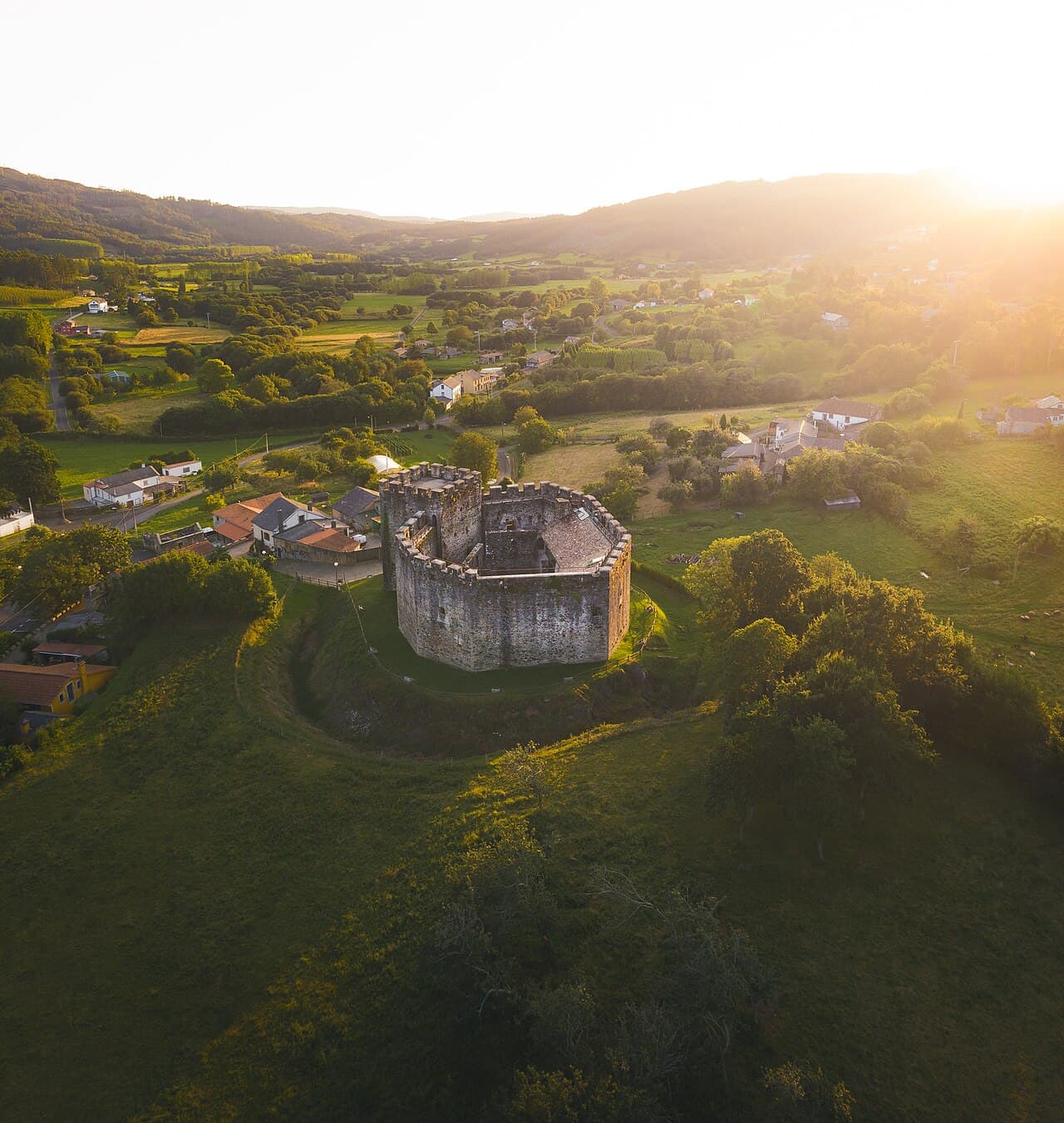
Moeche Castle stands as a remarkable example of a 14th-century hill castle located in the municipality of San Xurxo de Moeche in Galicia, Spain. Built originally by the Andrades family, this fortress embodies the turbulent history of medieval Galicia, reflecting both noble power and popular revolt. Its distinctive octagonal groundplan and formidable defensive features make it an architectural highlight of the region.
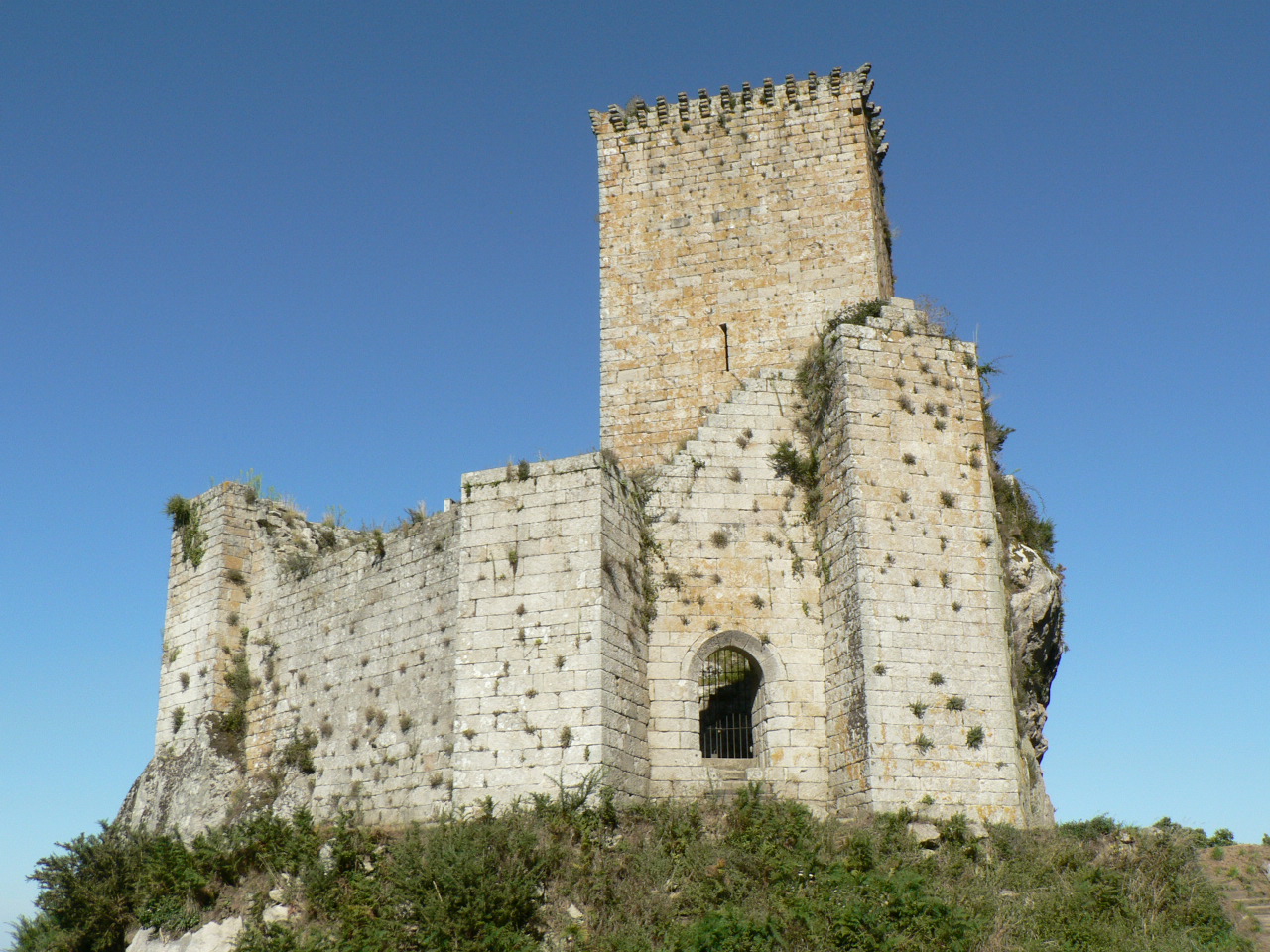
The castle's massive walls, approximately 10 meters high and 3 meters thick, are constructed primarily from schist rubble masonry with ashlar stone accents at corners and battlements. These robust walls were designed to withstand sieges and symbolize the strength of noble families who dominated the area during the Late Medieval period. The gatekeep tower, rising to about 18 meters tall, served as the primary defensive structure guarding the entrance and is the most prominent feature visible from outside the castle.
Historical significance and noble lineage
The castle's history is deeply intertwined with the powerful noble families of Galicia, notably the Andrades, the Valcárcel, and later the Osorio families. Originally constructed in the 14th century, the castle's strategic position on a hill provided both military advantage and control over surrounding lands. Through marriage and inheritance, the castle passed into the hands of the Osorio family, who played a crucial role in its later expansion and fortification.
The site itself has evidence of earlier fortifications predating the current structure, indicating its longstanding military importance. The castle was a focal point during the Second Irmandiña Revolt of 1467, when local commoners, known as irmandiños, rebelled against the oppressive noble class. Moeche Castle was stormed and partially destroyed during this uprising, symbolizing the conflict between the nobility and the people.
Following the rebellion, Pedro Álvarez Osorio undertook a significant reconstruction and expansion of the castle in the late 15th century. Remarkably, prisoners taken during the revolt were compelled to work on rebuilding the fortress, which reinforced its dual role as a defensive stronghold and noble residence. This period also saw the addition of heraldic decorations bearing the coats of arms of the Duke of Arjona, Pedro Álvarez Osorio, and his wife Beatriz de Castro, signifying their authority and influence.
Architectural features and layout
Moeche Castle is characterized by an irregular octagonal layout, surrounded by a shallow moat that enhances its defensive capabilities. The castle combines military and residential functions, with thick walls and battlements designed for defense alongside living quarters and service areas.
The keep and defensive structures
The centerpiece of the castle is its imposing square keep or tower of homage, which stands approximately 18 meters tall with walls about 4 meters thick. The keep features narrow arrow slits on the exterior for defense, while the interior openings are wider to allow light and access. Divided into three levels with wooden floors, the keep served various purposes: the ground floor likely functioned as storage, the second floor as a prison, and the top floor as a refuge for the lords, with direct access to the central courtyard.
A distinctive circular turret at the northern corner of the keep houses a spiral staircase, providing access to the battlements or adarve. This design allowed defenders to move quickly and efficiently during attacks.
Courtyard and ancillary buildings
The keep connects to the outer walls that enclose the central courtyard, which contains several rooms for daily castle operations. These include former servants' quarters, an armory, a dining hall, and stables. The stables building has been repurposed as the Castle of Moeche Interpretation Center, offering visitors detailed insights into the castle's history and significance.
Historical events and cultural legacy
The castle's location was also linked to significant events during the Castilian civil wars in the 14th century. After the Battle of Montiel in 1369, notable figures such as Henrique II of Castile, Bertrand du Guesclin, Fernán Pérez de Andrade, and King Pedro I “El Cruel” were involved in military actions near the castle. The death of Pedro I at this site marks a historically important moment in Castilian history.
Since 1980, the castle grounds have hosted the Festival Irmandiño, an annual cultural event commemorating the 15th-century revolt. The festival includes reenactments, traditional music, and celebrations that highlight the castle's enduring role in regional identity and historical memory.
Restoration and visitor information
Moeche Castle has undergone careful restoration to preserve its architectural integrity and historical character. The restoration has maintained the castle's original features while adapting some spaces for public education and tourism. Visitors interested in exploring the interior must request keys from the local town hall, as access is controlled to protect the site.
The castle's preservation allows visitors to appreciate its medieval defensive architecture, noble heritage, and cultural significance. The combination of robust fortifications, residential quarters, and symbolic heraldry makes Moeche Castle a compelling destination for those interested in medieval history and architecture.
Frequently asked questions (FAQ)
- How do I visit Moeche Castle?
- To visit Moeche Castle's interior, you need to request the keys from the local town hall in San Xurxo de Moeche. The castle grounds are accessible for exploration, but interior access is controlled to preserve the site.
- What is the historical significance of Moeche Castle?
- Moeche Castle is significant for its role in the 15th-century Irmandiño Revolt, where it was besieged and partially destroyed by local commoners rebelling against noble oppression. It also has ties to the Castilian civil wars and noble families like the Andrades and Osorio.
- When was Moeche Castle built and by whom?
- The castle was originally built in the 14th century by the Andrades family, a powerful noble lineage in Galicia. It was later expanded and rebuilt by Pedro Álvarez Osorio after the Irmandiño Revolt in the late 15th century.
- What architectural style characterizes Moeche Castle?
- Moeche Castle features typical Late Medieval military architecture with thick schist rubble walls, an octagonal layout, and a prominent square keep with arrow slits and battlements.
- Is Moeche Castle accessible for visitors with limited mobility?
- Due to its medieval hilltop location and historic structure, Moeche Castle may present challenges for visitors with limited mobility. The site includes uneven terrain and staircases, so assistance or accommodations should be inquired about in advance.
- What events are held at Moeche Castle today?
- Since 1980, Moeche Castle has hosted the annual Festival Irmandiño, featuring historical reenactments, traditional music, and cultural celebrations that honor the 15th-century revolt and the castle's heritage.
Photo gallery

Information
Website
Visit websiteSources & official resources
Verify the information above using these authoritative references.
Loading map...
Visitor reviews
No reviews yet. Been here? Write the first review and help other travelers!
Write the first reviewVisited this castle? Share your experience
Your review helps other travelers and adds first-hand knowledge to our encyclopedia.