Naegi Castle
Naegi Castle (苗木城, Naegi-jō) is a historic hill castle located in what is now the city of Nakatsugawa in Gifu Prefecture, Japan. Constructed in the 16th century during the Sengoku period, this castle served as the administrative center of the Naegi Domain, governed by the Tōyama clan. It is famously known by several names, including the Misty Castle (霞ケ城, Kasumi-ga-jō) and Akakabe Castle, the latter referring to its distinctive reddish clay walls, which set it apart from the typical white plaster walls seen in many Japanese castles.
Historical background and significance
Naegi Castle was built in the turbulent era of Japan's Sengoku period, a time marked by constant military conflict and political upheaval. Its strategic position atop a hill overlooking the Kiso River valley allowed it to control important transportation routes and defend the region effectively. The castle was originally constructed by the Tōyama family, who were retainers of the Oda clan, and later served as the stronghold of the Naegi Domain throughout the Edo period under the Tokugawa shogunate.
The castle's role as an administrative center was crucial for managing the domain's affairs, including governance, taxation, and military defense. Despite its relatively modest size compared to larger castles, Naegi Castle was well-fortified and symbolized the authority of the ruling clan over the surrounding territories.
Architectural features and layout
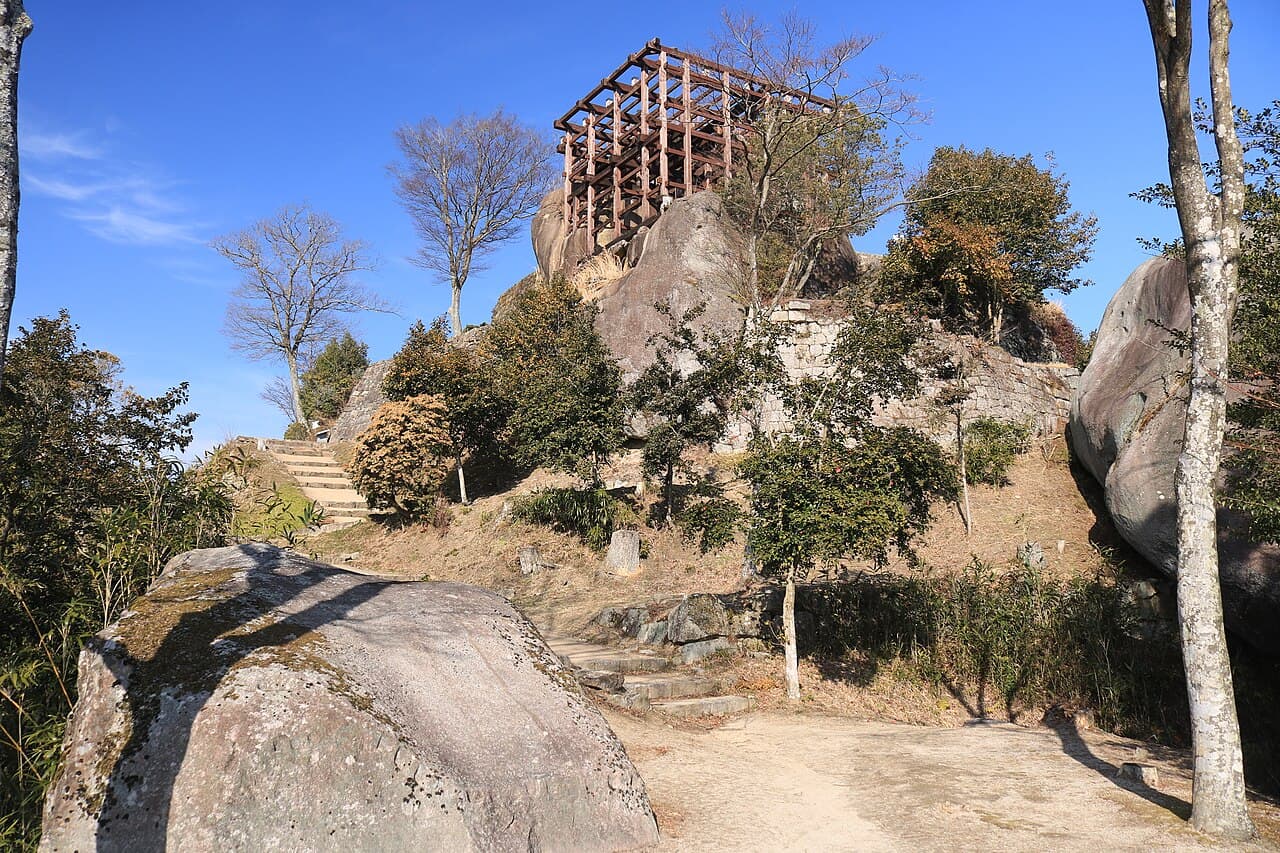
Naegi Castle is classified as a hill castle (yamajiro), utilizing the natural topography for defense. The castle's design incorporates the steep slopes of the hill, with multiple baileys (kuruwa) terraced along the hillside. The main enclosure (honmaru) was positioned at the highest point, providing commanding views of the surrounding landscape.
One of the castle's most distinctive features is its reddish clay walls, which earned it the nickname "Akakabe Castle." Unlike the typical white plaster walls found in many Japanese castles, Naegi's walls were constructed using local clay, giving them a unique appearance that blends with the natural environment. The walls were reinforced with stone foundations, and wooden structures such as gates and watchtowers were strategically placed to maximize defense.
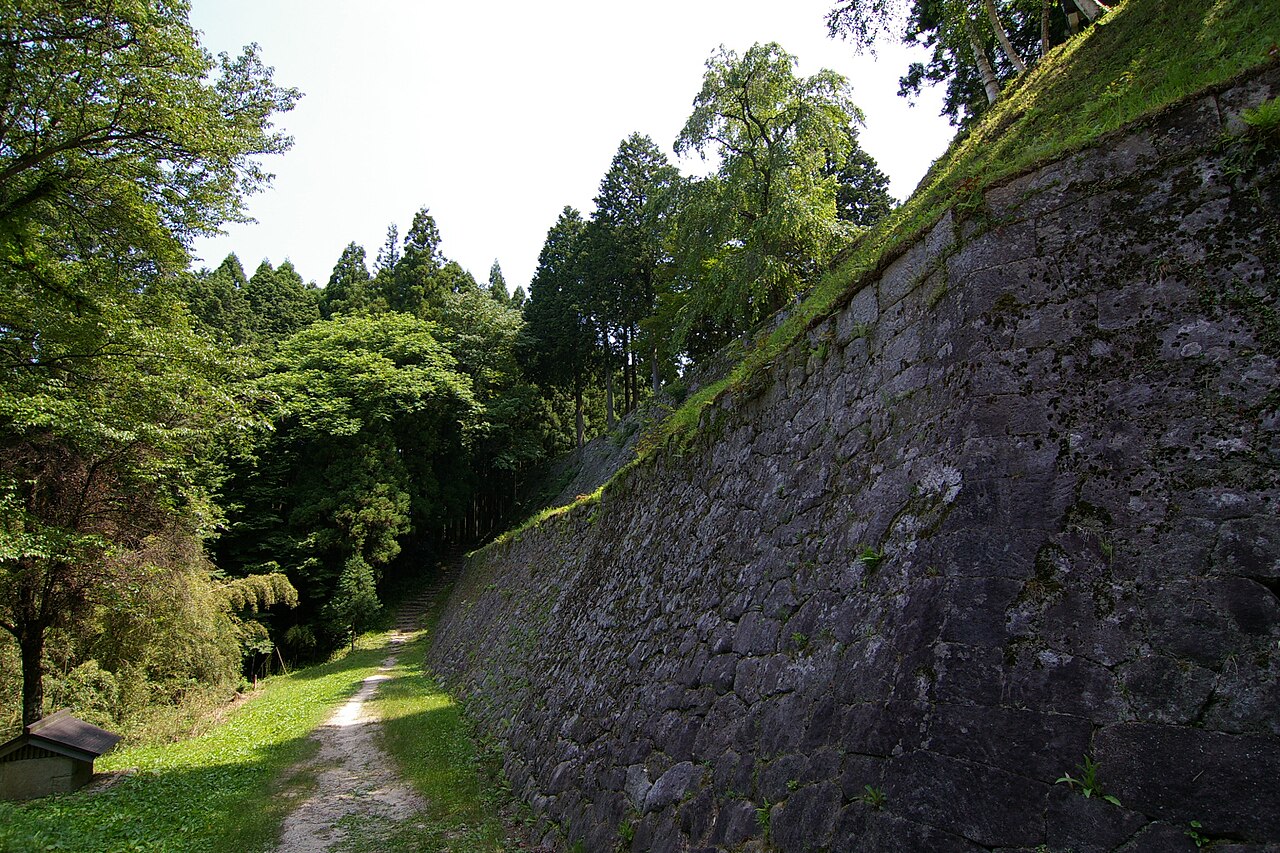
The castle complex included several defensive elements such as stone walls, moats, and gates designed to slow down and repel attackers. The use of terraces and narrow pathways made it difficult for enemy forces to advance quickly. Although the castle did not have a large keep (tenshu), its layered defenses compensated for this.
The castle's decline and preservation
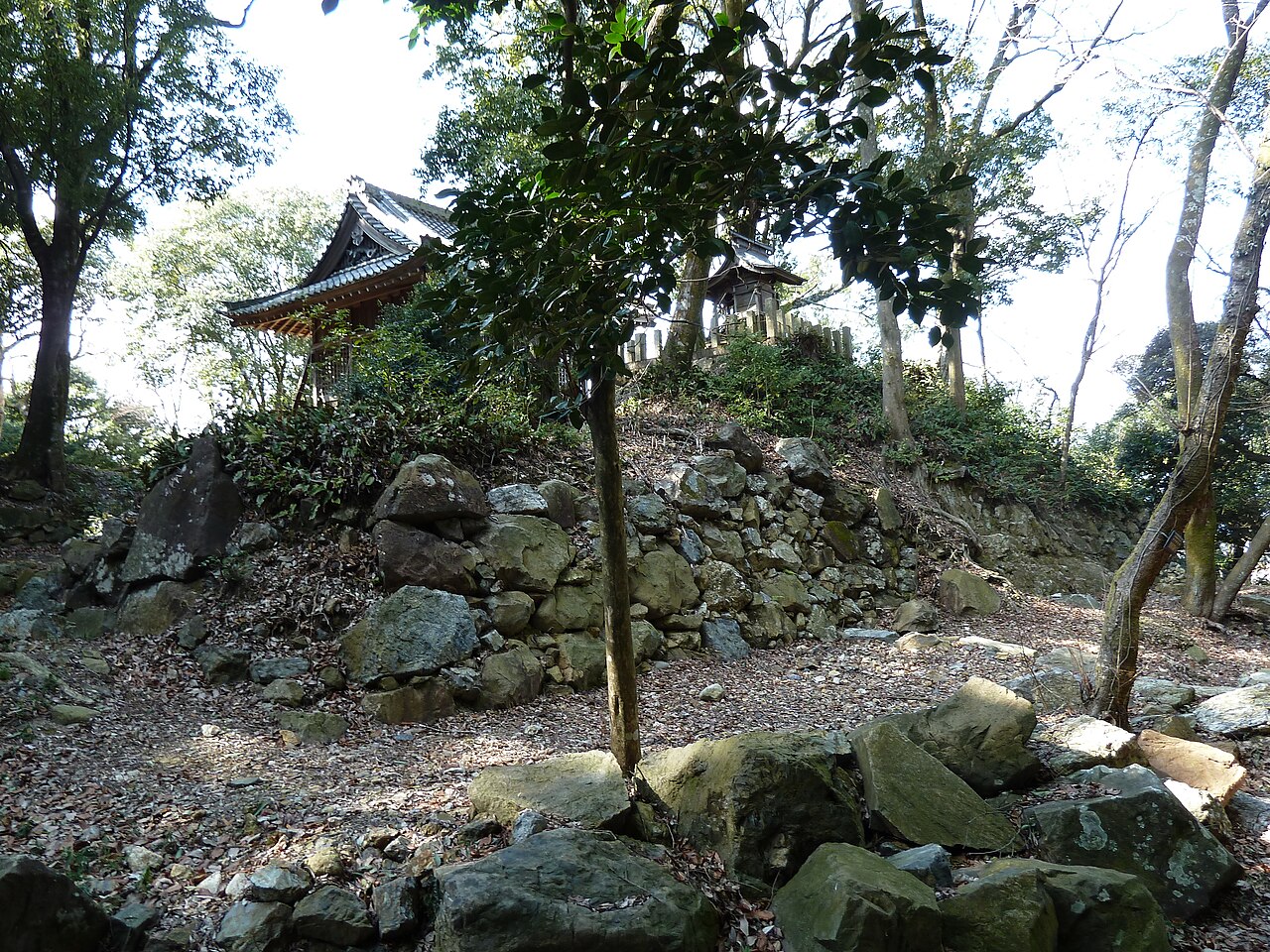
Following the Meiji Restoration in the late 19th century, Naegi Castle, like many other feudal castles, was dismantled as part of the government's efforts to modernize Japan and reduce the power of the samurai class. Most of the wooden structures were removed or destroyed, leaving only the stone foundations and clay walls.
Today, the ruins of Naegi Castle have been protected as a National Historic Site since 1981. The site offers visitors a glimpse into Japan's feudal past and the architectural ingenuity of hill castles. The castle ruins are accessible by hiking trails, which lead through terraced baileys and offer panoramic views of the Kiso River valley and surrounding mountains.
Visiting Naegi Castle
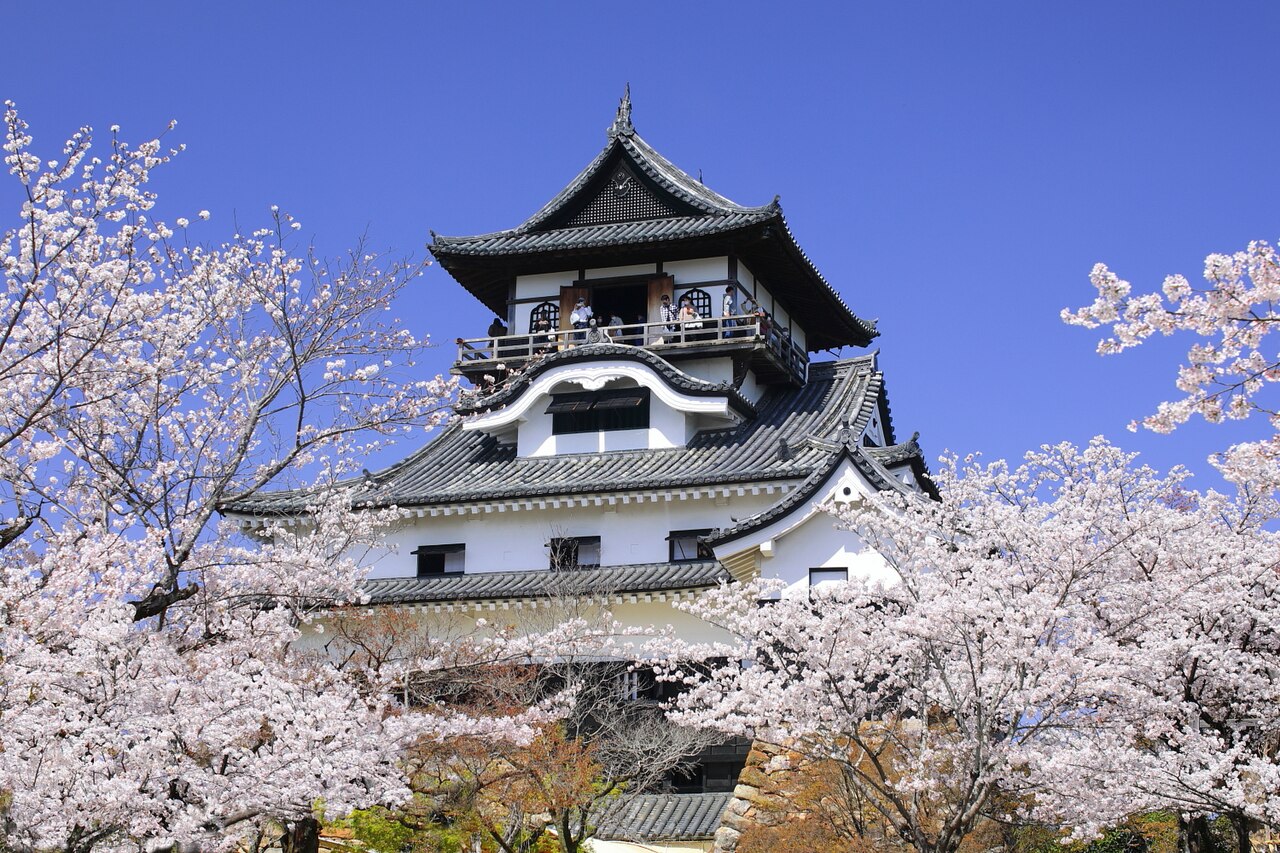
Visitors to Naegi Castle can explore the remains of the castle's walls, gates, and terraces. The site is especially popular during the cherry blossom season when the surrounding landscape is adorned with blooming sakura trees, enhancing the castle's misty and atmospheric nickname.
The castle ruins are located within a natural setting that highlights the strategic use of the terrain by the original builders. Informational signs and markers provide historical context, making it an educational experience for history enthusiasts and tourists alike.
Legacy and cultural importance
Naegi Castle stands as a testament to the military architecture and feudal governance of Japan's Sengoku and Edo periods. Its unique reddish clay walls distinguish it among Japanese castles, reflecting regional building materials and techniques. The castle's preservation as a historic site ensures that this cultural heritage continues to be appreciated and studied.
The castle also contributes to the local identity of Nakatsugawa and Gifu Prefecture, attracting visitors interested in Japan's samurai history and castle architecture. Events and festivals occasionally held near the site celebrate this heritage, fostering a connection between past and present.
Frequently asked questions (FAQ)
- How do I get to Naegi Castle?
- Naegi Castle is located in Nakatsugawa, Gifu Prefecture. Visitors can reach the site by train to Nakatsugawa Station, followed by a short bus or taxi ride to the castle ruins. Hiking trails lead up to the castle area.
- What is the best time to visit Naegi Castle?
- The best time to visit Naegi Castle is during spring, especially in April when cherry blossoms are in full bloom, creating a scenic and atmospheric environment around the ruins.
- Is Naegi Castle accessible for people with mobility issues?
- Due to its hilltop location and uneven terrain, Naegi Castle ruins are not fully accessible for visitors with mobility challenges. The site involves hiking on steep and rocky paths.
- Are there guided tours available at Naegi Castle?
- Guided tours are occasionally available through local tourism offices or during special events. Visitors should check in advance for availability and schedules.
- What makes Naegi Castle unique compared to other Japanese castles?
- Naegi Castle is unique for its reddish clay walls, earning it the nickname 'Akakabe Castle.' This feature distinguishes it from the common white plaster walls of other castles and reflects local building materials.
Photo gallery

Information
Current owner
Municipality
Loading map...
Visitor reviews
No reviews yet. Been here? Write the first review and help other travelers!
Write the first reviewVisited this castle? Share your experience
Your review helps other travelers and adds first-hand knowledge to our encyclopedia.