Murakami Castle
Murakami Castle (村上城, Murakami-jō) is a prominent hill castle located in Murakami, in the northern part of Niigata Prefecture, Japan. Constructed in the 15th century during the late medieval period, the castle played a significant role in regional military and political affairs. It is also known by the alternate name Maizuru-jō (舞鶴城), which translates to "Dancing Crane Castle," a name reflecting its graceful setting and strategic importance.
Historical background and significance
Murakami Castle was originally built in the turbulent era of the Sengoku period, a time marked by frequent conflicts among feudal lords vying for control over Japan. The castle's location on a hill provided a commanding view over the surrounding plains and the Sea of Japan coast, making it a strategic defensive site. During the Edo period, the castle became the seat of a cadet branch of the Naitō clan, who ruled the Murakami Domain under the authority of the Tokugawa shogunate. The Naitō family maintained the castle and its surrounding lands, contributing to local governance and stability.
Architectural features and layout
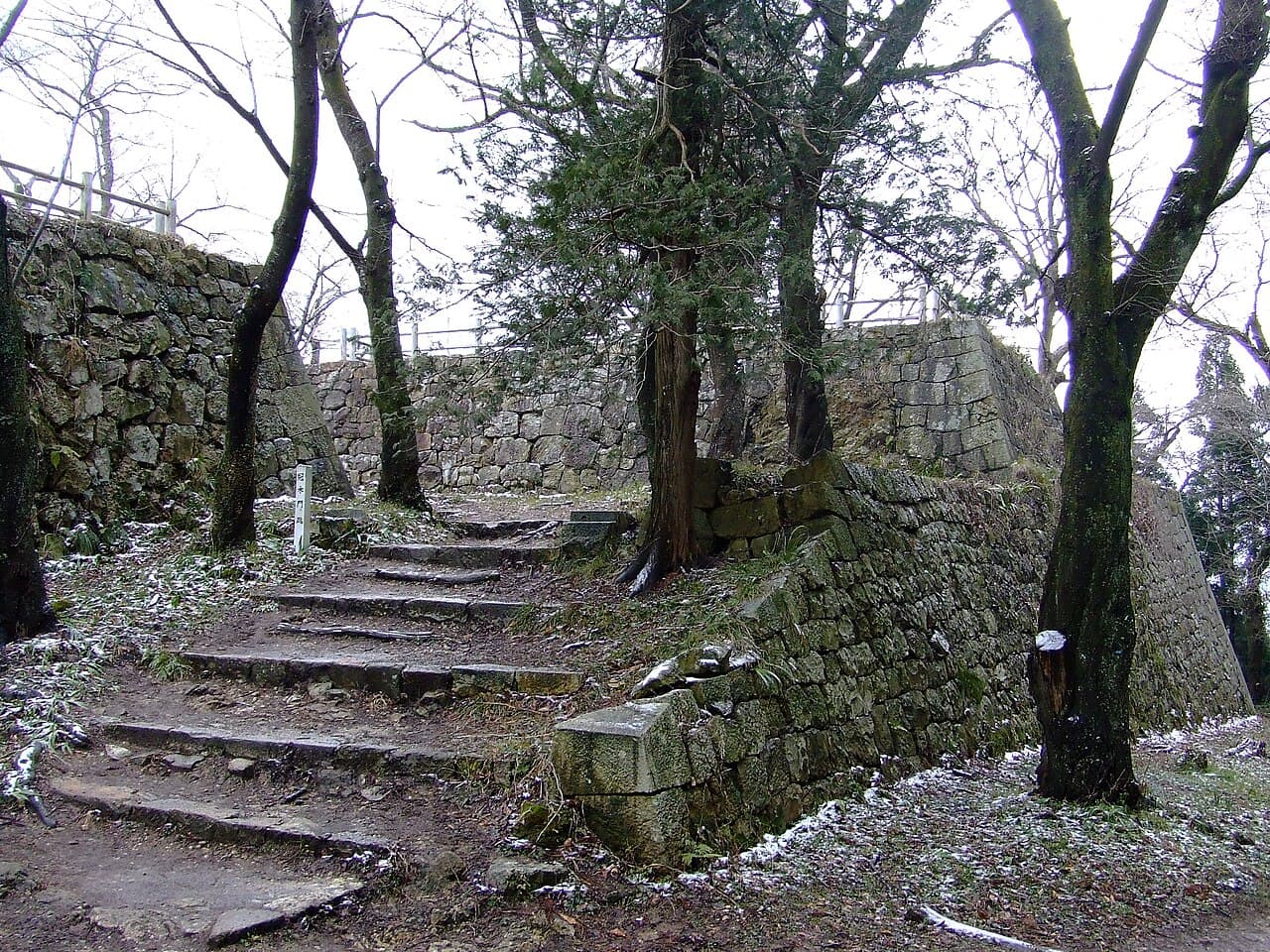
As a hill castle, Murakami Castle was designed to take advantage of the natural topography for defense. The castle complex was built on a series of terraced levels ascending the hill, connected by stone walls and earthen embankments. The main enclosure (honmaru) was situated at the highest point, serving as the residence and command center for the lord. Surrounding baileys (ni-no-maru, san-no-maru) provided additional defensive layers and housed administrative buildings, storehouses, and barracks.
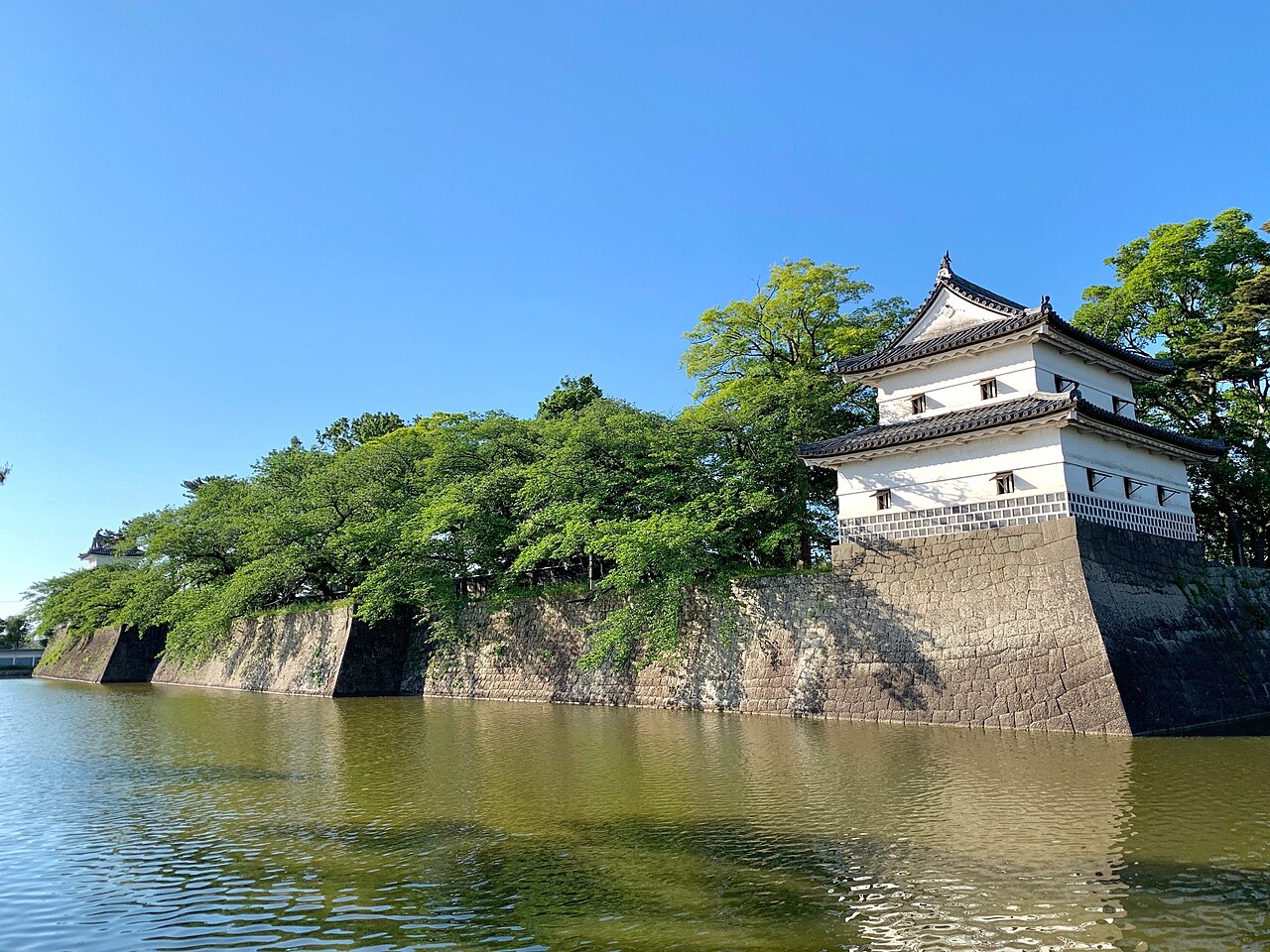
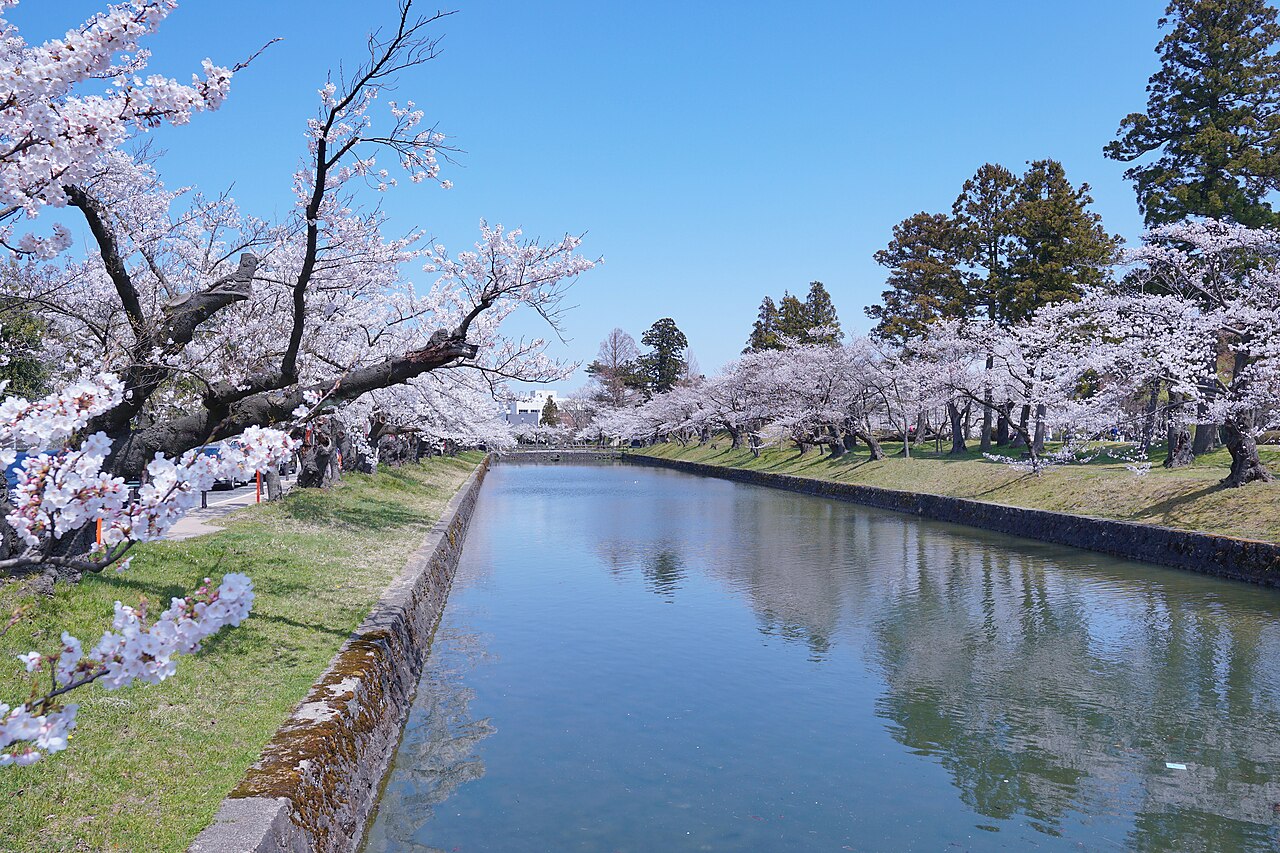
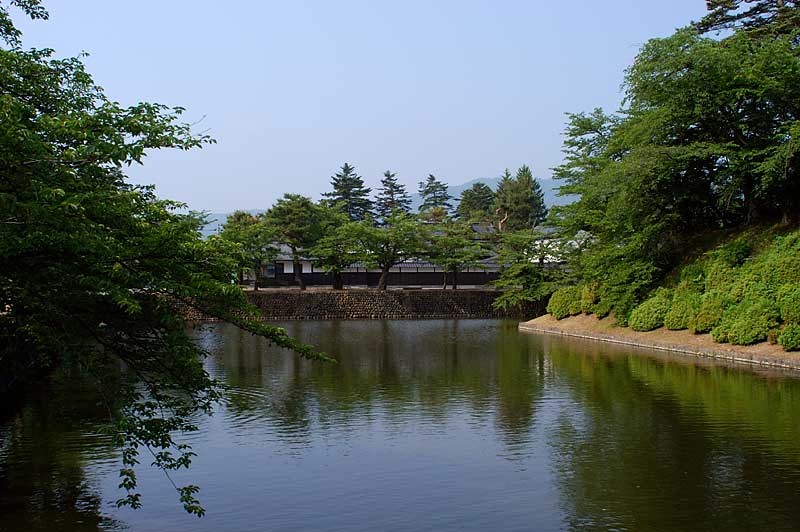
The castle's fortifications included stone walls and moats, which were typical defensive elements of Japanese castles of the period. Although much of the original wooden structures have not survived, the layout of the stone foundations and earthworks remains visible, offering insight into the castle's design and scale.
Defensive structures
Murakami Castle featured multiple gates (mon) strategically placed to control access and slow enemy advances. The gates were often fortified with watchtowers and gatehouses. The use of dry moats and steep slopes enhanced the castle's defensibility, making direct assaults difficult.
Role during the Edo period
Under the Tokugawa shogunate, Murakami Castle served primarily as an administrative center rather than a military fortress, reflecting the relative peace of the Edo period. The Naitō clan, as daimyō of the Murakami Domain, managed the surrounding territories from the castle, overseeing agricultural production, tax collection, and local justice.
The castle town that developed around Murakami Castle became a hub for commerce and culture, with merchants and artisans supporting the needs of the ruling samurai class. The castle's presence influenced the urban layout and economic activity of the region.
Decline and preservation
Following the Meiji Restoration in the late 19th century, many Japanese castles were dismantled or fell into ruin as the feudal system was abolished. Murakami Castle's wooden structures were largely lost during this period, but the stone foundations and earthworks survived.
In recognition of its historical importance, the site of Murakami Castle was designated a National Historic Site in 1993. Today, the castle ruins are accessible to the public, located about 30 minutes on foot from Murakami Station on the JR East Uetsu Line. Visitors can explore the remains of the stone walls, moats, and terraces, which provide a tangible connection to Japan's feudal past.
Visiting Murakami Castle
The castle site offers scenic views of the surrounding landscape, including the Sea of Japan coastline. Walking trails lead through the ruins, allowing visitors to appreciate the castle's strategic placement and architectural ingenuity. Informational plaques and signs help explain the history and features of the site.
Murakami Castle is a valuable cultural asset, reflecting the military, political, and social history of northern Japan. It remains a popular destination for those interested in Japanese history, castle architecture, and the Sengoku and Edo periods.
Frequently asked questions (FAQ)
- How do I get to Murakami Castle?
- Murakami Castle is approximately a 30-minute walk from Murakami Station on the JR East Uetsu Line, making it accessible by public transportation.
- What is the historical significance of Murakami Castle?
- Murakami Castle was a strategic hill castle built in the 15th century and served as the seat of the Naitō clan during the Edo period, overseeing the Murakami Domain under the Tokugawa shogunate.
- What can visitors see at the castle ruins today?
- Visitors can explore the stone foundations, earthworks, moats, and terraced layout of Murakami Castle, which reveal its defensive design and historical structure despite the loss of original wooden buildings.
- Is there an entrance fee to visit Murakami Castle?
- There is no entrance fee to visit the ruins of Murakami Castle, making it a free cultural and historical site open to the public.
- When is the best time to visit Murakami Castle?
- The best time to visit Murakami Castle is during spring and autumn when the weather is mild and the surrounding nature, including cherry blossoms and autumn foliage, enhances the scenic views.
Photo gallery

Photo by No machine-readable author provided. Geomr~commonswiki assumed (based on copyright claims).•CC BY-SA 3.0
Information
Loading map...
Visitor reviews
No reviews yet. Been here? Write the first review and help other travelers!
Write the first reviewVisited this castle? Share your experience
Your review helps other travelers and adds first-hand knowledge to our encyclopedia.