Muncaster Castle
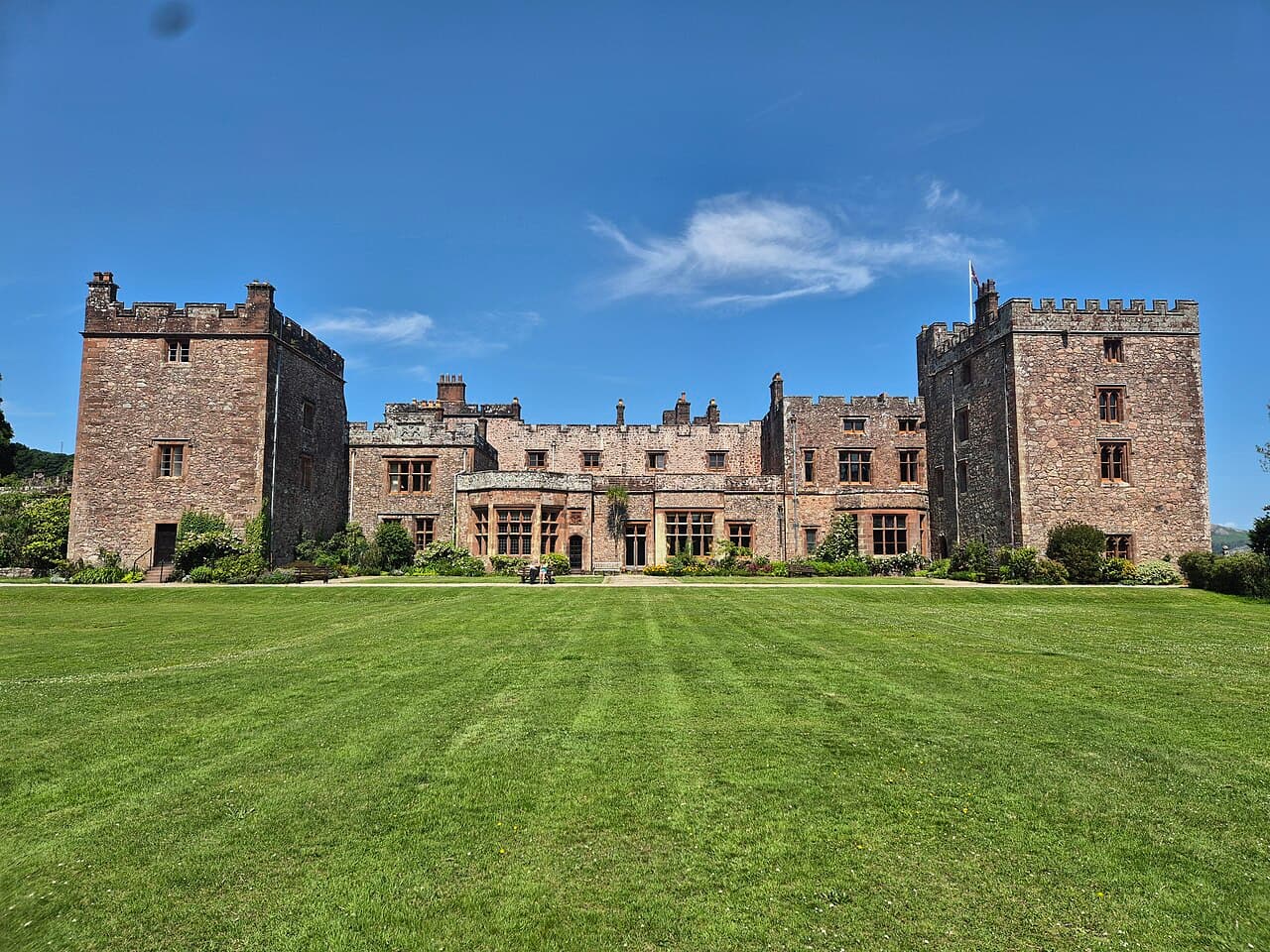
Muncaster Castle stands proudly overlooking the Esk River, just a mile east of the coastal town of Ravenglass in Cumbria, England. This Grade I listed building is a remarkable example of a late medieval hill castle with a continuous family ownership spanning over seven centuries. The castle's strategic location and rich heritage make it an important cultural landmark in the region.
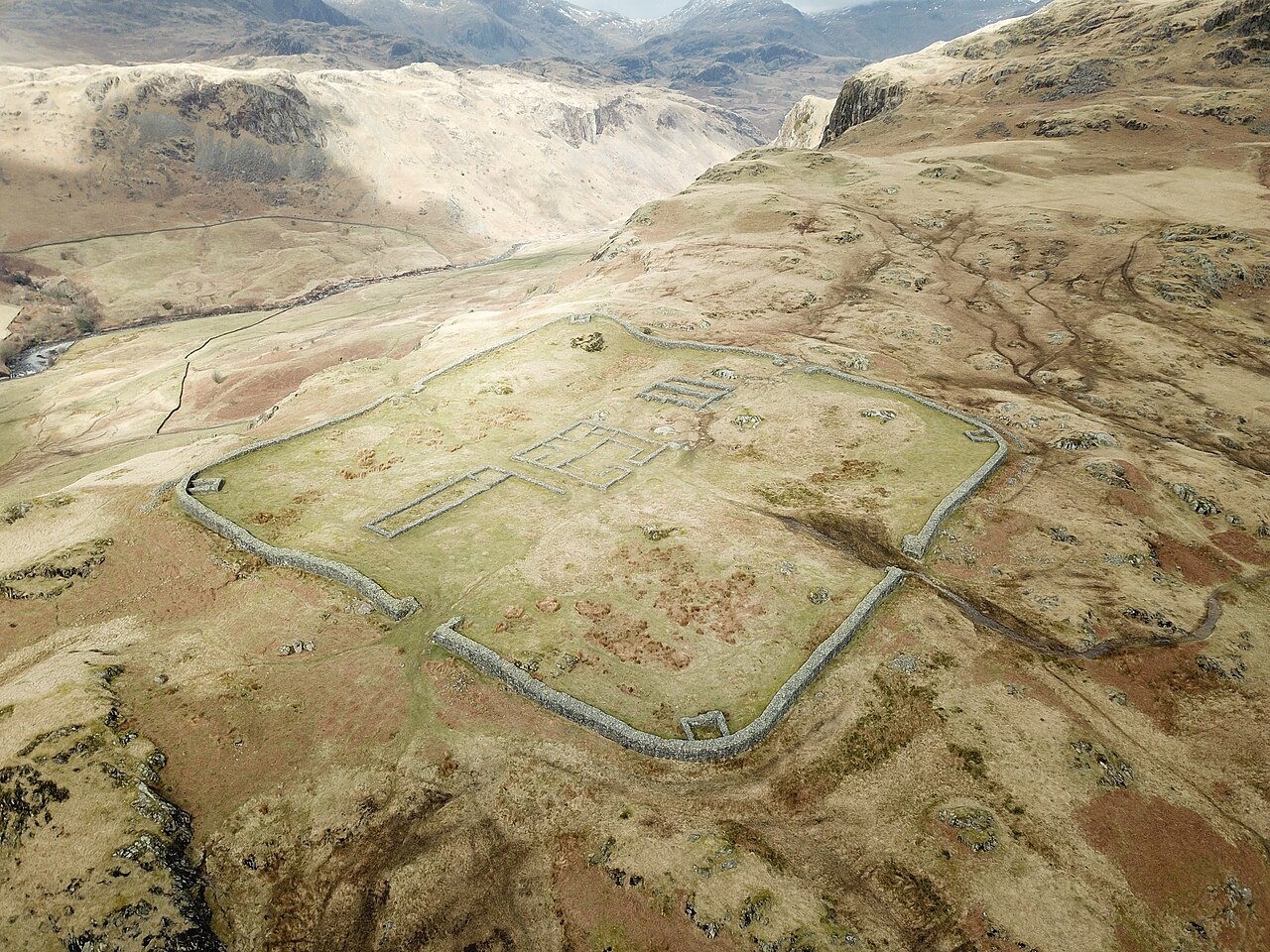
The castle's origins are deeply intertwined with the history of the area, as it is believed to be built upon the remains of a Roman fortification, possibly a small castellum linked to the nearby Glannoventa fort at Ravenglass. This connection underscores the site's long-standing military and strategic significance dating back to Roman Britain. The visible medieval structures primarily date from the 13th and 14th centuries, with the construction of a pele tower around 1325, a fortified watchtower typical of northern England's border defenses.
Medieval origins and the pennington family legacy
The estate has been under the stewardship of the Pennington family since 1208, when Alan de Penitone was granted the lands, marking one of the longest continuous family residencies in England. The Penningtons played a significant role in the castle's development and local history. The castle's fortified pele tower was a key defensive feature during the turbulent border conflicts between England and Scotland.
Local tradition holds that after the Battle of Towton in 1461, the defeated King Henry VI sought refuge at Muncaster Castle. Sir John Pennington is said to have sheltered the king, who gifted him a Venetian glass bowl known as "The Luck of Muncaster". This artifact, believed to bring prosperity while unbroken, remains intact and displayed at the castle, symbolizing the castle's royal connections and its role in England's dynastic struggles.
Architectural evolution and 19th-century restoration
The castle underwent significant remodeling between 1860 and 1866, led by the renowned architect Anthony Salvin, commissioned by the Barons Muncaster. Salvin's work respected the castle's medieval character while introducing Victorian-era enhancements that improved its habitability and aesthetic appeal. Although further alterations were proposed in 1916 by the celebrated architect Edwin Lutyens, these plans were never realized. However, Lutyens contributed to the estate by designing the Muncaster War Memorial in 1922, adding to the site's historical fabric.
Role during world war ii and cultural heritage
During World War II, Muncaster Castle served a crucial role as a secure storage location for approximately 700 artworks from the Tate Gallery, including masterpieces by Turner, Manet, and Van Gogh. This wartime function highlights the castle's importance beyond its historical and architectural value, contributing to the preservation of British cultural heritage during a period of national crisis.
The castle also celebrates its cultural legacy through its association with Thomas Skelton, the medieval jester reputed to be the original "Tom Fool." His portrait is prominently displayed within the castle, and an annual jesting competition honors his memory. Additionally, local folklore enriches the castle's mystique with tales of hauntings by the jester and the "White Lady" or Muncaster Boggle, a 17th-century governess, adding a layer of ghostly legend to the estate.
Architectural features and estate grounds
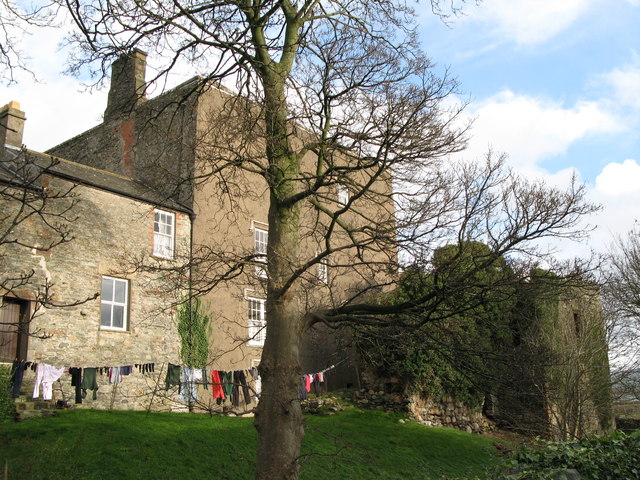
Muncaster Castle's layout centers on the Great Hall and the imposing 14th-century pele tower, which is built directly atop the earlier Roman foundations. The castle's stonework combines medieval masonry with remnants of Roman construction, illustrating the site's layered history.
The surrounding estate encompasses 77 acres of parkland featuring an 18th-century terrace that extends for about half a mile. This terrace offers sweeping views of the Lakeland Fells and the Esk Valley, famously praised by John Ruskin as "the gateway to Paradise." The gardens boast extensive collections of azaleas and rhododendrons introduced from Himalayan expeditions in the 1920s, enriching the botanical diversity of the grounds.
Inside, the castle preserves furnishings from the 16th and 17th centuries, alongside portraits of Pennington family members. The octagonal library houses around 6,000 volumes and features a ceiling dating to 1780, reflecting the castle's role as a center of learning and culture through the centuries.
The estate also includes the 12th-century Muncaster Church, which was remodeled by Anthony Salvin in the 19th century, maintaining its historical and architectural significance within the grounds.
Legends and ghost stories
Muncaster Castle is steeped in local legends and ghost stories that contribute to its allure. The tapestry room is famously associated with hauntings, including sightings of the jester Tom Skelton and the spectral "White Lady" or Muncaster Boggle, a governess from the 17th century. These tales are an integral part of the castle's cultural heritage and attract visitors interested in the paranormal.
These stories, combined with the castle's rich architectural and historical tapestry, make Muncaster Castle a fascinating destination for historians, architecture enthusiasts, and tourists alike.
Frequently asked questions (FAQ)
- How do I visit Muncaster Castle and what are the opening hours?
- Muncaster Castle is open to visitors seasonally, usually from spring through autumn. It is best to check the official website for current opening hours and any special events before planning your visit.
- What is the historical significance of The Luck of Muncaster?
- The Luck of Muncaster is a Venetian glass bowl gifted by King Henry VI to Sir John Pennington as a symbol of protection and prosperity. It remains intact and is displayed at the castle, representing its royal connections.
- Can I explore the gardens and parkland at Muncaster Castle?
- Yes, visitors can explore the 77 acres of parkland and the 18th-century terrace, which offers stunning views of the Lakeland Fells and Esk Valley. The gardens feature collections of azaleas and rhododendrons from Himalayan expeditions.
- Is Muncaster Castle associated with any ghost stories or legends?
- Muncaster Castle is known for its ghost stories, including hauntings by the medieval jester Tom Skelton and the "White Lady" or Muncaster Boggle. These legends are part of the castle's rich cultural heritage and add to its mystique.
- What architectural styles are evident in Muncaster Castle?
- The castle primarily exhibits features of late medieval fortification, including a 14th-century pele tower, with Victorian-era restorations by Anthony Salvin that respect its medieval character.
Photo gallery

Information
Sources & official resources
Verify the information above using these authoritative references.
Loading map...
Visitor reviews
No reviews yet. Been here? Write the first review and help other travelers!
Write the first reviewVisited this castle? Share your experience
Your review helps other travelers and adds first-hand knowledge to our encyclopedia.