Mukaihaguroyama Castle
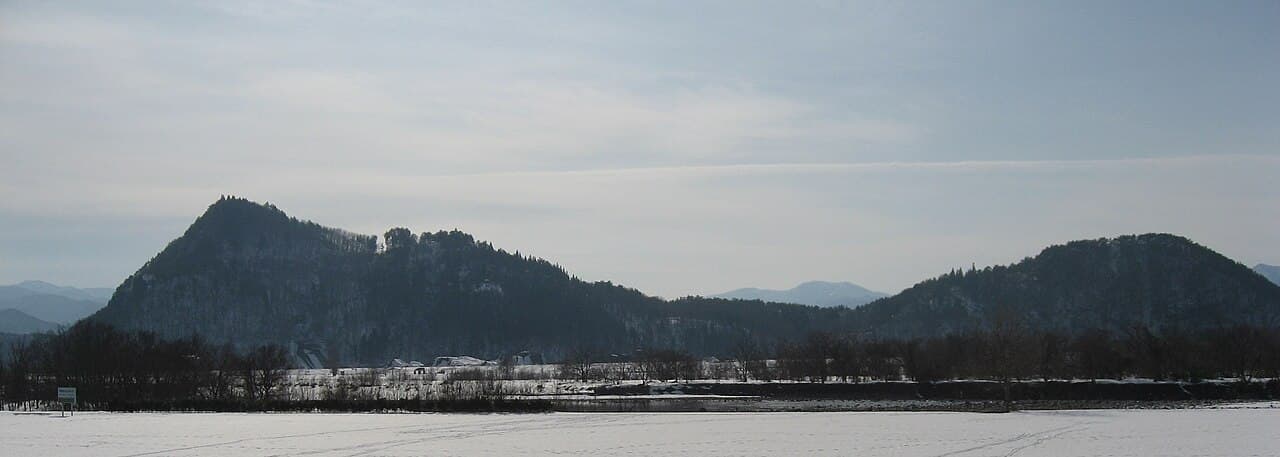
Mukaihaguroyama Castle (向羽黒山城, Mukaihaguroyama-jō), also known as Iwasaki Castle (岩崎城, Iwasaki-jō), is a significant historical fortress from Japan's Sengoku period, located in the town of Aizumisato in southern Fukushima Prefecture. The castle occupies a strategic position on a hill, characteristic of yamashiro or mountain castles, which were commonly built during the turbulent Sengoku era for defensive advantages. Since 2001, the site has been protected by the Japanese central government as a National Historic Site, underscoring its cultural and historical importance.
Historical significance and context
Mukaihaguroyama Castle is recognized as one of the five largest Sengoku period yamashiro, alongside other renowned fortresses such as Kasugayama Castle in Echigo Province, Nanao Castle in Noto Province, Odani Castle and Kannonji Castle in Omi Province, and Gassantoda Castle in Iwami Province. These castles were pivotal during the Sengoku period, a time marked by frequent military conflicts and shifting alliances among feudal lords across Japan.
The castle's construction dates back to the 17th century, placing it in the late Sengoku to early Edo period transition. This era saw the consolidation of power under the Tokugawa shogunate, which led to the decline of many mountain castles as centers of military activity. However, Mukaihaguroyama Castle remains an important example of the defensive architecture that characterized the Sengoku period.
Architectural features and layout
As a hill castle, Mukaihaguroyama Castle was strategically built on elevated terrain to maximize natural defenses. The castle's design incorporates multiple baileys (courtyards) arranged along the contours of the mountain, connected by narrow paths and fortified gates. The steep slopes and dense forests surrounding the site enhanced its defensibility against attackers.
The castle complex included stone walls, earthen ramparts, and wooden structures typical of the period. Defensive features such as watchtowers and gates were positioned to oversee approaches and control access. Although much of the original wooden architecture has not survived, the earthworks and stone foundations remain visible, providing insight into the castle's scale and layout.
Comparison with other major yamashiro
Mukaihaguroyama Castle shares architectural similarities with other prominent mountain castles of the Sengoku period, such as Kasugayama Castle and Nanao Castle. These fortresses emphasize natural terrain for defense, with complex networks of baileys and fortified enclosures. The scale of Mukaihaguroyama Castle places it among the largest and most formidable mountain castles of its time.
Preservation and current condition
Today, Mukaihaguroyama Castle is classified as archaeological ruins. While the wooden buildings have not survived, the site retains extensive earthworks, stone foundations, and defensive structures that allow visitors and researchers to appreciate its historical significance. The designation as a National Historic Site has helped protect the castle grounds from modern development and facilitated archaeological studies.
Access to the site offers a glimpse into the military architecture of the Sengoku period and the strategic importance of mountain castles in Japan's feudal history. Interpretive signage and preservation efforts aim to educate visitors about the castle's role and the broader context of regional conflicts during the 16th and 17th centuries.
Visiting Mukaihaguroyama Castle
The castle ruins are located in a rural area of Fukushima Prefecture, accessible by local roads from nearby towns. Visitors should be prepared for hiking on uneven terrain to explore the various baileys and defensive positions. The site is open year-round, with the best visiting seasons in spring and autumn when the natural surroundings enhance the experience.
Nearby attractions include historical sites and natural parks in Aizumisato and the wider Fukushima region, offering a rich cultural itinerary for those interested in Japan's feudal past and scenic landscapes.
Frequently asked questions (FAQ)
- When was Mukaihaguroyama Castle built?
- Mukaihaguroyama Castle was constructed in the 17th century, during the late Sengoku period transitioning into the Edo period.
- What type of castle is Mukaihaguroyama Castle?
- Mukaihaguroyama Castle is a hill castle (yamashiro), built on elevated terrain for strategic defensive advantage.
- Is Mukaihaguroyama Castle open to visitors?
- Yes, the castle ruins are accessible year-round, with hiking required to explore the site due to its mountainous location.
- Why is Mukaihaguroyama Castle historically important?
- It is one of the five largest Sengoku period yamashiro, representing key military architecture and feudal history in Japan.
- What remains can be seen at Mukaihaguroyama Castle today?
- Visitors can see earthworks, stone foundations, and defensive structures, though original wooden buildings no longer survive.
Photo gallery

Information
Current owner
Japanese central government
Loading map...
Visitor reviews
No reviews yet. Been here? Write the first review and help other travelers!
Write the first reviewVisited this castle? Share your experience
Your review helps other travelers and adds first-hand knowledge to our encyclopedia.